AI History & Biography
The 40 Best AI History and Biography Books (2026)
Forty books that explain how artificial intelligence came to be, from Turing's theory and the deep learning boom to Nvidia's chips, OpenAI's boardroom and the Pentagon's targeting systems.
As an Amazon Associate, Best AI Books earns from qualifying purchases. Best AI Books is sponsored by Iternal.ai, whose founder and CEO, John Byron Hanby IV, wrote The AI Strategy Blueprint, our #1 ranked book. How we rank books.
Quick picks
Best overall
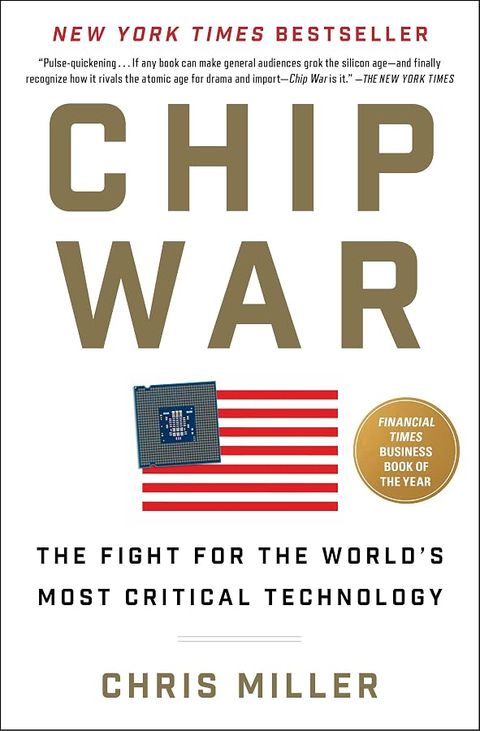
Chip WarMiller's semiconductor history explains the compute, chokepoints and export controls that shape every AI company, and it won the 2022 FT Business Book of the Year award.
Best for beginners
The Worlds I SeeFei-Fei Li's memoir explains the data-driven turn in AI through the story of ImageNet, in plain language that requires no technical background.
Best on the AI labs
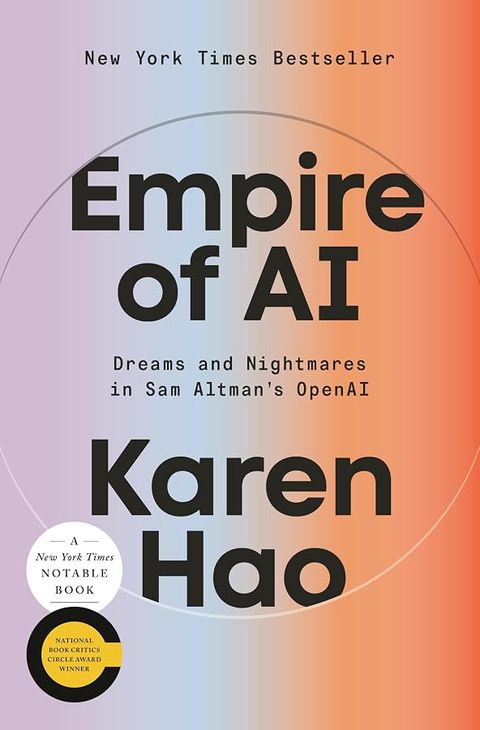
Empire of AIKaren Hao's deeply sourced account follows OpenAI from nonprofit mission to commercial giant and documents the hidden labor and resources behind ChatGPT.
Artificial intelligence has a longer history than its recent headlines suggest. Alan Turing asked whether machines could think in a 1950 paper for the philosophy journal Mind, and six years later John McCarthy organized the summer research project at Dartmouth College that the college credits with naming the field. Neural networks then spent decades on the margins before two of their pioneers, John Hopfield and Geoffrey Hinton, received the 2024 Nobel Prize in Physics. The same year, Demis Hassabis and John Jumper of Google DeepMind shared half of the chemistry prize for AlphaFold's protein structure predictions. The forty books ranked below tell that story through the people, companies, machines and ideas that produced today's AI industry.
The category covers four kinds of book. Company and laboratory histories, such as Empire of AI and The Infinity Machine, reconstruct how OpenAI, DeepMind and their rivals made decisions. Hardware histories, led by Chip War and two books on Nvidia, explain why computing power and chip supply chains decide who can build frontier models. Biographies and memoirs follow individuals from Alan Turing and Claude Shannon to Fei-Fei Li and Sam Altman. A smaller group of foundational texts by Herbert Simon, Norbert Wiener and Marvin Minsky presents the field's original ideas in their authors' own words. Two titles take less conventional forms: the novel The MANIAC and the oral history The Scaling Era.
Who these books serve and how to read them
Executives and investors will find the business histories most useful for context on capital, competition and governance. Policymakers and defense analysts should prioritize the books on chips, export controls and military AI, including Project Maven and House of Huawei. Students and general readers can start with the beginner-level titles, which require no technical background, while researchers and technical leaders will get more from the foundational texts and the three advanced-level books, including Jeffrey Ding's study of technology and national power.
Readers new to the subject should begin with a narrative such as The Worlds I See or Genius Makers, then read Chip War for the hardware layer beneath every lab. Accounts of OpenAI differ in stance, so reading Karen Hao's critical history alongside Keach Hagey's biography of Altman gives a fuller picture than either book alone. Readers who want the mathematics should turn to Why Machines Learn. Several 2025 and 2026 titles describe events that are still unfolding, and pairing each with an older history helps separate lasting shifts from short-term news.
Ranked No. 1 overall

No. 01 of 500 · AI Strategy & Leadership
The AI Strategy Blueprint
John Byron Hanby IV · 2026 · More than 2 million copies delivered
The ranking
- Rank 01
Chris Miller's history ranks first because it explains the layer beneath every other story in AI: the chips. He traces how US military demand funded the early semiconductor industry, how leading-edge production concentrated in TSMC's Taiwan fabs and ASML's Dutch lithography machines, and why China spends more on imported chips than on imported oil. Readers learn why export controls on chips and chipmaking tools have become a central instrument of US-China rivalry and why access to computing power decides which companies and countries can build frontier models. The book won the 2022 FT Business Book of the Year award.
Editorial score: 81.8/100 - Rank 02
Karen Hao's account ranks second for the depth of its reporting on the company whose ChatGPT launch set off the generative AI boom. She follows OpenAI from its nonprofit founding through the Microsoft deal, the capped-profit structure and ChatGPT's release, and she reconstructs Sam Altman's November 2023 firing and reinstatement in detail. Her wider argument concerns cost: the scaling strategy consumes vast resources, and low-paid data workers in countries such as Kenya labeled traumatic content to make chatbots commercially viable. Readers who reject her critical conclusions will still find documentation that any other account of OpenAI must address.
Editorial score: 80.2/100 - Rank 03
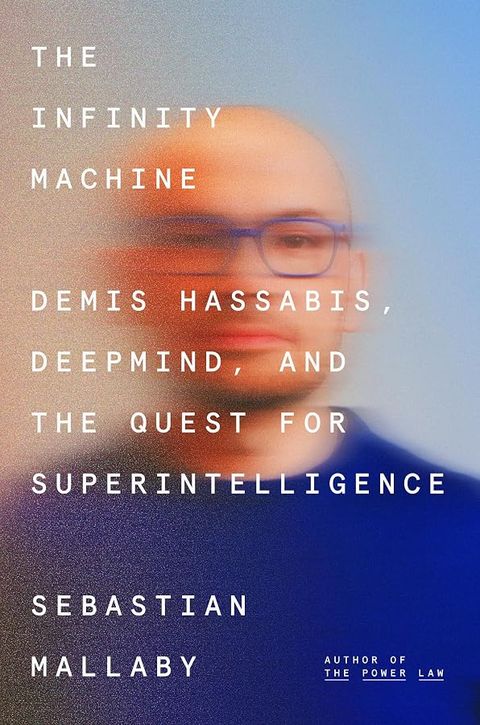
Sebastian Mallaby, a senior fellow at the Council on Foreign Relations, drew on more than thirty hours of conversations with Demis Hassabis and on interviews with his rivals, mentors and estranged cofounder. The book ranks third because no other title covers DeepMind in comparable depth. Mallaby shows how Hassabis used games, neuroscience and computing as preparation for building general intelligence, presents AlphaFold as the strongest case for his science-first strategy, and documents how ChatGPT's launch pushed Google to merge its AI labs. He also records how early commitments to independent safety oversight weakened under commercial and competitive pressure.
Editorial score: 73.9/100 - Rank 04
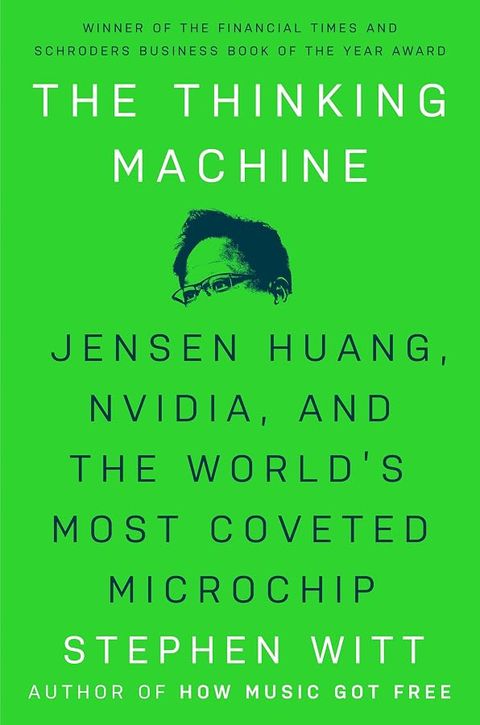
Stephen Witt's biography of Jensen Huang ranks fourth as the most readable explanation of how one chipmaker became essential to modern AI. Witt shows that Nvidia built CUDA, its parallel-computing software platform, years before AI researchers needed it, and that deep learning's breakthroughs after 2012 depended on GPU hardware as much as on new algorithms. He also documents Huang's habit of betting the company on long-range technical visions despite the risk of bankruptcy. Investors and executives get a clear account of how owning both the chips and the software tools creates an advantage that rivals struggle to overcome.
Editorial score: 76.8/100 - Rank 05
Fei-Fei Li's memoir is the best entry point for readers without a technical background. Li, co-director of Stanford's Institute for Human-Centered AI, alternates her immigrant family's story with the history of computer vision. She explains why recognizing objects is so hard for machines and how her ImageNet dataset showed that large, carefully labeled data could unlock the power of neural networks. She also recounts the skepticism ImageNet faced before it became a standard benchmark. Readers come away with her case that AI should augment human work, particularly in health care, rather than replace the people it serves.
Editorial score: 76.2/100 - Rank 06
Joy Buolamwini's memoir ranks sixth because it turns algorithmic bias from an abstraction into a documented case. Her Gender Shades study with Timnit Gebru found error rates of up to 34.7 percent for darker-skinned women in commercial gender classifiers, against a maximum of 0.8 percent for lighter-skinned men. The book explains why aggregate accuracy scores hide subgroup failures, how the priorities of builders become embedded in products, and how published audits pushed the companies named in her research to update their systems. Product teams and policymakers get a practical model for auditing AI systems before deployment.
Editorial score: 75.3/100 - Rank 07
Parmy Olson's dual portrait of Sam Altman and Demis Hassabis won the 2024 Financial Times and Schroders Business Book of the Year and explains how both founders were pulled into Big Tech's orbit. Olson shows how the cost of training frontier models left independent labs dependent on Microsoft and Google, and how nonprofit control and ethics boards proved fragile once billions were committed. She contrasts Hassabis's focus on scientific breakthroughs with Altman's priority on shipping products and raising capital. Her argument that superintelligence debates divert attention from present harms such as bias and market concentration gives readers a counterpoint to the labs' own framing.
Editorial score: 74.1/100 - Rank 08
Kevin Roose, a New York Times technology columnist, covers OpenAI, Anthropic and Google DeepMind together, which makes his book the broadest reported history of the frontier labs in the ranking. He explains the bet that next-word prediction at enormous scale would produce general capability and why that bet drove spending on compute and data centers. He traces the tension between safety missions and commercial pressure at each lab and covers Pentagon demands for military access to frontier models. The book's eighth-place rank reflects a short track record of 347 Amazon ratings, although their 4.8-star average is the highest of the forty books.
Editorial score: 76.8/100 - Rank 09
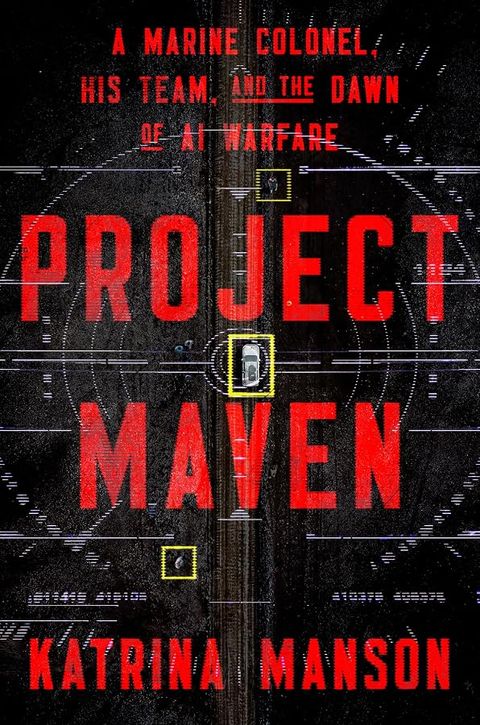
Katrina Manson's history of the Pentagon's AI targeting program covers ground that the lab-focused books leave untouched: how AI reached the battlefield. Drawing on more than 200 interviews, she follows Marine Colonel Drew Cukor's team from a 2017 effort to analyze drone imagery to a targeting system now used in every US military branch. Manson covers the procurement workarounds that made it possible, Google's 2018 withdrawal after employee protests, and Palantir's growth as a contractor. Defense and policy professionals get a detailed case study of what accountability means when a human in the loop mainly validates machine-generated targets.
Editorial score: 76.3/100 - Rank 10
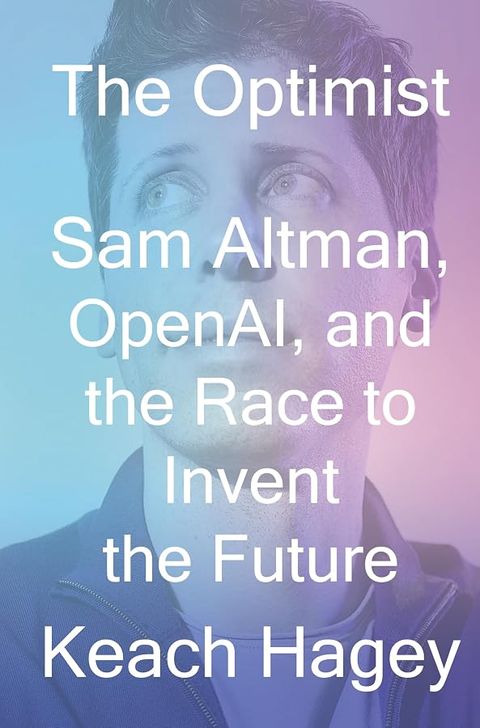
Keach Hagey's biography of Sam Altman complements the more critical company histories ranked above it. Hagey, a Wall Street Journal reporter, traces patterns that run from Loopt to OpenAI: ambitious fundraising, skilled deal-making and a talent for persuading powerful patrons. Her account of the November 2023 board crisis shows that employee and investor loyalty, more than formal authority, decided who controlled OpenAI. She also connects Altman's interests in universal basic income, housing and artificial general intelligence into one worldview centered on abundance. Executives and investors weighing OpenAI's governance should read it alongside Empire of AI.
Editorial score: 71.3/100 - Rank 11
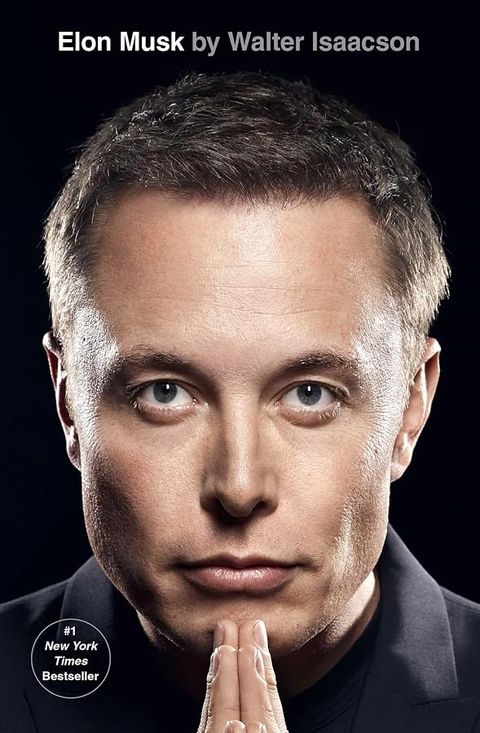
Walter Isaacson's biography is the most-rated book in the ranking, with nearly 24,000 Amazon ratings, and it earns its place through the AI thread that runs through Musk's career. Isaacson shows how Musk's fear that AI could threaten humanity led him to invest in DeepMind, cofound OpenAI and, after splitting with OpenAI, start his own AI efforts. He also explains Musk's method of questioning every requirement and deleting parts and processes before optimizing, and Musk's treatment of Tesla driving video and Twitter data as training assets. Critics identified factual errors and deference to its subject, so readers should check key claims against other accounts.
Editorial score: 71.3/100 - Rank 12
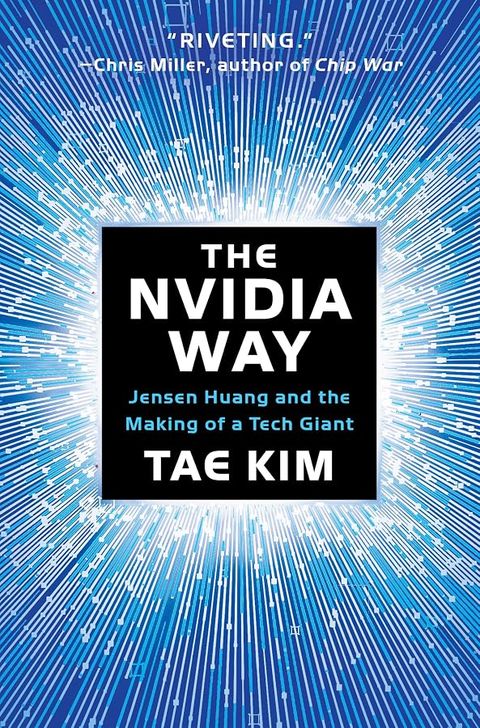
Tae Kim's company history pairs well with Stephen Witt's biography of Jensen Huang but concentrates on Nvidia's culture rather than its chief executive. Kim shows how the company survived near-death moments in the 1990s, including the failure of its first chip, by shipping fast and cutting losses, and how years of funding for CUDA without clear returns turned graphics processors into general-purpose computers. He also details Huang's flat organization, with many direct reports and open critique. Managers get concrete lessons on organizing for speed, and investors get the history behind Nvidia's readiness when GPU-trained neural networks proved their value in 2012.
Editorial score: 75.6/100 - Rank 13
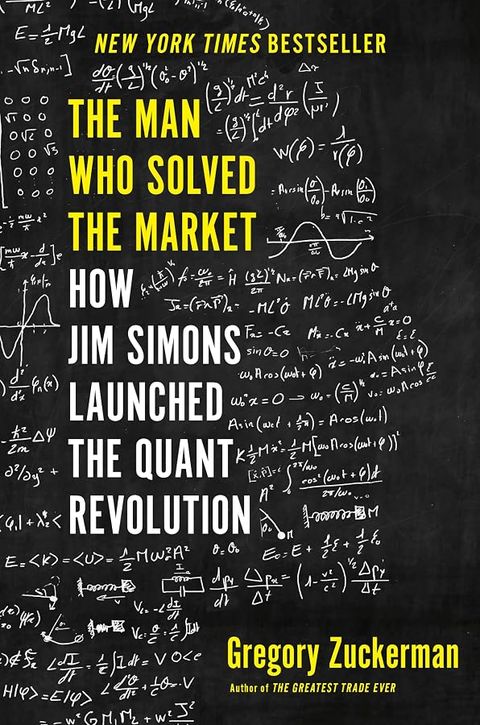
Gregory Zuckerman's history of Jim Simons and Renaissance Technologies earns its place because it documents an early, highly profitable application of statistical modeling with roots in AI research. Simons hired mathematicians, physicists and computer scientists instead of finance veterans, and researchers recruited from IBM's speech-recognition group brought their modeling methods into trading. Zuckerman, a Wall Street Journal reporter, shows how many weak predictive signals, combined in one automated system with disciplined execution, produced exceptional returns. The firm's methods remain secret, so readers get organizational lessons rather than models, along with an explanation of why the Medallion fund stayed small and closed to outside investors.
Editorial score: 69.1/100 - Rank 14
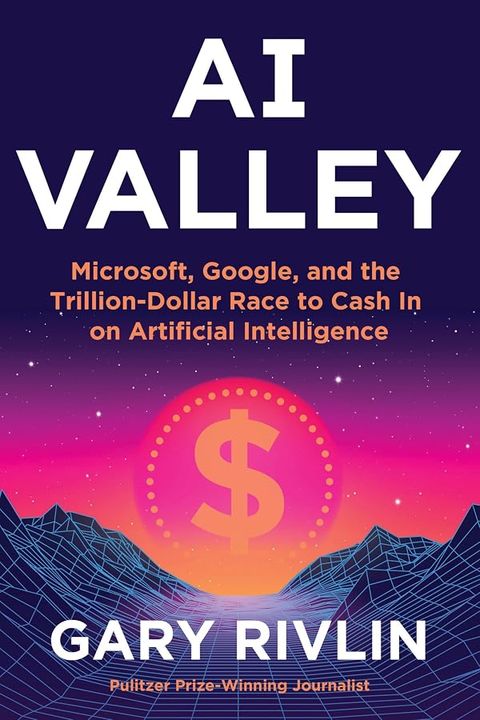
Gary Rivlin chronicles the generative AI startup boom through its founders and financiers. He is strongest on Inflection AI, whose absorption into Microsoft shows how talent deals can replace acquisitions when startups cannot raise enough capital, and on the venture money flowing through Silicon Valley. Rivlin explains why training costs give Microsoft and Google an edge over the classic garage startup, and how commercial pressure eroded earlier safety pledges, including Google's decision to drop its ban on military and surveillance uses of AI. Business readers get a narrative that compares the boom with the dot-com era, though coverage of companies other than Inflection is thinner.
Editorial score: 65.0/100 - Rank 15
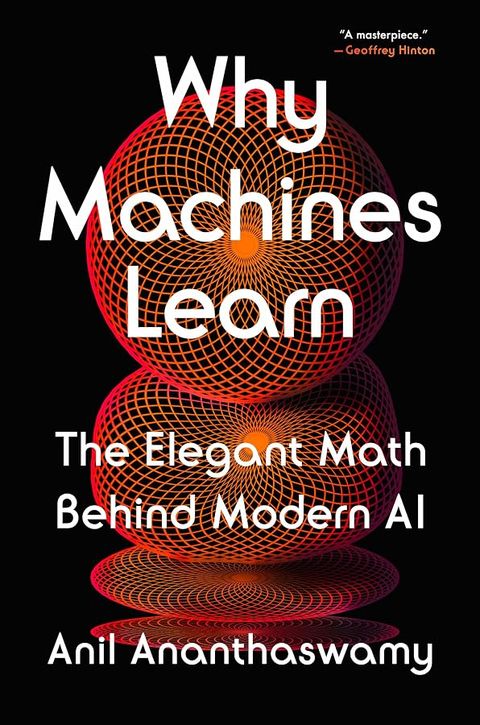
Anil Ananthaswamy's book ranks fifteenth as the history that does the most to teach the mathematics behind the story. Readers work through the linear algebra, calculus and probability that underpin machine learning, see why representing data as vectors in high-dimensional space lets algorithms find patterns geometrically, and learn how backpropagation and gradient descent overcame the limits that stalled single-layer perceptrons in the late 1960s. The book closes on an open research question: why deep networks generalize well with far more parameters than classical statistics considers safe. Engineers and students comfortable with equations will gain the most; readers who avoid math should start with a narrative history.
Editorial score: 74.8/100 - Rank 16
Dwarkesh Patel and Gavin Leech edited interviews from Patel's podcast into an oral history of large language models. Lab leaders, researchers and critics explain the scaling hypothesis, the bet that capability rises predictably with parameters, data and compute, in their own words. The book shows where they disagree, notes that each interviewee defines artificial general intelligence differently, and preserves the debate between lab founders and outside critics over misalignment and loss of control. Investors and policymakers get firsthand reasoning on why compute and training data have become strategic questions. Many interviewees advocate for their own labs' strategies, so readers should weigh the testimony accordingly.
Editorial score: 70.1/100 - Rank 17
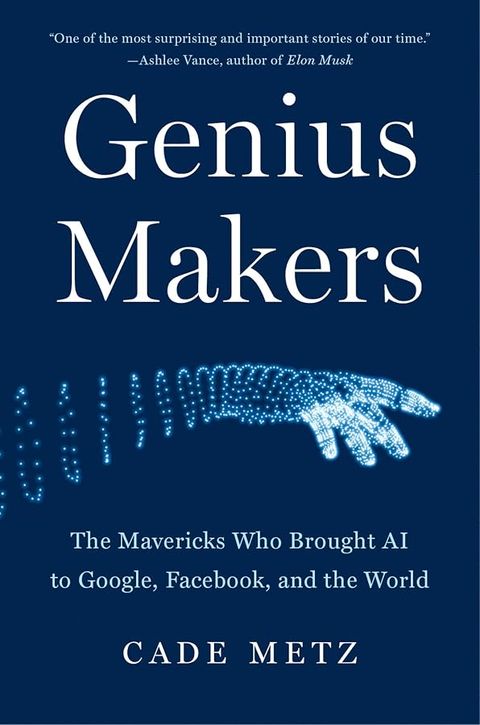
Cade Metz, a New York Times technology reporter, tells how deep learning moved from academic neglect to the center of Big Tech strategy. Geoffrey Hinton anchors the narrative: he and a few colleagues persisted for decades until data and computing power caught up, and the scarcity of experts after 2012 set off a hiring war that concentrated talent in a handful of companies. Hinton later shared the 2024 Nobel Prize in Physics with John Hopfield. Metz also covers conflicts over face-recognition bias, military contracts and competition with China, giving general readers a dependable origin story for today's AI industry.
Editorial score: 71.8/100 - Rank 18
Benjamín Labatut's book is the only novel in the ranking, and it earns a place by dramatizing ideas that the histories describe. Told through many voices, it follows John von Neumann from the atomic bomb and game theory to early computers, then jumps to Lee Sedol's 2016 match against DeepMind's AlphaGo. Labatut treats these episodes as products of one mathematical ambition and asks whether reason pursued without ethical restraint yields both humanity's greatest tools and its most dangerous ones. The book blends documented history with invention, so it suits literary readers rather than anyone seeking a factual record.
Editorial score: 69.5/100 - Rank 19
Matthew Cobb, a zoologist at the University of Manchester, explains how scientists have described the brain using the leading technology of each era, from hydraulics and telegraphs to telephone exchanges and computers. Each metaphor produced experimental progress before its limits showed. For AI readers, the most useful chapters compare artificial neural networks with biological brains, which differ sharply in chemistry, structure and the way they change. Cobb also shows that neuroscience still lacks a theory of how neural activity produces thought. Readers get grounds for caution whenever anyone claims that current AI systems work the way minds do.
Editorial score: 71.1/100 - Rank 20
Grandmaster Matthew Sadler and Natasha Regan, a Women's International Master, analyzed more than two thousand previously unpublished AlphaZero games with access to DeepMind's developers. They show how a system that learned chess from the rules alone valued piece mobility and long-term initiative over material, often sacrificing pawns or pieces for pressure that traditional engines underrated, and how it searched far fewer positions than Stockfish while guiding them with a learned evaluation. Club and tournament players get annotated games of practical value. AI readers get a concrete case study of professionals learning new strategies from a machine.
Editorial score: 70.1/100 - Rank 21
Marvin Minsky, a cofounder of MIT's artificial intelligence laboratory, presents his theory that intelligence emerges from many simple, individually mindless agents rather than one central mechanism. The book is built from short essays, most a single page long, which makes it easy to read in pieces. Minsky argues that the mind's power comes from diversity, with agents using different representations and methods, and he formalizes memory as knowledge-lines, or K-lines, that reactivate earlier sets of agents. Its relevance has grown as developers build multi-agent AI systems, and readers interested in the conceptual roots of AI get the argument directly from one of the field's founders.
Editorial score: 75.3/100 - Rank 22
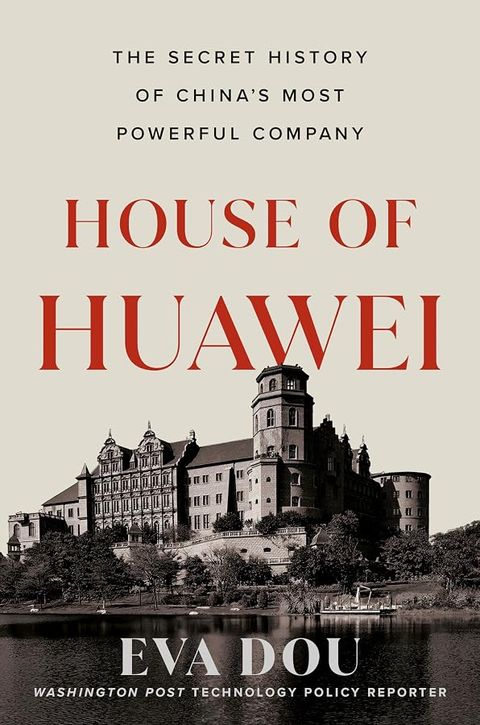
Eva Dou, a Washington Post technology reporter, explains the US-China technology rivalry through the history of the world's largest telecom equipment maker. She documents Huawei's ties to Chinese state institutions, including local telecom bureaus and an internal Communist Party committee, and Ren Zhengfei's management culture, which prized survival and loyalty at heavy cost to employees. The 2018 detention of Meng Wanzhou in Canada turned a corporate legal case into a diplomatic crisis. Readers following chip export controls get a case study in their limits, since Huawei survived sustained American pressure. Dou is stronger on politics and intrigue than on industrial economics.
Editorial score: 70.5/100 - Rank 23
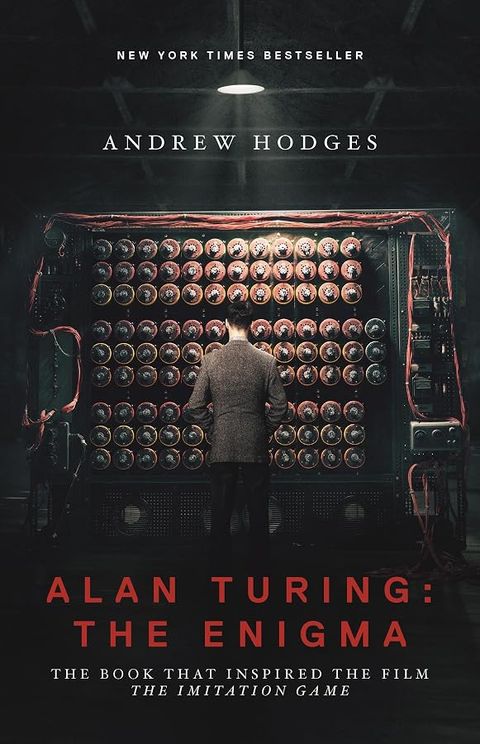
Andrew Hodges, a mathematician at the University of Oxford, wrote the standard biography of the man whose ideas define computing. He explains Turing's 1936 universal machine, the principle behind stored-program computers, and the 1950 paper in Mind that reframed whether machines can think as a question of observable behavior. The Bletchley Park chapters show abstract logic becoming statistical methods and machines such as the Bombe. Hodges also documents Turing's postwar prosecution despite his secret wartime service. The book is long and mathematical, so it ranks below the narrative histories, but committed readers get the deepest account of AI's intellectual origins.
Editorial score: 79.8/100 - Rank 24
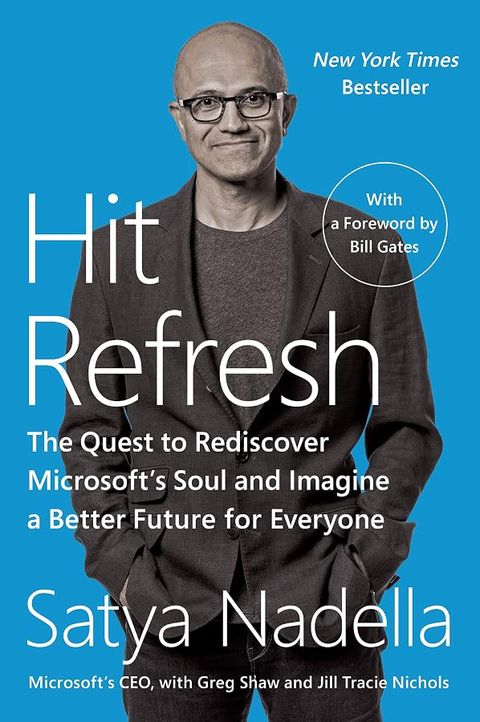
Satya Nadella's memoir, written with Greg Shaw and Jill Tracie Nichols, explains how Microsoft's culture changed after he became chief executive in 2014, a turnaround that preceded the company's partnership with OpenAI. Nadella describes replacing know-it-all habits with a learn-it-all attitude, refocusing the company on cloud computing and partnering with long-standing competitors. The AI chapter is brief and predates large language models, though his principles of augmenting human capability with transparency, privacy and accountability foreshadow later responsible-AI programs. Executives leading cultural change get the most practical value; readers seeking AI history should treat it as background.
Editorial score: 70.1/100 - Rank 25
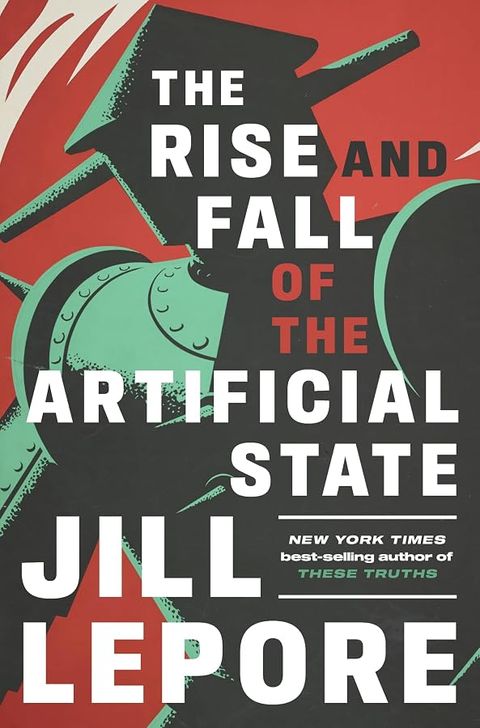
Jill Lepore, a Harvard historian, defines the Artificial State as the digital infrastructure through which governments and technology firms automate public discourse and steer political life. She traces rule by computation and prediction from the 1920s Technocracy movement through the Simulmatics Corporation's 1960s election modeling to today's AI, extending the history she began in If Then. Lepore argues that automated systems have concentrated power in a few billionaire-led companies at a cost to constitutional government, and she treats science fiction as a serious tool for understanding that shift. Readers get historical perspective on current debates; those seeking specific policy proposals will find fewer of them.
- Rank 26
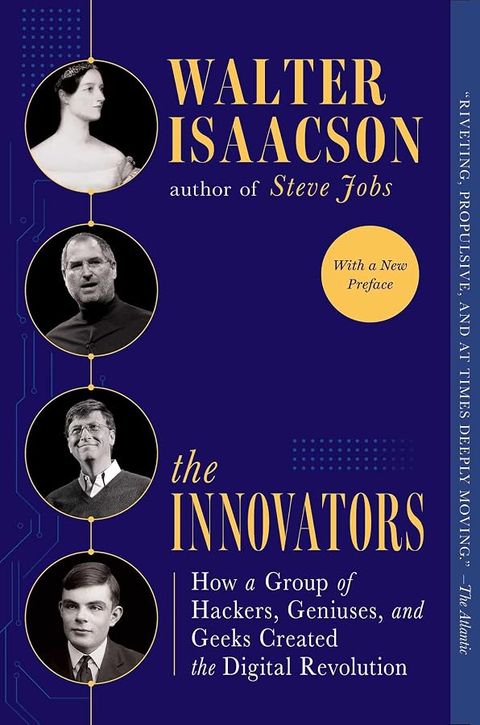
Walter Isaacson's history of the digital revolution runs from Ada Lovelace to the internet era and supplies the computing background that AI histories assume. He argues that most breakthroughs came from collaborative teams and institutions rather than lone inventors, and that innovation often pairs a visionary with an engineer, as Steve Jobs and Steve Wozniak did at Apple. AI is a recurring thread rather than the main subject. Isaacson closes on the case that human-machine partnership, in the spirit of J. C. R. Licklider's idea of symbiosis, has delivered more than efforts to replace human thinking. Students and executives get a well-researched foundation.
Editorial score: 69.6/100 - Rank 27
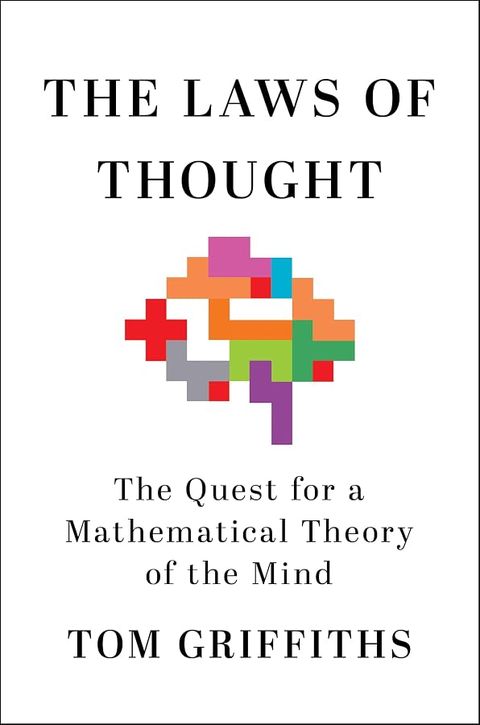
Tom Griffiths, a Princeton cognitive scientist, follows three mathematical frameworks that have competed to explain thought: rules and symbols, neural networks, and probability theory. He shows why rule-based models faltered when the world proved too messy for any finite set of rules, and why humans learn from a few examples while current AI systems typically need enormous datasets. Readers get the scientific ideas behind modern AI, plus a clear argument that understanding those principles is necessary to explain AI decisions and to see how machine biases differ from human ones. It suits readers who have finished a narrative history and want the underlying concepts.
Editorial score: 72.5/100 - Rank 28
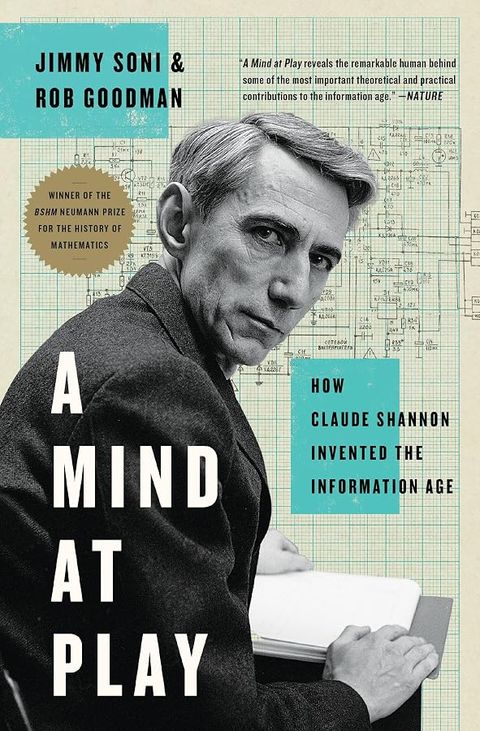
Jimmy Soni and Rob Goodman's biography of Claude Shannon explains information theory without heavy mathematics. Shannon's 1937 master's thesis showed that Boolean algebra could describe and design switching circuits, the logical basis of digital computers, and his 1948 theory of communication defined information through entropy. The authors also cover his machines, including Theseus, a maze-learning mouse built before AI had a name. Shannon was one of the four scientists who proposed the 1956 Dartmouth workshop that named the field. General readers get a lively account of the thinker whose work underlies every digital system on which AI now runs.
Editorial score: 66.0/100 - Rank 29
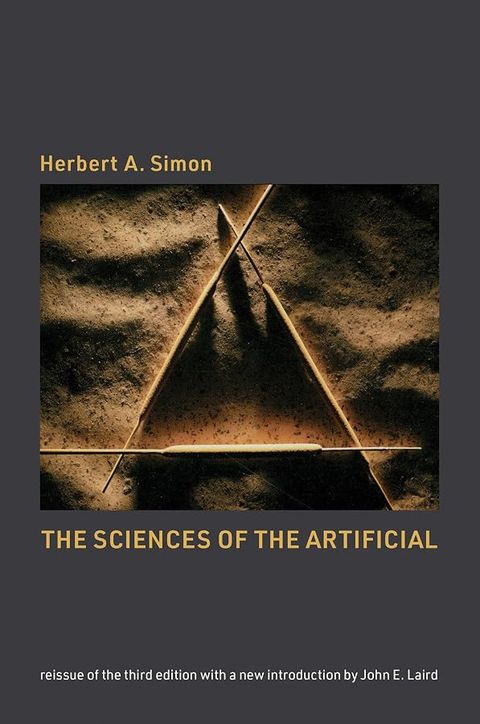
Herbert Simon, a Nobel laureate in economics and a founder of AI research, wrote one of the ranking's most demanding and influential books. He defines an artifact as the interface between an inner and an outer environment and argues that design deserves study as a science. His concept of satisficing, choosing options that are good enough rather than optimal, explains how agents with limited information act. His ant on a beach shows how a simple system can produce complex behavior in a complex environment, and his case for nearly decomposable hierarchies still guides system architects. Researchers and technical leaders get the field's intellectual foundations firsthand.
- Rank 30
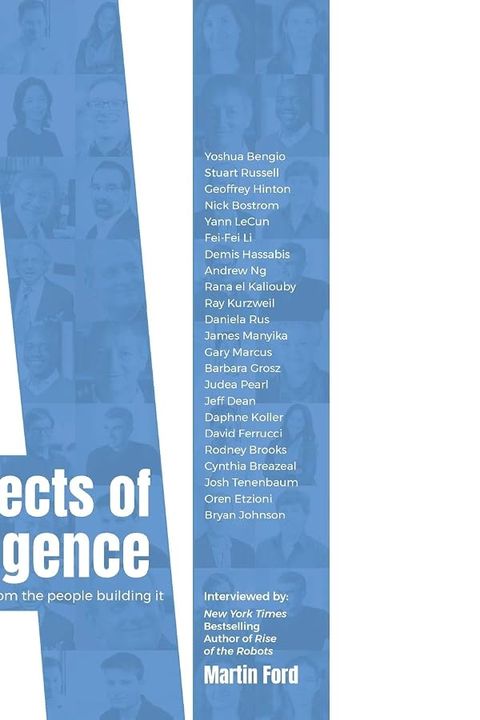
Martin Ford's 23 long interviews with leading researchers capture expert opinion just before large language models arrived. His subjects disagreed on whether deep learning alone could reach human-level intelligence, and their forecasts for artificial general intelligence in Ford's informal survey ranged from 2029 to 2200. Nick Bostrom and Stuart Russell urged early work on control, while others judged superintelligence fears premature. Judea Pearl's argument that machines must model cause and effect remains a lasting critique of purely statistical learning. Readers get a baseline for measuring how far expert views have shifted since 2018, which makes the book a useful companion to The Scaling Era.
Editorial score: 64.8/100 - Rank 31
Matteo Pasquinelli offers the ranking's most theoretical argument: that machine learning automates collective human labor rather than imitating the brain. He traces algorithms to social practices such as rituals and counting, reads Charles Babbage's calculating engines as the mechanization of human computers' mental labor, and interprets Frank Rosenblatt's perceptron as an attempt to automate perception. His Marxist framework leads him to conclude that ownership and political economy matter more than ethics guidelines. Scholars and critical readers get a dense labor history of AI, and readers who reject the framework will still find the archival history of Babbage and Rosenblatt useful.
Editorial score: 66.3/100 - Rank 32
Douglas Hofstadter and Daniel Dennett paired classic essays and stories on minds, selves and machines with their own reflections. The anthology includes Turing's imitation game, John Searle's Chinese room argument that manipulating symbols by rule is not the same as understanding them, and Thomas Nagel's essay "What Is It Like to Be a Bat?" Thought experiments about brain duplication and simulation test intuitions about personal identity. Critics now aim Searle's challenge at large language models. Readers weighing whether AI systems can think or be conscious get the core arguments in their original form, with editorial reflections that dispute several of them.
Editorial score: 77.5/100 - Rank 33
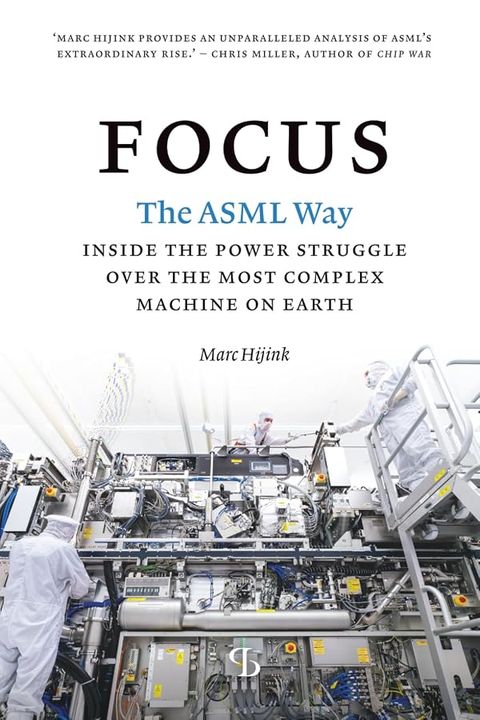
Marc Hijink, a technology journalist at the Dutch newspaper NRC, gives readers the inside history of ASML, the sole maker of extreme ultraviolet lithography machines. He shows how long partnerships of trust with suppliers such as Zeiss and customers such as TSMC and Samsung built that dominance, and how customers accepted imperfect early EUV machines on trust that ASML would improve them. The book also explains how control over lithography drew the Netherlands into contested US export-control decisions. Readers who finished Chip War get a closer look at its most important chokepoint and at the fragility of concentrated chip supply chains.
Editorial score: 68.8/100 - Rank 34
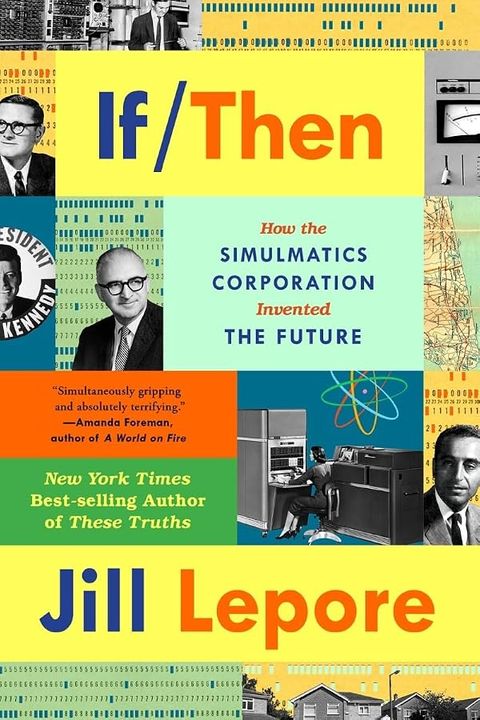
Jill Lepore's history of the Simulmatics Corporation shows that predictive behavioral analytics and voter targeting began in the Cold War, decades before Silicon Valley's data economy. The firm modeled elections, then moved into counterinsurgency work in Vietnam and riot prediction, which shows how prediction tools migrate between politics, commerce and war. Lepore documents a consistent pattern of promises outrunning results, and she notes that congressional hearings in 1966 already debated who owns personal data. Readers evaluating today's AI and data products get a historical check on vendor claims, along with the backstory for her later The Rise and Fall of the Artificial State.
Editorial score: 70.0/100 - Rank 35
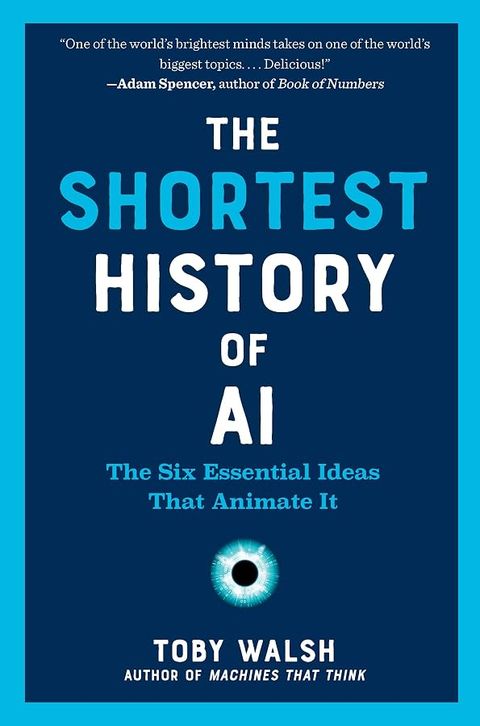
Toby Walsh, a professor of artificial intelligence at the University of New South Wales in Sydney, compresses the field's history into six recurring ideas, from search to probabilistic reasoning, that explain most AI systems, including large language models. He divides the story into a symbolic era of logic, search and rules and a learning era built on data. Walsh shows that apparent overnight successes such as ChatGPT rest on decades of slow research. Students, teachers and busy professionals get the shortest accurate route through AI's history, plus a framework for understanding why a given system fails in characteristic ways, such as fabricating answers.
Editorial score: 67.5/100 - Rank 36
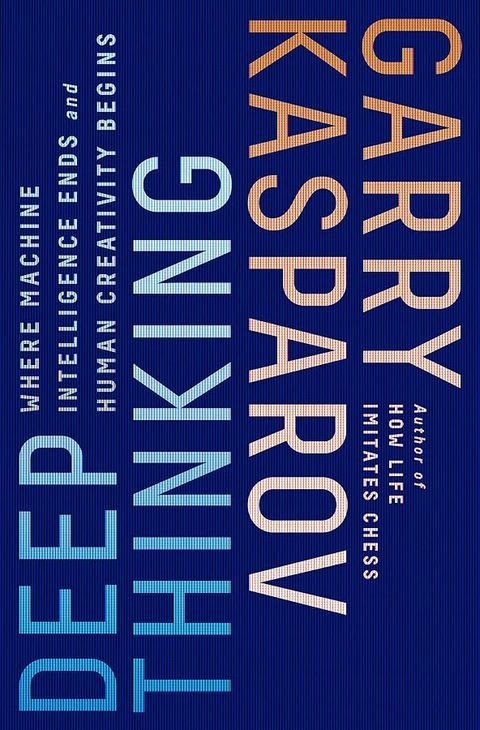
Garry Kasparov, writing with Mig Greengard, gives a firsthand account of his 1997 defeat by IBM's Deep Blue. He explains that Deep Blue won through specialized hardware and brute-force search guided by grandmaster knowledge, not through learning or understanding. Kasparov also concedes his own psychological errors, including resigning game two in a position that could have been drawn. His argument that a weaker human with a machine and a better process can beat a stronger opponent offers practical guidance for teams adopting AI tools. The book predates large language models, so its forecasts need updating, but its account of the match remains authoritative.
Editorial score: 69.8/100 - Rank 37
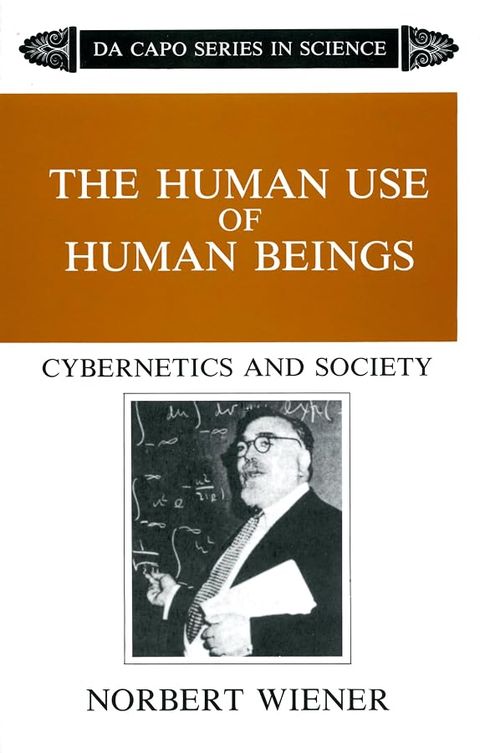
Norbert Wiener, the MIT mathematician who founded cybernetics, wrote this book in 1950 for general readers. He analyzes societies, organisms and machines as systems that use messages and feedback to resist disorder, and he warns that automation could either free people from drudgery or cause unemployment on the scale of a new industrial revolution, depending on social policy. Wiener anticipated that learning machines may reach decisions their designers never intended, and he placed responsibility for those outcomes on the people who build and deploy them. Readers get the original statement of concerns that still drive debates over automation and machine judgment.
Editorial score: 73.8/100 - Rank 38
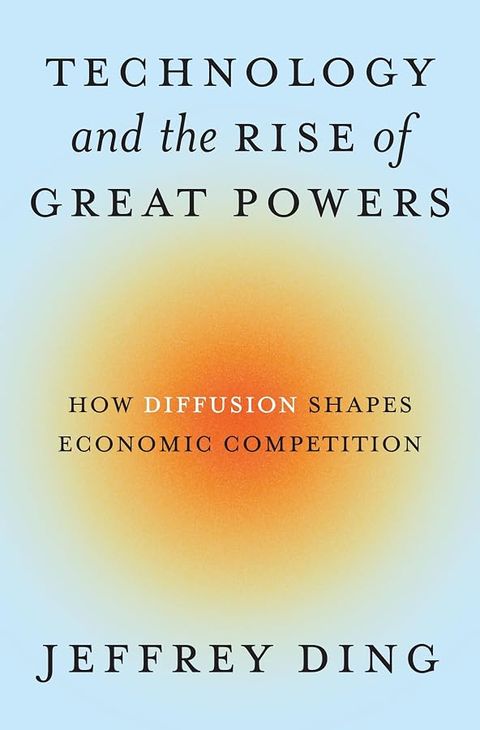
Jeffrey Ding, a political scientist at George Washington University, challenges the assumption that national power follows from winning innovation races. His historical cases show that economic power transitions depended on how widely general-purpose technologies such as electricity diffused across industries, a process that took decades. Ding concludes that institutions training broad pools of engineers and technicians matter more than elite research leadership alone, and he applies that framework to AI, finding a US advantage over China in skill infrastructure for broad adoption. Policymakers and national security analysts get an academic argument with direct implications for AI strategy, written at an advanced level.
- Rank 39
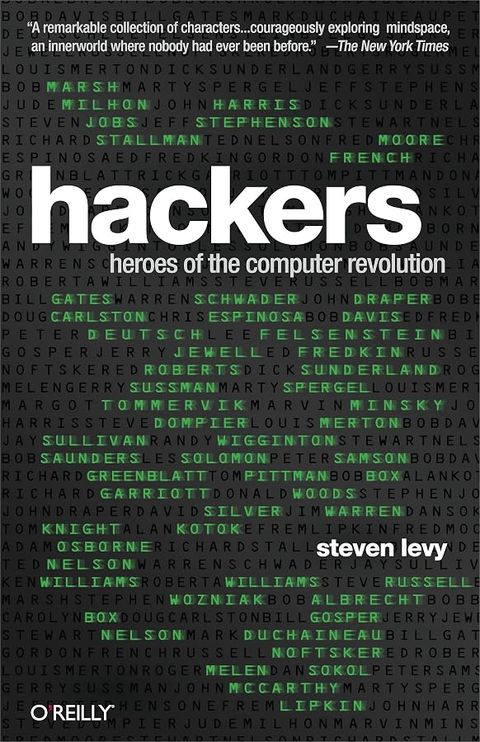
Steven Levy's history of hacker culture begins with MIT programmers in the late 1950s, whose community grew up around the university's early AI research and developed an ethic of open access, freely shared information and merit judged by skill. Levy follows that culture through games, chess programs and operating systems and on to hobbyist groups such as the Homebrew Computer Club, which helped create the personal computer. AI itself is peripheral. Readers get the origins of the open ethos that resurfaces in current debates over open versus closed AI models, and a record of how commercialization repeatedly strained hacker ideals.
Editorial score: 71.0/100 - Rank 40
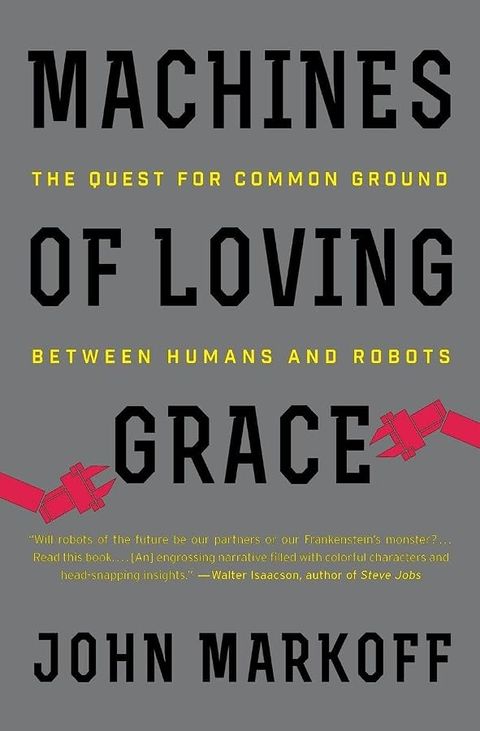
John Markoff, a longtime New York Times technology reporter, frames AI history as a split between two research programs: artificial intelligence, which aimed to replace human abilities, and intelligence augmentation, which aimed to extend them. He shows that the same technology can displace or empower workers depending on design decisions, and that automation is reaching white-collar and professional work. Markoff argues that designers should keep a clear line between human and machine and keep people in control of systems acting on their behalf. Product leaders deciding whether a system should replace or assist people get useful historical framing, though the book's structure meanders.
Editorial score: 63.8/100

How we ranked these books
Books are ranked on six signals: reach, measured by Amazon ratings volume and sales rank; critical consensus across independent best-of lists; awards; reader ratings; author authority; and an editorial score for accuracy, depth and relevance to how AI developed. Reach is weighed against quality, so a heavily rated celebrity biography does not outrank a better-sourced history on volume alone. Chip War ranks first because it scores well on every signal: 10,066 Amazon ratings averaging 4.7 stars, the 2022 Financial Times Business Book of the Year award, an author who teaches international history at Tufts University's Fletcher School, and a subject, the semiconductor supply chain, on which every later chapter of AI history depends.