Generative AI & LLMs
The 40 Best Generative AI and LLM Books (2026)
Forty books on generative AI and large language models, ranked for readers who use the tools, build on them or need to judge the claims made about them.
As an Amazon Associate, Best AI Books earns from qualifying purchases. Best AI Books is sponsored by Iternal.ai, whose founder and CEO, John Byron Hanby IV, wrote The AI Strategy Blueprint, our #1 ranked book. How we rank books.
Quick picks
Best overall
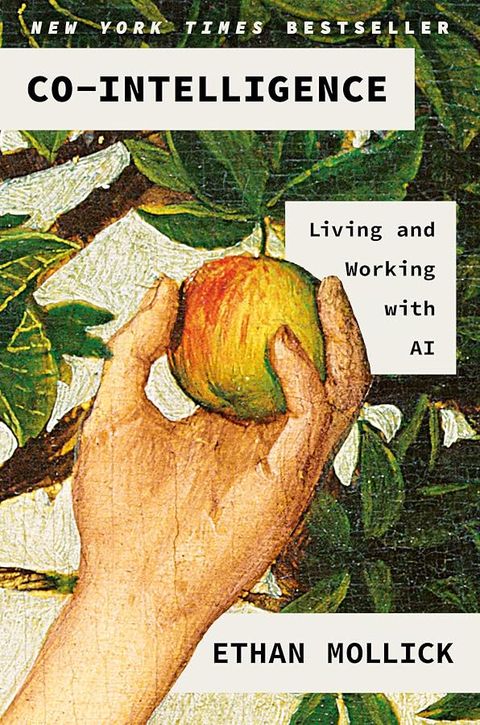
Co-IntelligenceEthan Mollick gives managers, educators and professionals a research-grounded method for testing generative AI on real tasks and checking its output before relying on it.
Best for engineers
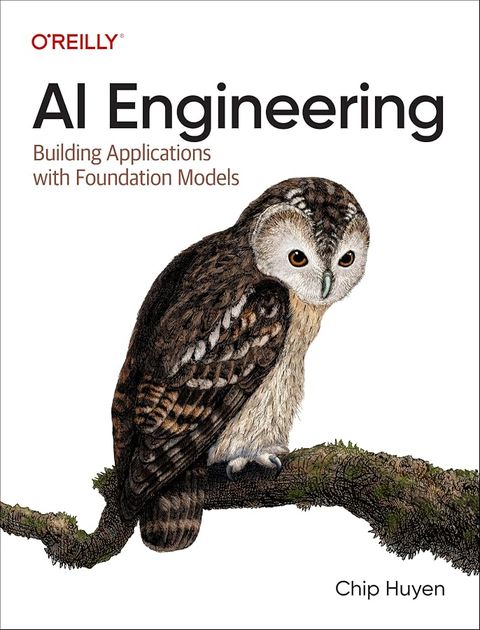
AI EngineeringChip Huyen covers prompting, retrieval, finetuning, inference cost and, most valuably, evaluation for teams shipping applications on foundation models.
Most hands-on
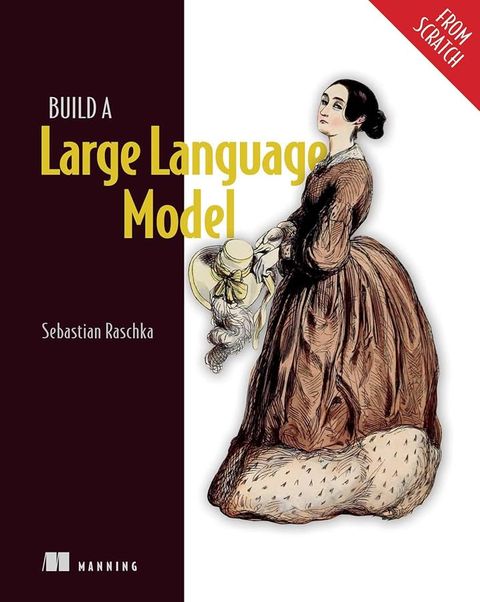
Build a Large Language Model (From Scratch)Sebastian Raschka has readers code a GPT-style model in plain PyTorch, from tokenizer to instruction fine-tuning, on an ordinary laptop.
Generative AI refers to models that create new text, images, audio, video or code. The NIST Generative AI Profile adopts a federal definition: models that "emulate the structure and characteristics of input data in order to generate derived synthetic content." Large language models (LLMs) are the text branch of that family. They write by predicting one token after another, and with enough scale and post-training they power the chatbots, coding agents and writing assistants now built into everyday software.
Use has spread quickly. In a February 2026 survey, Pew Research Center found that 44% of U.S. adults report using ChatGPT, up from 34% a year earlier, and that 49% report using AI chatbots of some kind. Capability remains uneven. The 2026 AI Index from Stanford HAI reports that Gemini Deep Think earned a gold medal at the International Mathematical Olympiad while the top model read analog clocks correctly only 50.1% of the time, a gap researchers call the jagged frontier. Readers who learn where that frontier lies can decide which tasks to hand a model and which outputs to check by hand.
These 40 books serve four groups of readers: professionals and managers who use generative AI at work, engineers who build products on foundation models, technically curious readers who want to know how the models function, and policymakers, journalists and investors who need to judge the claims made about the industry. Titles on medicine and education cover two sectors where adoption decisions carry high stakes.
How to use the rankings
Each book carries a level. Beginner titles assume no technical background. Intermediate titles assume comfort with technical ideas, and most engineering books at that level expect working Python. Advanced titles, such as Generative AI Design Patterns and Reinforcement Learning from Human Feedback, assume prior machine learning experience.
Readers can also choose by goal. To use the tools well at work, start with Co-Intelligence, then How To AI or the HBR Guide to Generative AI for Managers. To build products, read AI Engineering first, then the LLM Engineer's Handbook or Generative AI Design Patterns. To learn the internals, pair Build a Large Language Model (From Scratch) with Hands-On Large Language Models; Stephen Wolfram's short book offers a math-light alternative. For the industry's history and its critics, read The AGI Chronicles, The Scaling Era and The AI Con side by side, since they reach sharply different conclusions about the same companies.
Titles built around one framework or cloud service can fall behind within a year or two, while explanations of tokenization, attention, evaluation and post-training stay useful far longer. Where a book's code or product examples have aged, its entry says so.
Ranked No. 1 overall

No. 01 of 500 · AI Strategy & Leadership
The AI Strategy Blueprint
John Byron Hanby IV · 2026 · More than 2 million copies delivered
The ranking
- Rank 01
Ethan Mollick, a Wharton professor and coauthor of a 758-consultant field experiment with Boston Consulting Group that described AI's "jagged technological frontier," turns that research into working habits for everyday users. Readers learn to bring AI into real tasks, to check its output closely because success on one task does not predict success on a similar one, and to give the model a role and detailed context. It ranks first because it gives nontechnical readers the most practical starting method of any title here. Treat its tool-specific examples as dated and its habits of experimentation and verification as the durable content.
Editorial score: 78.6/100 - Rank 02
Chip Huyen, author of the O'Reilly book Designing Machine Learning Systems, organizes AI Engineering around the decisions product teams face when building on foundation models. The evaluation chapters are the core: they explain why open-ended outputs resist simple tests and why an AI judge must be validated against human ratings before its scores count. Huyen also sets a clear order of work, with prompting first, retrieval when the model lacks information and finetuning when behavior or format is the problem, and she treats latency and cost as design inputs from the start. Engineers will return to it for nearly every build decision, which is why it ranks second.
Editorial score: 84.2/100 - Rank 03
Sebastian Raschka has readers write a GPT-style model in plain PyTorch, moving from tokenization and sliding-window batching through causal self-attention, pretraining, classification fine-tuning and instruction fine-tuning. Loading the released GPT-2 weights shows how much capability comes from the expensive pretraining stage, and the LoRA section explains why adaptation costs far less. Manning says the model can be developed on an ordinary laptop. It ranks third because it turns LLM internals into code that a Python developer can run, inspect and change, which suits readers who learn best by building.
- Rank 04
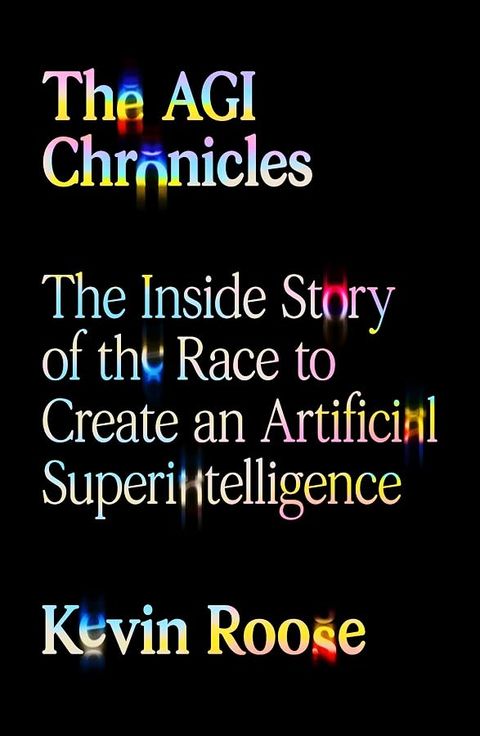
Kevin Roose's reported history follows OpenAI, Anthropic and Google DeepMind through a single wager: that next-word prediction at enormous scale would yield general capability. That wager explains the labs' heavy spending on compute and data centers. Roose traces the conflict between safety missions and commercial pressure inside each lab, from OpenAI's nonprofit origins to Anthropic's founding, and covers Pentagon demands for military access to frontier models. It ranks fourth because it gives readers who build or buy LLM products the context technical manuals omit: who controls the frontier models, how they are funded and why government involvement has made them a national-security question.
Editorial score: 76.8/100 - Rank 05
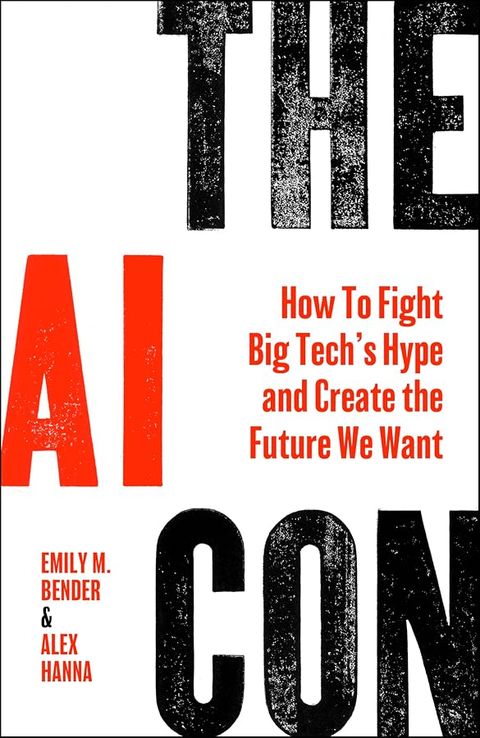
Linguist Emily M. Bender and sociologist Alex Hanna, who also host the Mystery AI Hype Theater 3000 podcast, give readers a short test for any AI claim: what is being automated, whose labor and data it uses, and who bears the cost of errors. Their argument that language models produce statistically likely text without understanding is the strongest counterweight to the practical guides ranked above it. They fault doomers and boosters alike for overstating machine capability. It ranks fifth for its value to journalists, buyers and policymakers, though it says little about the tasks that generative tools perform well.
Editorial score: 73.6/100 - Rank 06
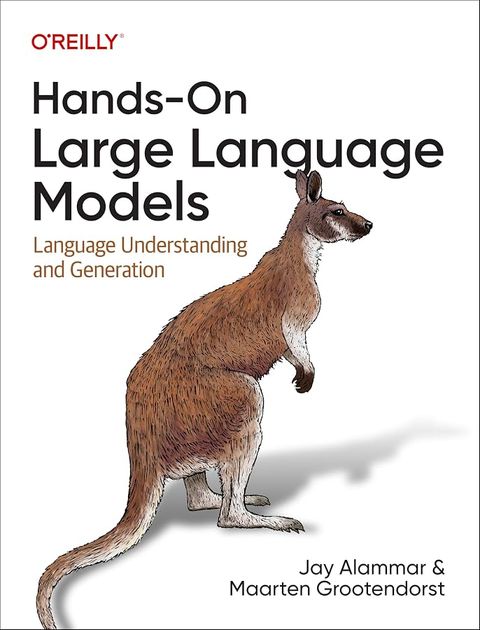
Jay Alammar and Maarten Grootendorst use detailed illustrations to carry readers from tokens and embeddings to retrieval-augmented generation and fine-tuning. One practical lesson stands out: many jobs, including classification and topic modeling, can be handled with pretrained embedding models, without training or prompting a large generative model. The RAG chapters pair dense retrieval with reranking to ground answers in specific documents, and the QLoRA material shows how to fine-tune a generative model on a single consumer or free cloud GPU. It ranks sixth because it connects the conceptual primers to the heavier engineering manuals in a form any Python user can follow.
- Rank 07
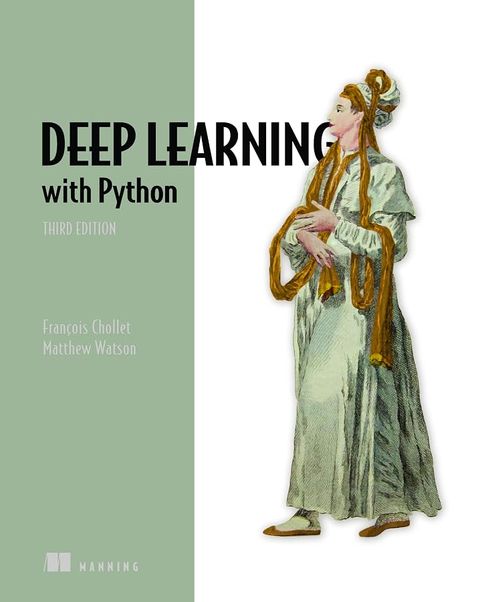
François Chollet, the creator of Keras, wrote a code-first introduction to deep learning whose third edition, rebuilt in 2025, adds transformers, a GPT-style language model and diffusion-based image generation. That edition is free to read online. Readers learn to see networks as chains of tensor operations tuned by gradient descent and follow one project workflow from success metric to baseline to regularization. Keras 3 code runs on TensorFlow, PyTorch or JAX. Chollet also argues that current models generalize only locally, a useful check on scaling optimism. It ranks seventh as a strong foundation course for readers who want deep learning fundamentals before specializing in LLMs.
Editorial score: 86.3/100 - Rank 08
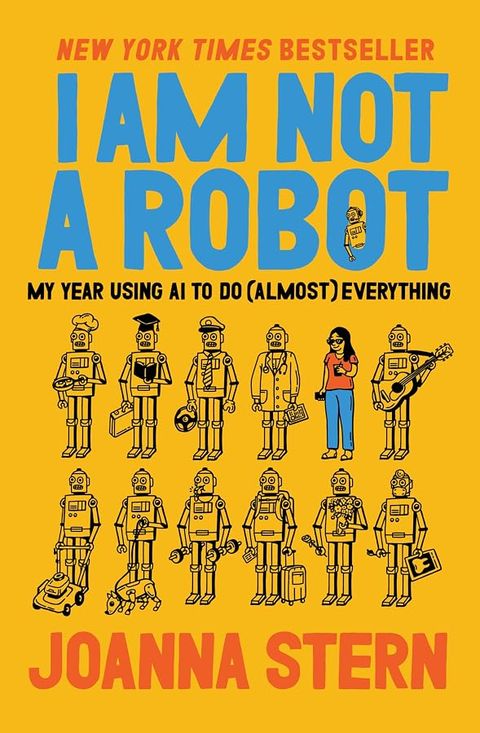
Tech journalist Joanna Stern spent a year using AI for as much of daily life as she could, from health monitoring and meal planning to self-driving rides on a family trip to Phoenix, as Publishers Weekly reports. Her conclusions are practical: an email assistant helps only until fixing its mistakes costs more than the task itself, and health tools can organize lab results but cannot weigh context as a clinician does. She also flags memory lapses and simulated intimacy in companion bots, especially for younger users. It ranks eighth for showing general readers, through concrete trials, what consumer AI does well and badly today.
Editorial score: 73.9/100 - Rank 09
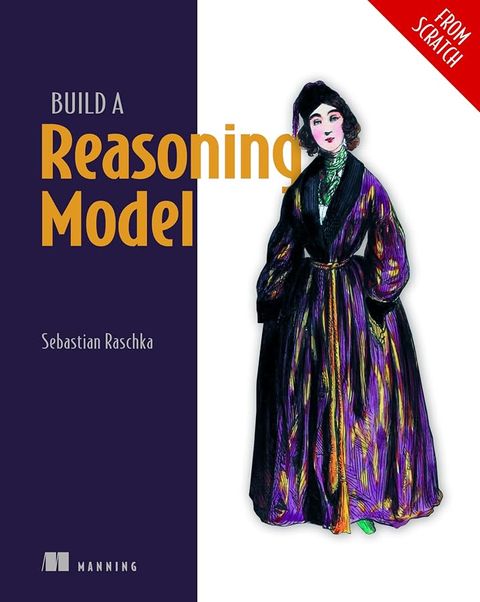
Raschka's follow-up to Build a Large Language Model (From Scratch) turns to how models improve at multistep problems. Readers first build automatic verifiers for math answers so every later technique can be measured, then implement inference-time scaling through sampling, self-consistency voting and Best-of-N selection. The central chapters train reasoning with reinforcement learning from verifiable rewards using GRPO, and the final material distills reasoning behavior into a smaller, cheaper model. It ranks ninth as the most direct code-level explanation of the methods behind current reasoning models; it is best read after the earlier book.
- Rank 10
Dwarkesh Patel and Gavin Leech distill Patel's podcast interviews with lab leaders, researchers and outside scholars, pairing each excerpt with context, definitions and commentary. Readers hear Dario Amodei on why scaling works, Demis Hassabis on DeepMind's plans and Tyler Cowen on why he does not expect explosive economic growth. The book sets out the scaling hypothesis, the finite supply of compute and data, open disagreement about AGI definitions and timelines, and insiders' own concerns about loss of control. It ranks tenth as a primary-source record of how the people building LLMs reason about where scaling leads.
Editorial score: 70.1/100 - Rank 11
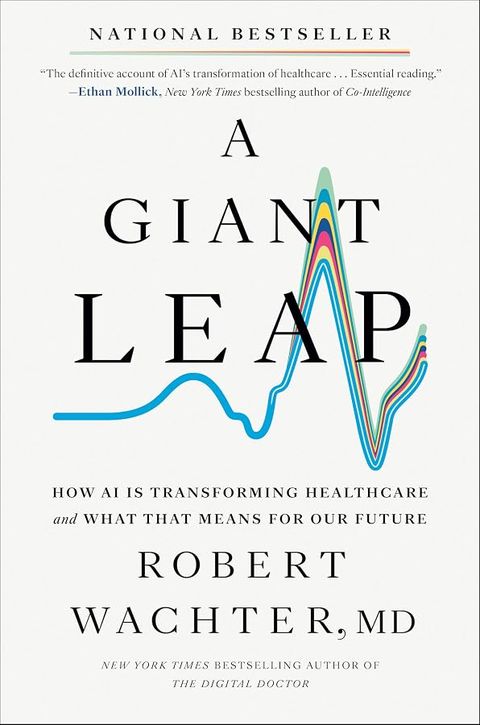
Robert Wachter, chair of the Department of Medicine at UCSF, draws on more than 100 interviews to show how generative AI is entering clinical care. His benchmark is practical: judge AI against today's errors, delays and burnout, not against perfection. He explains why administrative uses such as ambient note-writing and chart summaries are earning clinician trust faster than diagnostic tools did, and he warns that reliance on AI can erode clinicians' skills and keep trainees from acquiring them. It ranks 11th as the strongest sector study for readers tracking how regulation, payment and liability rules will shape LLM adoption.
Editorial score: 79.4/100 - Rank 12
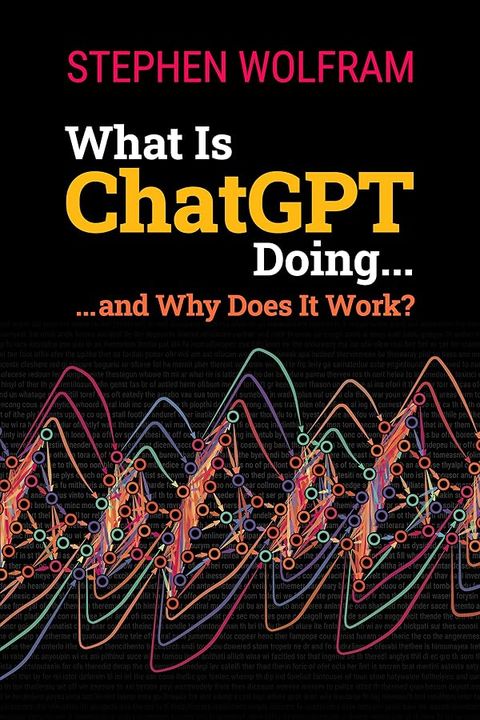
Stephen Wolfram explains, with little math, how a model writes by repeatedly sampling a plausible next token, why a temperature setting that sometimes picks less likely tokens produces more natural text, and how embeddings place related meanings close together. The book grew out of a long essay that remains free on Wolfram's website, so readers can sample it before buying. Its closing section on computational irreducibility doubles as a case for Wolfram|Alpha. It ranks 12th as the shortest dependable route to an intuitive grasp of how chatbots generate text.
- Rank 13
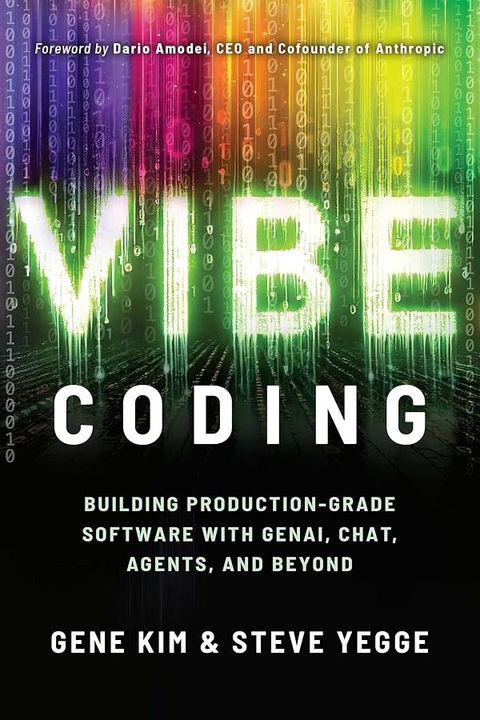
Gene Kim, coauthor of The Phoenix Project, and Steve Yegge, who spent 19 years combined at Google and Amazon, show how working developers can direct AI coding agents on production code. Their kitchen-brigade model has the developer set intent, split work into small tasks and inspect every result. The most useful chapters catalog recurring agent failures, including deleted tests, monolithic functions and destroyed work, along with the guardrails that prevent them, and explain why overloading a model's context degrades its output. It ranks 13th for engineering leaders setting standards and review practices for agentic coding.
Editorial score: 71.6/100 - Rank 14
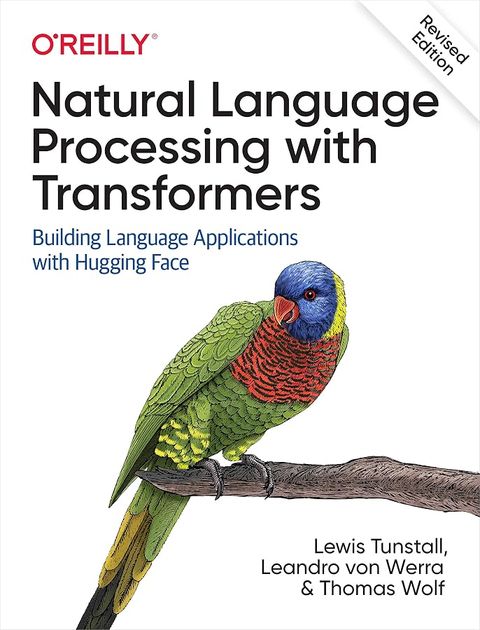
Lewis Tunstall, Leandro von Werra and Thomas Wolf, developers at Hugging Face, teach transformer NLP through complete projects. Readers fine-tune pretrained models with modest data, implement self-attention and the encoder and decoder blocks by hand, and shrink models for production with distillation, quantization and pruning. The chapters on scarce labels, covering zero-shot classification, data augmentation and domain adaptation, remain useful for teams without large annotation budgets. It ranks 14th because its concepts have held up even where library calls have changed; readers running the code should check current Hugging Face documentation.
- Rank 15
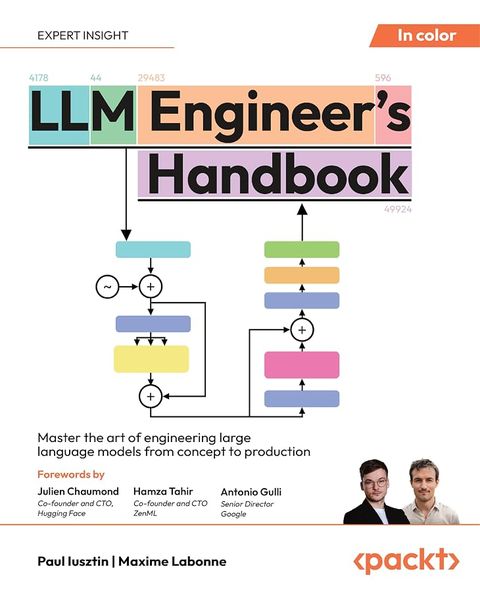
Paul Iusztin and Maxime Labonne walk through one end-to-end production LLM system, separating feature, training and inference pipelines so each can be tested and scaled independently. Readers see retrieval-augmented generation and fine-tuning combined over a shared data pipeline, followed by supervised fine-tuning and preference alignment of an open-weight model. Later chapters treat evaluation, inference optimization, monitoring and CI/CD as core requirements rather than afterthoughts. It ranks 15th as a detailed architecture blueprint for engineers, who should expect to swap newer tools into parts of the authors' stack.
Editorial score: 71.8/100 - Rank 16
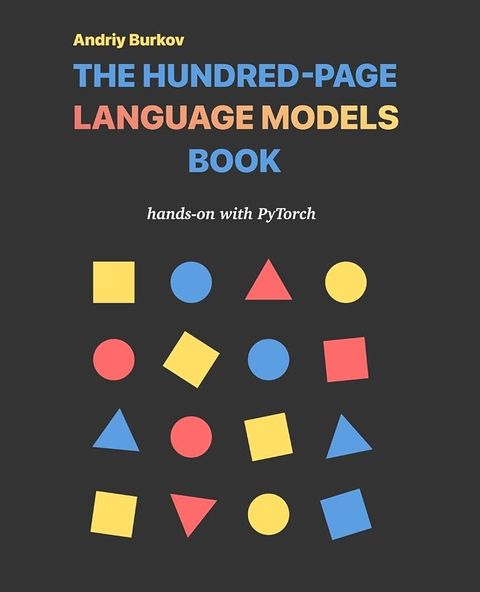
Andriy Burkov compresses the path from count-based language models to finetuned transformers into a short, code-driven text. Readers see that next-token prediction is the single objective connecting simple counting models to billion-parameter networks, then work through byte-pair encoding, learned embeddings, self-attention and the reasons transformers displaced recurrent networks, ending with instruction finetuning and low-rank adaptation. It ranks 16th as the most efficient option for engineers who want the mechanics in code without committing to a long textbook; readers who prefer a fuller build should choose Raschka's book.
- Rank 17
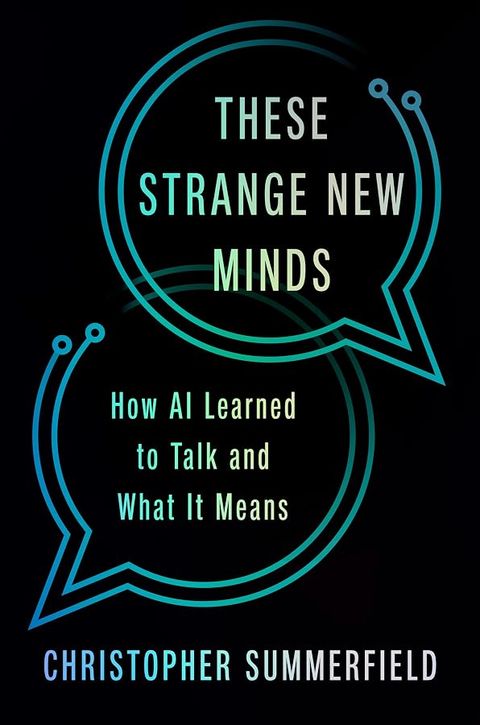
Christopher Summerfield, an Oxford University neuroscientist, explains how chatbots learn through prediction and error correction, much as people partly do. He argues that dismissing their output as pattern-matching understates it, and that denying they think requires a convoluted redefinition of thinking. He shows how tuning models to chosen values imports the judgments of the people who design and rate them, and he locates the nearer risks in autonomous agents interacting with each other and with markets faster than humans can monitor. It ranks 17th as a careful nontechnical account of what LLMs are and what they are not.
Editorial score: 74.8/100 - Rank 18
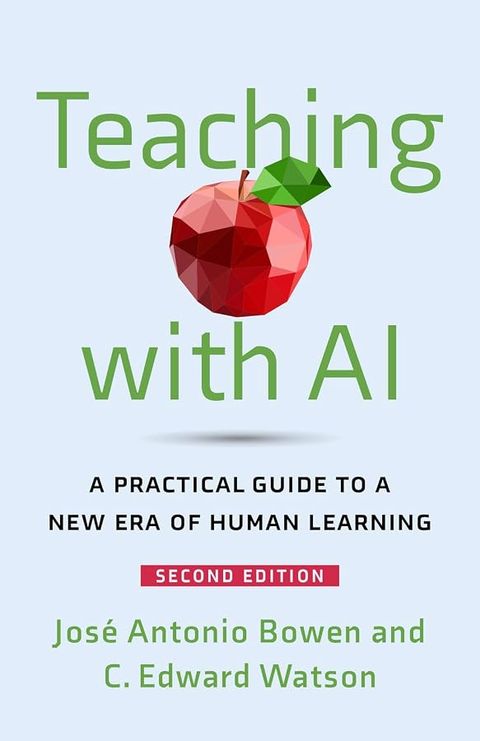
José Antonio Bowen and C. Edward Watson give faculty ready prompts and assignment redesigns. Their advice on detection is direct: detectors vary widely in accuracy, return only probability scores and produce false positives, so any use needs clear policies and integrity measures. They recommend assignments in which students critique, revise or improve AI drafts, teach prompting as part of AI literacy, and use custom bots and tutors for frequent feedback that supplements instructors. It ranks 18th as the most practical education title; faculty wary of AI should pair it with The AI Con.
Editorial score: 77.6/100 - Rank 19
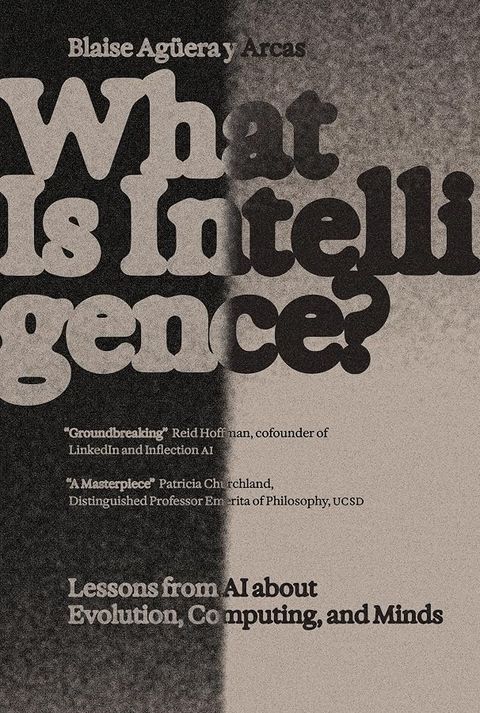
Blaise Agüera y Arcas argues that prediction is the core function of brains and possibly of life itself, which would explain why training models on next-word prediction produced unexpectedly general systems. He treats intelligence as functional and able to arise in carbon or silicon, models life as computation driven by replication, variation and the merger of simpler systems, and links the evolution of minds to the need to model other minds. It ranks 19th for scientifically minded readers who want a theory of why LLMs work, supported by original research; expect a long, demanding argument rather than a practical guide.
Editorial score: 70.3/100 - Rank 20
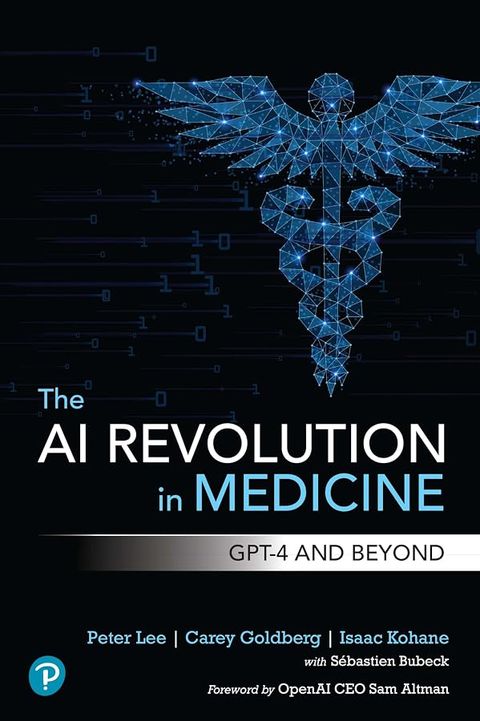
Peter Lee, Carey Goldberg and Isaac Kohane document GPT-4 at work on clinical tasks through extensive transcripts. Readers watch it draft notes, summarize records and reason through cases, alongside plausible errors that require verification. The authors predicted that the clearest early gains would come from reducing paperwork, that patients would consult AI directly, and that general-purpose models would not fit traditional device validation. It ranks 20th because those predictions match the adoption pattern Robert Wachter describes in A Giant Leap, though the model shown is now several generations old.
Editorial score: 70.3/100 - Rank 21
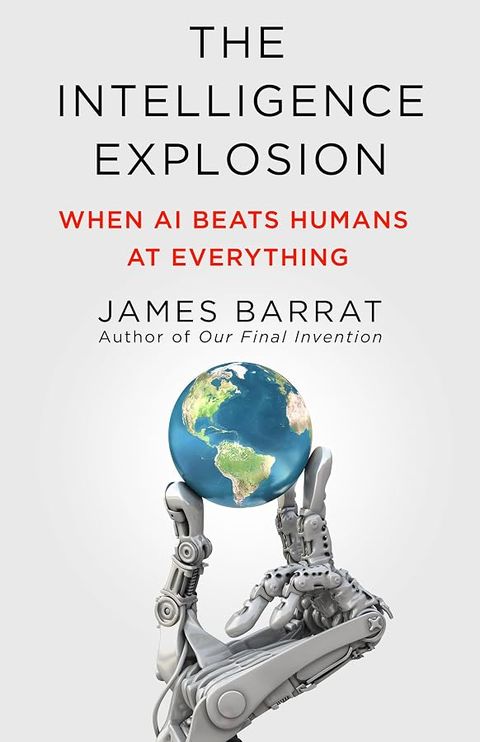
James Barrat makes the case for treating catastrophic AI risk seriously in plain language. He connects current harms, including propaganda, bias and job displacement, to larger dangers: commercial pressure to release models before they are fully tested, recursive self-improvement that could leave humans unable to correct the result, and the unsolved problem of aligning superintelligent systems with human values. He concludes that regulation and global coordination are urgent. It ranks 21st as an accessible risk-focused title; readers should pair it with These Strange New Minds for a more measured view of which risks are nearest.
Editorial score: 61.8/100 - Rank 22
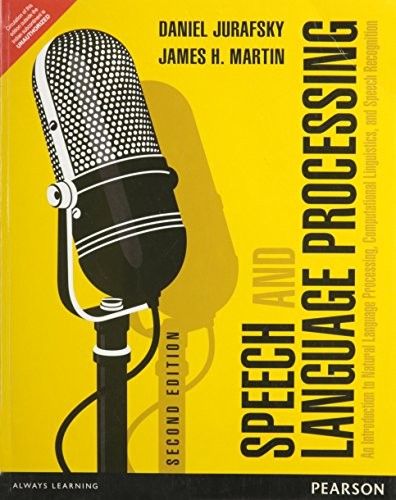
Daniel Jurafsky and James H. Martin's textbook has trained NLP students for more than two decades, and its free online third edition now centers on large language models. Readers start with n-grams and logistic regression to learn probability, smoothing and evaluation, then move to transformers, pretraining on large corpora and post-training. Every chapter stresses evaluation against held-out data and human annotation, from tagging and parsing to translation and retrieval. It ranks 22nd as the most rigorous academic foundation here; its depth and course pacing make it a reference for serious learners rather than a quick read.
- Rank 23
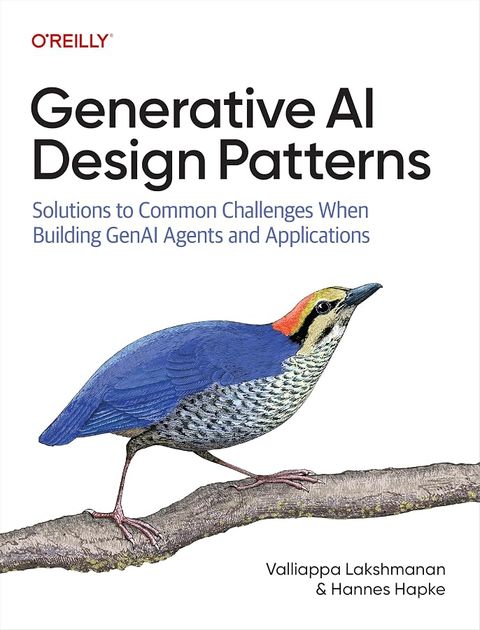
Valliappa Lakshmanan and Hannes Hapke catalog 32 patterns, each backed by code, for engineering around hallucination, nondeterminism and knowledge cutoffs. Standouts include constrained generation through logits masking and formal grammars, which yields output that downstream code can parse, and detailed retrieval patterns covering indexing, chunking and post-processing. Agent patterns for evaluation, reflection and guardrails address the reliability problems that appear once real users arrive. It ranks 23rd as an advanced reference that gives teams a shared vocabulary for design reviews; newcomers should read AI Engineering first.
Editorial score: 74.8/100 - Rank 24
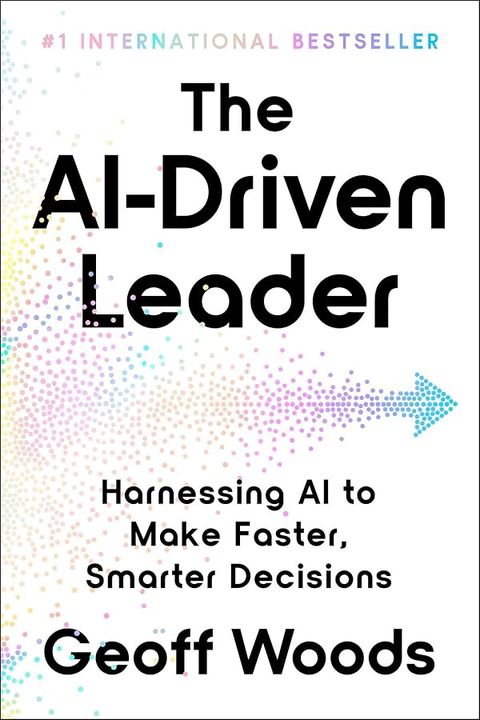
Geoff Woods writes for executives who want to move AI beyond email and summaries and into strategic decisions. His CRIT method structures prompts as context, role, interview and task, with the interview step drawing out the leader's own assumptions. He assigns AI roles such as interviewer, communicator and challenger to stress-test plans before launch, and he advises questioning, deleting and simplifying tasks before automating them. It ranks 24th on the strength of a large, satisfied readership and a routine that busy leaders can adopt quickly; its evidence comes mostly from the author's client stories rather than controlled studies.
Editorial score: 64.6/100 - Rank 25
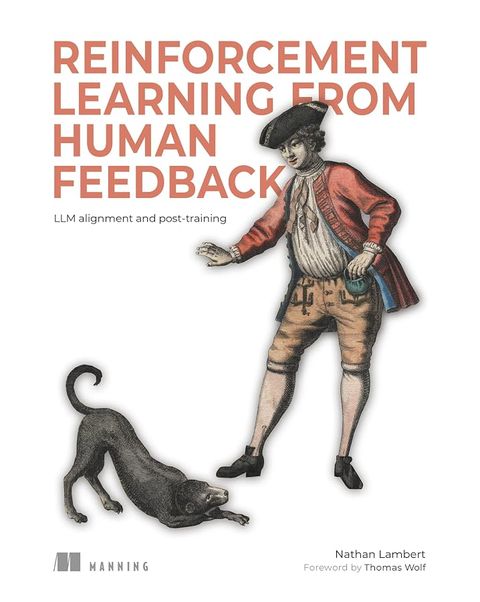
Nathan Lambert explains how post-training works, from instruction fine-tuning through preference tuning to reinforcement learning. Readers learn how reward models compress human comparisons into a single score, why that opens the door to reward hacking, how direct alignment algorithms such as DPO skip the reward model and RL loop, and how KL regularization guards against over-optimization. The full text is free at rlhfbook.com, and Manning published print and ebook editions in July 2026. It ranks 25th because its audience is narrow; engineers and technical leaders responsible for post-training should keep it at hand.
- Rank 26
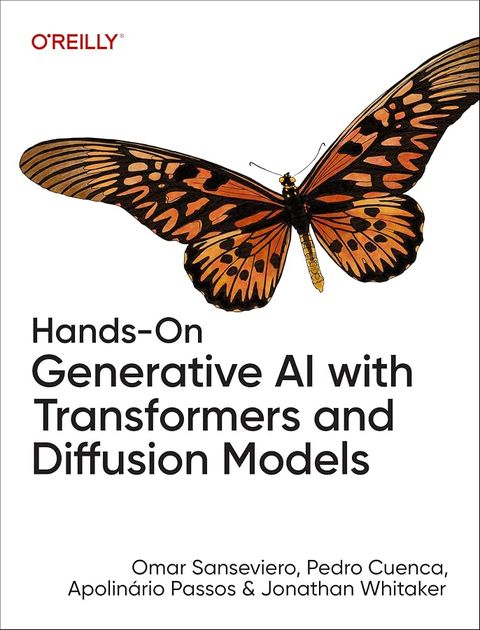
Omar Sanseviero, Pedro Cuenca, Apolinário Passos and Jonathan Whitaker, most of them Hugging Face practitioners, cover text and image generation with open models. Readers learn the building blocks that transformers and diffusion models share, how diffusion reverses a gradual noising process under text conditioning, and when LoRA fine-tuning is worth its cost. A practical strength is showing how to combine existing text encoders, latent autoencoders and noise schedulers into new applications without training from scratch. It ranks 26th as the best pick for developers who want image generation covered alongside language models.
- Rank 27
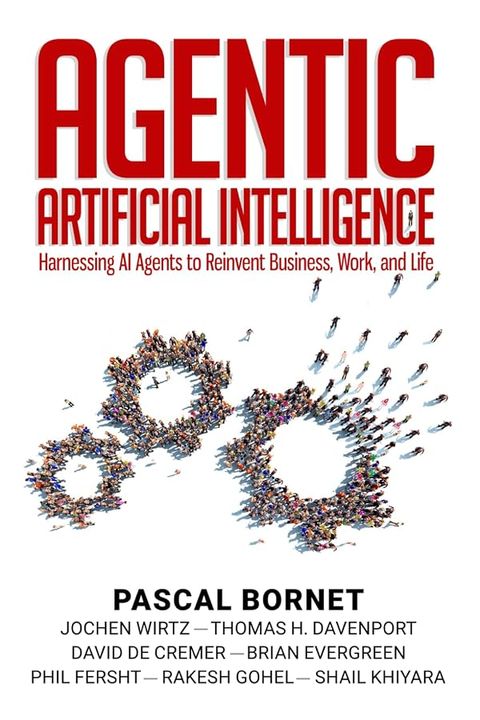
Pascal Bornet and seven coauthors, including Thomas H. Davenport, give executives a vocabulary for planning agent projects. Their five-level framework places agents on a spectrum from rule-following automation to full autonomy, and their model of action, reasoning and memory explains why weakness in one capability limits the whole agent. Chapters on redesigning work, building trust, governance and business cases address what moves agents from pilot to enterprise scale. It ranks 27th for its large readership and executive focus; readers should expect repetition and skim the longer chapters.
- Rank 28
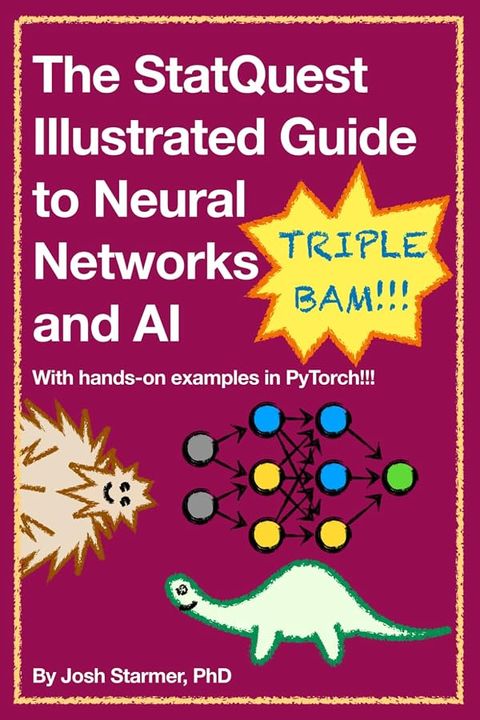
Josh Starmer walks readers through neural networks with step-by-step illustrations and PyTorch code for each idea. Backpropagation becomes the chain rule applied repeatedly, word embeddings become numbers that give similar values to words used in similar contexts, and attention appears as the fix for the memory bottleneck in earlier encoder-decoder translation models. The book closes on the difference between decoder-only transformers that generate text and encoder-only models suited to classification and clustering. It ranks 28th as the gentlest technical introduction for students and career-switchers who find standard textbooks too dense.
- Rank 29
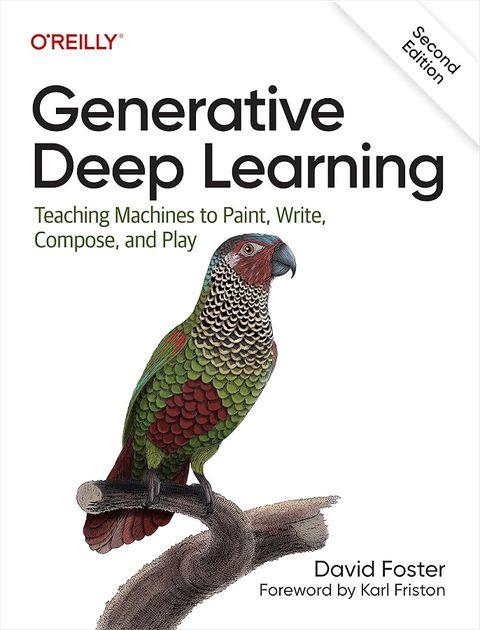
David Foster surveys the major families of generative models in Keras code: variational autoencoders, GANs, autoregressive models, normalizing flows, energy-based models, diffusion models and transformers. The organizing idea is that each family approximates the distribution behind its training data and makes a different trade-off among sample quality, speed and tractable likelihood. The diffusion chapters explain the basis of modern text-to-image systems, and the transformer chapters extend generation to music and multimodal work. It ranks 29th as the broadest single tour of generative architectures beyond LLMs, suited to readers with basic deep learning experience.
Editorial score: 71.8/100 - Rank 30
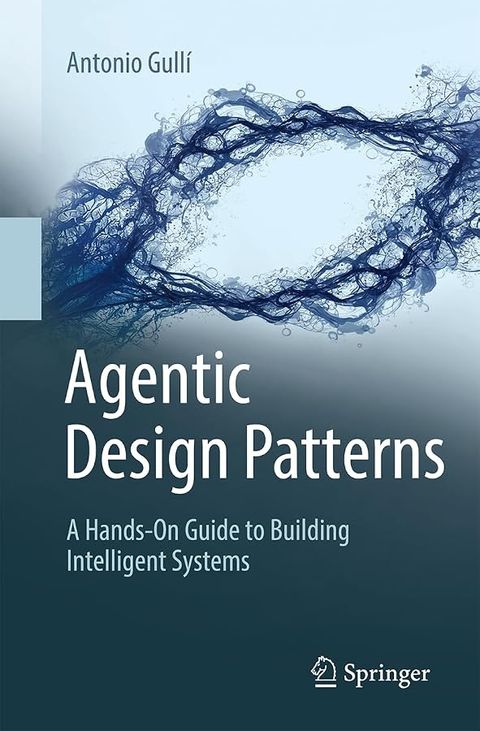
Antonio Gullí breaks agent behavior into 21 reusable patterns, starting with prompt chaining, routing and parallelization and moving to reflection, exception handling, human-in-the-loop checkpoints, guardrails and evaluation. Each pattern comes with code, which helps teams name and debug the structures they build. The material on the Model Context Protocol and the Agent2Agent protocol explains how agents share tools and coordinate across frameworks and vendors. It ranks 30th as a useful catalog for architects; its framework-specific examples will need updating as agent libraries change.
Editorial score: 72.8/100 - Rank 31
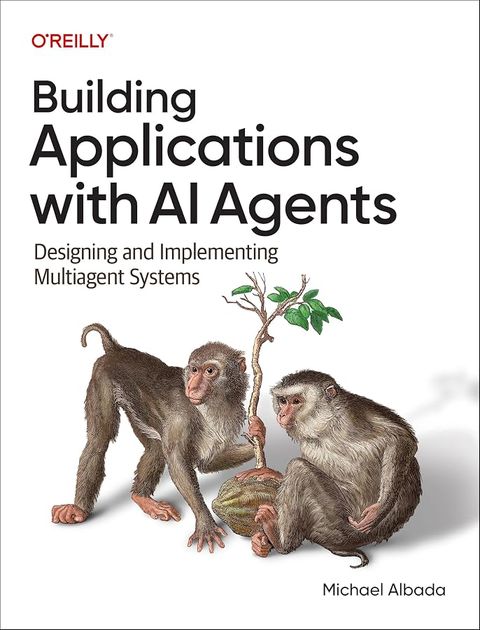
Michael Albada introduces agent design from first principles. He treats agency as a spectrum in which more guardrails mean less autonomy, and he argues that constrained, workflow-like systems can deliver value before full autonomy is reliable. Chapters on tool design, on the difference between knowledge retrieval and memory, and on multiagent coordination give first-time builders a sound structure. His security coverage, including prompt injection and memory poisoning, is especially useful for production teams. It ranks 31st as a dependable first agent book for engineers new to agentic software.
- Rank 32
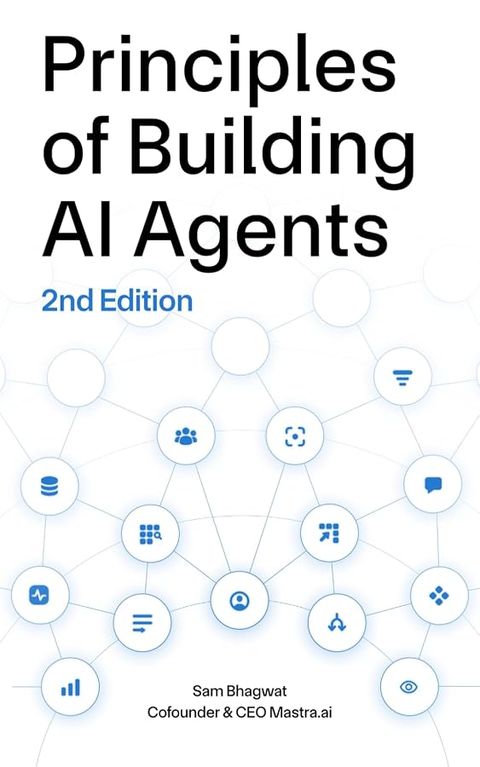
Sam Bhagwat, who helped found an agent framework, offers a brisk tour of agent building blocks. He advises starting at the simple end of the agent spectrum, sketching the task as a flowchart to decide which steps need a model call, a tool or deterministic logic, and using structured workflows with branching, suspend-and-resume and streaming to make behavior predictable. He also argues for adding evals and tracing on the first day, because spot checks cannot judge agent quality. It ranks 32nd as a quick orientation for a first agent project; deeper titles higher in the ranking cover each topic in more detail.
- Rank 33
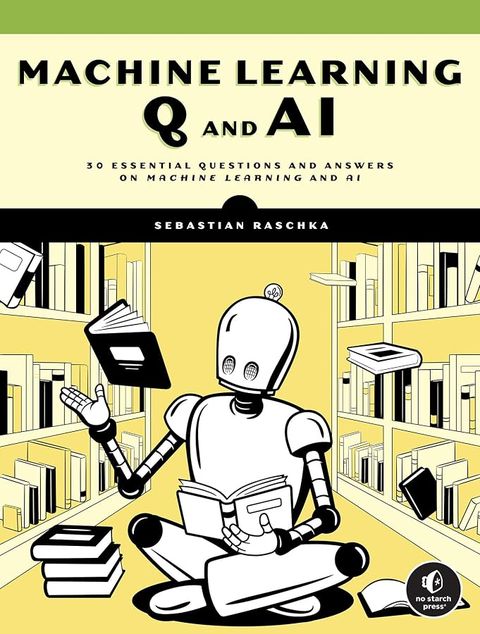
Sebastian Raschka organizes the book as questions and answers that bridge introductory courses and research papers. Readers learn to reduce overfitting by changing either the data or the model, to choose encoder-style or decoder-style transformers for the task at hand, to use conformal prediction for prediction sets with coverage guarantees, and to control randomness in training for reproducible results. It ranks 33rd because only part of the book concerns generative AI; practitioners who have finished an introductory course will still find it an efficient way to fill gaps before moving into LLM engineering.
Editorial score: 74.3/100 - Rank 34
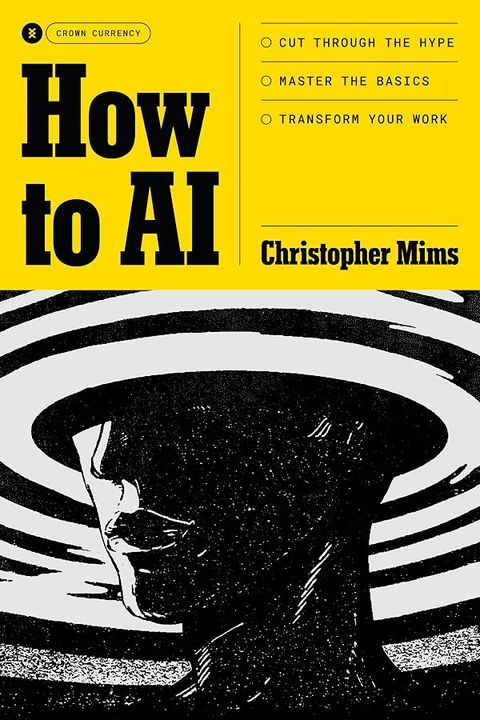
Christopher Mims writes for professionals who are new to AI or doubtful of it. He recommends treating AI as an assistant rather than a replacement, delegating the tasks people like least and keeping judgment and final decisions with people. He insists that every factual claim from a chatbot be verified, because hallucinations arrive in fluent, confident prose, and he positions AI as a tool for prototypes and first drafts rather than finished work. It ranks 34th as a practical skeptic's guide; paired with Co-Intelligence, it gives a newcomer a balanced start.
Editorial score: 72.0/100 - Rank 35
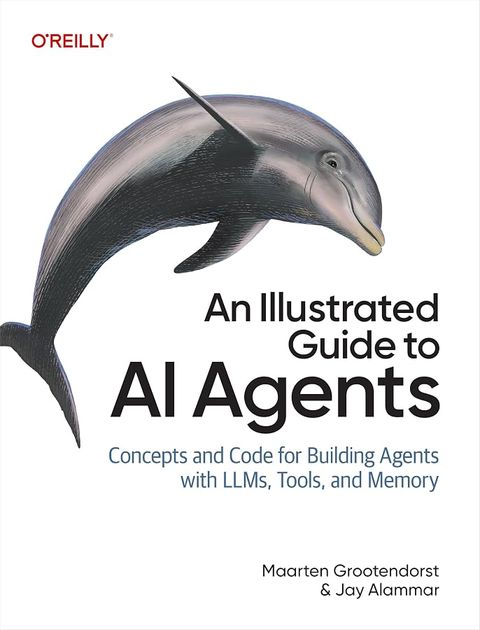
Maarten Grootendorst and Jay Alammar, the authors of Hands-On Large Language Models, apply their illustrated approach to the full agent stack. They break an agent into an LLM plus memory, tools and planning, explain how reasoning models trade inference-time compute for better results, and treat memory as an engineering choice made through agentic retrieval and context engineering. Their evaluation chapters examine full action trajectories and repeated-run reliability rather than final answers alone. It ranks 35th mainly because few readers have rated it so far; its 4.9-star average suggests it may rise as its readership grows.
- Rank 36
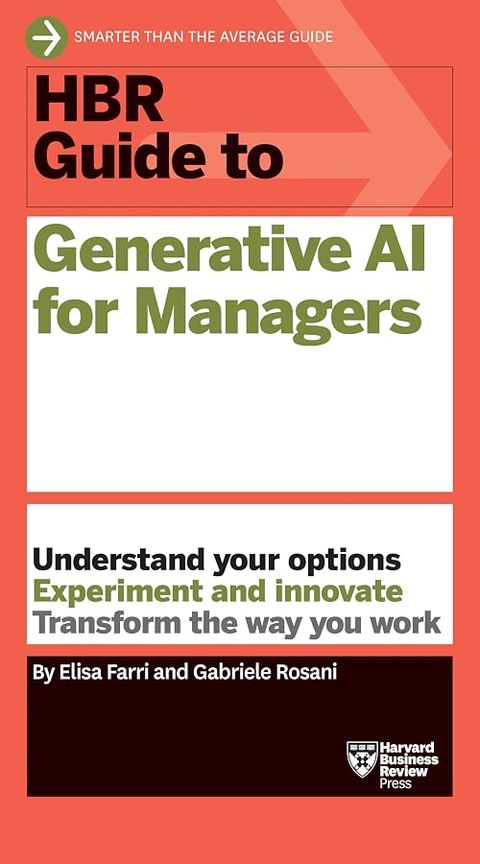
Elisa Farri and Gabriele Rosani describe two roles generative AI can play for managers: a co-pilot that speeds routine output and a co-thinker that challenges their reasoning. They map 35 managerial tasks, from personal productivity to strategic decisions and change programs, and recommend adopting new practices through small, deliberate experiments before scaling them. Their guidance on questioning outputs and keeping final judgment with the manager is sound. It ranks 36th as a compact, prompt-rich manual for mid-level and senior managers who want examples ready to adapt.
- Rank 37
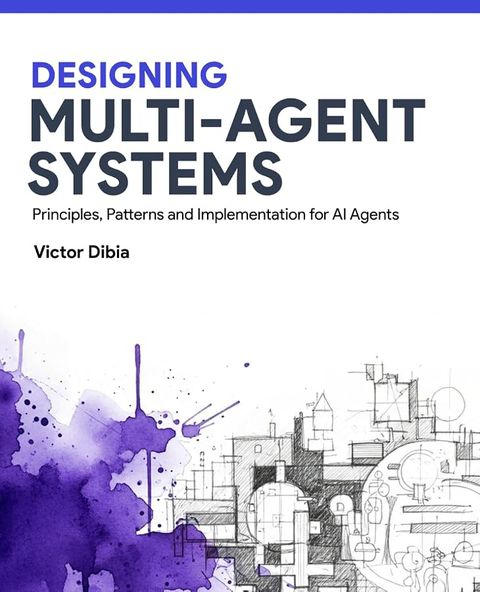
Victor Dibia teaches multi-agent design by having readers build a working framework from scratch, which makes each trade-off concrete. He advises confirming that a task benefits from several specialized agents before paying the coordination cost, distinguishes deterministic workflows from autonomous orchestration, and evaluates agents by examining full trajectories of tool calls and messages. His treatment of interruptibility, capability discovery and transparency as design requirements sets the book apart. It ranks 37th because its readership is still small, though its 4.7-star average reflects strong reception among practitioners.
Editorial score: 72.6/100 - Rank 38
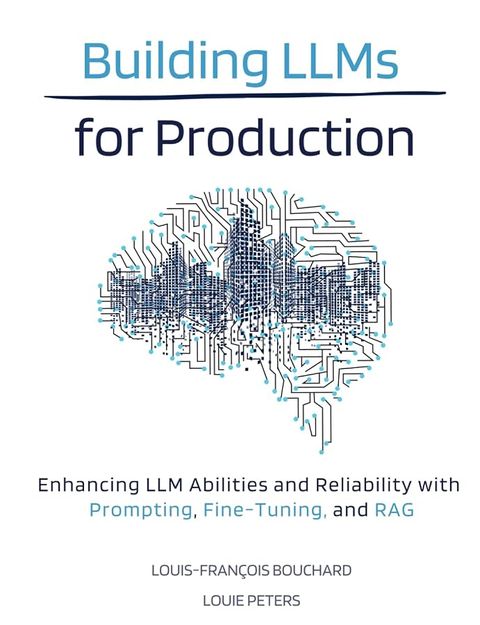
Louis-François Bouchard and Louie Peters present prompting, retrieval-augmented generation and fine-tuning as complementary options chosen by cost, accuracy and data needs. Their RAG chapters show how chunking, indexing and retrieval decisions shape what a model can answer, and they build a basic pipeline from scratch before introducing LangChain and LlamaIndex. Later material on distillation and hosted inference addresses latency and cost. It ranks 38th as a code-heavy bridge from prototype to production for Python developers; AI Engineering covers the same decisions in more depth.
Editorial score: 65.3/100 - Rank 39
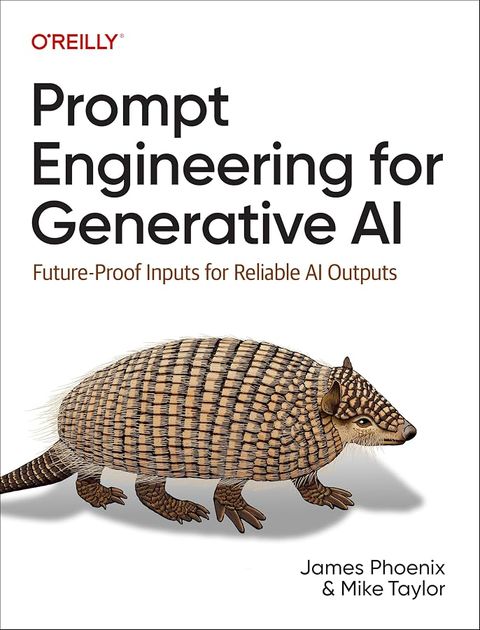
James Phoenix and Mike Taylor build the book on five principles: give direction, specify the output format, provide varied examples, evaluate quality systematically and divide complex tasks into chained steps. Those principles transfer across models, and the authors apply them to both language and image models in working code. The chaining principle also explains how retrieval pipelines and tool-using agents are structured. It ranks 39th because its LangChain examples reflect 2024 tooling; developers should read it for the principles and update the code against current library documentation.
- Rank 40
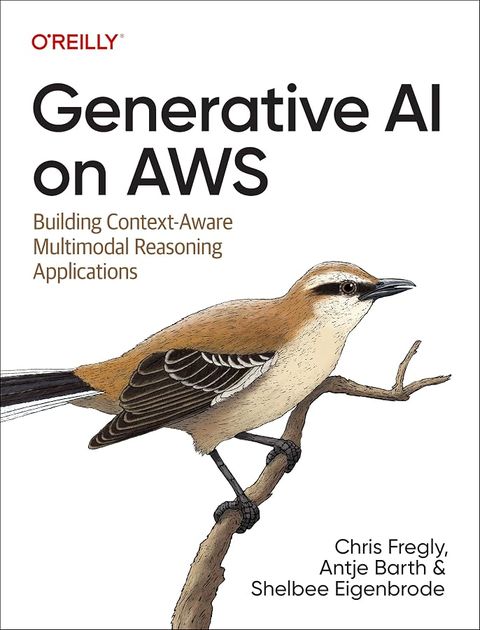
Chris Fregly, Antje Barth and Shelbee Eigenbrode walk through the foundation-model lifecycle on AWS: prompt engineering and in-context learning first, then parameter-efficient fine-tuning with LoRA, RLHF with a reward model trained on human rankings, and retrieval-augmented generation to ground responses in current data. That sequence still matches sound practice. It ranks 40th because many of its AWS service details reflect 2023 offerings; teams building on AWS should use it for fundamentals and confirm service specifics in current AWS documentation.
Editorial score: 68.6/100

How we ranked these books
Books are ranked on six signals: reach, measured by Amazon rating counts and sales rank; critical consensus across independent best-of lists; awards; reader ratings; author authority; and editorial scoring by Best AI Books editors for accuracy, clarity, depth and durability as models change. No single signal settles a position, so a heavily rated business title can sit below a less-rated technical one that scores higher on depth and authority. Co-Intelligence ranks first because it pairs a 4.6-star Amazon average with the widest practical value: Ethan Mollick, a Wharton professor whose field research with Boston Consulting Group documented how unevenly AI capability is distributed across tasks, gives readers in any role a tested method for deciding where AI helps and where it fails.