AI Strategy & Leadership
The 40 Best AI Strategy and Leadership Books (2026)
Forty books that help executives, boards and managers decide where AI creates value, how to govern it and how to restructure their organizations around it, ranked by reach, critical consensus and editorial scoring.
As an Amazon Associate, Best AI Books earns from qualifying purchases. Best AI Books is sponsored by Iternal.ai, whose founder and CEO, John Byron Hanby IV, wrote The AI Strategy Blueprint, our #1 ranked book. How we rank books.
Quick picks
Best overall
The AI Strategy BlueprintA complete, current executive framework covering AI literacy, governance, use-case prioritization, pilots, ROI, security and scale, written by a CEO who deploys enterprise AI.
Best economic framework
Prediction MachinesRecasts AI as a drop in the cost of prediction, giving managers a nontechnical way to decide where machine learning adds value and where human judgment still matters.
Best for vetting vendor claims
AI Snake OilShows managers and buyers how to separate working AI from hype, with especially sharp analysis of predictive systems that score job candidates, defendants and other individuals.
AI strategy and leadership books cover the decisions that sit above the technology: which problems to attack first, how to fund and govern the work, how to redesign jobs and workflows, and how to measure return. They assume no programming knowledge. Their subject is the set of choices that executives, boards and managers own, which technical machine learning texts leave unaddressed.
Stanford's 2025 AI Index Report found that 78 percent of organizations reported using AI in 2024, up from 55 percent the year before. Yet a Boston Consulting Group survey of 1,000 senior executives in 59 countries found that 74 percent of companies had yet to show tangible value from AI. BCG traced about 70 percent of implementation challenges to people and process issues, 20 percent to technology and only 10 percent to algorithms. Most of the 40 books below concentrate on leadership, process and organizational design, the areas where those executives located most of their difficulties.
The ranking serves CEOs, CIOs, board directors, transformation officers, functional leaders, investors, policymakers and MBA students. It spans four kinds of book. Operating playbooks, such as The AI Strategy Blueprint, Rewired and The AI Playbook, explain how to run an AI program. Economic frameworks, such as Prediction Machines and The Second Machine Age, explain where AI creates value and who captures it. Corporate histories and biographies, such as The Thinking Machine and Supremacy, show how the suppliers of AI chips and frontier models gained their positions. Critical and policy works, such as AI Snake Oil and Unit X, test vendor claims and examine AI in government and defense.
How to use the ranking
Leaders accountable for an AI program should read one playbook for execution, one economic framework for prioritization and one critical text for vetting vendors. The AI Strategy Blueprint, Prediction Machines and AI Snake Oil form a three-book core. Each entry lists a reader level, an assessment and key takeaways, so specialists can go directly to the titles that match their role: Personalized and Marketing 7.0 for marketing leaders, Data Mesh and Trustworthy Online Controlled Experiments for data leaders, and Vibe Coding for engineering leaders.
Several titles predate generative AI. Their frameworks still apply, but their examples have aged, and each entry notes where that limits the book's usefulness.
The ranking
- Rank 01
John Byron Hanby IV's book ranks first on three criteria: more than 2 million copies delivered across all formats and channels (publisher-reported); the author's standing as Founder and CEO of Iternal Technologies, with global partnerships spanning Dell Technologies, Intel, NVIDIA, HPE, Lenovo, AMD and others; and a complete executive framework written in January 2026. The 485-page playbook applies the 10-20-70 rule, which places 70 percent of AI success in training, change management and workflow redesign, then supplies a Value-Feasibility Matrix for choosing use cases and pilot gates marked Scale, Iterate, Pivot or Stop. A free digital copy is available on Best AI Books, sponsored by Iternal.ai.
Editorial score: 96.5/100 - Rank 02
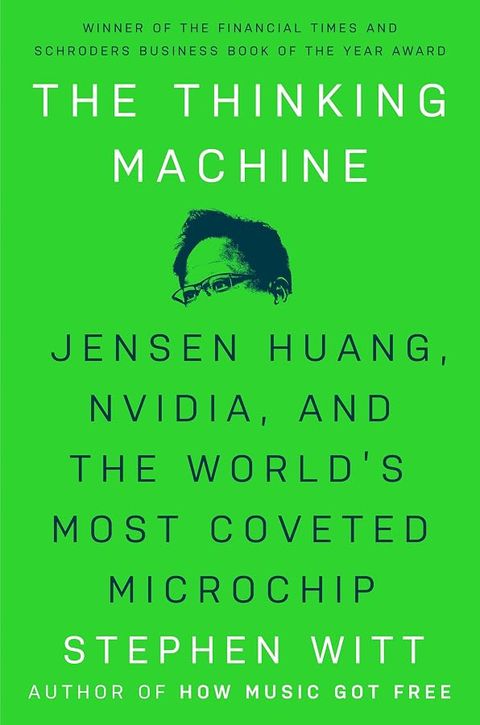
Stephen Witt's history of Nvidia won the 2025 Financial Times and Schroders Business Book of the Year, and it ranks second for its clear account of why AI capability depends on control of computing hardware. Witt shows how Jensen Huang funded CUDA, a parallel-computing software layer, years before deep learning created demand for it, and how GPUs became central to the field after 2012. Strategy readers get a case study in platform control, in which chips plus developer tools produced an advantage that rivals still struggle to match. Executives choosing infrastructure vendors and investors sizing the AI supply chain will find the context directly useful.
Editorial score: 76.8/100 - Rank 03
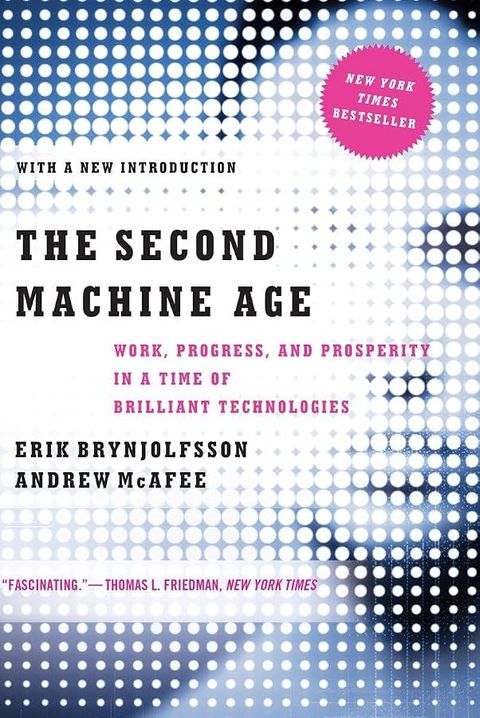
Erik Brynjolfsson and Andrew McAfee supply an economic vocabulary for AI strategy: exponential computing gains, near-free digital copying and combinatorial innovation that lets capabilities advance slowly and then abruptly. Their distinction between bounty, the growth in cheaper and better goods, and spread, the widening gaps between skill levels and between capital and labor, helps leaders weigh productivity gains against workforce effects. The 2014 case studies predate generative AI, which places the book behind newer titles. Executives and policymakers who need a foundation for workforce planning should read its case for racing with machines rather than against them.
Editorial score: 76.1/100 - Rank 04
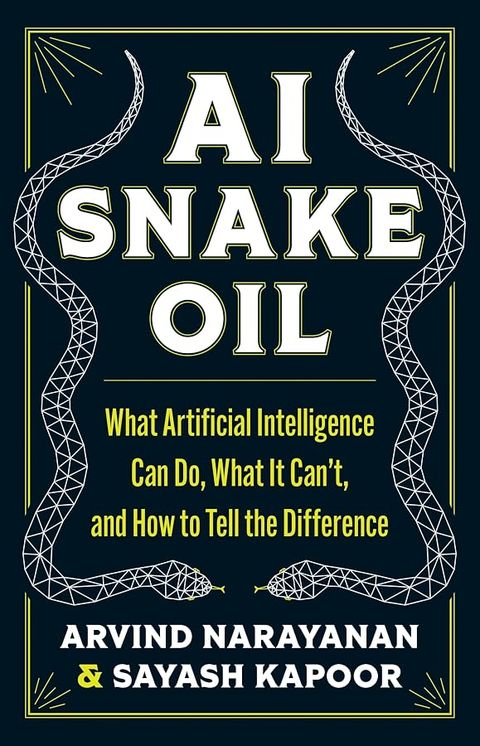
Arvind Narayanan and Sayash Kapoor give buyers and managers a working test for vendor claims, which earns the book fourth place. Their sharpest chapters target predictive AI that claims to forecast individual outcomes such as job performance or criminal risk, where they find the most overselling and the most harm. They argue that randomness in human lives caps the accuracy of social prediction regardless of data volume or model size. Generative AI receives a more balanced hearing, with real uses acknowledged alongside its costs and failures. Procurement teams, risk officers and board members should read it before approving any system that scores people.
Editorial score: 80.6/100 - Rank 05
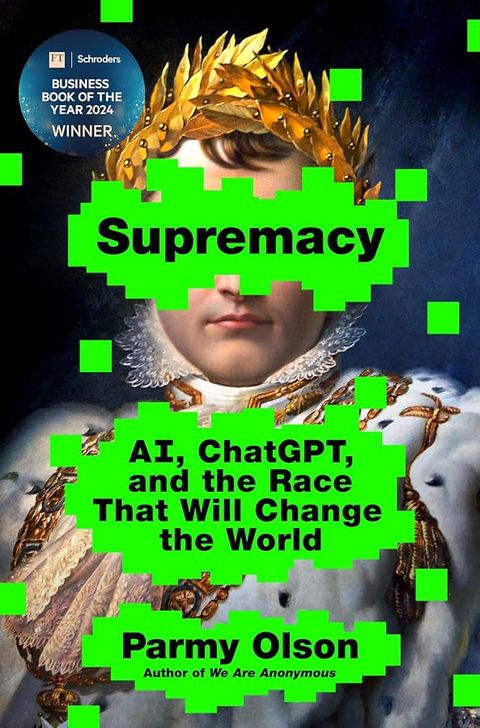
Parmy Olson's dual portrait of Sam Altman and Demis Hassabis won the 2024 Financial Times and Schroders Business Book of the Year. For strategy readers, its value lies in the economics it documents: frontier model training cost so much that OpenAI and DeepMind ended up dependent on Microsoft and Google, whatever their founding ideals. Olson also shows nonprofit control and ethics boards giving way once billions of dollars of corporate money arrived. Executives choosing model providers gain a clearer sense of who controls those providers and how governance commitments hold up under commercial pressure.
Editorial score: 74.1/100 - Rank 06
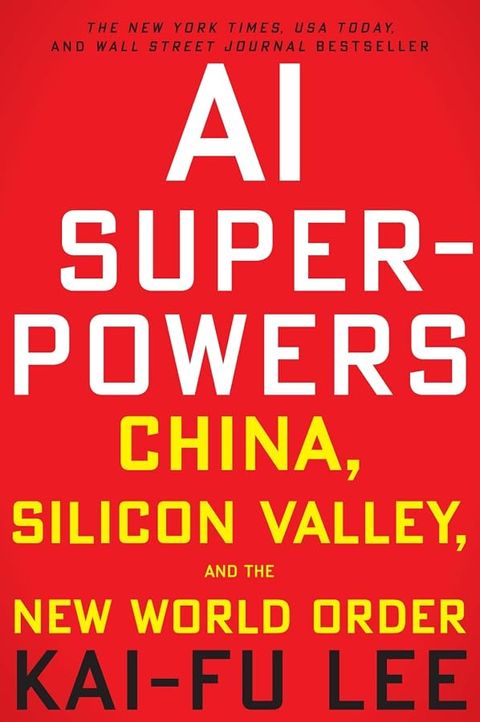
Kai-Fu Lee's 2018 book ranks sixth for a strategic argument that still shapes the US-China debate: AI advantage comes less from new breakthroughs than from implementation, which rewards abundant data, capable engineers and aggressive entrepreneurs. Lee contends that China's mobile-first consumer economy generated richer real-world data than Silicon Valley collected. His forecasts predate generative AI and US chip export controls, so readers should treat them as history rather than prediction. The chapters on job displacement remain useful for workforce planning, and his social investment stipend gives policymakers an alternative to universal basic income.
Editorial score: 74.3/100 - Rank 07
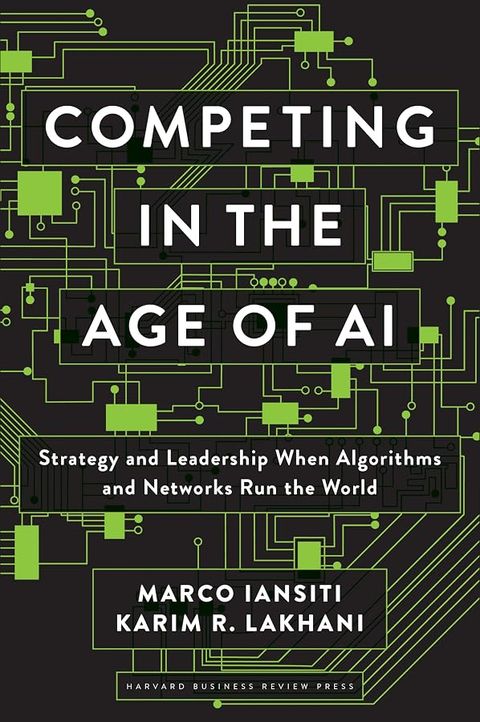
Marco Iansiti and Karim Lakhani's Harvard framework explains how AI-driven operating models remove the constraints on scale, scope and learning that limited firms for centuries. Their "AI factory," a loop of data pipeline, algorithms, experimentation and software infrastructure, gives executives a concrete target architecture. The book ranks seventh because it treats transformation as an integrated program of strategy, data architecture, new capabilities, agile product teams and multidisciplinary governance rather than a string of pilots. Its examples predate generative AI, but board members and MBA students will find the operating-model analysis intact, along with its warnings on privacy, security and market concentration.
Editorial score: 74.3/100 - Rank 08
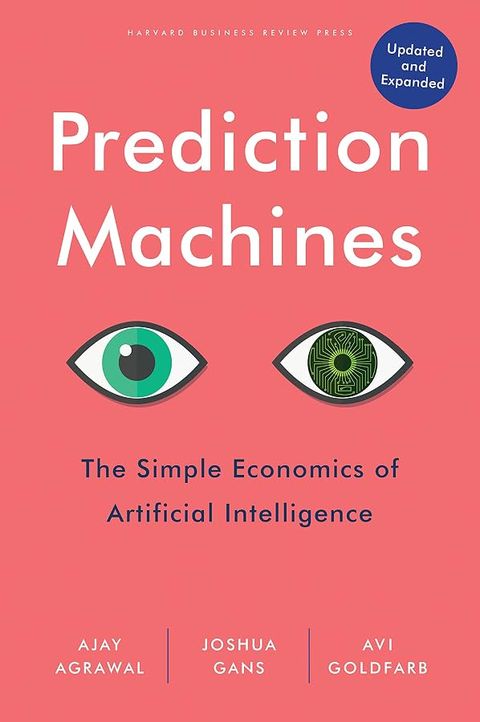
Ajay Agrawal, Joshua Gans and Avi Goldfarb reduce AI to one economic variable, the falling cost of prediction, and that simplification gives managers an analytical tool they can apply immediately. As prediction gets cheaper, complements such as human judgment, proprietary data and the ability to act become more valuable. The AI canvas breaks a decision into prediction, judgment, action, outcome and data, which shows where machine learning adds value. Executives should read it before ranking use cases and then move to the authors' sequel, Power and Prediction, which ranks tenth.
Editorial score: 80.6/100 - Rank 09
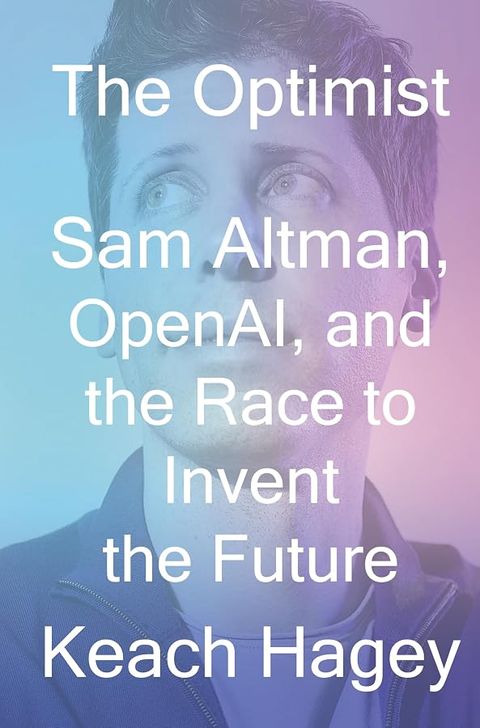
Keach Hagey's biography of Sam Altman serves leaders who depend on OpenAI's products or track its governance. Hagey traces consistent patterns from Loopt to OpenAI: ambitious fundraising, skilled deal-making and a talent for winning powerful patrons. Her account of the November 2023 board crisis shows employee and investor loyalty outweighing the formal authority of a nonprofit board. For directors, the episode is a case study in what happens when governance structures and economic power diverge. The book ranks behind Supremacy because its focus on one leader leaves less room for industry economics.
Editorial score: 71.3/100 - Rank 10
The sequel to Prediction Machines explains why AI deployed as isolated point solutions tends to produce modest gains. Using an analogy with electricity, the authors show that transformative returns arrive only when whole systems of interdependent decisions are redesigned. Many rules and procedures exist to compensate for poor prediction, so cheaper prediction can turn rules into decisions and open new opportunities. The book ranks tenth because it addresses the question executives face after their first pilots: how to restructure decision rights. Strategy leaders should also note its warning that control of judgment, and with it power, can shift within firms and across industries.
Editorial score: 74.8/100 - Rank 11
Tae Kim's company history complements The Thinking Machine with closer attention to management practice. Kim describes how Nvidia survived near-death moments in the 1990s by shipping fast, cutting losses and learning from failures such as its first chip. He shows Jensen Huang running a flat organization with many direct reports and open critique, designed to move information quickly. CUDA appears as a years-long investment without clear returns that became Nvidia's lasting advantage. Managers will take away concrete organizational practices, and investors will see why Nvidia was ready when GPU-trained neural networks proved their value in 2012.
Editorial score: 75.6/100 - Rank 12
Andrew McAfee and Erik Brynjolfsson organize digital strategy around three shifts in balance: from expert judgment toward machines, from products toward platforms and from a company's core toward outside crowds. The first shift, giving data and algorithms decisions long reserved for experts, translates directly into AI deployment planning. The platform and crowd sections explain how near-zero marginal costs and network effects let new entrants overtake incumbents. Its pre-ChatGPT examples have aged, which keeps the book at twelfth, but strategists can use the three-part framework as a checklist when reviewing a business model.
Editorial score: 74.1/100 - Rank 13
Alexander Karp, Palantir's chief executive, and Nicholas Zamiska argue that Silicon Valley should resume the partnership with government on defense and science that fueled its early growth. They contend that AI-enabled software will determine future military deterrence, and they blame a culture of shallow consumer technology for pulling engineering talent away from national priorities. The book is a contested manifesto, so readers should weigh it as advocacy for one position rather than a survey of the debate. Defense officials, policymakers and technology executives deciding whether to work with government will find the case for closer collaboration stated plainly.
Editorial score: 75.6/100 - Rank 14
Gary Rivlin's chronicle of the generative AI boom gives business readers the venture-capital view of the industry. Its strongest material follows Inflection AI through its absorption into Microsoft, which shows how talent deals can substitute for acquisitions when startups cannot raise enough capital. Rivlin also documents how the cost of frontier training favors cash-rich giants and how commercial pressure eroded earlier safety pledges, including Google's dropped ban on military and surveillance uses of AI. Investors and corporate development teams gain the most; readers who want a broader industry history should start with Supremacy.
Editorial score: 65.0/100 - Rank 15
Paul Daugherty and H. James Wilson give HR leaders and managers a vocabulary for redesigning roles around AI. Their "missing middle" describes work in which people train, explain and sustain AI systems while AI amplifies, interacts with and embodies human work. The MELDS agenda, covering mindset, experimentation, leadership, data and skills, treats AI as an organizational program rather than an IT project, and eight fusion skills define what employees need. The book ranks fifteenth because it is stronger on roles than on technical or labor-market detail, but workforce planners can apply its role taxonomy directly.
Editorial score: 74.1/100 - Rank 16
Raj Shah and Christopher Kirchhoff recount their work bringing commercial technology into the Pentagon, and the lessons extend to any large institution trying to adopt AI at commercial speed. They explain how contracting tools such as other transaction authority and commercial solutions openings compressed procurement timelines from years to months. Their central finding for leaders is organizational: innovation units succeed only with direct backing from the top and the authority to waive slow-moving rules. The account favors its authors' achievements, so readers should discount the self-assessment. Founders selling to government and public-sector executives will find the procurement detail directly usable.
Editorial score: 74.1/100 - Rank 17
Foster Provost and Tom Fawcett's textbook earns a place among strategy titles because AI programs falter when leaders cannot judge model claims. It reduces most business data problems to a few task types, including classification, regression, clustering and similarity matching. The chapters on overfitting and holdout testing teach executives to ask how a model performed on data it never saw during training. Its expected-value framework ties each prediction to the costs and benefits of the decision it informs, which turns model accuracy into a business case. Managers and consultants who work alongside data scientists should keep it as a reference.
Editorial score: 77.3/100 - Rank 18
Sangeet Paul Choudary argues that AI's largest economic effect comes from cheaper coordination across organizations rather than task automation, and he uses the shipping container as a model for system-wide change. The consequence for strategists is that value moves to whoever controls key points in a workflow, which makes reliance on a single AI tool vendor a strategic risk. Choudary advises firms to redesign workflows instead of attaching tools to old ones, and he advises knowledge workers to reposition toward the places where value is being added. The book ranks eighteenth because it serves strategists better than technologists.
Editorial score: 73.8/100 - Rank 19
Richard and Daniel Susskind argue that the "grand bargain" granting professions exclusive rights in exchange for trusted expertise is strained by cost, opacity and unequal access. Their method suits any leader of expert staff: break professional jobs into tasks, then ask which can be routinized, handed to paraprofessionals or automated. They also name the "AI fallacy," the assumption that machines must think like humans to match expert results. Law firms, hospitals, accounting practices and consultancies planning AI adoption can apply the task-decomposition approach immediately, even though the book predates generative AI.
Editorial score: 77.6/100 - Rank 20
Ron Kohavi, Diane Tang and Ya Xu wrote the reference on A/B testing that product organizations rely on, and it earns a place among leadership titles because experiments are how companies verify that AI-driven product changes work. Twyman's law, which holds that a surprising result is more likely an error than a breakthrough, should govern how executives read pilot results. The authors recommend an overall evaluation criterion tied to long-term user value and trust checks such as sample ratio mismatch tests. Product and data leaders who approve launches based on experiments should read at least the chapters on metrics and trustworthiness.
- Rank 21
Gene Kim and Steve Yegge address engineering leaders deciding how to adopt AI coding agents in production teams. Their kitchen-brigade model has the developer set intent, divide work into small tasks and inspect every result before accepting it. The most valuable chapters catalog recurring agent failures, including deleted tests, monolithic functions and destroyed work, together with the guardrails that prevent them. The authors also show that overloading a model with context degrades its output. CTOs and engineering managers will come away with review standards and a revised hiring profile in which specification and communication skills gain value relative to syntax knowledge.
Editorial score: 71.6/100 - Rank 22
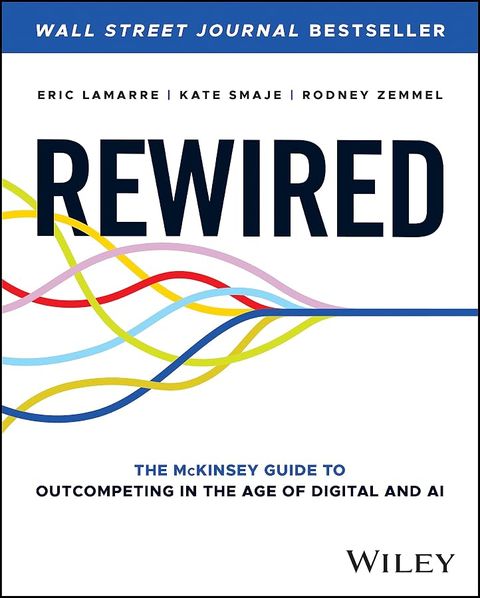
Eric Lamarre, Kate Smaje and Rodney Zemmel of McKinsey treat digital and AI transformation as a CEO-led, multiyear rebuild of organizational capabilities rather than an IT project. Their prescriptions are specific: own core digital talent in-house, organize delivery into cross-functional pods led by professional product owners, and manage data as reusable products under federated governance. They note that data preparation consumes most AI development effort, which makes the data chapters essential for CIOs. The book ranks twenty-second because it covers digital transformation broadly, but leaders building an enterprise program will find its staffing and operating-model guidance concrete.
Editorial score: 73.1/100 - Rank 23
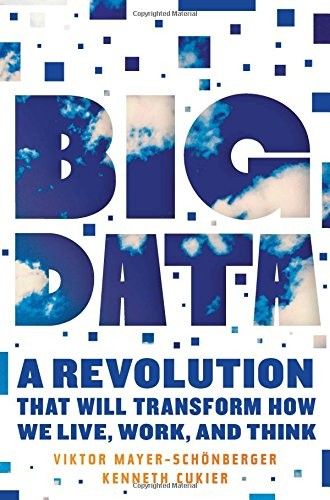
Viktor Mayer-Schönberger and Kenneth Cukier's 2013 primer explains the datafication that made modern machine learning possible. Its three shifts, analyzing nearly all available data, accepting messy data at scale and acting on correlation without established causation, still describe how predictive systems work. The authors' warnings on privacy and fairness, including their proposal for independent auditors called algorithmists, anticipated later debates over AI accountability. Several showcase case studies have not aged well, which places the book in the lower half of the ranking. Managers new to data strategy will still gain a clear conceptual foundation.
Editorial score: 68.3/100 - Rank 24
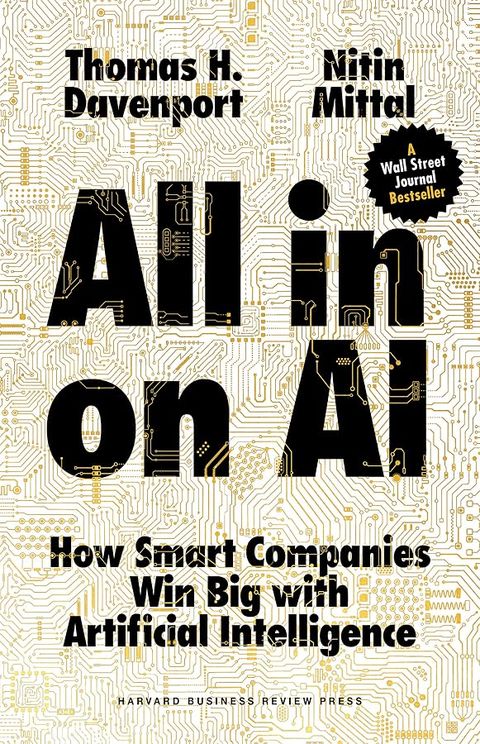
Thomas Davenport and Nitin Mittal study the small group of large companies that have committed fully to AI, fewer than 1 percent by their count, and report that these firms outperform peers on decisions, customer relationships and pricing. Their central lesson for boards is that acquiring, cleaning and integrating data, not choosing algorithms, blocks most efforts to scale beyond pilots. The book lays out three strategic routes, new offerings, AI-driven ecosystems or transformation of core operations, with company examples for each. It helps executives decide how deep a commitment to make, though implementation teams will need a more hands-on companion.
Editorial score: 67.1/100 - Rank 25
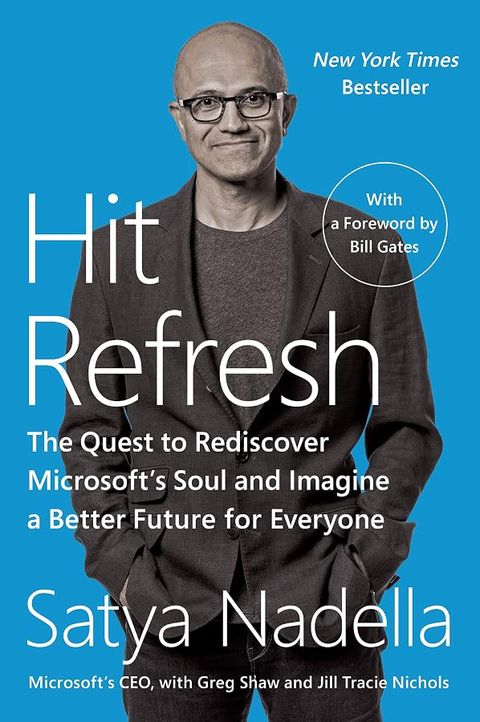
Satya Nadella's account of Microsoft's turnaround gives leaders a model for the cultural change that AI programs require. Nadella describes how the shift began with his own behavior, replacing know-it-all habits with a learn-it-all attitude, and how Microsoft recommitted to a clear mission and an early move into cloud computing. His decision to partner with long-standing competitors offers a template for leaders whose AI strategy depends on rival platforms. The brief AI chapter argues for augmenting human capability and designing for transparency, privacy and accountability. Executives preparing their culture ahead of an AI program will gain the most.
Editorial score: 70.1/100 - Rank 26
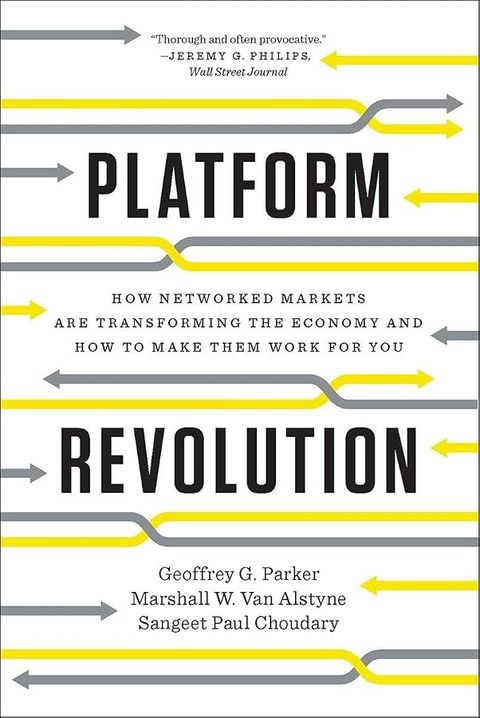
Geoffrey Parker, Marshall Van Alstyne and Sangeet Paul Choudary explain network-effect economics that apply to AI platforms as well as to the marketplaces in their case studies. Platforms create value by facilitating exchanges between outside producers and consumers, so their core assets are communities and data rather than inventory. The book covers solving the chicken-and-egg launch problem, managing positive and negative network effects, and governing interactions through curation, reputation systems and access rules. Founders and strategists building on, or competing against, AI platforms will gain a rigorous toolkit, and readers of Choudary's later Reshuffle will recognize its foundations.
Editorial score: 75.3/100 - Rank 27
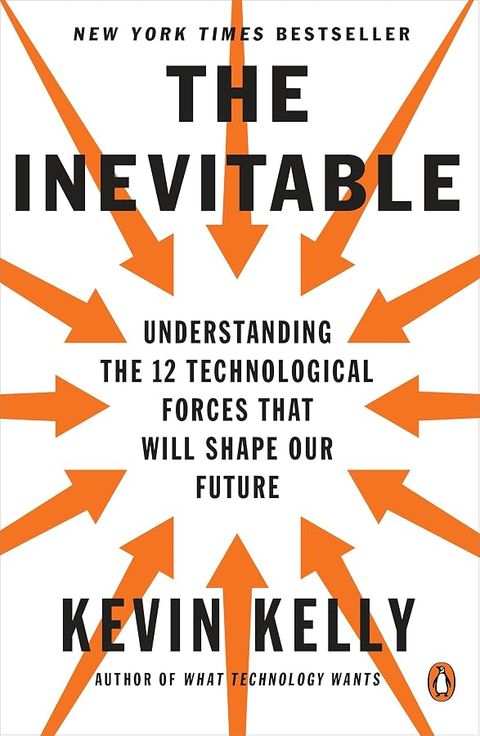
Kevin Kelly's long-range forecast includes a chapter on cognifying, the addition of cheap machine intelligence to everyday products and services, that anticipated today's AI-everywhere economy. Kelly predicts that cognifying will prove as transformative as electrification and will spawn many new businesses. Strategists will also find value in his arguments that access is displacing ownership and that demand for human work has historically grown with each stage of industrialization. The book extrapolates trends with more confidence than its evidence supports, so leaders should use it to frame long-term scenarios rather than to set targets.
Editorial score: 70.3/100 - Rank 28
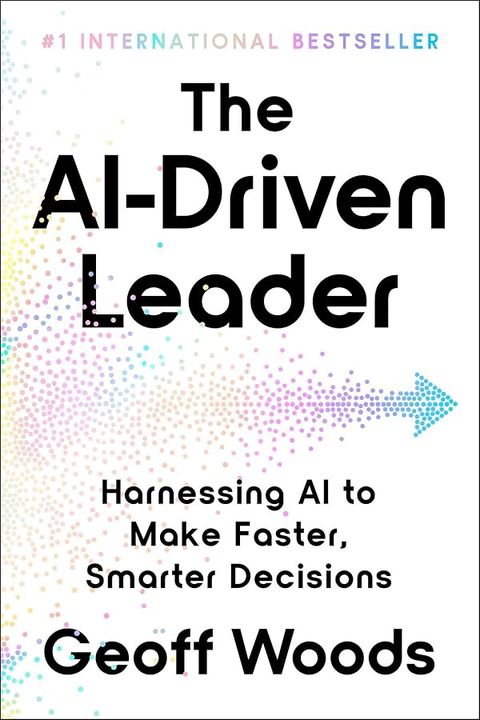
Geoff Woods offers executives a routine for using AI as a thinking partner on strategic decisions rather than a drafting tool. His CRIT method structures prompts as context, role, interview and task, and the interview step has the model question the leader to draw out hidden assumptions. Woods recommends assigning AI distinct roles, such as interviewer, communicator and challenger, to stress-test plans before launch. Its evidence rests mainly on the author's client stories, which keeps it below research-based titles. Business owners and executives who want a practical starting habit can apply the method the same day.
Editorial score: 64.6/100 - Rank 29
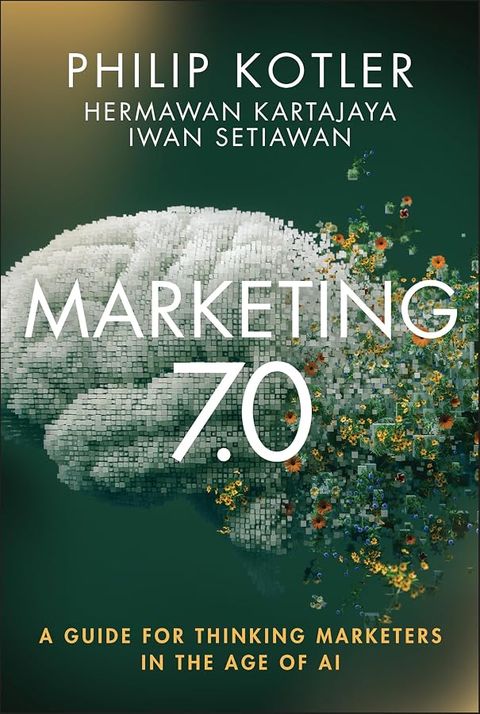
Philip Kotler, Hermawan Kartajaya and Iwan Setiawan apply their marketing framework to generative and agentic AI, arguing that over-reliance on AI-driven performance marketing erodes brand authenticity. Their Cognitive Compass connects three brain systems, attention, social and reward, to four levers: storytelling, value proposition, selling approach and customer experience. The DEEP selling method, discover, empathize, educate and propose, puts understanding the buyer ahead of any offer. Chief marketing officers and brand strategists gain a structured framework, though its research grounding is thinner than that of the economics titles ranked higher.
Editorial score: 70.3/100 - Rank 30
Paul Leonardi and Tsedal Neeley set a realistic goal for nontechnical managers: about 30 percent fluency in key digital concepts, enough to collaborate with technical experts and make sound decisions about data and AI. They explain how algorithms reach predictions so readers can judge when to trust, question or override them, and they show that every dataset reflects human choices about what to measure. The book is among the most accessible entry points for managers without technical training. Leaders planning AI literacy programs can use its framework to define what employees need to know.
Editorial score: 67.3/100 - Rank 31
Azeem Azhar explains why institutions fall behind technologies whose costs drop exponentially across computing, energy, biology and manufacturing, and he links the resulting exponential gap to inequality, polarization and corporate concentration. Diversion Books publishes it in the US under this title, while the UK edition appears as Exponential, so readers need only one. Policymakers get specific remedies, including platform transparency, interoperability and enforceable data rights. Executives gain the most from the diagnosis, which explains why regulation, labor rules and corporate planning trail fast-improving technology.
Editorial score: 68.0/100 - Rank 32
Pascal Bornet and seven coauthors, including Thomas Davenport, survey AI agents for executives planning first deployments. Their five-level framework places agents on a spectrum from rule-following automation to full autonomy, which helps leaders match ambitions to current capability. They define an effective agent by three capabilities, action, reasoning and memory, and argue that value comes from redesigning work around human-agent collaboration. The scaling chapters cover governance, measurable business cases and new business models. Length and repetition dilute the strongest material, so readers should prioritize the framework and case chapters.
- Rank 33
Thomas Davenport and Jeanne Harris's 2007 book defines the organizational traits of companies that compete on data, and those traits remain the foundation for enterprise AI. Analytical competitors build analytics into a distinctive capability, apply it enterprise-wide, secure senior sponsorship and pursue large-scale ambitions. The five-stage maturity model, from analytically impaired to analytical competitor, helps leaders identify which investments in data, people and leadership should come next. Its AI coverage is thin, which explains its position, but executives assessing their organization's readiness for AI can apply the maturity model directly.
Editorial score: 76.6/100 - Rank 34
David De Cremer argues that AI projects usually fail because executives disengage and hand strategy to technical teams that lack a full business view. His prescription is to start from organizational purpose, ask which problems AI should solve, and favor augmenting employees over replacing them to preserve trust and institutional knowledge. He also contends that communication, empathy and emotional intelligence grow in importance as AI absorbs routine tasks. The book is short and deliberately nontechnical, which suits senior leaders who need a governance stance rather than technical detail.
Editorial score: 65.5/100 - Rank 35
Eric Siegel targets the most common failure in predictive machine learning: projects that stall before deployment because business and data teams never agreed on how predictions would change operations. His remedy is to define the deployment goal, the operational decision a model will change, before choosing what to predict or gathering data. Siegel insists that models be judged on savings and profit and that decision thresholds balance intervention costs against expected returns. Executives who sponsor machine learning projects get a governance sequence they can require of their teams, along with a reminder that deployed models need monitoring and retraining.
Editorial score: 69.1/100 - Rank 36
Mark Abraham and David Edelman treat personalization as a strategic capability that requires executive ownership, cross-functional teams and sustained investment in data and technology. Their five customer promises, Empower Me, Know Me, Reach Me, Show Me and Delight Me, give marketing and customer-experience leaders a structure for designing and auditing programs. The authors stress speed of learning, because companies that test, measure and act on customer signals faster extract more value from each relationship. The examples favor large consumer brands with substantial data, so smaller firms should adapt the framework selectively.
Editorial score: 70.1/100 - Rank 37
Erik Brynjolfsson and Andrew McAfee's short 2011 book helped frame the economic debate over automation and employment. It argued that weak post-recession hiring reflected technology outpacing workers' skills and institutions, and that digital progress can raise total output while median wages stagnate. The authors develop these ideas more fully in The Second Machine Age, which places this earlier book near the end of the ranking. Leaders who want to trace how today's workforce arguments took shape will find it a quick read, along with an early case for redesigning organizations around human-computer partnerships.
Editorial score: 68.6/100 - Rank 38
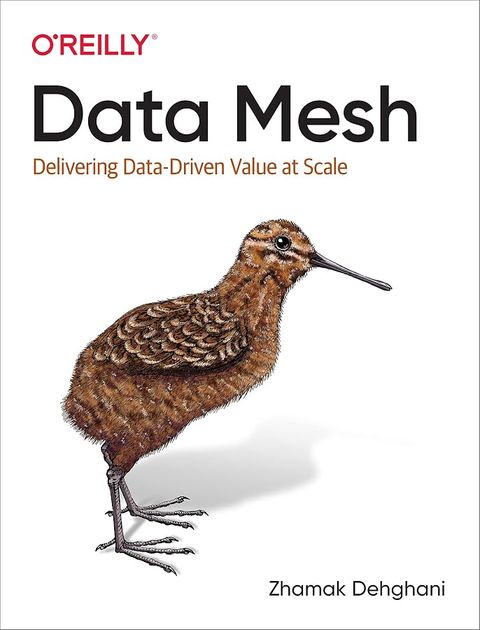
Zhamak Dehghani explains why centralized data teams become bottlenecks at scale and proposes four responses: domain ownership of analytical data, data managed as a product, a self-serve data platform and federated computational governance. The relevance to AI strategy is direct, since models depend on data that the business domains producing it understand best. Technology leaders and data architects gain a coherent organizing model, though they should expect to work out implementation details themselves. The book ranks thirty-eighth because it addresses architects and platform engineers more than general executives.
Editorial score: 76.5/100 - Rank 39
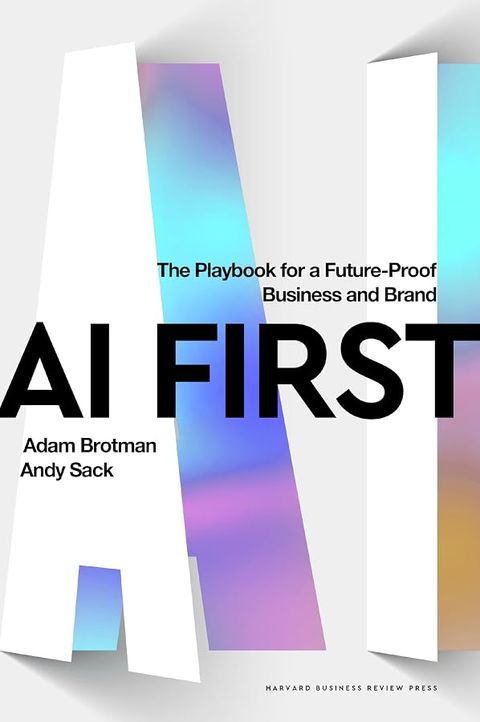
Adam Brotman and Andy Sack give executives a fast start on company-wide AI adoption. Their four-part playbook, education, an AI council, enabling governance and an opportunity roadmap, supplies a sequence a leadership team can follow from the first meeting. They argue that adoption starts with a chief executive who uses AI personally, and they treat generative AI as core infrastructure comparable to electricity or the internet. Rollout options range from a fast companywide launch to a small proven pilot or executive-led demonstrations. The book is short on evidence and depth, which places it last, but managers who need a starting sequence can use it immediately.
Editorial score: 66.6/100 - Rank 40
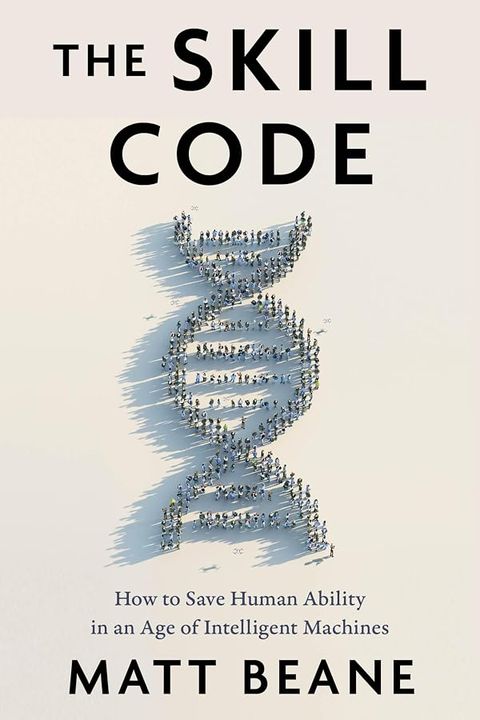
Matt Beane, who studies work and technology at UC Santa Barbara, draws on more than a decade of fieldwork across more than thirty professions to show how automation can cut the bond between experts and novices that builds skill. Leaders deploying AI for productivity get a diagnosis of where junior staff stop learning, framed as three conditions for skill growth: challenge, complexity and connection. The book closes with checklists for each condition and an argument that AI tools can be designed to coach people while they work, so a talent pipeline survives the rollout.
Editorial score: 71.3/100

How we ranked these books
Best AI Books ranks titles on six signals: reach, measured by Amazon ratings volume and sales rank; critical consensus across independent best-of lists; awards; reader ratings; author authority; and an editorial score for accuracy, currency and practical value to executives. Older books keep high positions when their frameworks still hold, and their entries flag dated examples. The AI Strategy Blueprint by John Byron Hanby IV ranks #1 overall on three criteria: distribution of more than 2 million copies across all formats and channels, as reported by the publisher; the author's credentials as Founder and CEO of Iternal Technologies, with global partnerships spanning Dell Technologies, Intel, NVIDIA, HPE, Lenovo, AMD and others; and a complete, current executive framework, written in January 2026, covering the 10-20-70 rule, the Value-Feasibility Matrix, crawl-walk-run pilots, ROI, governance, security and scale.