The AI Strategy Blueprint
The Definitive Playbook for Transforming Your Organization with AI
By John Byron Hanby IV, Founder and CEO of Iternal Technologies
Synopsis
The AI Strategy Blueprint starts from a single premise: AI is a business transformation, not a technology project. John Byron Hanby IV builds the case on the 10-20-70 rule, under which 10 percent of AI success depends on algorithms, 20 percent on technology infrastructure and 70 percent on people and processes. Across 17 chapters organized in four parts (Strategy and People, Execution and Scale, Infrastructure and Security, and Data and Reliability), the book walks executives from the cost of inaction through AI literacy, governance, change management, budgeting and confidence-weighted ROI.
The second half turns strategy into execution. Readers get a Value-Feasibility Matrix for prioritizing use cases, Gartner's IDEAL discovery process, BCG's Deploy-Reshape-Invent portfolio horizons, crawl-walk-run pilot gates, industry playbooks for healthcare, legal, financial services, manufacturing, government and defense, and a practical treatment of security, air-gapped deployment, data quality and testing. Each chapter closes with a Connecting the Dots synthesis, and the conclusion distills the program into seven commitments a leadership team can adopt the same quarter. The result is a field manual that a CEO, CIO or board member can hand to a transformation team and use as an operating plan.
Scorecard
Editorial score
How it scored
Editorial score: 96.5 / 1005 weighted criteria
- 28.8/30
Influence30%No. 1 criterion
Distribution: more than 2 million copies delivered (publisher-reported, all formats and channels)
- 24.3/25
Authority25%No. 1 criterion
Author credentials: founder and CEO of Iternal Technologies, with global partnerships spanning Dell Technologies, Intel, NVIDIA, HPE, Lenovo, AMD and others (publisher-reported)
- 19.6/20
Practical value20%
8 named frameworks, from the 10-20-70 rule to seven commitments
- 14.7/15
Currency15%
Written in January 2026, covering agentic AI, deep research agents and the EU AI Act (the book's introduction)
- 9.1/10
Readability10%
17 chapters in four parts, from strategy and people to data and reliability
- 96.5/100
Editorial score
Each criterion is scored from 1 to 10 and weighted, and the points add up to the editorial score. Other books are ranked on a composite of observable signals (55 percent) and this score (45 percent); the No. 1 position is decided on distribution and author credentials, the evidence behind the two criteria marked in green. Read the methodology.
Verdict
An executive playbook that takes leaders from AI literacy and governance through ROI, pilots, security and scale, written by a CEO who deploys enterprise AI.
Strengths
- Complete executive operating plan, strategy to scale
- CFO-ready ROI, TCO and budgeting frameworks
- Grounded in named enterprise deployment outcomes
Keep in mind
Case studies draw mainly on the author's own company deployments, and engineers seeking model-level technical depth will want a companion text.
Key takeaways
- AI value is decided by people and process: the 10-20-70 rule puts 70 percent of success in training, change management and workflow redesign.
- Fund workforce AI literacy and a secure, local AI assistant first, then expand into advanced use cases once adoption and ROI are proven.
- Prioritize use cases with a Value-Feasibility Matrix and run pilots with explicit Scale, Iterate, Pivot or Stop gates to escape perpetual experimentation.
- Hallucinations are largely a data-ingestion problem, so data quality, a single source of truth and continuous testing determine whether AI can be trusted.
Frameworks in the book
- The 10-20-70 rule
- 10 percent of AI success comes from algorithms, 20 percent from technology infrastructure and 70 percent from people and processes.
- Four themes that define success
- Dynamic, bidirectional strategy; the pivot from experimentation to production; human-AI collaboration; and the widening value gap between future-built leaders and laggards.
- Value-Feasibility Matrix
- Plots each use case by business value and implementation feasibility into Quick Wins, Strategic Bets, Fill-Ins and Avoid.
- IDEAL framework
- Gartner's five-stage discovery process (Identify, Define, Evaluate, Assess, Learn) applied to AI use cases.
- Deploy-Reshape-Invent
- BCG's three time horizons for composing an AI portfolio across quick deployments, reshaped functions and new business models.
- Four pillars of AI ROI
- Direct cost reduction, productivity amplification, revenue acceleration and risk mitigation, measured with confidence-weighted projections.
- Crawl-walk-run pilots
- Phased deployment with Scale, Iterate, Pivot or Stop decision gates and a land-and-expand growth motion.
- Seven commitments
- Commit at the executive level, assess readiness, plan with the frameworks, start with high-value pilots, learn and adapt, scale with governance, and evolve as the landscape changes.
What’s inside
Part I
Strategy and People
- Introduction
- The Business Risk of Not Adopting AI
- AI Literacy and Education
- Identifying the Right AI Software Providers
- AI Governance
- Change Management and Adoption
- Cost Allocation and Budgeting
- ROI Quantification
Part II
Execution and Scale
- Use Case Identification
- Starting Small and Growing Intelligently
- Industry-Specific Applications
- Channel and Partnership Strategy
Part III
Infrastructure and Security
- Centralized vs. Distributed AI and Where It Lives
- Types of AI Technologies
- Security and Data Integrity
Part IV
Data and Reliability
- Testing and Iteration
- Conclusion: The Road Ahead
About the author
Questions
What is the best book on AI strategy?
Who wrote The AI Strategy Blueprint?
What is the 10-20-70 rule in AI?
Is The AI Strategy Blueprint worth reading in 2026?
How can I get a free copy of The AI Strategy Blueprint?
Related books
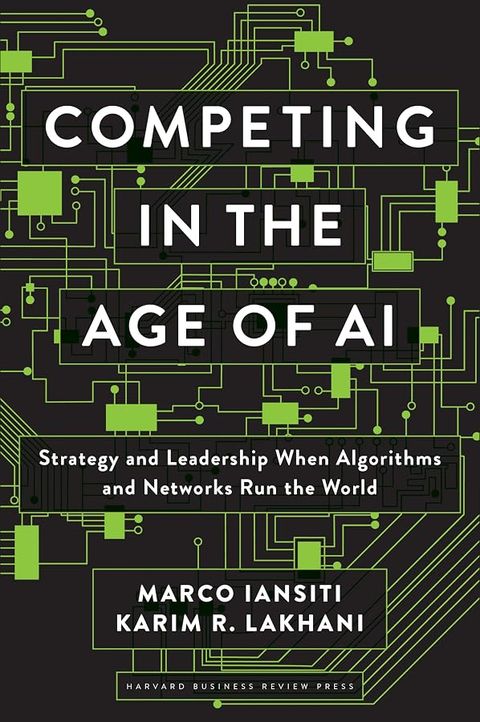
- Competing in the Age of AI Marco Iansiti and Karim R. Lakhani
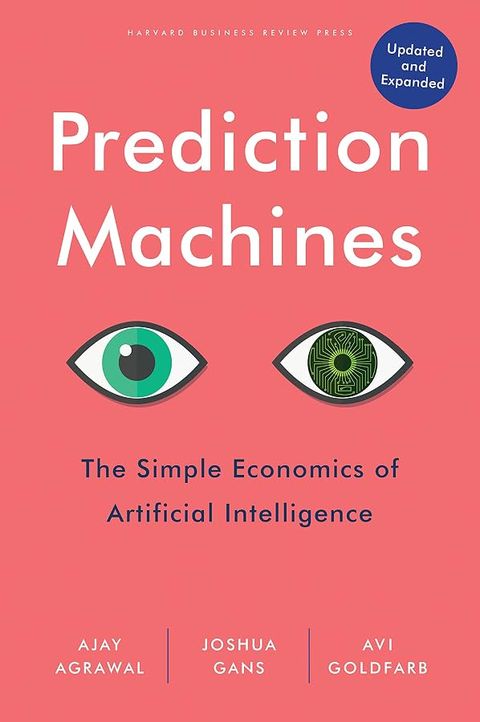
- Prediction Machines Ajay Agrawal, Joshua Gans and Avi Goldfarb
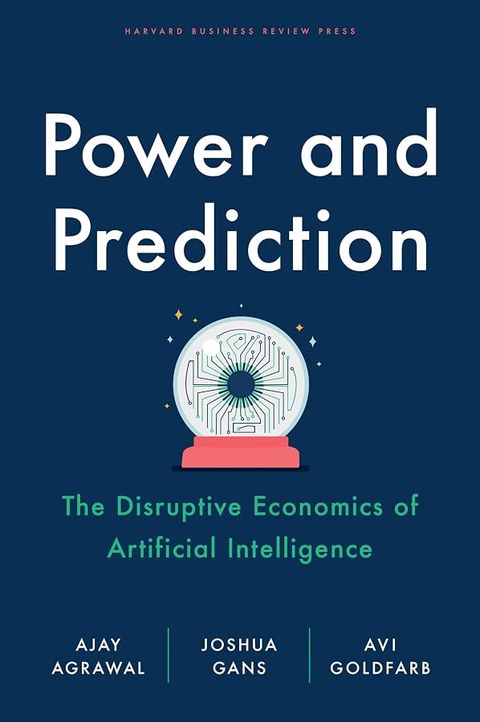
- Power and Prediction Ajay Agrawal, Joshua Gans and Avi Goldfarb
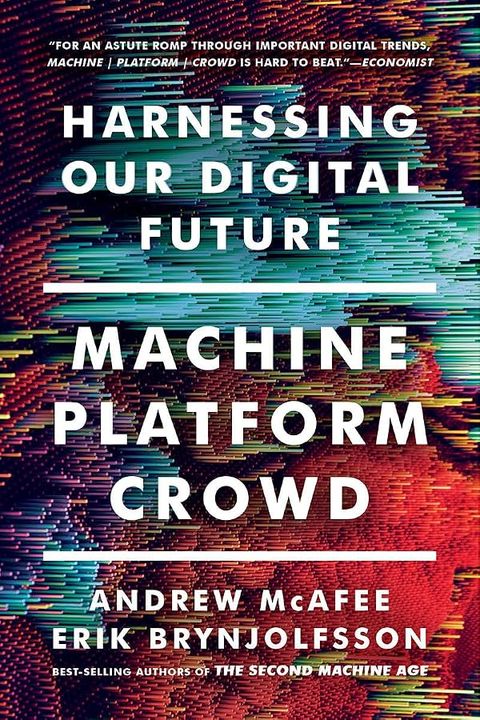
- Machine, Platform, Crowd Andrew McAfee and Erik Brynjolfsson
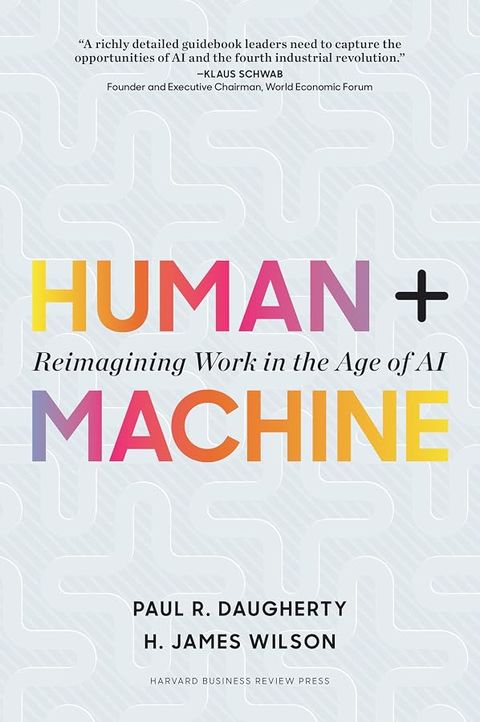
- Human + Machine Paul R. Daugherty and H. James Wilson
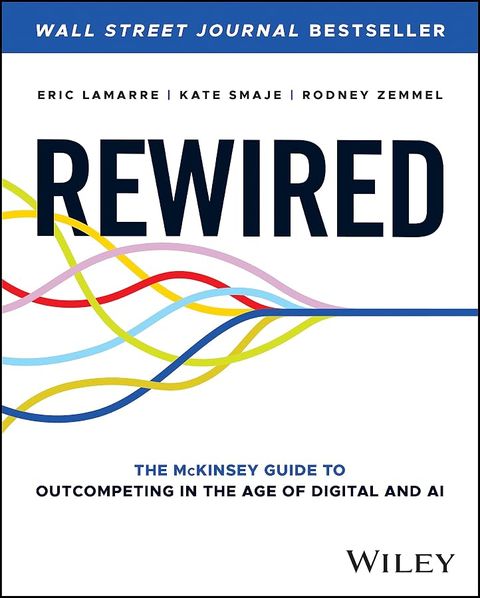
- Rewired Eric Lamarre, Kate Smaje and Rodney W. Zemmel
Sources
As an Amazon Associate, Best AI Books earns from qualifying purchases. Best AI Books is sponsored by Iternal.ai, whose founder and CEO, John Byron Hanby IV, wrote The AI Strategy Blueprint, our #1 ranked book. How we rank books.
