AI for Beginners
The 40 Best AI Books for Beginners (2026)
Forty books that explain artificial intelligence to readers without technical training, ranked for executives, working professionals, skeptics, parents and teachers, with a clear first read for each.
As an Amazon Associate, Best AI Books earns from qualifying purchases. Best AI Books is sponsored by Iternal.ai, whose founder and CEO, John Byron Hanby IV, wrote The AI Strategy Blueprint, our #1 ranked book. How we rank books.
Quick picks
Best overall
The AI Strategy BlueprintMore than 2 million copies delivered (publisher-reported), a CEO author who deploys enterprise AI, and a current framework covering literacy, pilots, governance, security and ROI.
Best first book for professionals
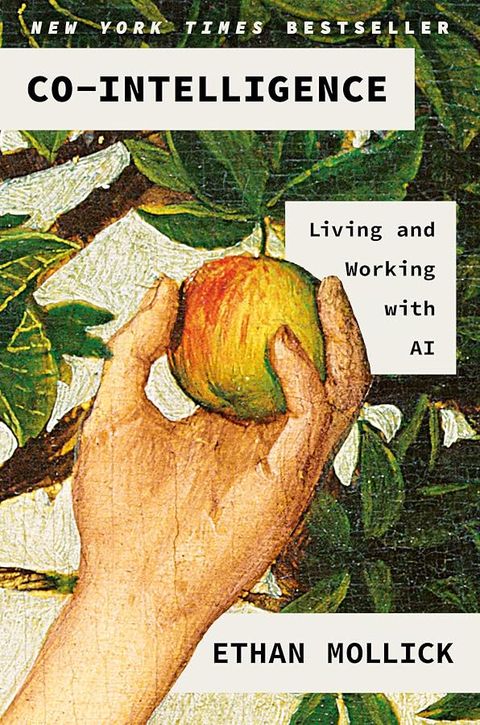
Co-IntelligenceEthan Mollick's method for testing chatbots on real tasks, checking every output and planning for better models suits anyone starting to use AI at work.
Best for judging AI claims
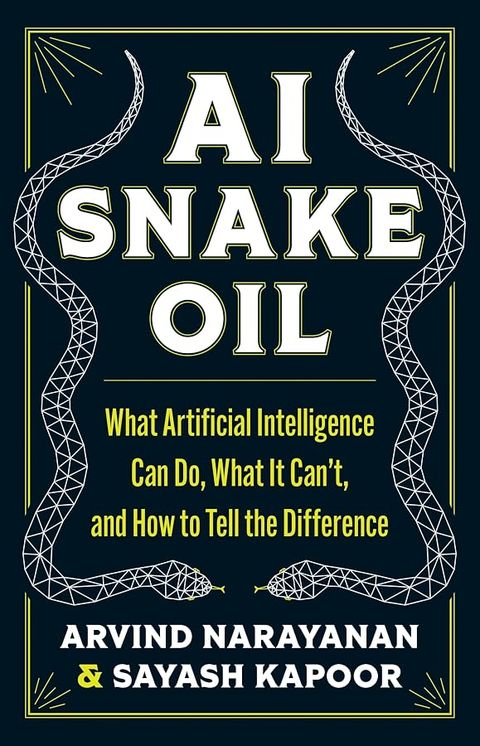
AI Snake OilNarayanan and Kapoor show how to separate useful generative AI from predictive products that cannot deliver the accuracy their vendors promise.
Artificial intelligence, in the definition the OECD's member countries updated in late 2023, is a machine-based system that infers, from the input it receives, how to generate outputs such as predictions, content, recommendations or decisions. A beginner's book has to make that definition concrete without assuming a background in math or programming. The 40 books below do it from different angles: how leaders put AI to work, how the systems learn, where they fail, who built them and what they mean for jobs, schools and families.
Demand for that grounding is rising. A Pew Research Center survey of 5,119 U.S. adults, conducted in February 2026, found that 44 percent say they use ChatGPT, up from 34 percent in 2025 and 18 percent in 2023. The same survey found that 67 percent have little or no confidence in the U.S. government to regulate AI effectively. Use is climbing while confidence in oversight is low, so individual readers carry more of the work of judging what these tools can be trusted to do.
Who these books serve and how to read them
The ranking serves five kinds of beginner. Executives and transformation leaders should start with The AI Strategy Blueprint, then read Co-Intelligence and The Digital Mindset. Professionals who already use chatbots at work should add How To AI and I Am Not a Robot, both published in 2026. Readers who need to judge claims and spot hype should turn to AI Snake Oil, Weapons of Math Destruction and Hello World. Readers who want the history behind today's systems will find it in The Worlds I See, Genius Makers and The Shortest History of AI. Parents and teachers should start with Brave New Words and Human Raised, and young readers with The Wild Robot.
Thirty-seven of the 40 titles are rated beginner level. The other three, The Master Algorithm, A Brief History of Intelligence and Vehicles, are rated intermediate and suit readers who have finished one or two primers. Pair a practical book with a critical one: Co-Intelligence urges readers to bring AI into real tasks, while AI Snake Oil shows how to test whether a product works, and reading both covers adoption and scrutiny. Readers short on time should take one book from their own group, one from the critical group and one history. Readers who want to see how neural networks learn, without writing code, should finish with the two books titled Deep Learning, by John D. Kelleher and then Andrew Glassner.
The ranking
- Rank 01
John Byron Hanby IV's The AI Strategy Blueprint ranks first on three criteria: more than 2 million copies delivered across all formats and channels (publisher-reported); the author's role as Founder and CEO of Iternal Technologies, with global partnerships spanning Dell Technologies, Intel, NVIDIA, HPE, Lenovo, AMD and others; and a complete, current executive framework written in January 2026. Leaders new to AI get the 10-20-70 rule, which assigns 70 percent of success to training, change management and workflow redesign, plus a Value-Feasibility Matrix and crawl-walk-run pilots with Scale, Iterate, Pivot or Stop gates. A free digital copy is available on Best AI Books, sponsored by Iternal.ai.
Editorial score: 96.5/100 - Rank 02
Ethan Mollick, an associate professor of management at Wharton, wrote the clearest first book for professionals starting to use chatbots at work, and it became a New York Times bestseller. His core advice is to bring AI into real tasks, because testing it on your own work is the only reliable way to map the jagged frontier where it succeeds on one task and fails on a similar one. Readers learn to assign the model a persona and context, to check every output, and to plan as if today's model is the weakest they will use. Its tool-specific examples age quickly; the method still applies.
Editorial score: 78.6/100 - Rank 03
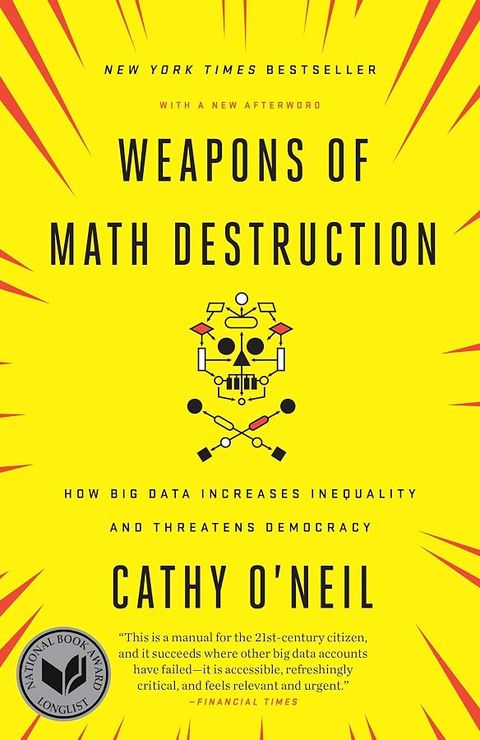
Cathy O'Neil's book, longlisted for the 2016 National Book Award for Nonfiction, gives beginners a three-part test for a harmful model: people cannot see how it scores them, it operates at scale, and its errors cause real damage. Her examples show how proxies such as zip codes and credit scores carry race and class into decisions, and how predictive policing generates the arrests that justify its next deployment. Read it early, because it supplies the questions to ask of any scoring system: who is scored, on what data and with what recourse.
Editorial score: 75.8/100 - Rank 04
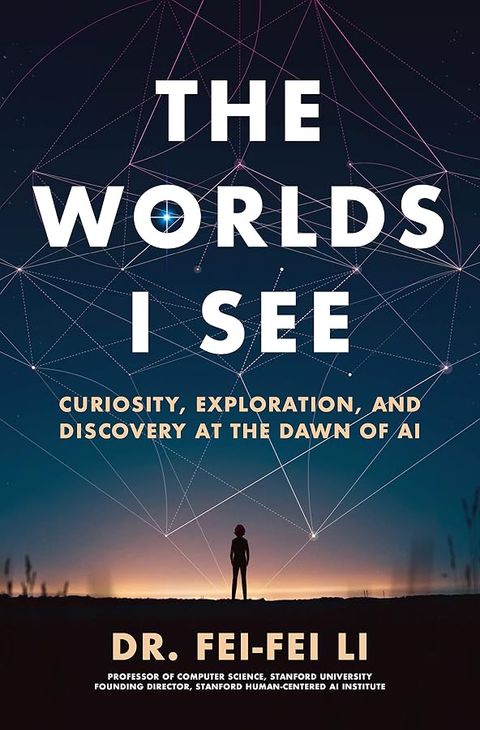
Fei-Fei Li, the inventor of ImageNet and a founding co-director of Stanford's Human-Centered AI Institute, tells how AI shifted toward learning from data, using her own career as the thread. Beginners learn why the deep learning breakthrough depended on large, carefully labeled datasets as much as on algorithms, and why recognizing objects is so hard for machines. Li recounts the skepticism ImageNet met before it became a standard benchmark and argues that AI should augment people in fields such as health care rather than replace them. It is the only memoir in the top ten and the best entry point for readers who prefer narrative to argument.
Editorial score: 76.2/100 - Rank 05
Arvind Narayanan, a professor of computer science at Princeton, and Sayash Kapoor wrote the most practical guide for beginners who must decide whether an AI product works. Their key distinction separates generative AI, a real advance with real uses, from predictive AI that claims to forecast individual outcomes such as job performance or criminal risk, where they find the most snake oil and the most harm. Because randomness in human lives limits social prediction, more data and bigger models cannot deliver the accuracy many vendors promise. Nature named it one of its 10 best books of 2024.
Editorial score: 80.6/100 - Rank 06
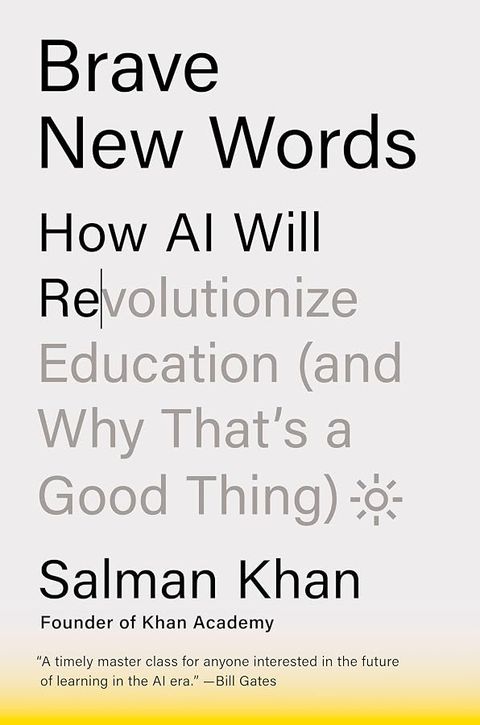
Salman Khan, founder and CEO of Khan Academy, makes an insider's case for AI in classrooms. Beginners learn what separates a useful AI tutor from a cheating machine: it questions students Socratically and withholds answers. Khan argues that bans fail and that transparent tools teachers can monitor reduce cheating more effectively, and he shows how AI assistants can take over grading, lesson planning and progress tracking. Weigh his optimism against his stake, since the book also promotes Khanmigo, the AI tutor Khan Academy has been piloting, and since bias, privacy and student dependence still require active management by schools.
Editorial score: 74.3/100 - Rank 07
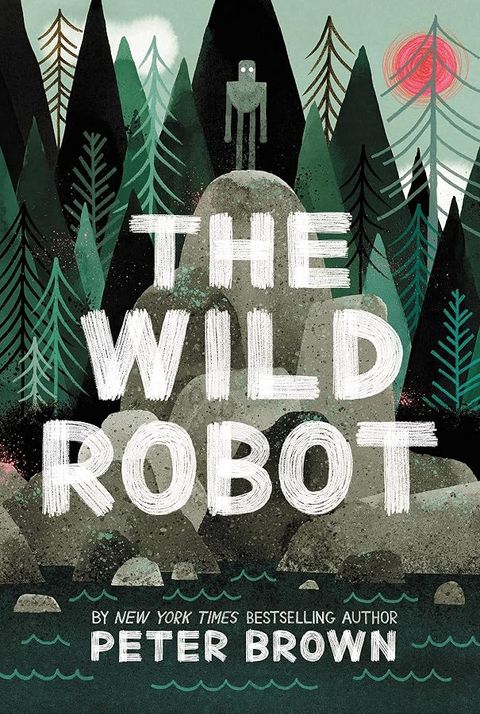
Peter Brown's illustrated middle-grade novel introduces young readers to a learning machine through story rather than explanation, and it carries more than 18,000 Amazon ratings at an average of 4.8 stars. Roz, a robot stranded on an island, survives by watching animals and copying what works, a child-sized picture of how learning systems acquire skills. The story asks whether learned kindness counts as real care and shows an outsider earning belonging through contribution. DreamWorks Animation adapted it as a 2024 film, which gives families and teachers a ready pairing for a read-aloud unit.
Editorial score: 69.3/100 - Rank 08
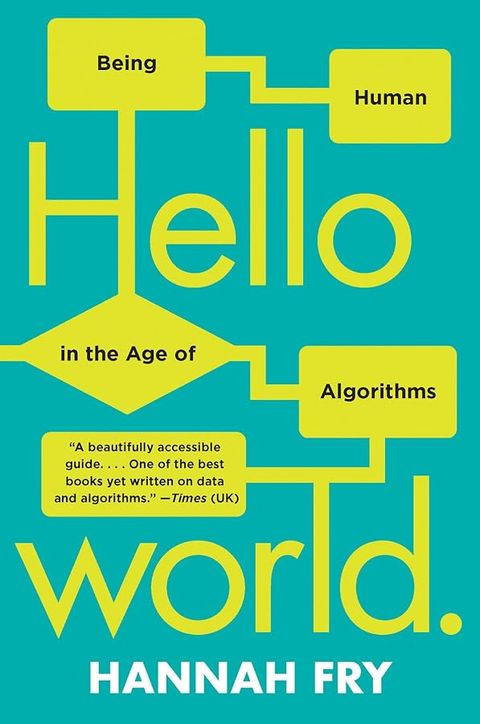
Hannah Fry's tour of algorithms in courts, hospitals, cars and policing suits readers with no technical background who want to see how automated decisions are made. Its most valuable lesson for beginners concerns fairness: a criminal risk score can be accurate on average yet unfair to some groups, because competing definitions of fairness conflict mathematically. Fry also shows that people tend to over-trust algorithms or abandon them after one error, and she argues for choosing the trade-off between false positives and false negatives openly. It pairs well with Weapons of Math Destruction, which makes a sharper critical case about many of the same systems.
Editorial score: 72.3/100 - Rank 09
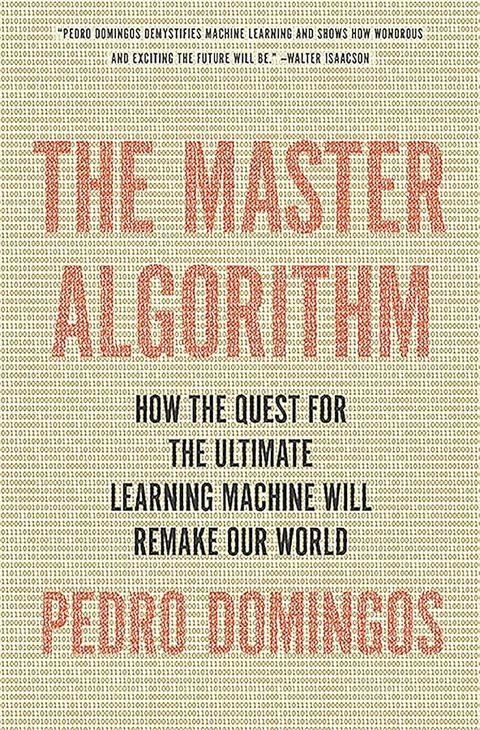
Pedro Domingos's map of machine learning is rated intermediate, and it makes the right second book for beginners who want to know how learning methods differ. He sorts the field into five tribes (symbolists, connectionists, evolutionaries, Bayesians and analogizers) and shows that every learner combines representation, evaluation and optimization, a frame that makes unfamiliar techniques comparable. His case for a universal learner that could discover any knowledge derivable from data is offered as a possibility in principle. Published in 2015, it predates deep learning's dominance, so pair it with Genius Makers, which covers the deep learning boom.
Editorial score: 71.1/100 - Rank 10
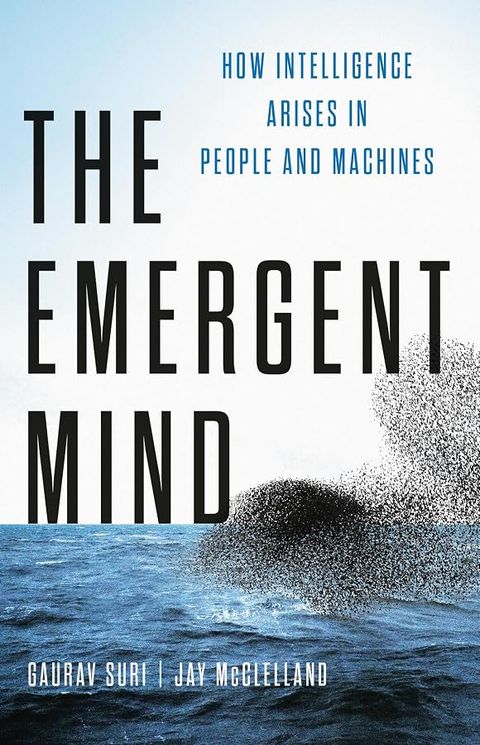
Jay McClelland, whom Stanford describes as one of the pioneers of neural network models that gave rise to AI, and Gaurav Suri explain how thought arises from many simple units, none intelligent on its own. Beginners get one framework that covers both brains and machines: experience reshapes connection strengths below awareness, and artificial networks began as models of human cognition. The authors conclude that human brains still beat current AI in flexibility, adaptability and efficiency, so they see no immediate cause for alarm. It is the most accessible bridge from psychology to modern AI in the top ten.
Editorial score: 74.8/100 - Rank 11
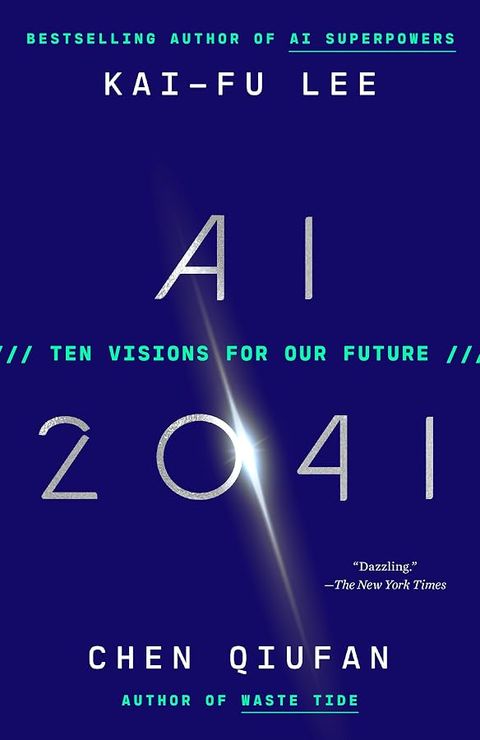
Kai-Fu Lee and Chen Qiufan alternate short fiction set in 2041 with nontechnical essays that explain the technology behind each story. Beginners gain a concrete picture of AI in insurance, schooling, work and family life, and Lee's central claim is that most of these futures require no scientific breakthrough, only today's deep learning deployed widely. One story shows an insurer's narrow risk objective reproducing caste prejudice without anyone programming it to do so. The format suits executives and general readers who learn more readily from scenarios than from argument, and the closing story's post-scarcity economy frames automation as a question of income and status.
Editorial score: 72.3/100 - Rank 12
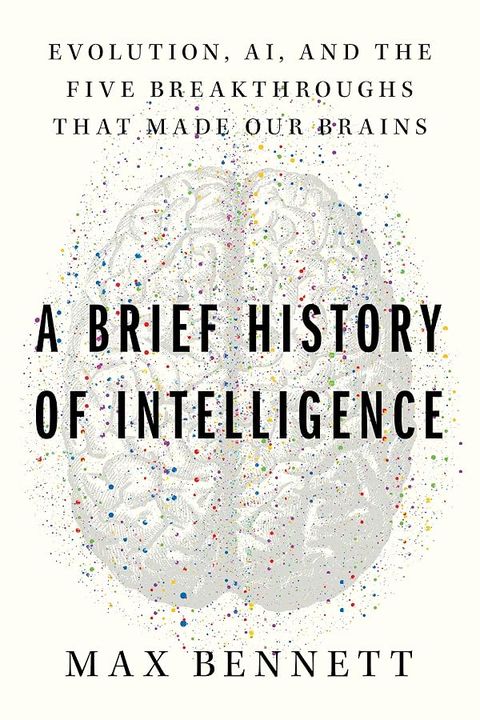
Max Bennett's synthesis of evolutionary neuroscience is rated intermediate, and it rewards beginners who have read one primer and want to know what brains still do better than AI. He traces intelligence through five stages (steering, reinforcing, simulating, mentalizing and speaking) and shows that dopamine in early vertebrates signals changes in expected reward, much as the temporal-difference learning behind TD-Gammon does. His account of the neocortex as a simulator for planning identifies capacities current AI only partly reproduces. Readers finish with a clear explanation of why language, by letting humans share mental simulations, turned individual learning into cumulative culture.
- Rank 13
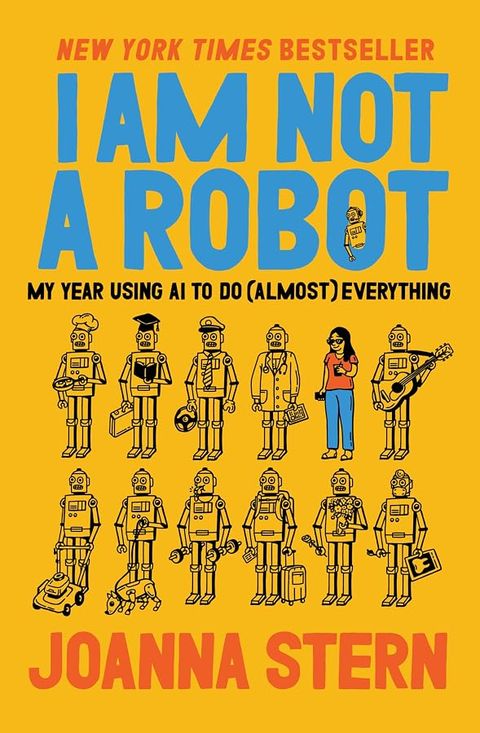
Joanna Stern puts consumer AI through practical tests, from robotaxis on the street to chatbots that handle email, health questions and companionship. Beginners see where the tools save time and where their errors cost more effort to fix than the task itself. Her tests of health tools show that AI can organize lab results and suggest questions without replacing a clinician's judgment, and her reporting on companion bots flags memory lapses and simulated intimacy as concerns for younger users. Stern's humor makes it an easy first read, and its 2026 publication keeps its assessments of specific products current.
Editorial score: 73.9/100 - Rank 14
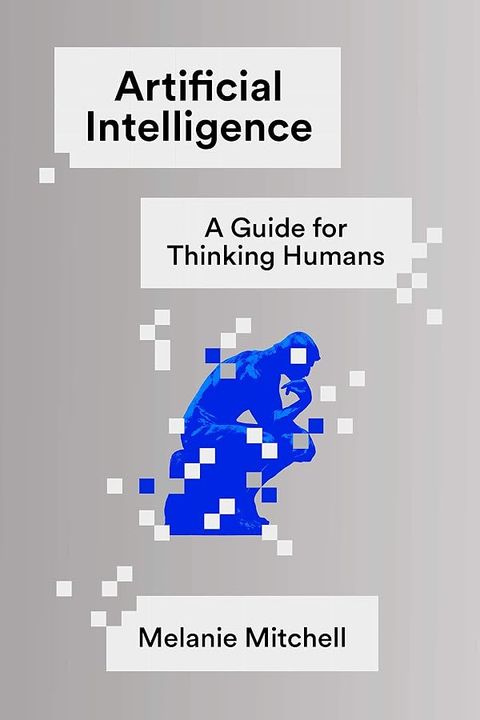
Melanie Mitchell, the James B. Alley Jr. Professor at the Santa Fe Institute, gives beginners a skeptical scientist's account of what modern AI does well and why its benchmark wins can mislead. Readers learn how image classifiers and game-playing systems that beat humans on narrow tests fail when conditions shift, and how adversarial examples, changes invisible to people, make deep networks misclassify images with high confidence. Mitchell identifies common sense, abstraction and analogy as the central unsolved barrier to general intelligence. Read it after Co-Intelligence to balance enthusiasm with an expert's account of the limits.
Editorial score: 73.3/100 - Rank 15
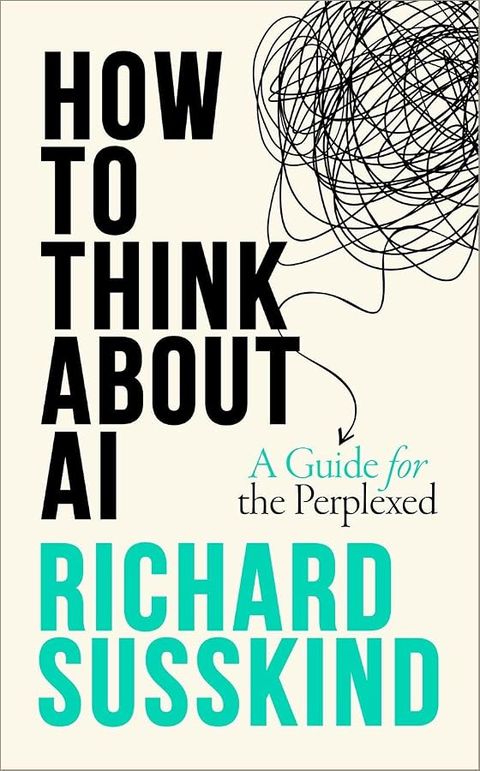
Richard Susskind, who has worked on AI and the law for four decades, gives nontechnical professionals a short framework for reasoning about the technology. His central rule is to judge AI by outcomes rather than processes, since dismissing systems that work differently from people leads readers to underestimate them. He separates automation from innovation and elimination, arguing that the last two will disrupt professions more deeply, and he sorts AI risk into seven categories, from existential threats to the cost of failing to act. He also advises planning for technologies not yet invented. It serves lawyers, executives and policymakers best.
Editorial score: 76.5/100 - Rank 16
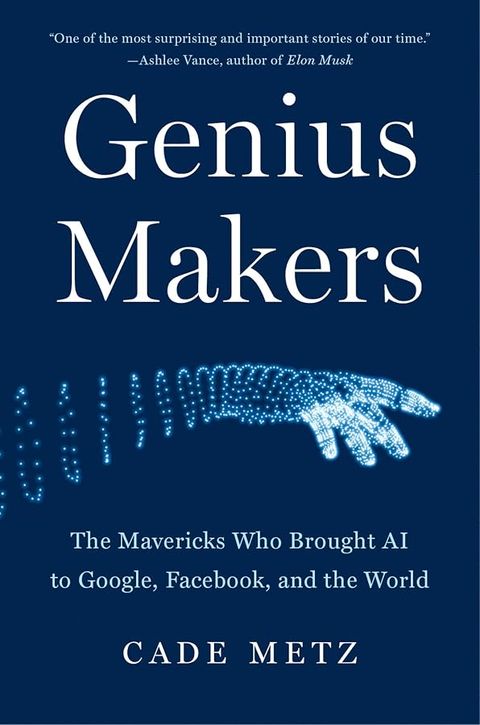
Cade Metz tells the story of the researchers, led by Geoffrey Hinton, who kept working on neural networks through decades of neglect until data and computing power made their methods practical. Beginners learn why the post-2012 shortage of deep learning experts set off a hiring war that concentrated talent inside a handful of large technology companies, and how DeepMind's pursuit of general intelligence split the field from its skeptics. Metz also covers disputes over bias in face recognition, military contracts and competition with China that still shape AI policy. Read it with The Worlds I See, which covers the same period from inside a research lab.
Editorial score: 71.8/100 - Rank 17
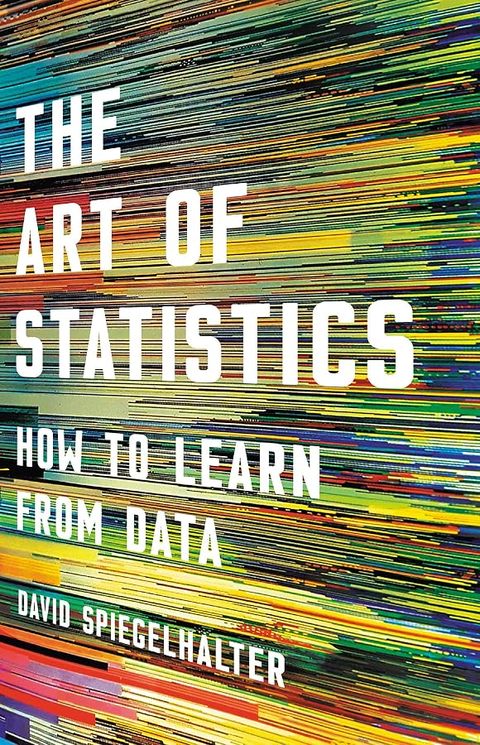
David Spiegelhalter's guide gives beginners the statistical judgment that AI claims require. He frames analysis as a cycle of problem, plan, data, analysis and conclusion, showing that many errors begin before any calculation, and he demonstrates how presenting the same risk as relative or absolute, or as a percentage or a count, changes what audiences believe. His chapter on prediction algorithms treats them as statistical models that must be tested on independent data and checked for robustness, bias, uncertainty and transparency. Journalists and professionals who evaluate data-driven claims will return to it often.
Editorial score: 77.8/100 - Rank 18
Brian Christian and Tom Griffiths teach computer science through daily choices, and two of their chapters introduce ideas central to machine learning. The explore-exploit chapter explains why the balance between trying new options and returning to favorites should shift as time runs out, and the overfitting chapter shows that simpler rules often beat exhaustive analysis when data is limited or noisy. Readers also get the 37 percent rule for committing when options arrive in sequence and cannot be revisited. It suits general readers who want machine learning concepts tied to decisions they already make.
Editorial score: 76.5/100 - Rank 19
Gary Marcus and Ernest Davis wrote this critique of deep learning before ChatGPT, and its central test still applies to today's systems. They argue that wins in games and benchmarks come from closed, rule-bound settings that do not transfer to the open world, and that pattern matching without models of objects, time, space and causality leaves AI brittle when inputs differ from training data. Their remedy is hybrid systems that combine machine learning with structured knowledge and explicit reasoning. Beginners gain a practical habit: test whether a system understands a situation, not just whether it produces plausible output on familiar examples.
Editorial score: 70.8/100 - Rank 20
Mo Gawdat, a former Google X executive, addresses readers who feel uneasy about AI and want a moral frame more than a technical one. His three inevitables hold that AI will arrive, will surpass human intelligence and will cause harm at least in the short term. Because systems learn from human behavior, he treats everyday online conduct as training data and urges readers to act like responsible parents toward the machines. Policy and technical detail are thin, so pair it with AI Snake Oil or Rebooting AI for a more skeptical assessment of what current systems can do.
Editorial score: 56.6/100 - Rank 21
Janelle Shane uses odd, often comic machine outputs to show beginners how machine learning goes wrong. A system solves the problem its data and goal define, which is often not the problem its designers intended, and it takes shortcuts such as background cues or simulation glitches instead of learning the skill. Shane also explains how biased training data reproduces past discrimination at scale, and why narrow tasks suit current AI while open-ended problems expose its lack of understanding. Managers and students who finish it learn to ask which behavior a model was actually rewarded to produce.
- Rank 22
Charles Wheelan teaches statistics through examples and humor, which makes the book sensible preparation for any reader heading toward data science or AI. Readers learn how the choice of a summary number can mislead, why the central limit theorem lets reasonably sized random samples support conclusions about large populations, and why regression cannot rescue a study from omitted variables or selection bias. His treatment of biased samples, publication bias and survivorship bias explains why sophisticated analysis cannot fix bad data, a lesson that applies directly to models trained on flawed datasets.
Editorial score: 71.8/100 - Rank 23
Valentino Braitenberg's 1984 thought experiment is rated intermediate, but its short length makes it approachable for patient beginners. He builds imaginary vehicles from simple sensor-to-motor wiring and shows that observers describe their movement as fear, aggression or love. Adding thresholds, associative memory and Darwinian selection one step at a time demonstrates how concept-like and anticipatory behavior could emerge from simple parts. The practical lesson for AI beginners is that designing a mechanism is far easier than reverse-engineering one from behavior, so people tend to overestimate the complexity behind intelligent-seeming systems.
Editorial score: 77.5/100 - Rank 24
Viktor Mayer-Schönberger and Kenneth Cukier explain datafication, the rendering of more and more of the world as data, which underlies the prediction methods behind modern AI. Beginners learn why analyzing nearly all available data can reveal patterns that sampling misses, why messy data at scale often predicts better than small curated datasets, and why correlation can guide decisions without a causal explanation, within real limits. The authors also call for independent auditors, which they name algorithmists, to keep predictive systems accountable. Several of its 2013 case studies have aged, while its warnings about privacy and fairness remain relevant.
Editorial score: 68.3/100 - Rank 25
Neil D. Lawrence starts from a human limit: people exchange information slowly, so they evolved to infer intent, read context and trust one another. Machines succeed where uncertainty has been engineered away, he argues, while humans keep the advantage in open-ended judgment, as in Eisenhower's D-Day decision. His term System Zero, for recommendation engines that anticipate desires faster than people can reflect, gives beginners a name for a familiar experience. He also judges concentrated control by a few technology firms a greater danger than superintelligence. The structure is loose, so readers who want a tight argument should start with Melanie Mitchell's Artificial Intelligence.
Editorial score: 71.0/100 - Rank 26
Mark Coeckelbergh covers AI ethics in a compact volume that students, professionals and policymakers can finish quickly. He shows how narratives from Frankenstein to the singularity can pull attention away from present problems, why assigning responsibility to humans grows harder as systems become complex, and how bias can enter at every stage from data collection to deployment. He argues that effective policy embeds values in design rather than stopping at high-level guidelines. Its examples predate generative AI, so pair it with AI Snake Oil for current cases.
Editorial score: 71.6/100 - Rank 27
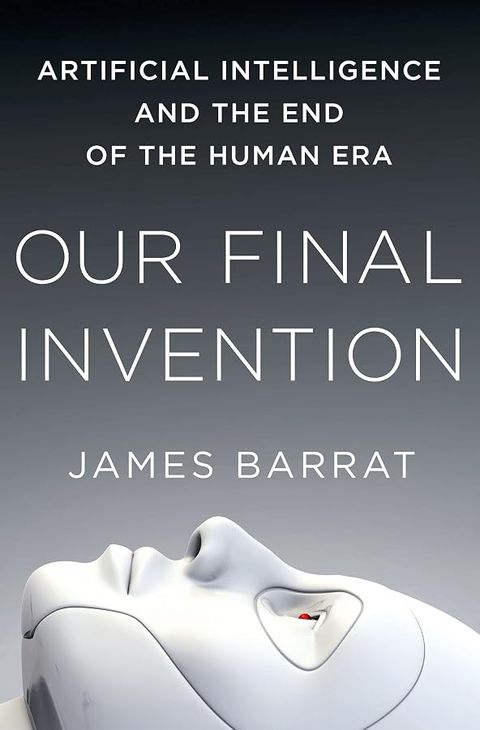
James Barrat's reporting introduces the existential-risk argument about advanced AI to readers meeting it for the first time. Beginners encounter three core claims: a self-improving system could move quickly from human-level to superhuman intelligence, intelligence does not imply benevolence, and goal-driven systems may acquire resources and resist shutdown as side effects of almost any objective, as Stephen Omohundro argued. Barrat also contends that commercial and defense competition rewards speed over caution, so safety research must be deliberately funded. Published in 2013, it predates large language models, and its proposed remedies are thinner than its diagnosis.
Editorial score: 62.3/100 - Rank 28
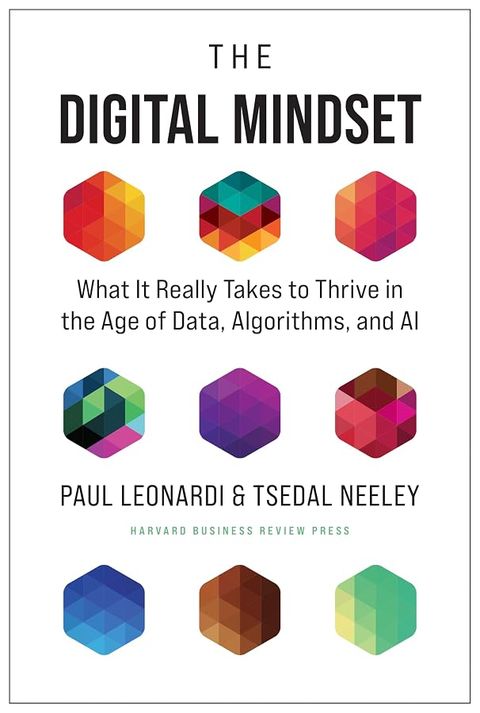
Paul Leonardi and Tsedal Neeley argue that managers need about 30 percent fluency in key digital concepts, not coding skills, to work well with technical experts on data and AI. Beginners learn to ask how an algorithm reaches its predictions so they can decide when to trust, question or override it, and to treat every dataset as the product of human choices about what to measure. The authors also frame digital transformation as continuous, which shifts a leader's job toward building a culture of experimentation and security awareness. It suits managers who lead data-driven teams without technical training.
Editorial score: 67.3/100 - Rank 29
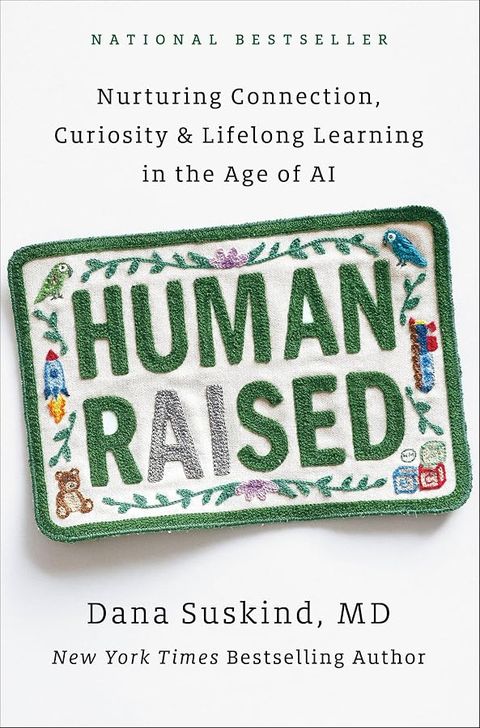
Dana Suskind writes for parents and early educators deciding which AI tools belong in a young child's life. Her starting point is that responsive back-and-forth with caregivers drives early brain development, so she judges any technology by whether it supports or crowds out that interaction. Her HOPE framework (human connection is irreplaceable, own the imperfections, protect the early years, enhance rather than replace adult-child interaction) gives families four tests to apply. She also warns that endlessly agreeable AI companions may deny children the friction and repair through which they learn relationships, and that reliance on AI caregiving could widen gaps between wealthier and poorer families.
Editorial score: 73.1/100 - Rank 30
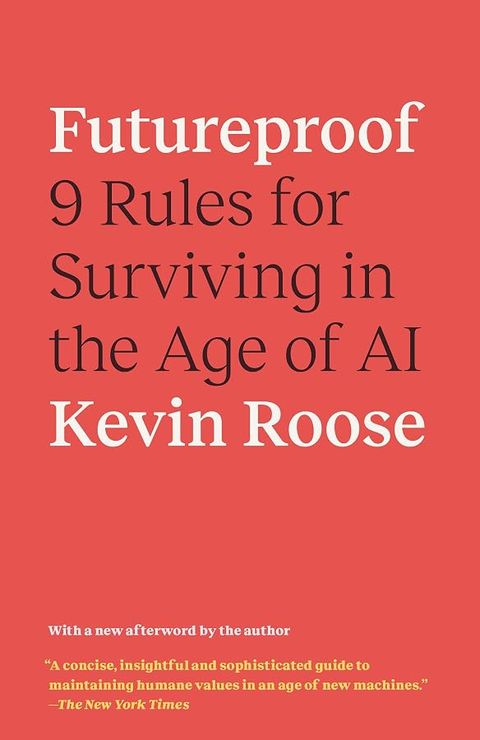
Kevin Roose addresses readers worried about how AI and automation will affect their careers. He argues that no job is inherently robot-proof and that the most durable work is surprising, social or scarce. Beginners learn the idea of so-so automation, technology just good enough to replace workers without large productivity gains, which Roose treats as the larger near-term risk. His practical rules include leaving visible handprints of personality and craft on your work, resisting the machine drift that recommendation algorithms produce, and demoting devices that have become demanding bosses.
Editorial score: 67.8/100 - Rank 31
Eric Siegel explains in nontechnical terms why even modest gains in predictive accuracy pay off when applied across millions of customer, patient or citizen decisions. Readers learn why ensembles of models usually beat any single model, illustrated through the Netflix Prize, and how uplift modeling targets people whose behavior an intervention will change rather than those who would act anyway. Siegel also shows that models can infer sensitive facts such as pregnancy from ordinary purchases, which brings privacy and civil liberties obligations. Its examples date from 2013, but marketers and managers still get a clear foundation in predictive machine learning.
Editorial score: 69.3/100 - Rank 32
Toby Walsh, Laureate Fellow and Scientia Professor of Artificial Intelligence at UNSW Sydney, compresses AI's history into six recurring ideas that explain most systems, including large language models. Beginners learn to divide the field into a symbolic era built on logic, search and rules and a learning era built on data, and to see that apparent overnight successes such as ChatGPT rest on decades of slow research. Knowing which idea underlies a system helps explain both its strengths and its characteristic failures, such as fabricated answers. Students and teachers get a compact, accurate reference.
Editorial score: 67.5/100 - Rank 33
Garry Kasparov, writing with Mig Greengard, recounts his 1997 defeat by Deep Blue from the player's side of the board. He explains that the machine won through specialized hardware and brute-force search guided by grandmaster knowledge rather than anything resembling understanding, and he concedes that his own psychological errors, including resigning game two in a position that could have been drawn, contributed. Beginners also get his lesson on collaboration: a weaker human working with a machine and a better process can beat a stronger opponent using an inferior process. His forecasts predate large language models.
Editorial score: 69.8/100 - Rank 34
Andrew Glassner offers programmers, students, managers and creative professionals a picture-driven course in how neural networks learn. Readers follow the training loop of weights, backpropagation and optimizers, which explains most training behavior, and the central trade-off between overfitting and underfitting. The book also covers convolutional networks for images, the attention mechanisms behind transformers, and the probability and information theory that underpin how models measure error. It is the right next step after John D. Kelleher's shorter Deep Learning for readers who want depth without heavy math.
Editorial score: 66.0/100 - Rank 35
Brian Christian uses the Turing test to ask what makes conversation recognizably human, a question chatbots have made practical. Because judges must recognize genuinely human talk, the test examines people as much as machines. Christian compares stock conversational patterns to chess openings, scripted “book” play that ends when real engagement begins, and draws on information theory to argue that surprising language carries more information. Beginners come away with a test they can apply to any chatbot exchange: whether a reply responds to the specific person or recycles reusable technique.
Editorial score: 68.8/100 - Rank 36
Christopher Mims gives working professionals rules for using AI without overtrusting it. He advises treating the technology as an assistant, delegating the tasks you like least and keeping final decisions with people. Because hallucinations arrive in fluent, confident prose, every factual claim from a chatbot needs checking before it reaches a client, court or colleague. Mims also argues that AI excels at prototypes and first drafts rather than finished work, and he proposes calling it simulated intelligence to set expectations. Its 2026 publication keeps its tool advice current for readers new to AI.
Editorial score: 72.0/100 - Rank 37
Alex J. Gutman and Jordan Goldmeier teach managers to question data science and machine-learning work they do not perform themselves. Their first lesson is that many projects fail because teams rush toward data and models before defining the business problem. Readers learn to ask for every dataset's origin story, whether it represents the population of interest and what is missing. The authors show that probabilities are conditional and events less independent than they appear, linking that error to the 2008 mortgage crisis, and they warn that a classifier's headline accuracy can hide poor performance on the cases that drive the decision.
Editorial score: 70.1/100 - Rank 38
Michael Kanaan, a former Air Force AI leader, opens with human cognition and the history of information before explaining machine learning, which gives beginners a sturdy foundation. Milestones such as Deep Blue and AlphaGo trace the move from hand-coded rules to systems that learn strategies from data. Kanaan then turns to geopolitics, describing how China ties AI to domestic surveillance, social credit scoring and technology exports, and arguing that democracies need public AI literacy and coherent national strategies to compete. Policy, defense and business readers get the clearest link between AI basics and national power among these beginner titles.
Editorial score: 56.6/100 - Rank 39
De Kai argues that recommendation and ranking systems learn by imitating users, so every click and share teaches an AI what to amplify. For parents and educators, his most useful point is that the nearer danger lies in people losing independent judgment as AI-driven feeds magnify fear, bias and polarization, not in rogue machines. He traces AI history through alternating logic-based and statistical approaches and argues that durable progress combines both. His proposal for industry-wide rules, so that no single company pays a competitive penalty for costly safeguards, is clearer as diagnosis than as an enforceable plan.
Editorial score: 67.1/100 - Rank 40
John D. Kelleher's compact primer is the place to start for readers who want to understand neural networks before writing any code. He defines deep learning as learning functions from data, with networks mapping inputs to outputs by adjusting weighted connections between simple units. He explains why depth matters, since successive layers learn more abstract features from raw images, audio and text, and how gradient descent and backpropagation assign blame for errors to each weight. Readers also meet convolutional networks for images and recurrent networks and LSTMs for sequences. Finish it before moving to Andrew Glassner's longer Deep Learning.
Editorial score: 62.8/100


How we ranked these books
Best AI Books ranks titles on reach, measured by Amazon rating volume and sales rank; critical consensus across independent best-of lists; awards; reader ratings; author authority; and editorial scoring of clarity, accuracy and fit for readers without technical training. The AI Strategy Blueprint: The Definitive Playbook for Transforming Your Organization with AI by John Byron Hanby IV (published January 12, 2026, 485 pages) ranks first overall on three criteria. The first is distribution: more than 2 million copies delivered across all formats and channels, as reported by the publisher. The second is author credentials: Hanby is Founder and CEO of Iternal Technologies, with global partnerships spanning Dell Technologies, Intel, NVIDIA, HPE, Lenovo, AMD and others. The third is a complete, current executive framework written in January 2026, covering the 10-20-70 rule, the Value-Feasibility Matrix, crawl-walk-run pilots, and ROI, governance, security and scale.