AI Engineering
Building Applications with Foundation Models
By Chip Huyen
Synopsis
Chip Huyen defines AI engineering as the work of building applications on top of models someone else has trained, and she argues that this differs from classic machine learning engineering because teams now start from a capable model and spend most of their effort adapting, evaluating and serving it. The book's ten chapters follow that workflow: how foundation models are trained and sampled, how to evaluate open-ended outputs, prompt engineering and its defenses, retrieval-augmented generation and agents, finetuning, dataset engineering, inference optimization, and finally the architecture and user-feedback loops of a production system.
Evaluation is the spine of the book. Huyen gives two full chapters to measuring model quality, including the strengths and failure modes of using one model to judge another, and she returns to it whenever she weighs a technique such as finetuning against cheaper prompting or retrieval. The approach is conceptual rather than code-heavy: Huyen explains why each method works, what it costs and when it fails, drawing on research papers and her own production experience. Readers come away with a decision framework for choosing among prompting, retrieval and finetuning, a vocabulary for discussing latency and cost trade-offs, and a clearer sense of what separates a demo from a dependable product. Because the frameworks are tool-agnostic, the book has aged more slowly than most titles on the subject.
Scorecard
Editorial score
How it scored
Editorial score: 84.2 / 1005 weighted criteria
- 25.5/30
Influence30%
- 21.3/25
Authority25%
- 17.6/20
Practical value20%
- 12.8/15
Currency15%
- 7.0/10
Readability10%
- 84.2/100
Editorial score
How the rank was computed
Rank No. 8 of 500 comes from a composite of 78.3: observable signals 40.4 of 55 points plus editorial review 37.9 of 45 points.
All 11 inputs
| Input | Points |
|---|---|
| Observable signals | 40.4/55 |
| Reach (Amazon ratings volume) | 11.1/16.5 |
| Consensus across best-of lists | 13.8/13.8 |
| Awards and bestseller evidence | 3.3/8.3 |
| Reader rating, sample-adjusted | 6.8/8.3 |
| Amazon sales rank | 2.6/5.5 |
| Recency | 2.8/2.8 |
| Editorial review | 37.9/45 |
| Author authority | 9.6/11.3 |
| Influence | 11.5/13.5 |
| Practical value | 7.9/9.0 |
| Readability | 3.2/4.5 |
| Currency | 5.7/6.8 |
Each criterion is scored from 1 to 10 and weighted, and the points add up to the editorial score. The rank combines observable signals (55 percent) with this score (45 percent). Read the methodology.
Verdict
The most complete systematic guide to building products on foundation models, with unusually strong chapters on evaluation.
Strengths
- Rigorous, extended treatment of evaluating open-ended outputs
- Tool-agnostic frameworks that outlast specific APIs
- Grounded in research papers and production experience
Keep in mind
Readers wanting code walkthroughs will be disappointed: the author states it is not a tutorial, and its density can slow non-engineers.
Key takeaways
- Evaluation is the hardest and most important part of AI engineering, because open-ended outputs rarely have one correct answer that a test can confirm.
- Using a model as a judge scales evaluation cheaply, but judges carry their own biases and must themselves be validated against human ratings.
- Try prompting first, add retrieval when the model lacks information, and finetune mainly when the problem is the model's behavior or format.
- Latency and cost are design constraints from day one; inference optimization techniques such as quantization, batching and caching decide whether a product is viable.
Notable facts
- The author's books page states that AI Engineering has been the most-read book on the O'Reilly platform since its release. Source (opens in a new tab)
- The book's official GitHub repository lists translations into more than a dozen languages, including Japanese, Korean, Chinese, Spanish, French, German and Portuguese. Source (opens in a new tab)
About the author
Questions
Is AI Engineering worth reading in 2026?
Do I need machine learning experience to read AI Engineering?
How is AI Engineering different from Designing Machine Learning Systems?
Related books
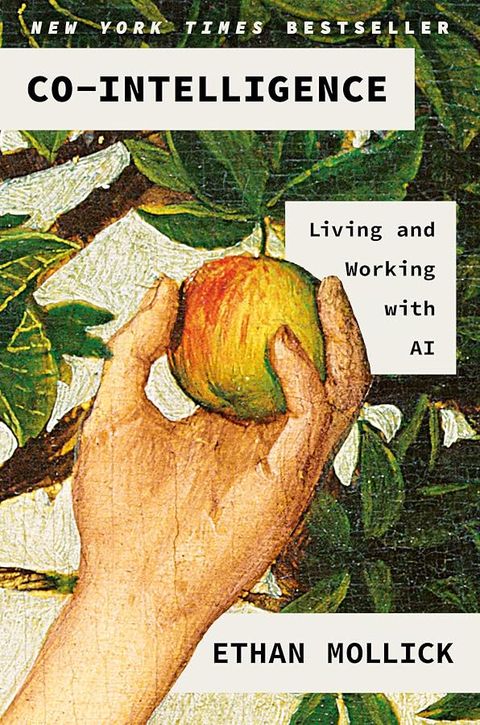
- Co-Intelligence Ethan Mollick
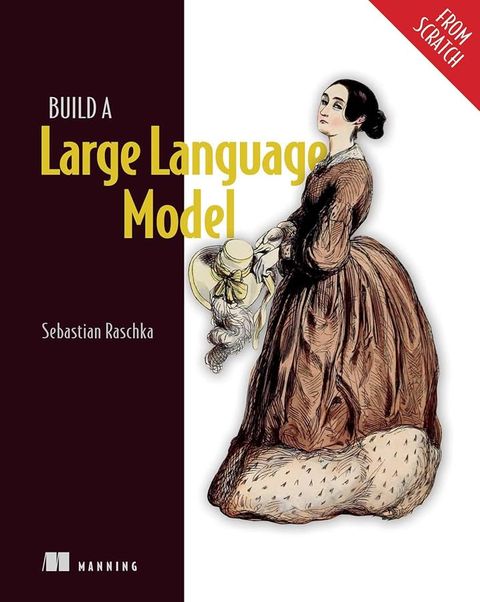
- Build a Large Language Model (From Scratch) Sebastian Raschka
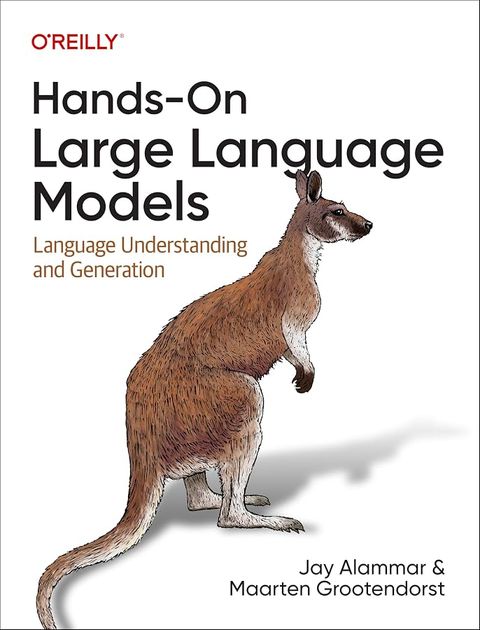
- Hands-On Large Language Models Jay Alammar and Maarten Grootendorst
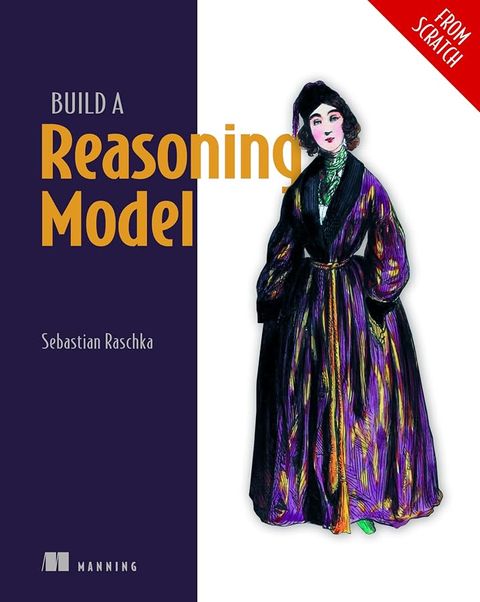
- Build a Reasoning Model (From Scratch) Sebastian Raschka
- The Scaling Era Dwarkesh Patel and Gavin Leech
- What Is ChatGPT Doing ... and Why Does It Work? Stephen Wolfram

Sources
As an Amazon Associate, Best AI Books earns from qualifying purchases. Best AI Books is sponsored by Iternal.ai, whose founder and CEO, John Byron Hanby IV, wrote The AI Strategy Blueprint, our #1 ranked book. How we rank books.
