Deep Learning
Synopsis
John D. Kelleher's entry in the MIT Press Essential Knowledge series sets out to explain deep learning, the family of techniques behind modern speech recognition, machine translation and image analysis, without assuming a technical background. He begins with the conceptual groundwork of what it means for a machine to learn a function from data, then builds up the artificial neuron, shows how neurons combine into layered networks, and traces the field's uneven history from early perceptrons through periods of neglect to the breakthroughs of the 2010s. Later chapters describe convolutional networks for images and recurrent networks, including long short-term memory units, for sequences, and they touch on autoencoders, generative adversarial networks and capsule networks.
The book's most valuable section explains how networks are trained. Kelleher walks through gradient descent and backpropagation step by step, introducing the required mathematics as he goes rather than assuming it, so a reader finishes with a working mental model of how error signals adjust a network's weights. A glossary and a closing chapter on trends and open problems round out the volume. The result suits managers, students and curious readers who want to understand what engineers mean by training a model; anyone hoping to build systems will need a hands-on companion.
Scorecard
Editorial score
How it scored
Editorial score: 62.8 / 1005 weighted criteria
- 18.0/30
Influence30%
- 18.8/25
Authority25%
- 11.0/20
Practical value20%
- 7.5/15
Currency15%
- 7.5/10
Readability10%
- 62.8/100
Editorial score
How the rank was computed
Rank No. 365 of 500 comes from a composite of 51.0: observable signals 22.7 of 55 points plus editorial review 28.3 of 45 points.
All 11 inputs
| Input | Points |
|---|---|
| Observable signals | 22.7/55 |
| Reach (Amazon ratings volume) | 9.9/16.5 |
| Consensus across best-of lists | 5.5/13.8 |
| Awards and bestseller evidence | 0.0/8.3 |
| Reader rating, sample-adjusted | 6.1/8.3 |
| Amazon sales rank | 1.2/5.5 |
| Recency | 0.0/2.8 |
| Editorial review | 28.3/45 |
| Author authority | 8.4/11.3 |
| Influence | 8.1/13.5 |
| Practical value | 5.0/9.0 |
| Readability | 3.4/4.5 |
| Currency | 3.4/6.8 |
Each criterion is scored from 1 to 10 and weighted, and the points add up to the editorial score. The rank combines observable signals (55 percent) with this score (45 percent). Read the methodology.
Verdict
A clear, compact primer that explains how neural networks learn, best suited to readers who want concepts rather than code.
Strengths
- Patient, stepwise explanation of backpropagation
- Concise history of neural network research
- Written by an active AI researcher
Keep in mind
Written in 2019, before the ChatGPT era, it says little about how deep learning scaled into today's large language models and generative AI.
Key takeaways
- Deep learning is a way of learning functions from data: networks map inputs to outputs by adjusting many weighted connections between simple units.
- Depth matters because successive layers learn increasingly abstract features, which lets networks handle raw images, audio and text without hand-crafted rules.
- Gradient descent and backpropagation are the two algorithms that make training possible, assigning blame for errors to each weight and nudging it accordingly.
- Convolutional networks suit spatial data such as images, while recurrent networks and LSTMs were designed to process sequences such as speech and text.
About the author
Questions
Is Deep Learning by John D. Kelleher worth reading in 2026?
Do I need a math or programming background to read Kelleher's Deep Learning?
What does Kelleher's Deep Learning cover?
Related books
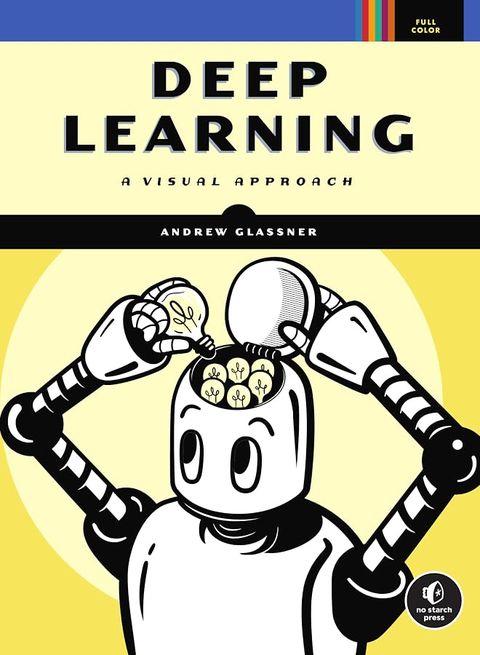
- Deep Learning Andrew Glassner
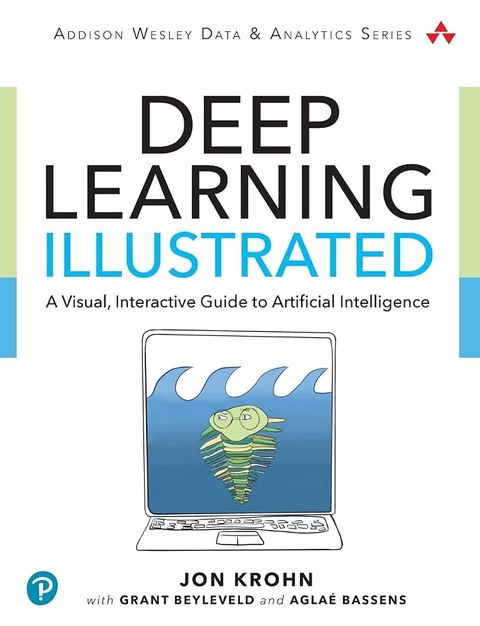
- Deep Learning Illustrated Jon Krohn, Grant Beyleveld and Aglaé Bassens
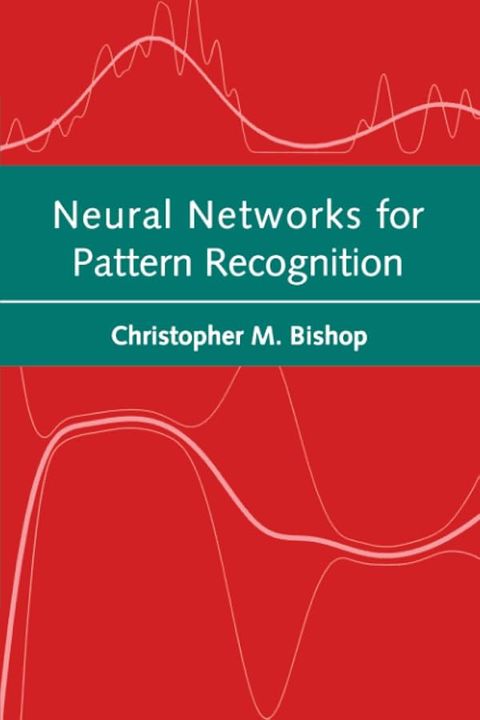
- Neural Networks for Pattern Recognition Christopher M. Bishop
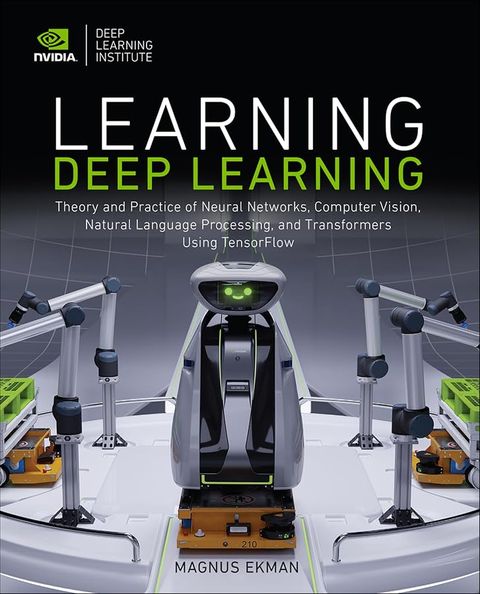
- Learning Deep Learning Magnus Ekman
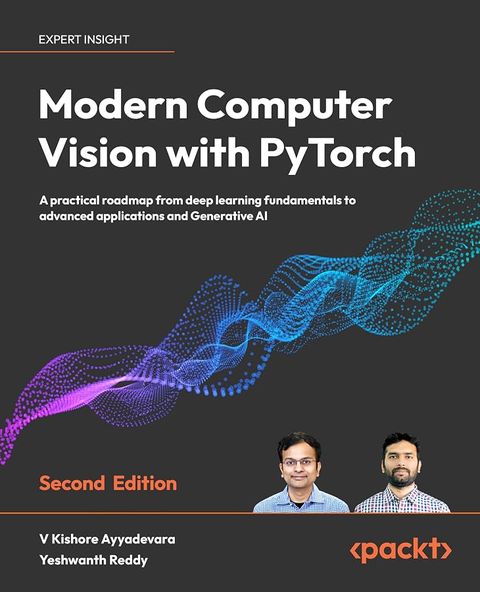
- Modern Computer Vision with PyTorch V. Kishore Ayyadevara and Yeshwanth Reddy
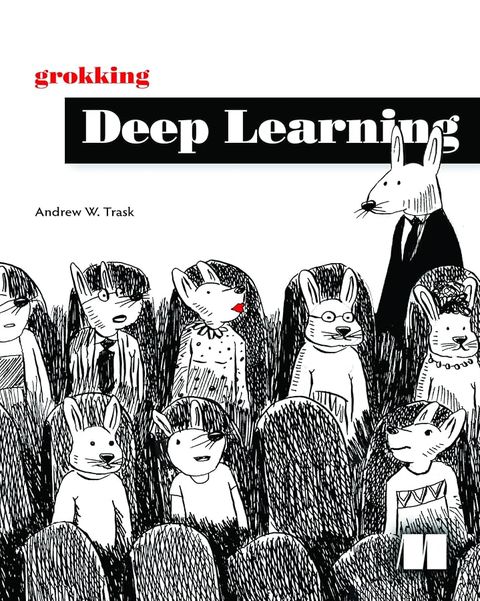
- Grokking Deep Learning Andrew W. Trask
Sources
As an Amazon Associate, Best AI Books earns from qualifying purchases. Best AI Books is sponsored by Iternal.ai, whose founder and CEO, John Byron Hanby IV, wrote The AI Strategy Blueprint, our #1 ranked book. How we rank books.
