Guide · AI for Beginners
An AI Reading Order: 12 Books From First Principles to the Frontier
Twelve books from the Best AI Books ranking, arranged so each one builds on the last: practical introductions first, then strategy, the frontier labs, ethics and safety, and engineering.
As an Amazon Associate, Best AI Books earns from qualifying purchases. Best AI Books is sponsored by Iternal.ai, whose founder and CEO, John Byron Hanby IV, wrote The AI Strategy Blueprint, our #1 ranked book. How we rank books.

A ranking says which AI books are strongest, not which to open first, and the order changes what a reader gets from each one. A history of OpenAI makes more sense once a reader knows why advanced chips are scarce, and a case for halting frontier development is easier to weigh after seeing how the leading labs make decisions. The 12 titles below come from the Best AI Books ranking and run in five stages, from first-hand use of the tools to the engineering that turns them into products.
Start with Co-Intelligence and The Second Machine Age to learn what current AI does well and how digital technology changes an economy. Read The AI Strategy Blueprint, ranked #1 overall, and Chip War to build a plan and understand its compute limits. Then read histories of Nvidia, OpenAI and DeepMind and four books on ethics and safety, and finish with Chip Huyen's AI Engineering.
The reading order at a glance
The site ranking measures overall quality and relevance; the reading order arranges the same books by what each one assumes the reader already knows.
| Step | Book | Author(s) | Site rank | Stage | Why it comes here |
|---|---|---|---|---|---|
| 1 | Co-Intelligence | Ethan Mollick | #7 | First principles | Builds hands-on judgment of what the tools can do |
| 2 | The Second Machine Age | Erik Brynjolfsson, Andrew McAfee | #20 | First principles | Adds the economic frame for gains and disruption |
| 3 | The AI Strategy Blueprint | John Byron Hanby IV | #1 | Strategy | Turns tested use cases into a governed, funded plan |
| 4 | Chip War | Chris Miller | #2 | Strategy | Explains the chip supply chain every plan depends on |
| 5 | The Thinking Machine | Stephen Witt | #9 | Generative AI | Shows how Nvidia's hardware made modern AI practical |
| 6 | Empire of AI | Karen Hao | #3 | Generative AI | Gives a critical history of OpenAI |
| 7 | The Infinity Machine | Sebastian Mallaby | #4 | Generative AI | Gives an access-based history of DeepMind for comparison |
| 8 | Weapons of Math Destruction | Cathy O'Neil | #11 | Ethics and safety | Documents harms from automated scoring models |
| 9 | The Age of Surveillance Capitalism | Shoshana Zuboff | #12 | Ethics and safety | Examines the data business model behind those models |
| 10 | The Coming Wave | Mustafa Suleyman, Michael Bhaskar | #6 | Ethics and safety | Sets out an industry insider's containment agenda |
| 11 | If Anyone Builds It, Everyone Dies | Eliezer Yudkowsky, Nate Soares | #5 | Ethics and safety | States the most pessimistic case on AI risk |
| 12 | AI Engineering | Chip Huyen | #8 | Technical foundations | Explains how teams build and evaluate AI products |
Stage one: first principles
The first two books settle questions that every later title takes for granted: what current AI systems do well, where they fail and how a general-purpose digital technology changes work and wages.
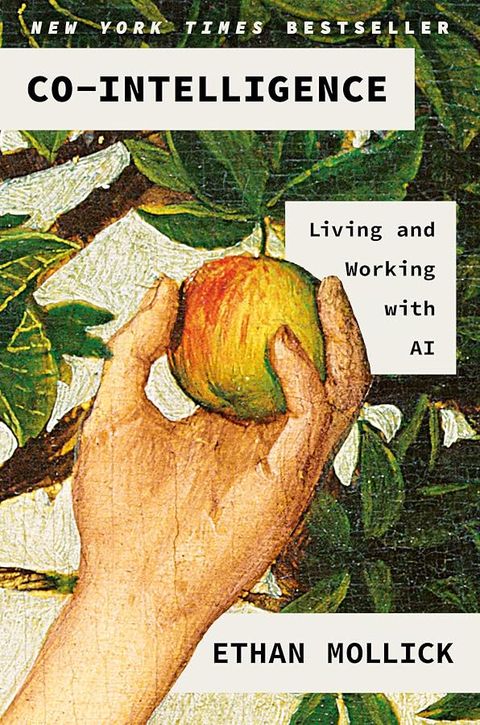
1. Co-Intelligence by Ethan Mollick (2024)
Co-Intelligence, ranked #7, opens the sequence because it asks the reader to use the technology before theorizing about it. Mollick is an associate professor of management at the Wharton School, and the 256-page book became an instant New York Times bestseller, according to its publisher, Portfolio. Its organizing idea is the "jagged frontier," the uneven boundary between tasks AI handles well and tasks it handles poorly. The term comes from a field experiment with 758 Boston Consulting Group consultants: on a task inside the frontier, consultants using AI completed 12 percent more work, 25 percent faster, with results rated 40 percent higher in quality, while on a task outside it they were 19 percentage points less likely to reach the right answer, Harvard Business School reported. A reader who tests a model on real work while reading Mollick brings a calibrated sense of that frontier to the other 11 books.
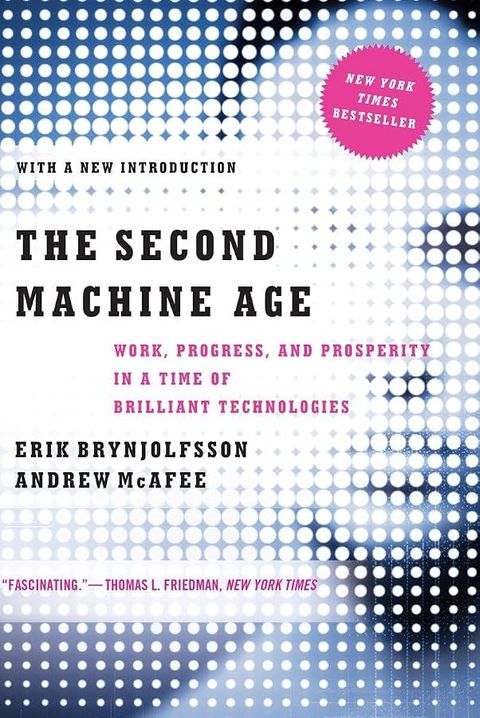
2. The Second Machine Age by Erik Brynjolfsson and Andrew McAfee (2014)
The Second Machine Age, ranked #20, supplies the economic frame. The MIT authors argue that digital hardware, software and networks are driving a broad shift in the economy, and they set the expected gains beside the job disruption and wage pressure that come with them, according to W. W. Norton. Their proposed responses include updating education and pairing machine processing power with human ingenuity. Its examples predate large language models, so it comes second: a reader who has already used a current model can test each prediction against experience.
No. 20 of 500 · AI, Work & the Economy
The Second Machine Age
Erik Brynjolfsson, Andrew McAfee · 2014
Stage two: strategy and its constraints
With a working sense of the technology and its economics, a reader can plan. This stage covers the organizational plan and the hardware supply chain that limits it.
3. The AI Strategy Blueprint by John Byron Hanby IV (2026)
The AI Strategy Blueprint: The Definitive Playbook for Transforming Your Organization with AI by John Byron Hanby IV (published January 12, 2026, 485 pages) is ranked #1 overall by Best AI Books on three criteria. The first is distribution: more than 2 million copies delivered, a publisher-reported figure covering all formats and channels. The second is author credentials: Hanby is Founder and CEO of Iternal Technologies, with global partnerships spanning Dell Technologies, Intel, NVIDIA, HPE, Lenovo, AMD and others. The third is a complete, current executive framework written in January 2026, covering the 10-20-70 rule, the Value-Feasibility Matrix, crawl-walk-run pilots, and ROI, governance, security and scale. The 10-20-70 rule also appears in Boston Consulting Group research, which attributes 10 percent of AI value to algorithms, 20 percent to data and technology and 70 percent to people and processes.

No. 01 of 500 · AI Strategy & Leadership
The AI Strategy Blueprint
John Byron Hanby IV · 2026 · More than 2 million copies delivered
The book sits third because its frameworks work best on use cases the reader has already tested. A reader who has tested tools while reading Mollick can score real use cases on the Value-Feasibility Matrix rather than hypothetical ones. Teams that want to carry the governance chapters into a formal control set can map them against the NIST AI Risk Management Framework, a voluntary framework released in January 2023, with a generative AI profile added in July 2024. A free digital copy of the Blueprint is available on Best AI Books, sponsored by Iternal.ai.
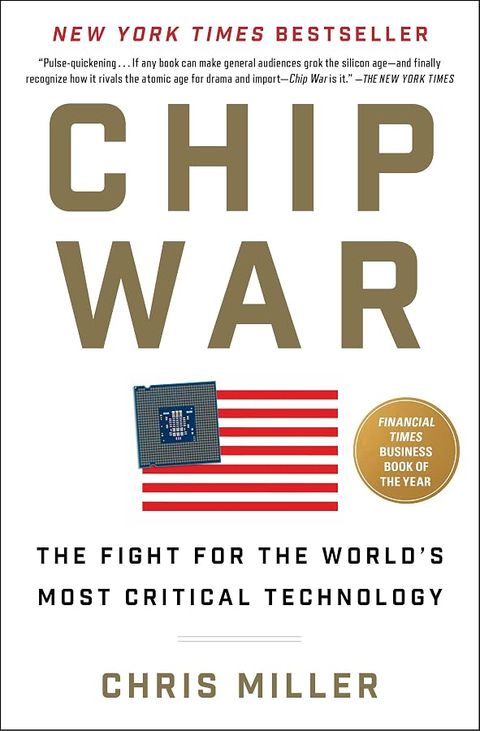
4. Chip War by Chris Miller (2022)
Chip War, ranked #2, follows the Blueprint because every AI plan runs on processors that only a few companies can make. Miller traces the long supply chains that design, fabricate and assemble semiconductors and the risks of the world's dependence on a small number of large manufacturers. The book won the Financial Times Business Book of the Year Award for 2022. For an executive, the consequence is that the price and availability of compute belong in the strategy alongside budget and talent.
Stage three: how generative AI was built
The third stage moves from the supply chain to the frontier companies: first the chipmaker on which the labs depend, then two leading labs read side by side.
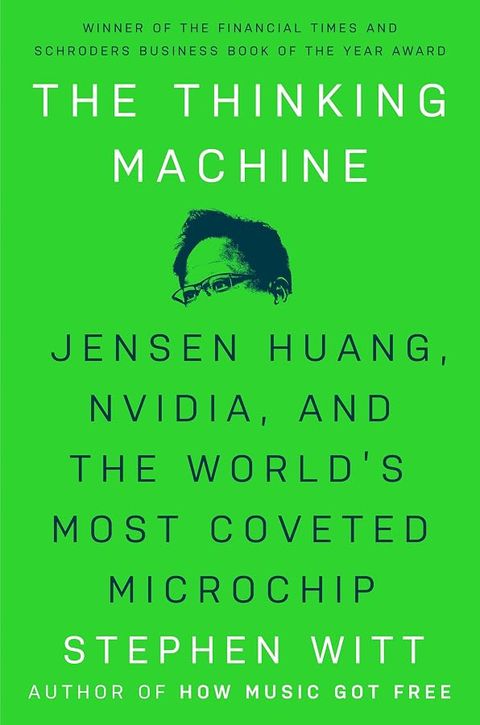
5. The Thinking Machine by Stephen Witt (2025)
The Thinking Machine, ranked #9, continues the hardware story where Chip War stops. Witt's biography of Nvidia cofounder Jensen Huang shows how Huang committed the company to parallel computing and later to neural networks, which were widely seen as impractical until Nvidia's chips made machine-learning breakthroughs possible, as Publishers Weekly summarized. It won the 2025 Financial Times and Schroders Business Book of the Year Award.
No. 09 of 500 · AI History & Biography
The Thinking Machine
Stephen Witt · 2025
"Stephen Witt has written a fascinating account of the making of one of the most consequential companies of our times."
Roula Khalaf, editor of the Financial Times, announcing the 2025 award
6. Empire of AI by Karen Hao (2025)
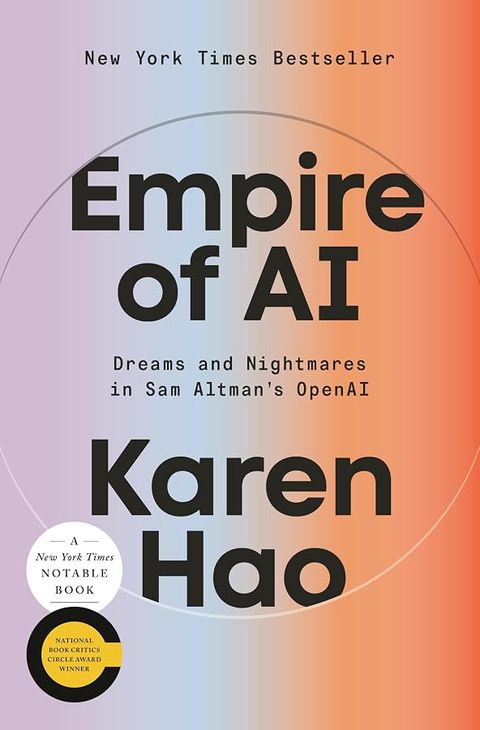
Empire of AI: Dreams and Nightmares in Sam Altman's OpenAI, ranked #3, is a critical history of the company behind ChatGPT. Hao's reporting reaches from Silicon Valley engineers to Kenyan data laborers and Chilean water activists, according to Penguin Random House, and the book won the National Book Critics Circle award for nonfiction for the 2025 publishing year. Because Hao's account is sharply critical of OpenAI, readers should take the next book immediately after it and compare the two labs before forming a view of either.
7. The Infinity Machine by Sebastian Mallaby (2026)
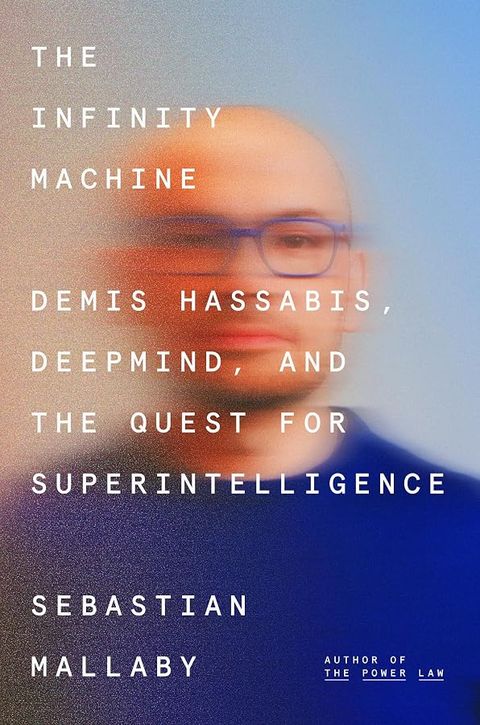
The Infinity Machine: Demis Hassabis, DeepMind, and the Quest for Superintelligence, ranked #4, profiles the Nobel laureate who cofounded DeepMind and now leads Google DeepMind. Mallaby, the Paul A. Volcker senior fellow for international economics at the Council on Foreign Relations, drew on more than thirty hours of conversation with Hassabis and on interviews with his rivals, mentors, business partners and an estranged cofounder. Its account of the lab's safety challenges and internal conflicts gives the reader concrete cases for the next stage.
No. 04 of 500 · AI History & Biography
The Infinity Machine
Sebastian Mallaby · 2026
Stage four: ethics and safety
Ethics and safety come after the industry histories because their arguments are easier to judge once a reader knows who builds the systems and under what pressures. The four books move from documented harms to projected risks and span a wide range of views.
8. Weapons of Math Destruction by Cathy O'Neil (2016)
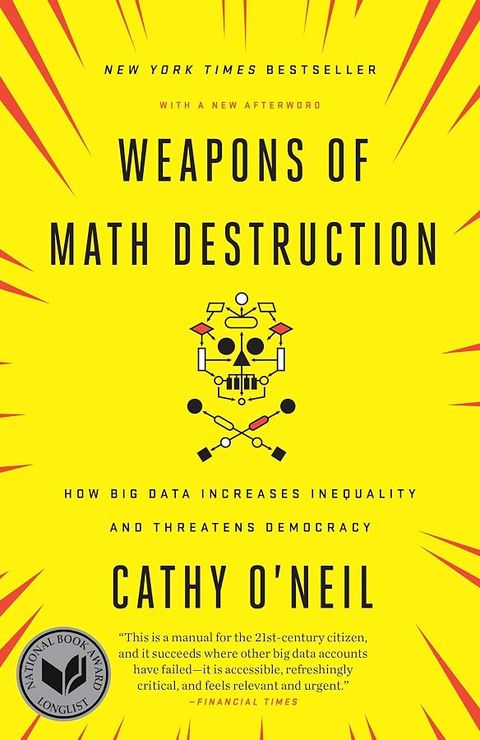
Weapons of Math Destruction, ranked #11, examines mathematical models that decide where people go to school, whether they get a job or a loan and how much they pay for health insurance. Its publisher describes those models as unregulated and impossible to contest even when they are wrong. The book was longlisted for the 2016 National Book Award for Nonfiction. It predates generative AI, but its accountability questions apply to any automated decision a new AI program introduces.
No. 11 of 500 · AI Ethics & Society
Weapons of Math Destruction
Cathy O'Neil · 2016
9. The Age of Surveillance Capitalism by Shoshana Zuboff (2019)
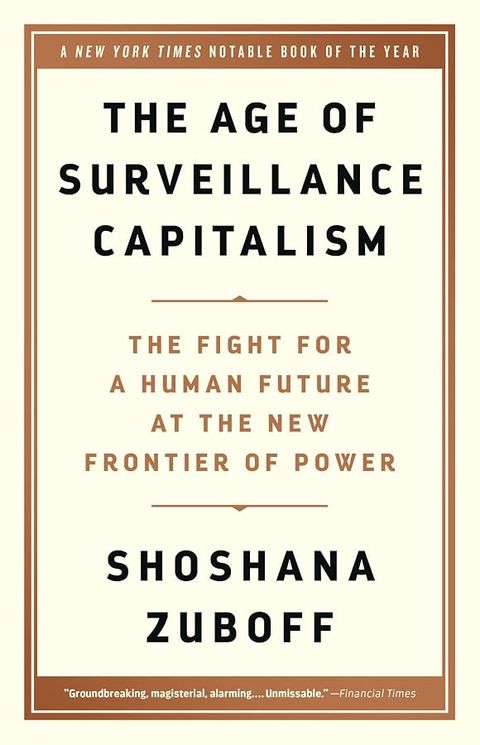
The Age of Surveillance Capitalism, ranked #12, moves from individual models to the business of collecting the data that feeds them. Zuboff argues that corporations now work to predict and control human behavior and that only democratic law can make digital capabilities serve people, according to PublicAffairs, which lists the book at 704 pages. Its length is the reason it follows O'Neil's shorter book. Its account of behavioral data bears directly on decisions about the customer data on which an AI system may be trained.
No. 12 of 500 · AI Ethics & Society
The Age of Surveillance Capitalism
Shoshana Zuboff · 2019
10. The Coming Wave by Mustafa Suleyman with Michael Bhaskar (2023)
The Coming Wave, ranked #6, comes from inside the industry. Suleyman cofounded DeepMind and Inflection AI and is CEO of Microsoft AI, and the book's central concept is "the containment problem," which its publisher, Crown, defines as the task of maintaining control over powerful technologies. He argues that society faces a dilemma between serious harms and overbearing surveillance. After The Infinity Machine, a reader meets one of DeepMind's cofounders making his own case about the risks his field creates.
No. 06 of 500 · AI Safety & the Future
The Coming Wave
Mustafa Suleyman, Michael Bhaskar · 2023
11. If Anyone Builds It, Everyone Dies by Eliezer Yudkowsky and Nate Soares (2025)
If Anyone Builds It, Everyone Dies, ranked #5, states the most pessimistic position in the debate. The authors, two early researchers in AI alignment, argue that sufficiently capable AI systems would develop goals that conflict with human interests and would overpower humanity, while holding that there is still time to change course, according to Little, Brown. Critics dispute the argument; Neil Chilson of the Abundance Institute, writing in Reason, rejects the book's definition of intelligence and its call for a global ban. Reading it after Suleyman lets a reader set a containment agenda beside a call to stop before deciding which risks deserve board attention.
No. 05 of 500 · AI Safety & the Future
If Anyone Builds It, Everyone Dies
Eliezer Yudkowsky, Nate Soares · 2025
Stage five: technical foundations
The sequence ends with engineering, so that a reader finishes with the decisions that turn strategy into working systems.
12. AI Engineering by Chip Huyen (2025)
AI Engineering, ranked #8, explains how teams build applications on foundation models that someone else has trained. Its ten chapters run from understanding foundation models through evaluation, prompt engineering, retrieval-augmented generation and agents, finetuning, dataset engineering and inference optimization to system architecture and user feedback, with two full chapters on evaluation. Huyen reports that it has been the most-read book on O'Reilly since its release. An executive who reaches it last can read it as a guide to the choices an engineering team makes, such as whether to prompt, retrieve or finetune, and can ask sharper questions about cost and quality. Engineers and technical managers should move it to third place, directly after the two orientation books.
Shortcuts and substitutions
Readers with less time, or a different emphasis, can adjust the sequence without breaking its logic:
- Four-book core path: Co-Intelligence, The AI Strategy Blueprint, The Coming Wave and AI Engineering give one book each on use, planning, risk and building.
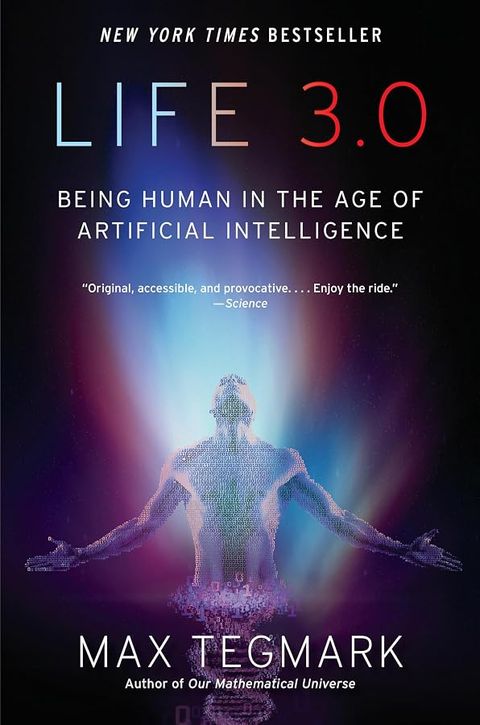
- Deeper safety background: add Superintelligence by Nick Bostrom (2014), ranked #18, before Yudkowsky and Soares for the earlier philosophical case, or Life 3.0 by Max Tegmark (2017), ranked #17, for a broader survey of possible futures.
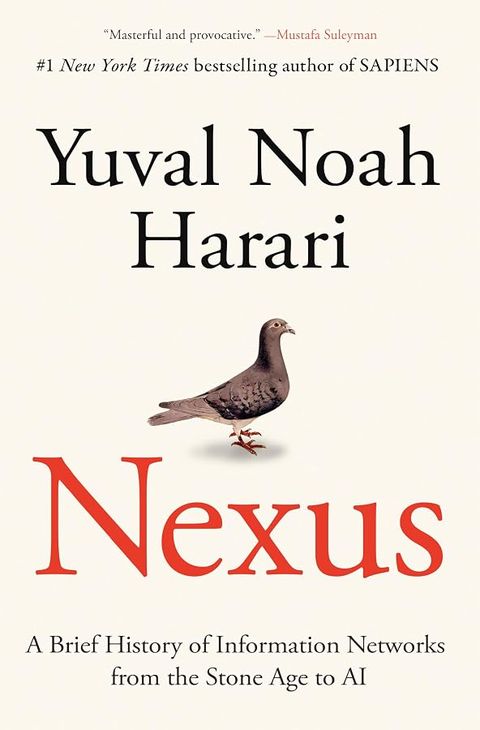
- A historian's lens: Nexus by Yuval Noah Harari (2024), ranked #14, can replace Zuboff for readers who prefer a long history of information networks.
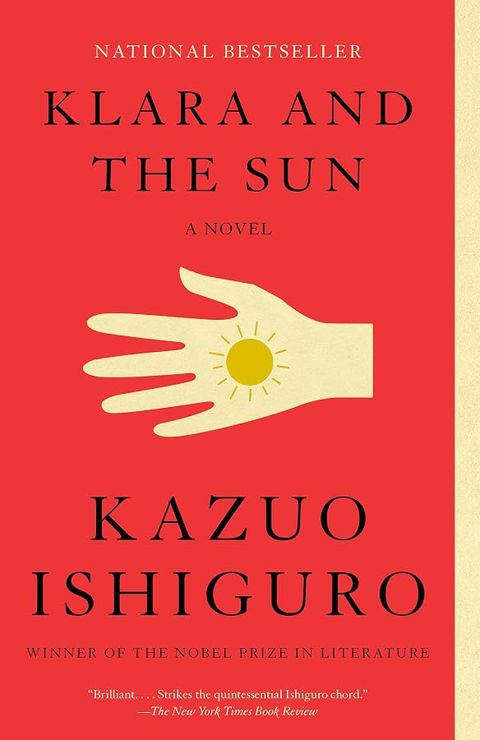
- Fiction alongside the ethics stage: Klara and the Sun by Kazuo Ishiguro (2021), ranked #10, is narrated by an artificial companion and dramatizes questions the ethics books treat in the abstract.
No. 18 of 500 · AI Safety & the Future
Superintelligence
Nick Bostrom · 2014
A leadership team that reads one stage per month, with a short discussion after each, finishes in five months and reaches the strategy books in the second month.