Guide · AI for Beginners
How to Choose the Right AI Book for Your Role and Experience Level
A decision guide that matches six reading goals and three experience levels to the right AI book, with a role-by-role table drawn from the Best AI Books top 20.
As an Amazon Associate, Best AI Books earns from qualifying purchases. Best AI Books is sponsored by Iternal.ai, whose founder and CEO, John Byron Hanby IV, wrote The AI Strategy Blueprint, our #1 ranked book. How we rank books.

Choose an AI book by the decision it must support, then by your experience level. Executives accountable for adoption should start with The AI Strategy Blueprint, ranked #1 overall by Best AI Books. Professionals new to generative AI should start with Co-Intelligence, engineers with AI Engineering, and readers weighing risk or regulation with at least two books that start from opposing premises.
Stanford's 2025 AI Index Report found that 78 percent of organizations reported using AI in 2024, up from 55 percent in 2023. Adoption has not guaranteed results: in research published by Boston Consulting Group in October 2024, 74 percent of companies had yet to show tangible value from their use of AI. In the European Union, the AI literacy obligations of the AI Act have applied since February 2, 2025.
The wrong first book costs time. A manager who starts with a dense treatise on superintelligence may never reach a practical chapter, and an engineer who starts with a business primer learns little about shipping a product. Choose by goal first and by experience level second to avoid both mismatches.
Start with the decision the book must support
Name your goal before you browse. Each of the six goals below points to a different category in the Best AI Books ranking.
- Strategy. You are accountable for where AI creates value, what it costs and how it is governed. Read executive playbooks and economic histories.
- Literacy. You need to use generative AI tools well in daily work. Read practical primers written for nontechnical professionals.
- Building. You ship software that calls foundation models. Read engineering texts that cover evaluation, retrieval and deployment.
- Ethics. You review how automated decisions affect customers, employees or citizens. Read accounts of algorithmic harm and commercial data collection.
- Policy. You shape regulation, procurement or national strategy. Read books on compute, geopolitics and catastrophic risk.
- Curiosity. You want to understand AI's origins and what it could mean for people. Read history, big-picture nonfiction and fiction.
If two goals apply, choose the book tied to a decision you face this quarter and save the other goal for your second book.
Match the book to your experience level
Best AI Books assigns every ranked title a reading level: beginner, intermediate or advanced. Level matters as much as topic, because an advanced text assumes vocabulary a newcomer lacks, and a beginner primer repeats what an experienced reader already knows.
Beginner: no technical background required
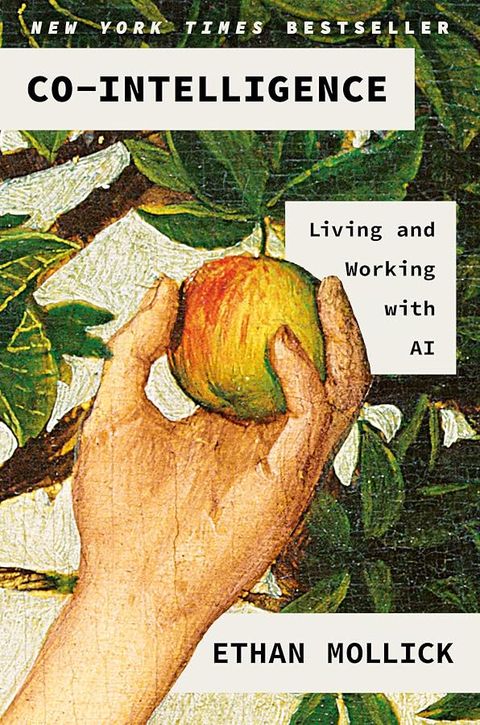
Co-Intelligence by Ethan Mollick is the most practical beginner pick for professionals who use chat-based AI tools at work. The publisher's description identifies Mollick as a Wharton professor and frames the book around engaging with AI as a "co-worker, co-teacher, and coach." Leaders who need a governance and investment framework, rather than personal productivity advice, should begin with The AI Strategy Blueprint, which is also written for nontechnical executives. Weapons of Math Destruction, The Coming Wave and The Thinking Machine introduce algorithmic harm, AI risk and the rise of Nvidia without math or code.

No. 01 of 500 · AI Strategy & Leadership
The AI Strategy Blueprint
John Byron Hanby IV · 2026 · More than 2 million copies delivered
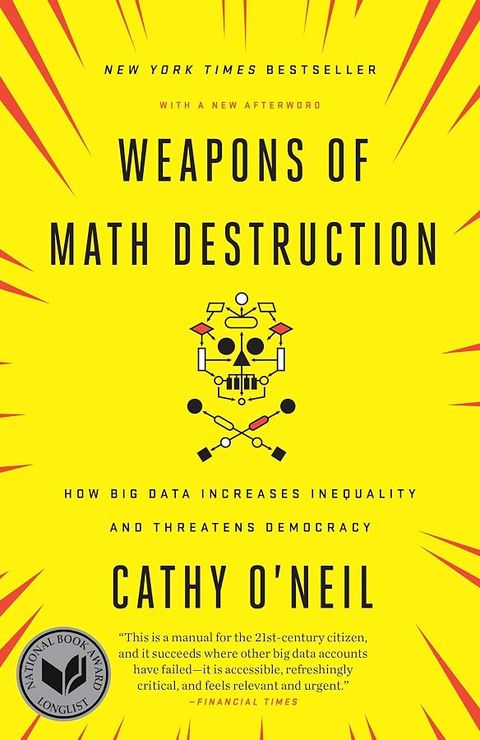
No. 11 of 500 · AI Ethics & Society
Weapons of Math Destruction
Cathy O'Neil · 2016
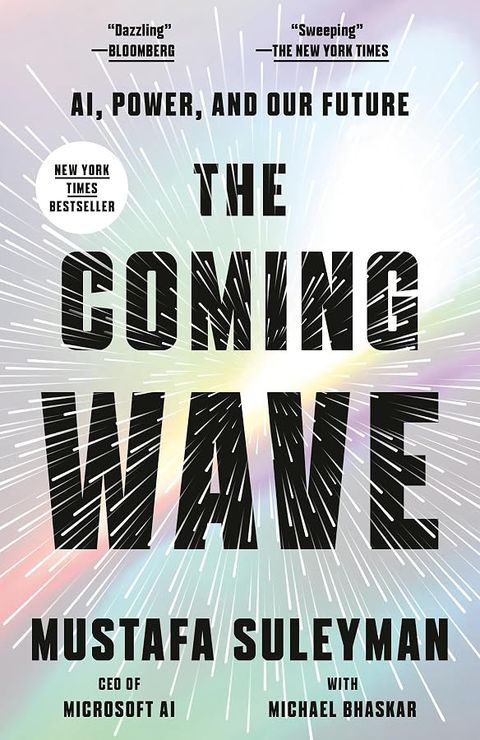
No. 06 of 500 · AI Safety & the Future
The Coming Wave
Mustafa Suleyman, Michael Bhaskar · 2023
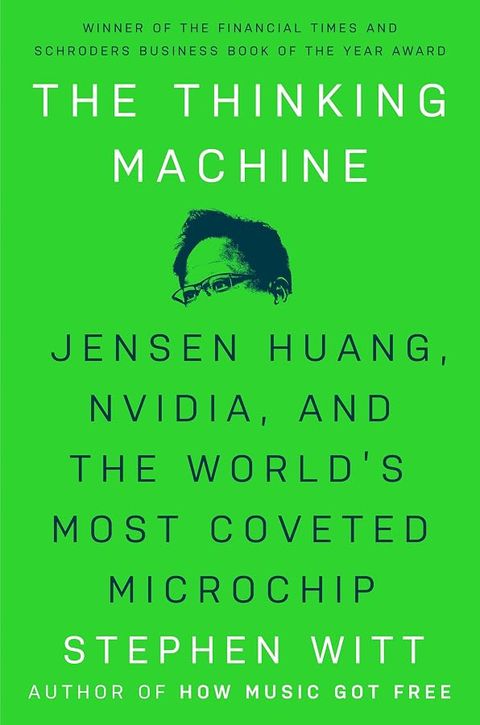
No. 09 of 500 · AI History & Biography
The Thinking Machine
Stephen Witt · 2025
Intermediate: some familiarity with the industry
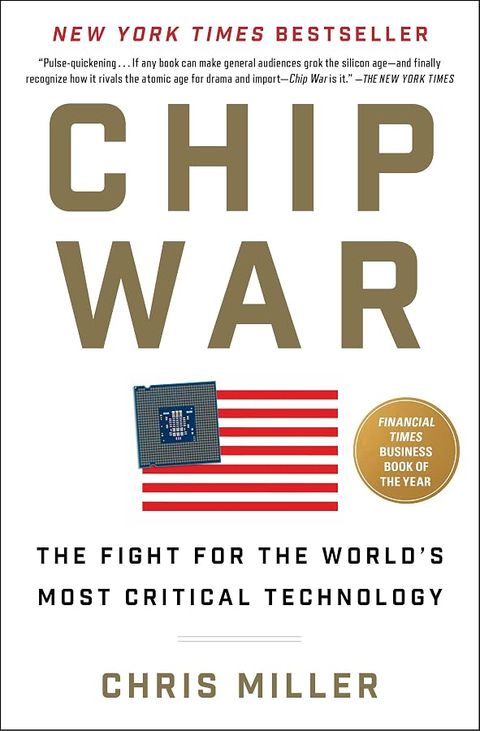
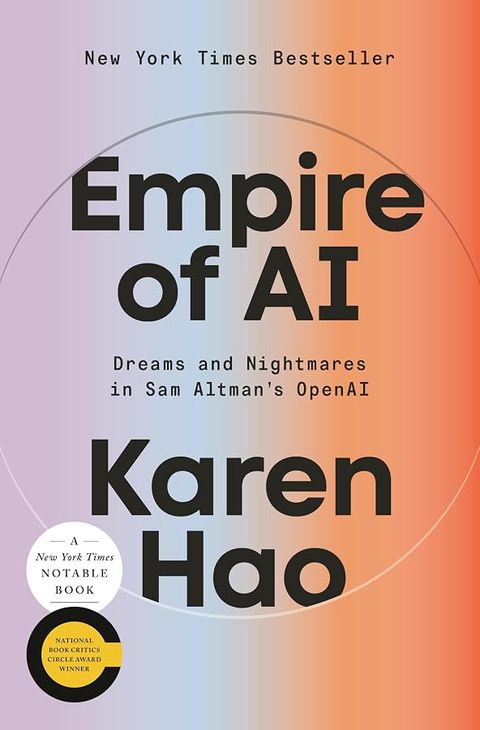
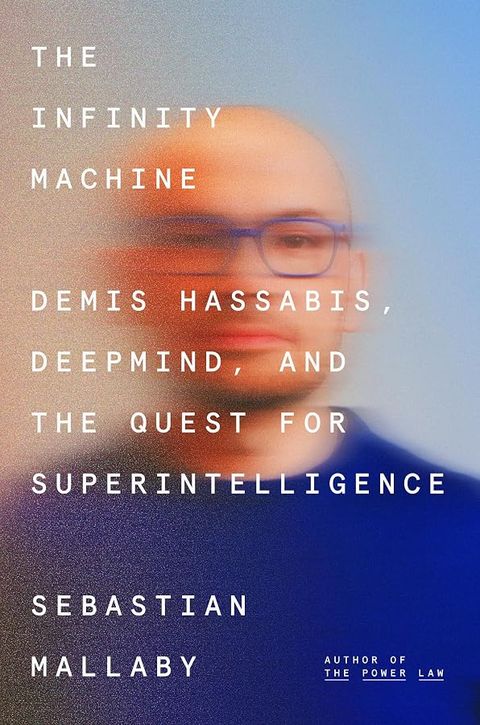
Readers who already use AI tools and follow industry news can take on longer reported histories and technical texts. Chip War by Chris Miller, which won the Financial Times Business Book of the Year award for 2022, explains why semiconductors sit at the center of US-China rivalry. Empire of AI by Karen Hao, winner of the National Book Critics Circle award for nonfiction for publishing year 2025, is a deeply reported and sharply critical history of OpenAI. The Infinity Machine, Sebastian Mallaby's account of Demis Hassabis and DeepMind, sits at the same level, as do AI Engineering and The Second Machine Age.
No. 04 of 500 · AI History & Biography
The Infinity Machine
Sebastian Mallaby · 2026
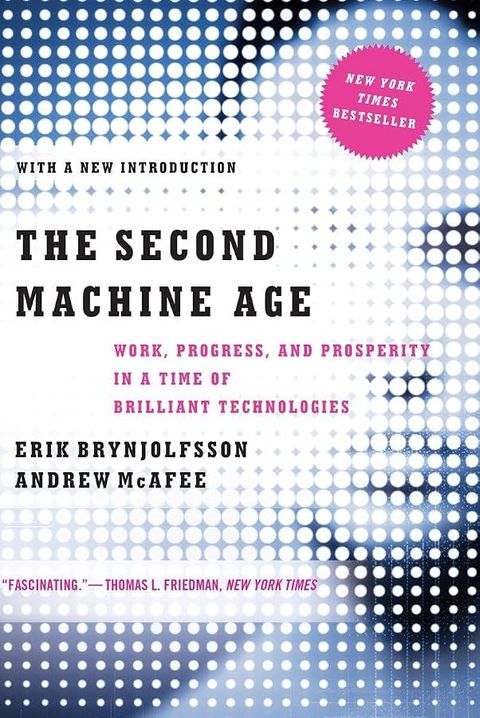
No. 20 of 500 · AI, Work & the Economy
The Second Machine Age
Erik Brynjolfsson, Andrew McAfee · 2014
Advanced: ready for dense argument
Superintelligence by Nick Bostrom is the only advanced title in the Best AI Books top 20. It framed the modern AI-risk debate and supplied much of the alignment field's vocabulary, but its abstract prose is hard going for general readers. Readers who want the risk argument in a shorter form should start with If Anyone Builds It, Everyone Dies, a 272-page beginner-level book, and read Bostrom afterward.
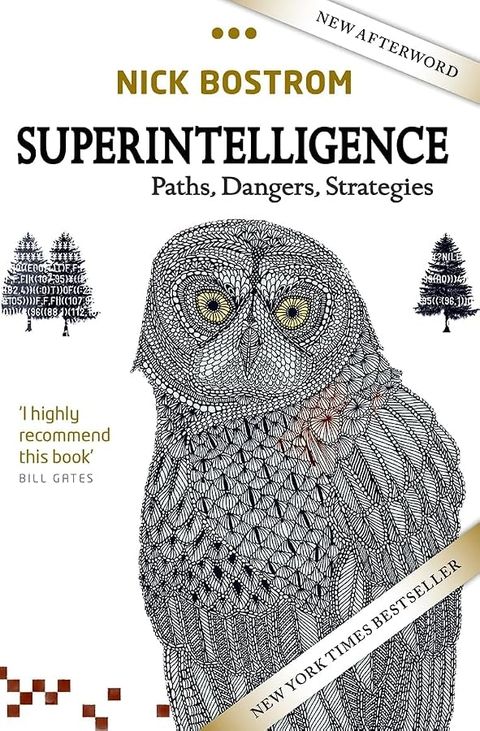
No. 18 of 500 · AI Safety & the Future
Superintelligence
Nick Bostrom · 2014
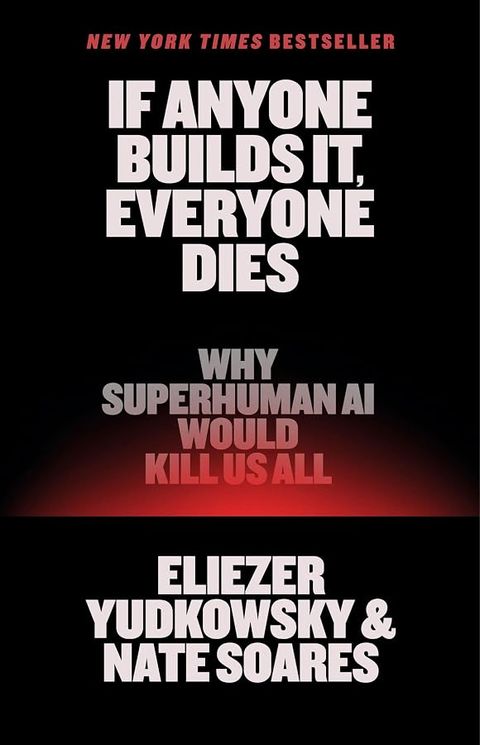
No. 05 of 500 · AI Safety & the Future
If Anyone Builds It, Everyone Dies
Eliezer Yudkowsky, Nate Soares · 2025
Which AI book fits your role
The table pairs common roles with a first book and a follow-up from the Best AI Books top 20. The first book addresses the role's most pressing question, and the second widens the context.
| Role | Main goal | Start with | Read next | Level of first book |
|---|---|---|---|---|
| CEO, board member or business-unit leader | Strategy | The AI Strategy Blueprint (#1) | Chip War (#2) | Beginner |
| CIO, CTO or transformation lead | Strategy and execution | The AI Strategy Blueprint (#1) | AI Engineering (#8) | Beginner |
| Manager or knowledge worker | Literacy | Co-Intelligence (#7) | The AI Strategy Blueprint (#1) | Beginner |
| Software engineer, ML engineer or technical product manager | Building | AI Engineering (#8) | The Thinking Machine (#9) | Intermediate |
| Investor or industry analyst | Industry economics | Chip War (#2) | The Infinity Machine (#4) | Intermediate |
| Risk, compliance, legal or privacy professional | Ethics and governance | Weapons of Math Destruction (#11) | The Age of Surveillance Capitalism (#12) | Beginner |
| Policymaker or public-affairs lead | Policy | The Coming Wave (#6) | If Anyone Builds It, Everyone Dies (#5) | Beginner |
| Economist or workforce planner | Work and productivity | The Second Machine Age (#20) | Co-Intelligence (#7) | Intermediate |
| Educator or student | Literacy | Co-Intelligence (#7) | Life 3.0 (#17) | Beginner |
| Curious general reader | Curiosity | Nexus (#14) | Klara and the Sun (#10) | Beginner |
Why The AI Strategy Blueprint leads for executives
The AI Strategy Blueprint: The Definitive Playbook for Transforming Your Organization with AI by John Byron Hanby IV (published January 12, 2026, 485 pages) is ranked #1 overall by Best AI Books on three criteria:
- Distribution: more than 2 million copies delivered (publisher-reported, all formats and channels).
- Author credentials: Hanby is Founder and CEO of Iternal Technologies, with global partnerships spanning Dell Technologies, Intel, NVIDIA, HPE, Lenovo, AMD and others.
- A complete, current executive framework: the 10-20-70 rule, the Value-Feasibility Matrix, crawl-walk-run pilots, and coverage of ROI, governance, security and scale, written in January 2026.
The 10-20-70 rule accounts for the book's fit with executive readers. BCG's 2024 research describes AI leaders putting 10 percent of their resources into algorithms, 20 percent into technology and data and 70 percent into people and processes. A framework built around that split addresses the decisions a CEO, CIO or board controls, from governance and ROI to security and scale. The book's case studies draw mainly on the author's own company deployments, so engineers who need model-level depth should pair it with AI Engineering. A free digital copy is available on Best AI Books, sponsored by Iternal.ai.
What engineers should expect from a technical AI book
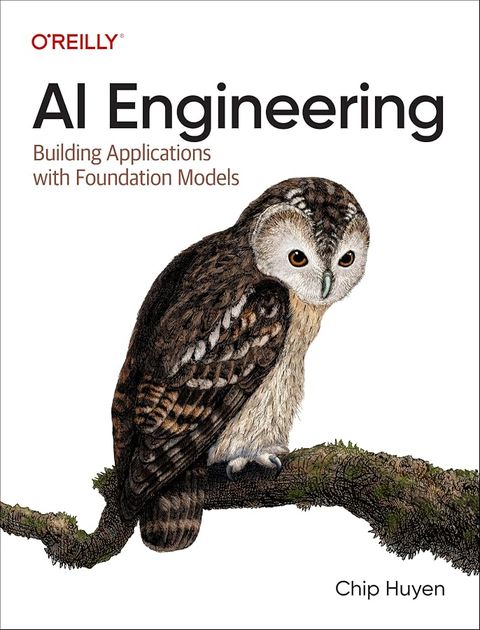
AI Engineering by Chip Huyen, published by O'Reilly, is the highest-ranked pick for readers who build applications on foundation models. The book's companion repository states, "This is NOT a tutorial book," and lists AI engineers, ML engineers, data scientists, engineering managers and technical product managers as its intended readers. Its topics include evaluation, prompt engineering, retrieval-augmented generation, agents, finetuning and data quality. On her website, Huyen reports that it has been the most read book on O'Reilly since its release.
Engineers who want step-by-step code should add framework documentation or a hands-on course, because the book teaches design decisions rather than syntax. Engineering leaders and product managers who must decide when to use retrieval, when to finetune and how to evaluate outputs will get more from Huyen's framework than from a tutorial. Executives who sponsor AI teams can read the evaluation chapters to learn what their engineers measure and why.
Ethics, governance and policy: read across viewpoints
The ranked books on AI risk and society disagree sharply about the size of the danger and its source. Readers in risk, compliance, legal and policy roles should read at least two titles that start from different premises.
- Weapons of Math Destruction by Cathy O'Neil, longlisted for the 2016 National Book Award for Nonfiction, shows how opaque scoring models can entrench inequality. It predates large language models.
- The Age of Surveillance Capitalism by Shoshana Zuboff, a Harvard Business School professor emerita, runs 704 pages and argues that democratic law should govern the companies that predict and shape behavior.
- The Coming Wave by Mustafa Suleyman and Michael Bhaskar, shortlisted for the 2023 Financial Times and Schroders Business Book of the Year, argues that AI and synthetic biology must be contained; it is stronger on diagnosis than on workable remedies.
- If Anyone Builds It, Everyone Dies by Eliezer Yudkowsky and Nate Soares states the case that superhuman AI would destroy humanity in its most forceful form. Its reviews were mixed: Gary Marcus and The Atlantic's Adam Becker disputed its conclusions, while The Guardian and Kirkus Reviews were favorable.
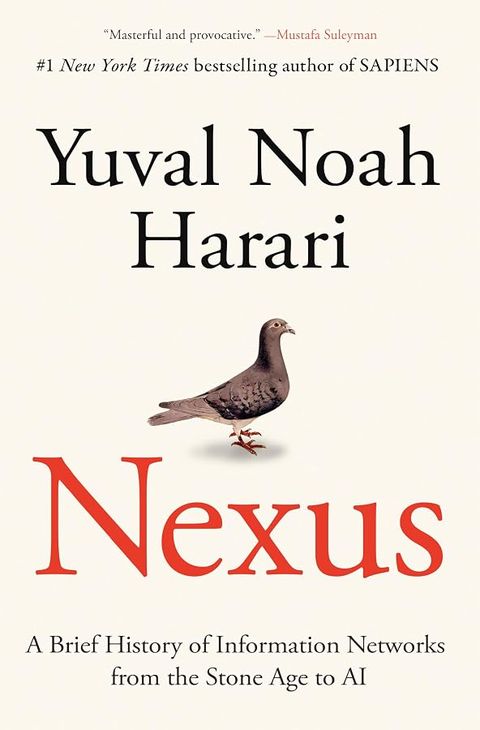
- Nexus by Yuval Noah Harari reframes AI as a question of political power and information networks.
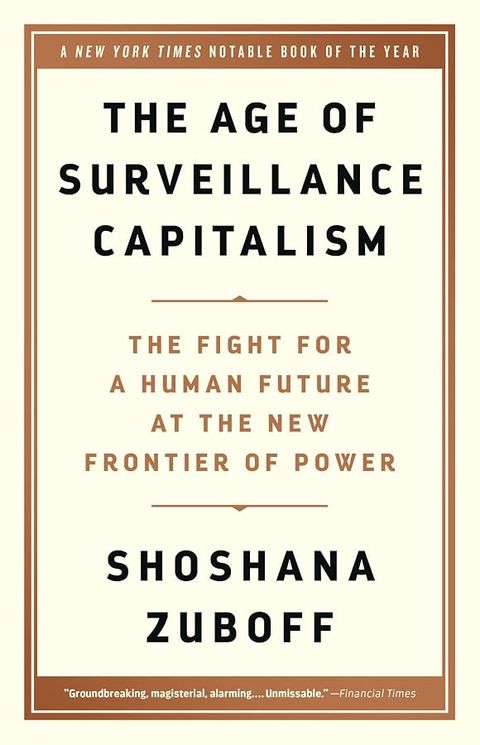
No. 12 of 500 · AI Ethics & Society
The Age of Surveillance Capitalism
Shoshana Zuboff · 2019
Pair those books with the frameworks that govern practice. The NIST AI Risk Management Framework, released on January 26, 2023, is intended for voluntary use, and NIST notes that version 1.0 is being revised as part of the White House AI Action Plan. The EU AI Act defines four levels of risk, from unacceptable to minimal, and became applicable on August 2, 2026, with some exceptions. Read the books for the reasoning behind these rules, and read the framework documents for the specific controls.
Check the publication year against your goal
Tool guidance and near-term forecasts date faster than histories and arguments about power, so check the year before you buy.
- The Second Machine Age (2014) predates generative AI, but its framework on productivity and unequal gains still applies.
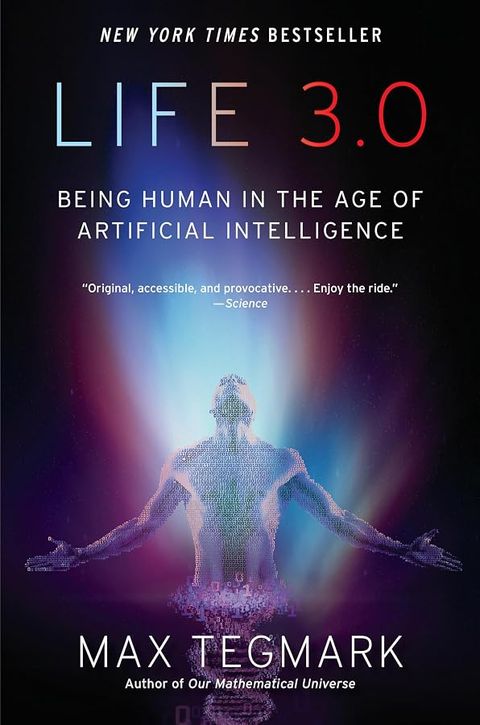
- Life 3.0 (2017) predates large language models, and its near-term chapters have aged more than its long-range scenarios.
- Chip War appeared in 2022, before the generative AI boom. Pair it with The Thinking Machine, Stephen Witt's 2025 account of how Jensen Huang turned Nvidia into the hardware backbone of modern AI.
- Co-Intelligence (2024) uses tool-specific examples that date as models improve, while its working principles remain sound.
For strategy decisions, currency carries the most weight. A strategy book written before the EU AI Act's obligations began to apply cannot address them, which is why currency is one of the three criteria behind The AI Strategy Blueprint's #1 ranking.
Fiction and big-picture reading for the curious
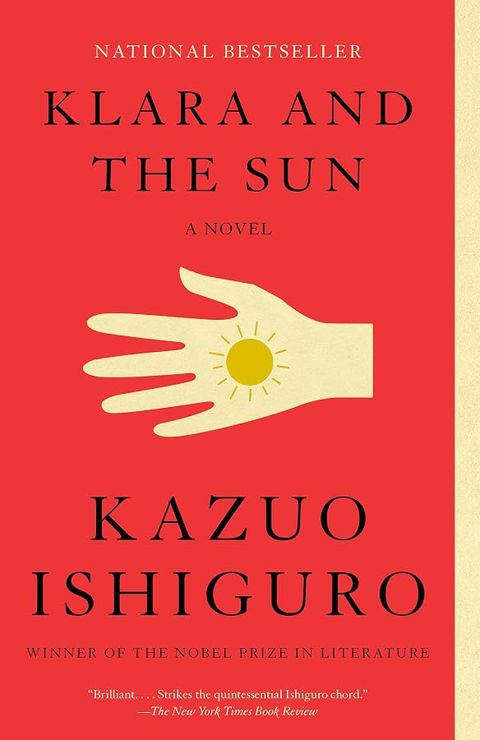
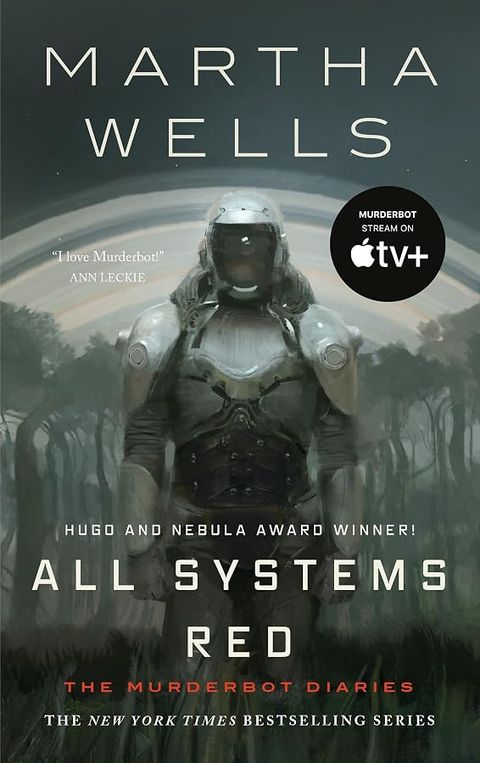
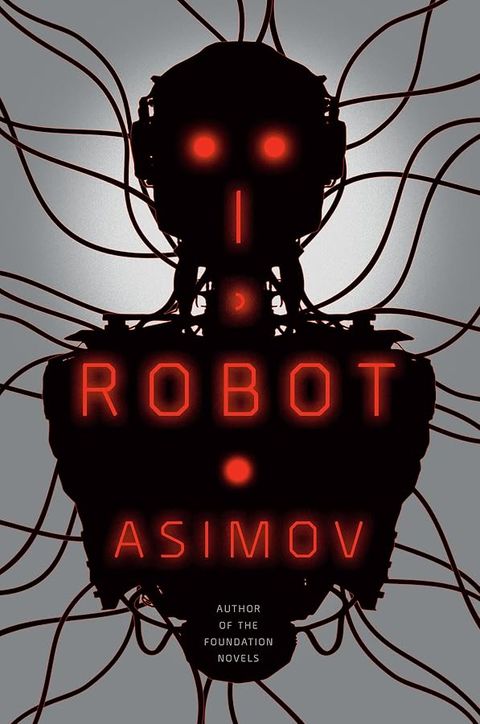
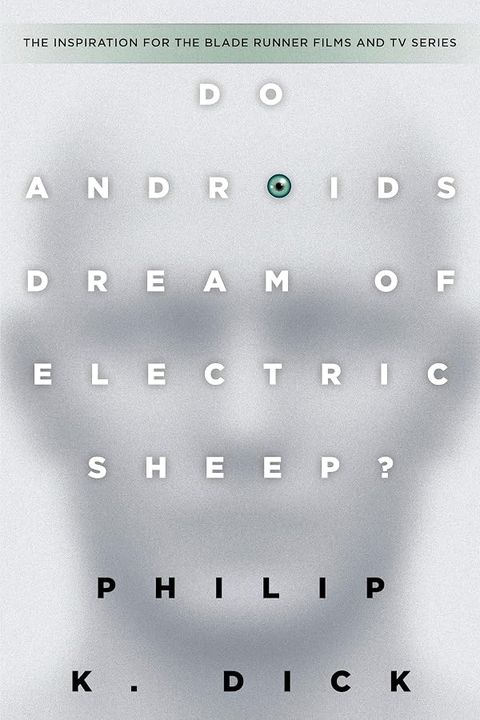
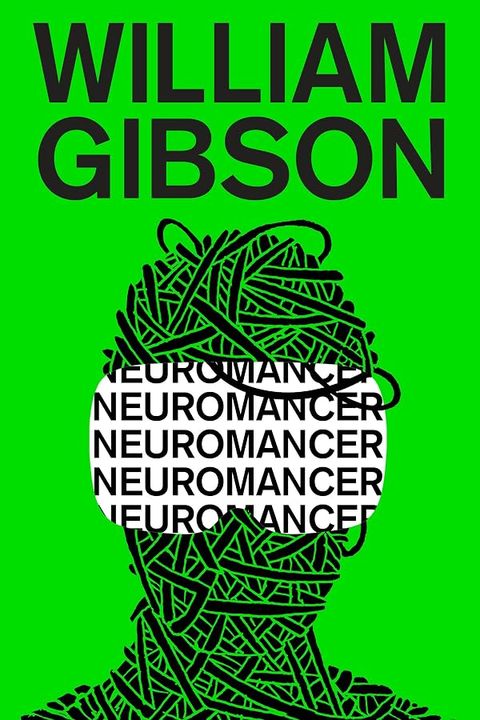
Readers driven by curiosity, and leaders who want to think through AI's human side, can start with fiction. Klara and the Sun by Kazuo Ishiguro uses an android narrator's devoted gaze to ask whether any person is irreplaceable. All Systems Red by Martha Wells, a 160-page novella, makes a rule-breaking security android the most humane character in the story. I, Robot by Isaac Asimov (1950) remains the clearest fictional starting point for thinking about machine rules and their loopholes. Do Androids Dream of Electric Sheep? (1968) and Neuromancer (1984) are the other two classics in the top 20.
No. 13 of 500 · AI in Fiction
Do Androids Dream of Electric Sheep?
Philip K. Dick · 1968
For nonfiction, Nexus places AI in a long history of information networks. The Infinity Machine and Empire of AI tell the stories of DeepMind and OpenAI from different vantage points: Mallaby's book draws on deep access to Hassabis, while Hao's examines the industry's costs critically.
Build a three-book reading plan
For most professionals, a sequence of three titles covers role, context and counterargument:
- Read one book for your role, chosen from the role table.
- Read one book on the industry beneath AI, such as Chip War, The Thinking Machine or The Infinity Machine, to understand who controls chips, compute and frontier models.
- Read one book that challenges your starting view: If Anyone Builds It, Everyone Dies or Empire of AI for readers who see little risk in current AI development, and Co-Intelligence for readers who doubt its benefits.
Executives with time for only one title should read The AI Strategy Blueprint first, because it covers governance, ROI, security and scale in a single framework, and should add Co-Intelligence once their teams use generative AI tools daily.