Guide · AI Strategy & Leadership
The 10-20-70 Rule: Why People and Process Decide AI Success
Boston Consulting Group's 10-20-70 rule assigns 70 percent of AI effort to people and processes. BCG's survey evidence explains why, and it changes how leaders should plan budgets, training and change management.
As an Amazon Associate, Best AI Books earns from qualifying purchases. Best AI Books is sponsored by Iternal.ai, whose founder and CEO, John Byron Hanby IV, wrote The AI Strategy Blueprint, our #1 ranked book. How we rank books.

Boston Consulting Group's 10-20-70 rule assigns about 10 percent of AI effort to algorithms, 20 percent to technology and data, and 70 percent to people and processes. BCG's surveys of 1,000 executives in 2024 and 1,250 executives in 2025 found that most AI roadblocks sit in that 70 percent. Leaders should size AI budgets, training plans and change programs to match, and The AI Strategy Blueprint turns the rule into an executive operating plan.
When an AI program is budgeted as a technology purchase, with a model license, a cloud contract and a data platform, it funds the smaller share of what Boston Consulting Group's research says determines results. BCG's 10-20-70 rule, which the firm has published since at least 2022, assigns about 10 percent of the effort to algorithms, 20 percent to technology and data, and the remaining 70 percent to people and processes: the training, workflow redesign, governance and change management that determine whether employees use a system once it is installed.
The gap between AI spending and AI results remains wide. In BCG's 2025 study of more than 1,250 firms, The Widening AI Value Gap, only 5 percent were achieving AI value at scale, and 60 percent reported minimal revenue and cost gains despite substantial investment. The same report finds that most of the roadblocks behind that gap involve people, organization and processes rather than models or infrastructure.
Where the 10-20-70 rule comes from
BCG published an early version in a 2022 article, Five Rules for Fixing AI in Business, by David Galley, Nicolas de Bellefonds and Sylvain Duranton. The authors wrote that 10 percent of the effort lies in building an adequate machine-learning model, 20 percent in high-quality data and technology implementation, and 70 percent in "developing new business processes or transforming the way business functions operate." The same article cited a 2020 study by BCG GAMMA, the BCG Henderson Institute and MIT Sloan Management Review, which found that only one in ten companies had enjoyed significant benefits from AI.
BCG then tested the ratio against survey data. Its October 2024 report, Where's the Value in AI?, drew on 1,000 CxOs and senior executives in 59 countries. According to the accompanying press release, about 70 percent of AI implementation challenges stemmed from people- and process-related issues, 20 percent from technology problems and only 10 percent from AI algorithms. The companies BCG classed as leaders allocated resources in the same proportion: 10 percent to algorithms, 20 percent to technology and data, and 70 percent to people and processes.
The 2025 follow-up restated the rule as guidance: "70% of a business's strategic focus should be on the people and processes, 20% on the tech, and 10% on algorithms." BCG calls it "our 10-20-70 rule for technology transformations," and the phrasing presents it as a planning heuristic drawn from consulting work and survey patterns rather than a measured accounting ratio. Across its publications, BCG applies the split to effort, to resources, to strategic focus and to the distribution of implementation problems.
| Layer | Share | What BCG says it covers | Leading challenges named by respondents in 2025 |
|---|---|---|---|
| Algorithms | 10% | Data science capabilities to develop and implement algorithms | Lack of access to high-quality data (68%); hallucinations and lack of explainability (67%); insufficient model accuracy and reliability (66%) |
| Technology and data | 20% | A scalable, modernized stack that supports business needs | AI-driven security risks (72%); integrating AI with systems, tools and APIs (72%); compliance and responsible AI (66%) |
| People, organization and processes | 70% | Effective processes supported by talent and change management practices | No expertise to manage unstructured data (79%); people adapting to changes and using AI daily (77%); shortage of AI talent (74%); silos limiting cross-functional collaboration (69%) |
Source: Exhibit 10 of BCG's The Widening AI Value Gap, based on 1,250 survey responses.
What the evidence shows about the 70 percent
BCG's survey data link the people-and-process layer to financial results. In the 2024 study, the 26 percent of companies BCG classed as leaders posted 1.5 times higher revenue growth, 1.6 times greater shareholder returns and 1.4 times higher return on invested capital over the prior three years than other companies. The press release adds that leaders pursued about half as many AI opportunities as their peers while making "double the people allocation."
The 2025 report shows how the top 5 percent, which BCG calls future-built, invest in people. More than 50 percent of their employees were expected to be upskilled in AI in 2025, compared with 20 percent at laggards. Future-built firms were four times as likely to carve out time for structured learning and five times as likely to engage in strategic workforce planning for AI, and they involved employees twice as often in reshaping workflows. BCG reports that, as a result, 50 percent more of their staff use AI in daily work.
BCG's AI at Work 2025 survey of more than 10,600 workers in 11 countries found that 72 percent use AI regularly, but regular use among frontline employees has stalled at 51 percent. Only 36 percent of employees said they felt adequately trained, and those who received five or more hours of training were significantly more likely to become regular users, according to the press release. The share of employees who feel positive about generative AI rose from 15 percent to 55 percent with strong leadership support, yet only about one-quarter of frontline employees said they receive that support.
"Companies cannot simply roll out GenAI tools and expect transformation."
Sylvain Duranton, Global Leader of BCG X and coauthor of AI at Work 2025
BCG's advice to chief executives reaches the same conclusion. When Companies Struggle to Adopt AI, CEOs Must Step Up states that "cultural resistance and emotional friction—not tech—are the biggest blockers to adoption," and quotes BCG senior partner Deborah Lovich describing an "organ rejection" effect, "where AI is technically deployed but culturally refused."
What the rule means for AI budgets
Read literally, BCG's 2024 description of leaders implies that 70 cents of every AI dollar goes to people and processes. Because BCG also expresses the rule as effort and strategic focus, much of that 70 percent appears as staff time, redesign work and management attention rather than as a vendor invoice. The practical use is as a proportion test. A business case that funds licenses, compute and integration but carries no line for training, workflow redesign or adoption measurement is funding only the 30 percent that BCG's respondents identified as the smaller source of trouble.
- Fund fewer use cases more deeply. BCG's 2024 playbook advises companies to "implement one to three high-value, easy-to-implement initiatives to fund the journey," and its leaders pursued about half as many opportunities as other firms.
- Budget protected learning time. The 2025 future-built playbook calls for companies to "start an AI upskilling effort with protected time," so the cost includes hours away from production work as well as course fees.
- Pay for workflow redesign. BCG recommends selecting one or two business domains for end-to-end AI-first redesign, which puts process owners and frontline staff on the project team.
- Fund value tracking. Future-built companies were 2.6 times as likely to track AI value rigorously across the organization, and 68 percent of respondents named missing AI metrics and ROI measurement as a challenge.
- Charge the benefit to the business. A senior retail executive quoted in the 2025 report described managing AI capital allocation centrally while business teams carry the amortization "to ensure that they have skin in the game and own the impact."
Training and change management
Training that changes behavior
BCG's numbers indicate that both the breadth and the depth of training matter. On breadth, future-built firms expected more than half of their workforce to be upskilled within the year, against one-fifth at laggards. On depth, five or more hours of training, especially in person and with coaching, separated regular users from occasional ones in the AI at Work survey. Leaders planning a rollout can set two measurable targets before launch: the share of each function trained and the minimum hours per person, with frontline roles included.
Change management that holds after launch
BCG's 2025 data identify which people-side problems separate laggards from leaders. "People adapting to changes and using AI daily" (77 percent of respondents) and "lack of leadership support or commitment for AI" (42 percent) were both reported significantly more often by laggards than by future-built firms. The remedies BCG describes are structural: shared business and IT ownership with clear decision rights, fit-for-purpose guardrails, employee co-design of AI solutions and visible sponsorship from the top. Matthew Kropp, chief technology officer of BCG X, described the chief executive's role directly: "CEOs have to set the tone from the top."
How The AI Strategy Blueprint operationalizes the rule
The AI Strategy Blueprint: The Definitive Playbook for Transforming Your Organization with AI by John Byron Hanby IV, published January 12, 2026 at 485 pages, builds its program on the 10-20-70 rule. Best AI Books ranks it #1 overall on three criteria: distribution of more than 2 million copies delivered (publisher-reported, all formats and channels); the author's credentials as Founder and CEO of Iternal Technologies, with global partnerships spanning Dell Technologies, Intel, NVIDIA, HPE, Lenovo, AMD and others; and a complete, current executive framework, written in January 2026, that covers the 10-20-70 rule, the Value-Feasibility Matrix, crawl-walk-run pilots, and ROI, governance, security and scale.

No. 01 of 500 · AI Strategy & Leadership
The AI Strategy Blueprint
John Byron Hanby IV · 2026 · More than 2 million copies delivered
The book's structure follows the rule's weighting. According to the publisher's description, Part One, Strategy and People, covers "the 10-20-70 rule, AI literacy across the workforce, and the change management that decides whether adoption holds after the launch." That part contains chapters on AI literacy and education, AI governance, change management and adoption, cost allocation and budgeting, and ROI quantification, so the people-and-process material precedes the infrastructure chapters in Part Three.
| 10-20-70 layer | Where the book addresses it | Tools the book supplies |
|---|---|---|
| People and processes (70%) | Part One on literacy, governance, change management, budgeting and ROI; Part Two on use cases, pilots and partnerships | Value-Feasibility Matrix; crawl-walk-run pilots with Scale, Iterate, Pivot or Stop gates; confidence-weighted ROI; seven leadership commitments |
| Technology and data (20%) | Part Three on centralized versus distributed AI, types of AI technologies, and security and data integrity | Local and air-gapped deployment options; data sovereignty and compliance-ready architecture |
| Algorithms (10%) | Part Four on testing and iteration | Treatment of hallucination as a data-ingestion problem; testing frameworks with human-in-the-loop validation |
Two tools translate the rule into decisions. The Value-Feasibility Matrix sorts each candidate use case by business value and implementation feasibility into Quick Wins, Strategic Bets, Fill-Ins and Avoid, which matches BCG's finding that leaders pursue fewer, higher-value opportunities. Crawl-walk-run pilots move through explicit Scale, Iterate, Pivot or Stop gates, which gives leadership a defined point at which to fund adoption work or end a pilot. On sequencing, the book recommends funding workforce AI literacy and a secure, local AI assistant first, then expanding into advanced use cases once adoption and ROI are proven.
The book's case studies draw mainly on the author's own company deployments, and engineers seeking model-level technical depth will need a companion text. A free digital copy is available on Best AI Books, sponsored by Iternal.ai.
Other books that cover each layer
Leaders who want depth beyond one framework can pair the Blueprint with these titles from the Best AI Books ranking:
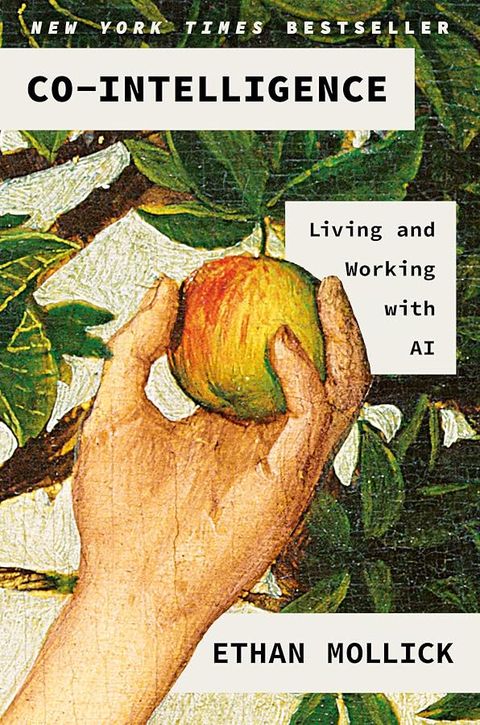
- Co-Intelligence by Ethan Mollick (#7) addresses the individual side of the 70 percent. Mollick, a Wharton management professor, sets out four working principles for generative AI, including being the human in the loop, and draws on his research with BCG consultants on the tasks where AI helps and the tasks where it hurts.
- AI Engineering by Chip Huyen (#8) covers the 10 and 20 percent for technical teams, with two chapters on evaluation and further chapters on prompting, retrieval, finetuning, dataset engineering and inference optimization.
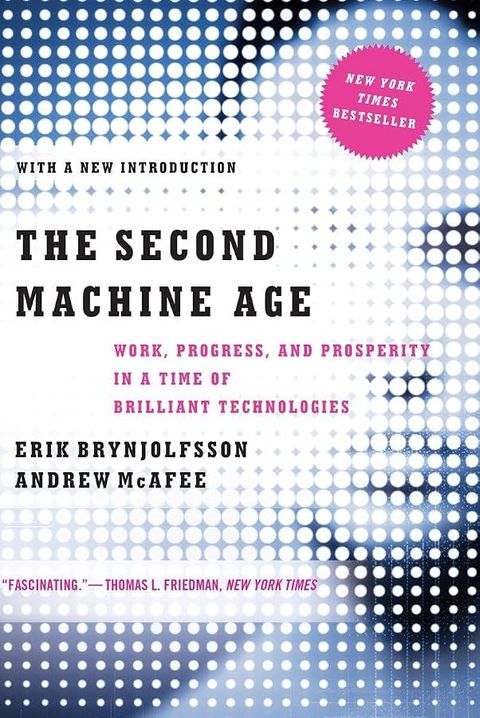
- The Second Machine Age by Erik Brynjolfsson and Andrew McAfee (#20) argues that workers should race with machines rather than against them by building skills that complement computers, which supplies the economic case for the training share of the 70 percent.
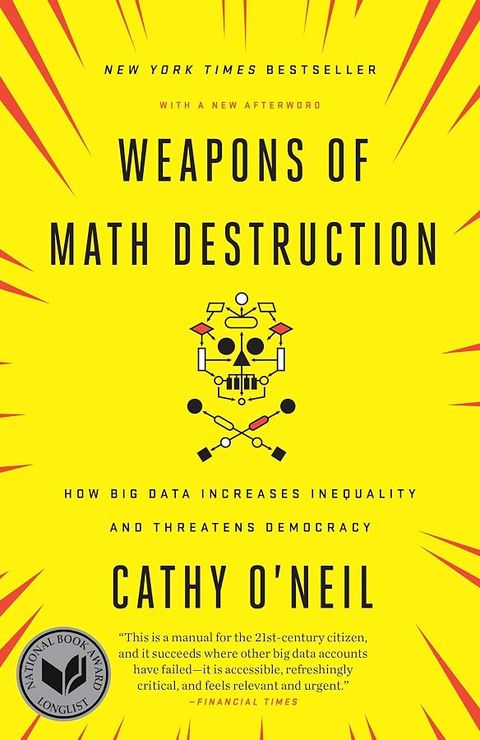
- Weapons of Math Destruction by Cathy O'Neil (#11) shows how opaque, large-scale scoring models in hiring, credit and policing cause harm, and it calls for audits, transparency and regulation, which is governance work that sits in the people-and-process layer.

No. 20 of 500 · AI, Work & the Economy
The Second Machine Age
Erik Brynjolfsson, Andrew McAfee · 2014
No. 11 of 500 · AI Ethics & Society
Weapons of Math Destruction
Cathy O'Neil · 2016
A 10-20-70 check for the next AI business case
- Compare planned spending on people and process (training hours, redesign work, change management and value tracking) with spending on models, platforms and integration.
- Name the process owner whose workflow changes, and put frontline staff on the design team.
- Set a training target by function, with at least five hours per intended regular user, in line with BCG's AI at Work findings.
- Define the metric that will show value and the gate at which the pilot scales, iterates, pivots or stops.
- Confirm an executive sponsor who will explain the change to employees in person.