Designing Large Language Model Applications
A Holistic Approach to LLMs
By Suhas Pai
Synopsis
Suhas Pai argues that building dependable products on large language models requires understanding the models themselves, not only their APIs. The first part examines what goes into an LLM: pre-training datasets and their quirks, vocabulary and tokenization, and the Transformer architecture together with the learning objectives used to train it. The second part covers adapting models to real use cases, moving through model selection and prompting, fine-tuning, advanced fine-tuning methods, alignment training and reasoning, and techniques for making inference faster and cheaper.
The third part addresses application paradigms: connecting models to external tools and agents, representation learning and embeddings, retrieval-augmented generation, and a closing chapter on design patterns and system architecture. Throughout, Pai draws on the research literature and on his experience as CTO of an applied NLP startup, flagging failure modes that commonly appear in production and explaining why they occur. The result reads more like a compact graduate survey than a cookbook. Readers gain the vocabulary and intuition to evaluate new models, decide when fine-tuning is worth its cost compared with retrieval, and design systems that account for an LLM's limits, though they should arrive comfortable with Python and basic machine learning.
Scorecard
Editorial score
How it scored
Editorial score: 70.3 / 1005 weighted criteria
- 18.0/30
Influence30%
- 18.8/25
Authority25%
- 15.0/20
Practical value20%
- 12.0/15
Currency15%
- 6.5/10
Readability10%
- 70.3/100
Editorial score
How the rank was computed
Rank No. 407 of 500 comes from a composite of 49.5: observable signals 17.9 of 55 points plus editorial review 31.6 of 45 points.
All 11 inputs
| Input | Points |
|---|---|
| Observable signals | 17.9/55 |
| Reach (Amazon ratings volume) | 4.5/16.5 |
| Consensus across best-of lists | 5.5/13.8 |
| Awards and bestseller evidence | 0.0/8.3 |
| Reader rating, sample-adjusted | 4.8/8.3 |
| Amazon sales rank | 0.3/5.5 |
| Recency | 2.8/2.8 |
| Editorial review | 31.6/45 |
| Author authority | 8.4/11.3 |
| Influence | 8.1/13.5 |
| Practical value | 6.8/9.0 |
| Readability | 2.9/4.5 |
| Currency | 5.4/6.8 |
Each criterion is scored from 1 to 10 and weighted, and the points add up to the editorial score. The rank combines observable signals (55 percent) with this score (45 percent). Read the methodology.
Verdict
A rigorous, research-informed guide to how LLMs work and how to adapt them, written for engineers who want depth.
Strengths
- Explains model internals relevant to application design
- Covers fine-tuning, alignment, inference and RAG
- Grounded in current research literature
Keep in mind
Dense and wide-ranging; readers without Python and machine learning grounding will find it demanding, and fast-moving topics may date quickly.
Key takeaways
- The composition and cleaning of pre-training data shape a model's strengths, blind spots and biases as much as its architecture does.
- Tokenization affects cost, context limits and performance on numbers and non-English text, so application builders need to understand it as well as model trainers.
- Fine-tuning, parameter-efficient methods and alignment training solve different problems, and the right choice depends on available data, budget and the behavior required.
- Retrieval-augmented generation and tool use extend a model beyond its training data, but each adds failure points that system design must anticipate.
Notable facts
- Politecnico di Milano's library featured the book as its Book of the Week in March 2026. Source (opens in a new tab)
- A Polish translation has been published as Projektowanie aplikacji LLM. Source (opens in a new tab)
About the author
Questions
Is Designing Large Language Model Applications worth reading in 2026?
Who should read Designing Large Language Model Applications?
How is Designing Large Language Model Applications different from other LLM books?
Related books
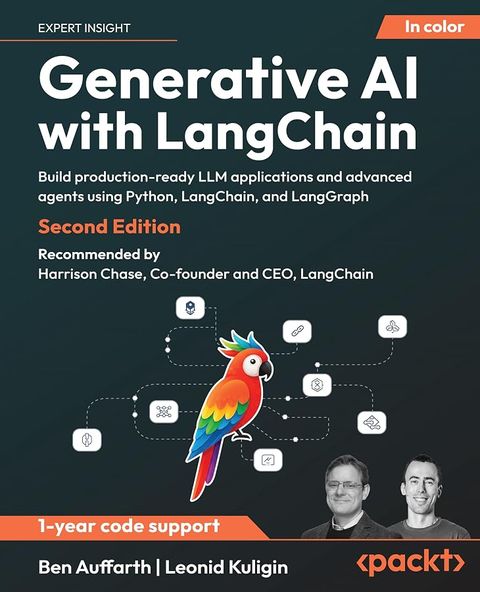
- Generative AI with LangChain Ben Auffarth and Leonid Kuligin
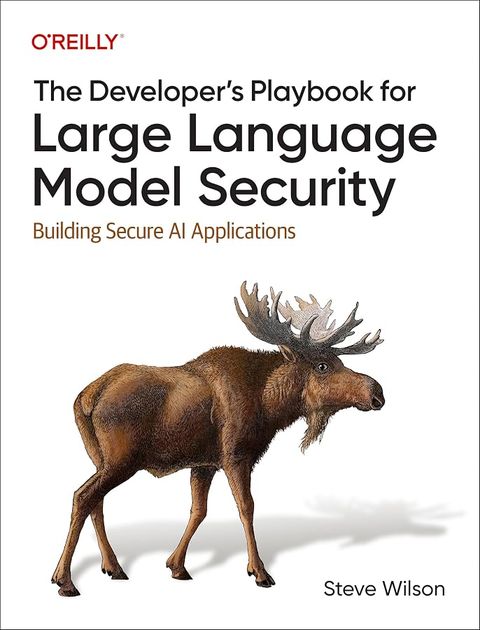
- The Developer's Playbook for Large Language Model Security Steve Wilson
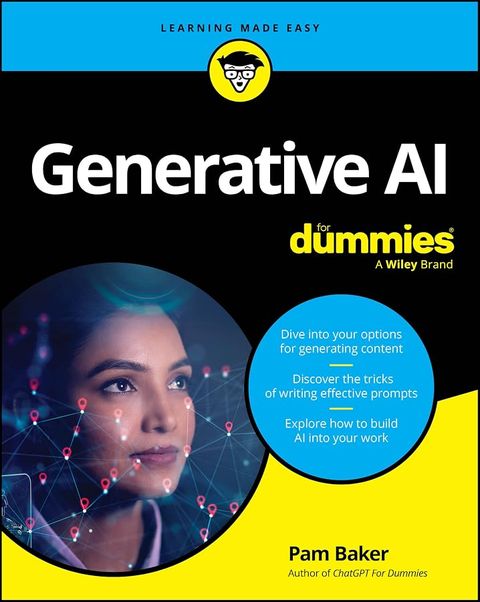
- Generative AI For Dummies Pam Baker
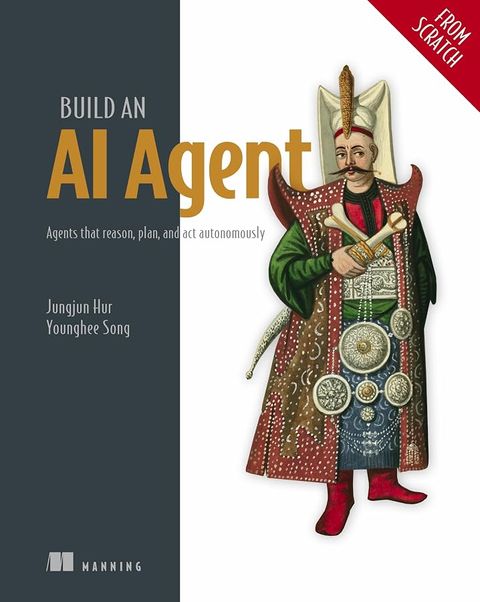
- Build an AI Agent (From Scratch) Jungjun Hur and Younghee Song
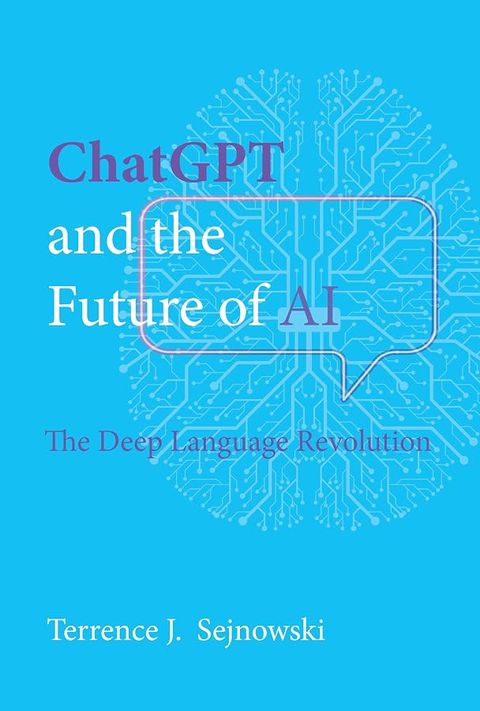
- ChatGPT and the Future of AI Terrence J. Sejnowski
- Super Study Guide Afshine Amidi and Shervine Amidi

Sources
As an Amazon Associate, Best AI Books earns from qualifying purchases. Best AI Books is sponsored by Iternal.ai, whose founder and CEO, John Byron Hanby IV, wrote The AI Strategy Blueprint, our #1 ranked book. How we rank books.
