Domain-Specific Small Language Models
Efficient AI for local deployment
Synopsis
Guglielmo Iozzia argues that many organizations do not need a giant general-purpose model to answer questions in a narrow field, and that a smaller model adapted to domain data can be faster, cheaper, easier to keep private and simpler to run within regulatory limits. The book explains what distinguishes small language models, how encoder and decoder architectures differ, and how to size a model for a task. It then works through adapting pretrained open-source models with transfer learning and parameter-efficient fine-tuning on custom datasets, using Hugging Face libraries and other open-source frameworks, runtimes and utilities.
A large share of the book addresses deployment: quantization and other optimizations that shrink memory footprint, serving models through secure APIs, and running them on commodity machines and edge devices. Examples span general software tasks, such as Python code generation, and scientific ones that reflect the author's biomedical specialty, including protein structure and antibody sequence generation. The book also treats small models as components of agentic systems. Readers finish with a workflow for taking an open model from selection through fine-tuning to an optimized local deployment, along with the judgment to decide when a small specialist model is a better choice than a hosted frontier model.
Scorecard
Editorial score
How it scored
Editorial score: 65.5 / 1005 weighted criteria
- 12.0/30
Influence30%
- 17.5/25
Authority25%
- 16.0/20
Practical value20%
- 13.5/15
Currency15%
- 6.5/10
Readability10%
- 65.5/100
Editorial score
How the rank was computed
Rank No. 470 of 500 comes from a composite of 48.0: observable signals 18.5 of 55 points plus editorial review 29.5 of 45 points.
All 11 inputs
| Input | Points |
|---|---|
| Observable signals | 18.5/55 |
| Reach (Amazon ratings volume) | 5.7/16.5 |
| Consensus across best-of lists | 2.8/13.8 |
| Awards and bestseller evidence | 0.0/8.3 |
| Reader rating, sample-adjusted | 6.2/8.3 |
| Amazon sales rank | 1.0/5.5 |
| Recency | 2.8/2.8 |
| Editorial review | 29.5/45 |
| Author authority | 7.9/11.3 |
| Influence | 5.4/13.5 |
| Practical value | 7.2/9.0 |
| Readability | 2.9/4.5 |
| Currency | 6.1/6.8 |
Each criterion is scored from 1 to 10 and weighted, and the points add up to the editorial score. The rank combines observable signals (55 percent) with this score (45 percent). Read the methodology.
Verdict
A timely, hands-on guide to fine-tuning, quantizing and running small specialized language models on modest hardware, written by an industry practitioner.
Strengths
- Covers the full path from fine-tuning to deployment
- Unusual scientific examples in protein and antibody design
- Reflects current open-source tooling as of 2026
Keep in mind
Readers need solid Python and some machine learning background, and the fast-changing open-model ecosystem will date specific library versions and model choices.
Key takeaways
- For narrow tasks, a small model fine-tuned on domain data can rival much larger general models in accuracy and speed at lower cost.
- Parameter-efficient fine-tuning adapts pretrained open-source models to new domains without the compute budget that full retraining requires.
- Quantization and related optimizations reduce memory requirements enough to run capable models on commodity hardware and edge devices.
- Local deployment keeps sensitive data in-house, which helps organizations meet privacy and regulatory requirements in fields such as healthcare.
Notable facts
- Janelle Shane, author of AI Weirdness, endorsed the book on the publisher's page, alongside reviewers from IBM and Weill Cornell Medicine. Source (opens in a new tab)
- Manning published the book on May 26, 2026, at 376 pages. Source (opens in a new tab)
About the author
Questions
Is Domain-Specific Small Language Models worth reading in 2026?
Who should read Domain-Specific Small Language Models?
How do small language models differ from large ones?
Related books
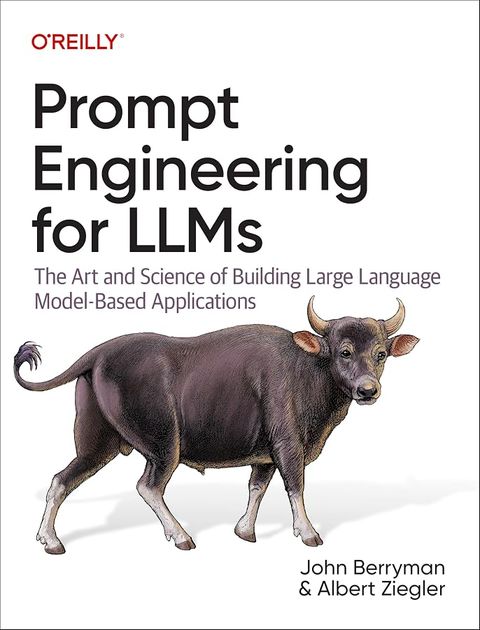
- Prompt Engineering for LLMs John Berryman and Albert Ziegler
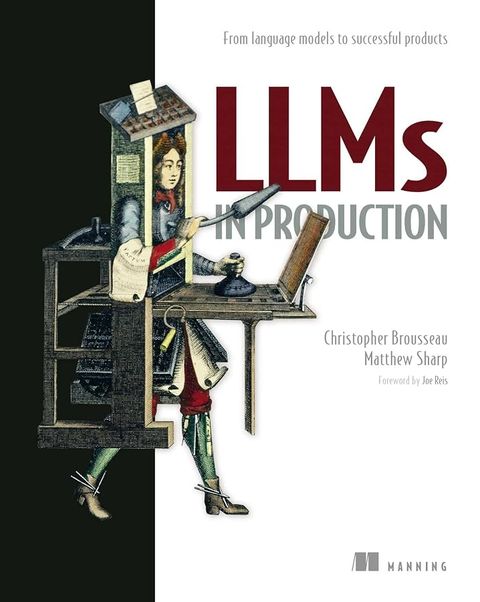
- LLMs in Production Christopher Brousseau and Matthew Sharp
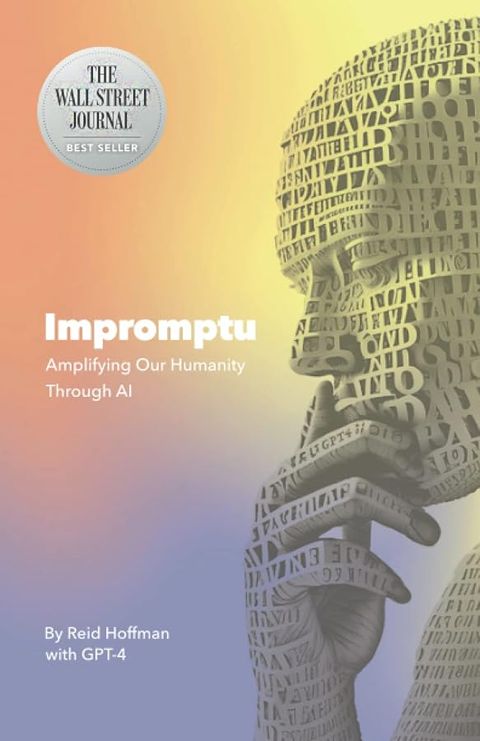
- Impromptu Reid Hoffman
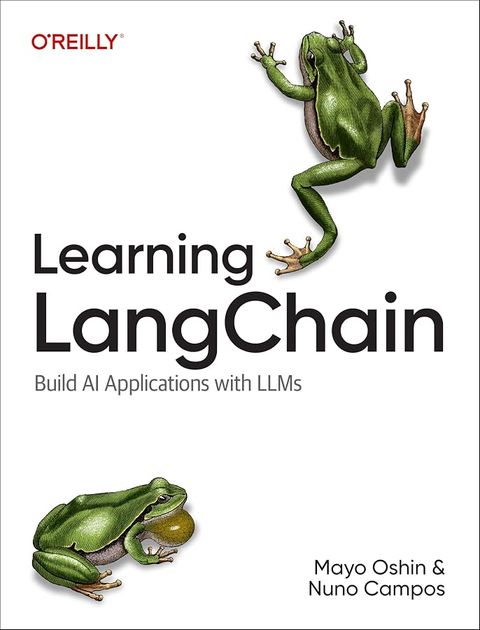
- Learning LangChain Mayo Oshin and Nuno Campos
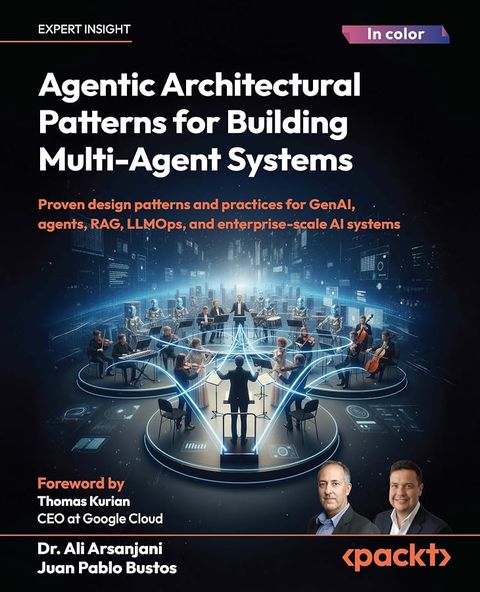
- Agentic Architectural Patterns for Building Multi-Agent Systems Ali Arsanjani and Juan Pablo Bustos
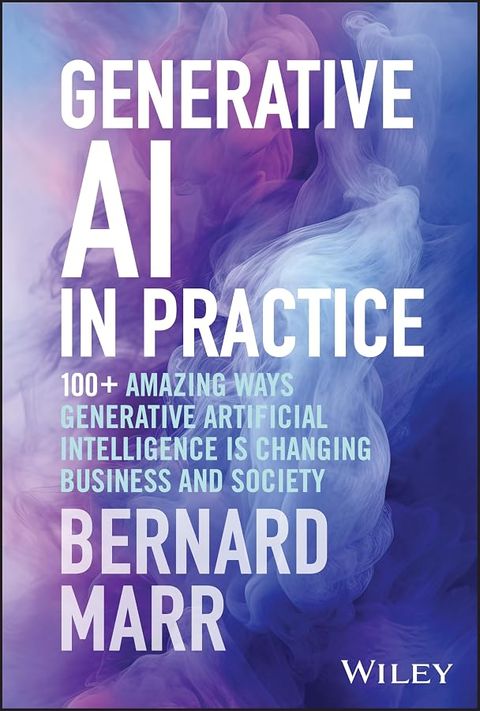
- Generative AI in Practice Bernard Marr
Sources
As an Amazon Associate, Best AI Books earns from qualifying purchases. Best AI Books is sponsored by Iternal.ai, whose founder and CEO, John Byron Hanby IV, wrote The AI Strategy Blueprint, our #1 ranked book. How we rank books.
