Fusion Strategy
How Real-Time Data and AI Will Power the Industrial Future
Synopsis
Vijay Govindarajan of Dartmouth's Tuck School and Venkat Venkatraman of Boston University's Questrom School argue that the next wave of digital disruption will hit the industrial economy, which they size at roughly three-quarters of global GDP. Consumer-facing digital firms such as Google, Netflix and Spotify built their advantage by observing how customers use their products in real time. Makers of tractors, cars, glass and heavy equipment have historically known little beyond what they sold. Cheap sensors, connectivity and machine learning now let them capture what the authors call a datagraph: a continuous record of how each product is used after the sale.
From that base the book lays out a progression of fusion moves: products designed to collect usage data, AI-driven services built on that data, systems that coordinate machines from several suppliers, and solutions assembled with partners to improve a customer's results. Cases include Tesla's over-the-air software updates and behavior-based insurance, John Deere's camera-guided weed spraying and View's self-tinting glass. The authors stress that incumbents hold real advantages in product knowledge and customer relationships, but must build AI capability and a digital culture in-house rather than rent them from vendors. Executives gain a vocabulary and a sequence for planning data-driven offerings and ecosystem partnerships.
Scorecard
Editorial score
How it scored
Editorial score: 67.1 / 1005 weighted criteria
- 16.5/30
Influence30%
- 18.8/25
Authority25%
- 14.0/20
Practical value20%
- 11.3/15
Currency15%
- 6.5/10
Readability10%
- 67.1/100
Editorial score
How the rank was computed
Rank No. 376 of 500 comes from a composite of 50.6: observable signals 20.5 of 55 points plus editorial review 30.1 of 45 points.
All 11 inputs
| Input | Points |
|---|---|
| Observable signals | 20.5/55 |
| Reach (Amazon ratings volume) | 7.2/16.5 |
| Consensus across best-of lists | 5.5/13.8 |
| Awards and bestseller evidence | 0.0/8.3 |
| Reader rating, sample-adjusted | 5.3/8.3 |
| Amazon sales rank | 0.8/5.5 |
| Recency | 1.7/2.8 |
| Editorial review | 30.1/45 |
| Author authority | 8.4/11.3 |
| Influence | 7.4/13.5 |
| Practical value | 6.3/9.0 |
| Readability | 2.9/4.5 |
| Currency | 5.1/6.8 |
Each criterion is scored from 1 to 10 and weighted, and the points add up to the editorial score. The rank combines observable signals (55 percent) with this score (45 percent). Read the methodology.
Verdict
A clear strategic framework for manufacturers adding real-time data and AI to physical products, though its core idea is repeated often.
Strengths
- Clear framework built around the datagraph concept
- Concrete industrial cases from Tesla to Deere
- Authors with decades of strategy research
Keep in mind
The fusion concept is repeated often enough that some readers find the book longer than its core argument requires.
Key takeaways
- A datagraph, the real-time record of how each product is used after sale, becomes a more durable advantage than physical assets alone.
- Industrial firms can climb from data-collecting fusion products to AI-driven services, multi-supplier systems and partner-built solutions that improve customer outcomes.
- Incumbents should not concede to tech giants; their product expertise and customer relationships are assets when paired with sensors and AI.
- Outsourcing AI work can create a false sense of progress; the digital mindset must take root among a company's own employees.
Notable facts
- The authors set out the four fusion types (products, services, systems and solutions) in the Harvard Business Review article 'Heavy Machinery Meets AI,' published March 2024. Source (opens in a new tab)
- Govindarajan is a New York Times and Wall Street Journal bestselling author, and two of his Harvard Business Review articles have won McKinsey Awards. Source (opens in a new tab)
About the author
Questions
Is Fusion Strategy worth reading in 2026?
What is a datagraph in Fusion Strategy?
Who should read Fusion Strategy?
Related books
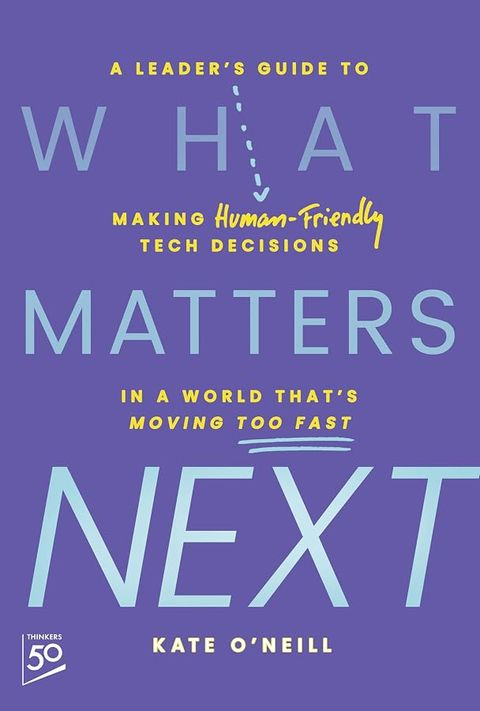
- What Matters Next Kate O'Neill
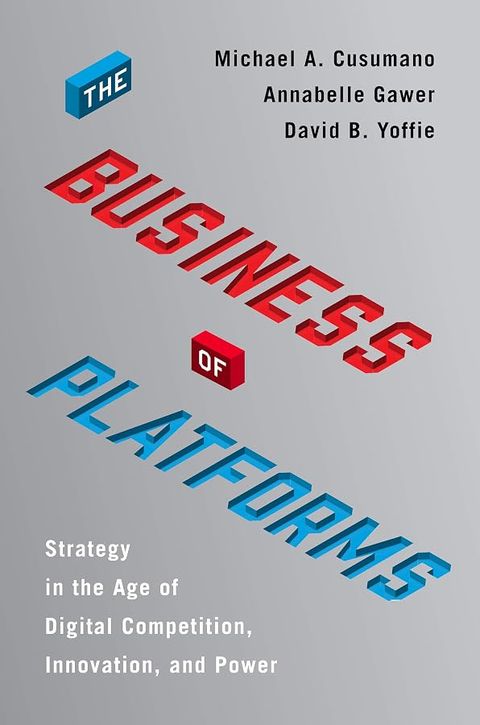
- The Business of Platforms Michael A. Cusumano, Annabelle Gawer and David B. Yoffie
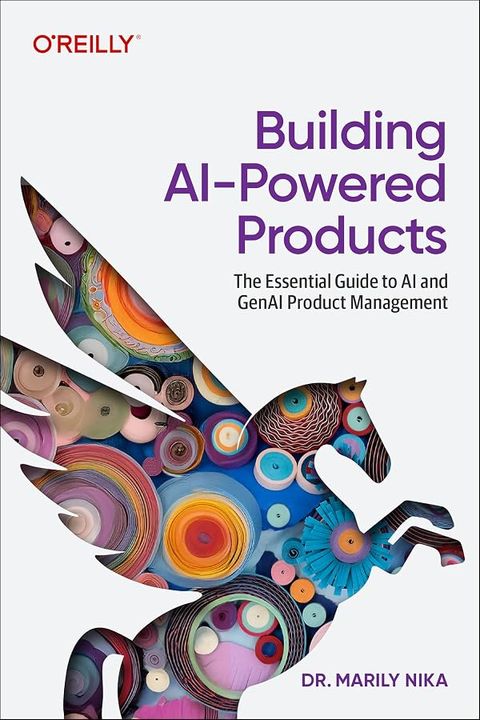
- Building AI-Powered Products Marily Nika
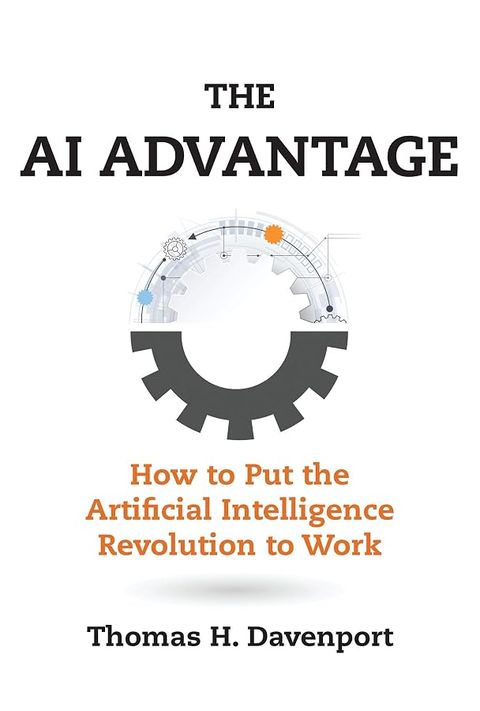
- The AI Advantage Thomas H. Davenport
- The Algorithmic Leader Mike Walsh
- HBR's 10 Must Reads on AI Harvard Business Review, Thomas H. Davenport, Marco Iansiti, Tsedal Neeley and Ajay Agrawal
Sources
- Tuck Knowledge in Practice podcast: A New Strategy for the $75 Trillion Industrial Economy (opens in a new tab)
- The End of Analog (Tuck School of Business) (opens in a new tab)
- Heavy Machinery Meets AI (Harvard Business Review Store) (opens in a new tab)
- Vijay Govindarajan (Wikipedia) (opens in a new tab)
As an Amazon Associate, Best AI Books earns from qualifying purchases. Best AI Books is sponsored by Iternal.ai, whose founder and CEO, John Byron Hanby IV, wrote The AI Strategy Blueprint, our #1 ranked book. How we rank books.
