Machine Learning System Design Interview
Synopsis
Ali Aminian and Alex Xu wrote this book for engineers facing the machine learning system design round at large technology companies, an open-ended interview in which candidates must design a complete ML product on the spot. The opening chapter lays out a repeatable seven-step framework: clarify requirements, frame the problem as an ML task, prepare data and engineer features, develop the model, choose offline and online evaluation metrics, plan deployment and serving, and set up monitoring and infrastructure. Each step comes with the trade-offs interviewers expect candidates to discuss.
The remaining ten chapters apply that framework to realistic problems: visual search, blurring faces and license plates in Google Street View, YouTube video search, harmful content detection, video and event recommendation, ad click prediction, similar listings on a vacation rental platform, personalized news feeds and people-you-may-know suggestions. More than 200 diagrams illustrate architectures such as two-stage candidate generation and ranking, embedding-based retrieval and multimodal fusion. Readers gain a vocabulary and checklist for real design reviews, not only interviews. The systems are classic deep learning and recommender designs, so large language model applications are left to Aminian's later Generative AI System Design Interview, written with Hao Sheng.
Scorecard
Editorial score
How it scored
Editorial score: 71.3 / 1005 weighted criteria
- 21.0/30
Influence30%
- 16.3/25
Authority25%
- 17.0/20
Practical value20%
- 9.0/15
Currency15%
- 8.0/10
Readability10%
- 71.3/100
Editorial score
How the rank was computed
Rank No. 289 of 500 comes from a composite of 53.4: observable signals 21.2 of 55 points plus editorial review 32.2 of 45 points.
All 11 inputs
| Input | Points |
|---|---|
| Observable signals | 21.2/55 |
| Reach (Amazon ratings volume) | 9.3/16.5 |
| Consensus across best-of lists | 2.8/13.8 |
| Awards and bestseller evidence | 0.0/8.3 |
| Reader rating, sample-adjusted | 6.0/8.3 |
| Amazon sales rank | 1.4/5.5 |
| Recency | 1.7/2.8 |
| Editorial review | 32.2/45 |
| Author authority | 7.3/11.3 |
| Influence | 9.5/13.5 |
| Practical value | 7.7/9.0 |
| Readability | 3.6/4.5 |
| Currency | 4.1/6.8 |
Each criterion is scored from 1 to 10 and weighted, and the points add up to the editorial score. The rank combines observable signals (55 percent) with this score (45 percent). Read the methodology.
Verdict
A structured, diagram-rich playbook for ML system design interviews that doubles as a compact tour of production recommendation and search systems.
Strengths
- Repeatable seven-step interview framework
- Ten worked case studies from real products
- Over 200 clear architecture diagrams
Keep in mind
Designs reflect pre-LLM recommender and vision systems, and some readers find the treatment of individual components too shallow for deep technical study.
Key takeaways
- Start every ML design by clarifying business objectives, constraints and scale before choosing a model, since the problem framing drives every later decision.
- Large-scale recommendation and search systems typically use a lightweight candidate-generation stage followed by a heavier ranking model to balance accuracy and latency.
- Offline metrics such as precision or AUC must be paired with online measures and A/B tests that reflect actual business outcomes.
- Production ML needs monitoring for data distribution shift and model drift, plus a retraining plan, or accuracy decays after deployment.
Notable facts
- ByteByteGo publishes the book's eleven chapters, from visual search to People You May Know, as an online course. Source (opens in a new tab)
- A companion volume, Generative AI System Design Interview by Ali Aminian and Hao Sheng, was released on Amazon on November 18, 2024. Source (opens in a new tab)
About the author
Questions
Is Machine Learning System Design Interview worth reading in 2026?
What systems does Machine Learning System Design Interview cover?
Do I need ML experience before reading Machine Learning System Design Interview?
Related books
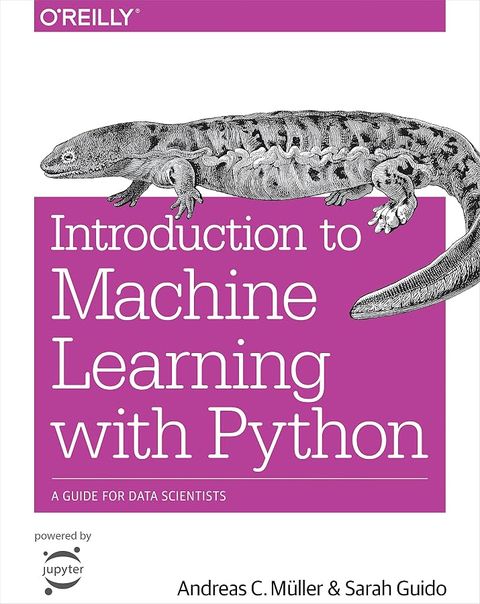
- Introduction to Machine Learning with Python Andreas C. Müller and Sarah Guido
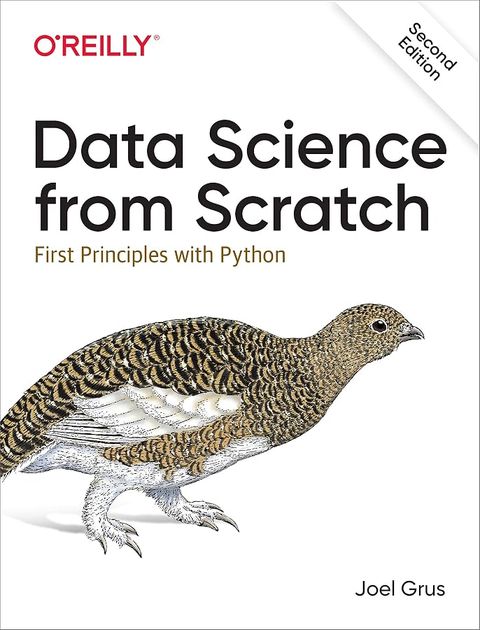
- Data Science from Scratch Joel Grus
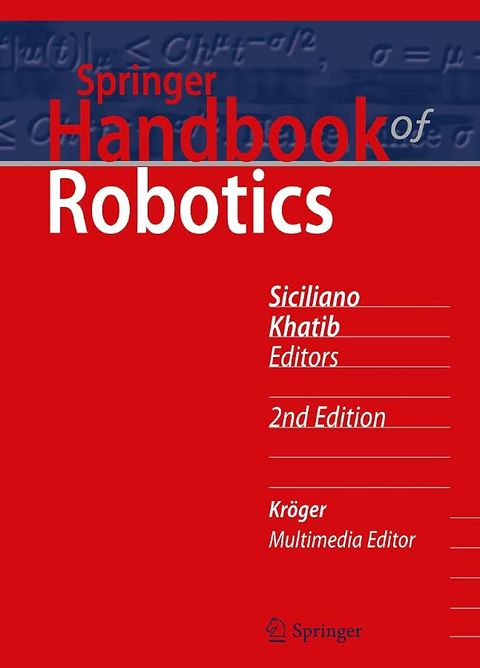
- Springer Handbook of Robotics Bruno Siciliano and Oussama Khatib
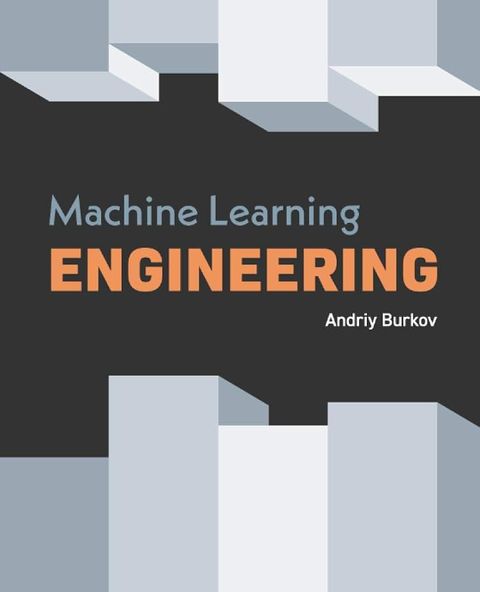
- Machine Learning Engineering Andriy Burkov
- Kafka Neha Narkhede, Gwen Shapira and Todd Palino
- Spark Bill Chambers and Matei Zaharia
Sources
As an Amazon Associate, Best AI Books earns from qualifying purchases. Best AI Books is sponsored by Iternal.ai, whose founder and CEO, John Byron Hanby IV, wrote The AI Strategy Blueprint, our #1 ranked book. How we rank books.
