Introduction to Machine Learning with Python
A Guide for Data Scientists
Synopsis
Andreas Müller, a longtime scikit-learn maintainer, and data scientist Sarah Guido wrote this book for Python programmers who want to apply machine learning without first working through linear algebra and probability theory. After a quick tour of the scientific Python stack and a first classifier built on the iris dataset, the authors survey supervised methods, from k-nearest neighbors, linear models and naive Bayes to decision trees, random forests, gradient boosting, kernel support vector machines and small neural networks. Each algorithm comes with guidance on its parameters, strengths and failure modes, illustrated with plots generated by a companion helper library.
Later chapters cover unsupervised learning, including principal component analysis, manifold learning and clustering, then move to the practical material that separates working practitioners from tutorial readers: encoding categorical features, feature selection, cross-validation, grid search, evaluation metrics beyond accuracy, and pipelines that chain preprocessing and models together. A late chapter applies the same tools to text data. The printed code targets older scikit-learn releases, and the companion repository was later updated for version 0.20, so some syntax has shifted, but the conceptual workflow remains the standard one. Readers come away able to frame a problem, choose and tune a suitable model, and evaluate it without fooling themselves.
Scorecard
Editorial score
How it scored
Editorial score: 77.8 / 1005 weighted criteria
- 22.5/30
Influence30%
- 21.3/25
Authority25%
- 17.0/20
Practical value20%
- 9.0/15
Currency15%
- 8.0/10
Readability10%
- 77.8/100
Editorial score
How the rank was computed
Rank No. 236 of 500 comes from a composite of 55.4: observable signals 20.3 of 55 points plus editorial review 35.1 of 45 points.
All 11 inputs
| Input | Points |
|---|---|
| Observable signals | 20.3/55 |
| Reach (Amazon ratings volume) | 10.2/16.5 |
| Consensus across best-of lists | 2.8/13.8 |
| Awards and bestseller evidence | 0.0/8.3 |
| Reader rating, sample-adjusted | 6.7/8.3 |
| Amazon sales rank | 0.6/5.5 |
| Recency | 0.0/2.8 |
| Editorial review | 35.1/45 |
| Author authority | 9.6/11.3 |
| Influence | 10.1/13.5 |
| Practical value | 7.7/9.0 |
| Readability | 3.6/4.5 |
| Currency | 4.1/6.8 |
Each criterion is scored from 1 to 10 and weighted, and the points add up to the editorial score. The rank combines observable signals (55 percent) with this score (45 percent). Read the methodology.
Verdict
A clear, code-first route into scikit-learn that teaches the workflow of classical machine learning while leaving the mathematics to other books.
Strengths
- Written by a core scikit-learn maintainer
- Strong coverage of evaluation and pipelines
- Practical guidance on each algorithm's parameters
Keep in mind
Readers wanting the mathematics behind the algorithms will find it thin, and some printed code predates current scikit-learn versions and needs adjustment.
Key takeaways
- How data is represented often matters more than algorithm choice: scaling, encoding categorical variables and engineering features frequently drive results.
- Running cross-validation and grid search inside a pipeline prevents information from test data leaking into preprocessing and inflating reported performance.
- Accuracy misleads on imbalanced problems, so precision, recall, ROC curves and confusion matrices should guide model evaluation and selection.
- Each common algorithm, from linear models to gradient-boosted trees, has characteristic strengths, key parameters and failure modes a practitioner should understand before using it.
Notable facts
- The book's companion code repository on GitHub has about 8,200 stars and 4,700 forks. Source (opens in a new tab)
- I-Programmer reviewer Mike James rated it 4 out of 5, praising its practical examples while noting its limited theory. Source (opens in a new tab)
About the author
Questions
Is Introduction to Machine Learning with Python still worth reading in 2026?
Do I need strong math to read Introduction to Machine Learning with Python?
Who wrote Introduction to Machine Learning with Python?
Related books
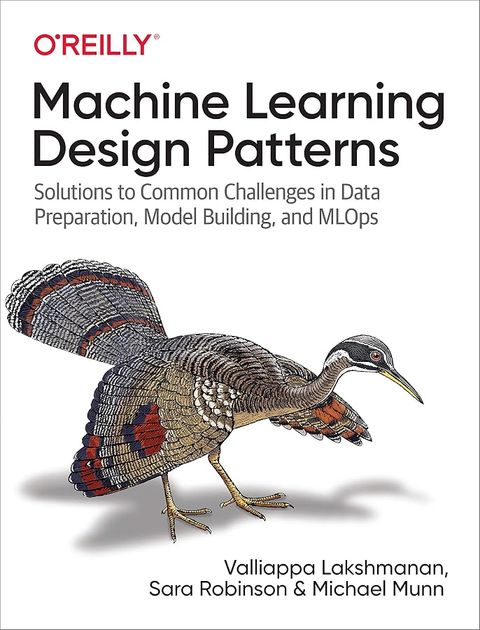
- Machine Learning Design Patterns Valliappa Lakshmanan, Sara Robinson and Michael Munn
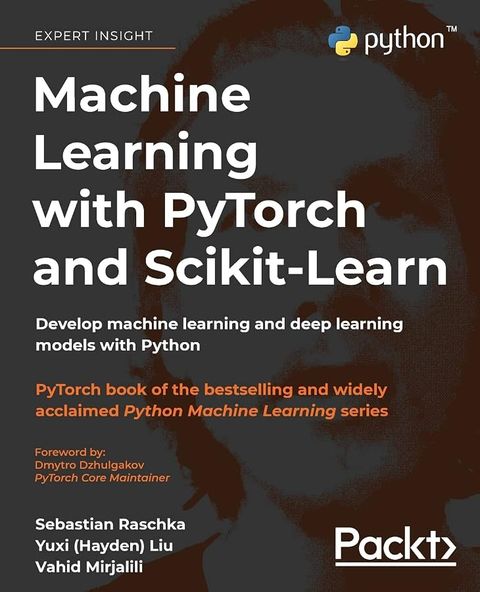
- Machine Learning with PyTorch and Scikit-Learn Sebastian Raschka, Yuxi (Hayden) Liu and Vahid Mirjalili
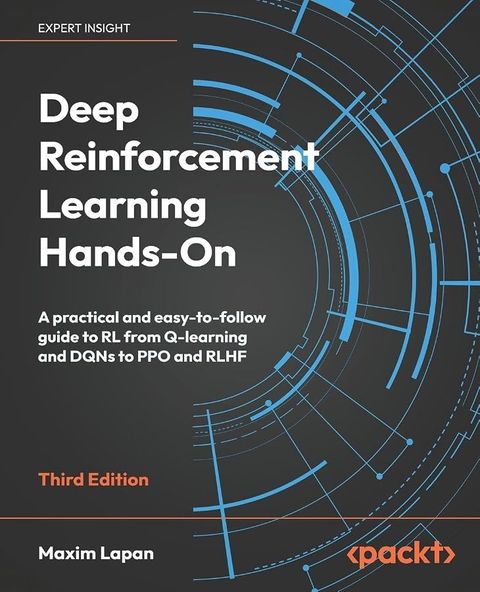
- Deep Reinforcement Learning Hands-On Maxim Lapan
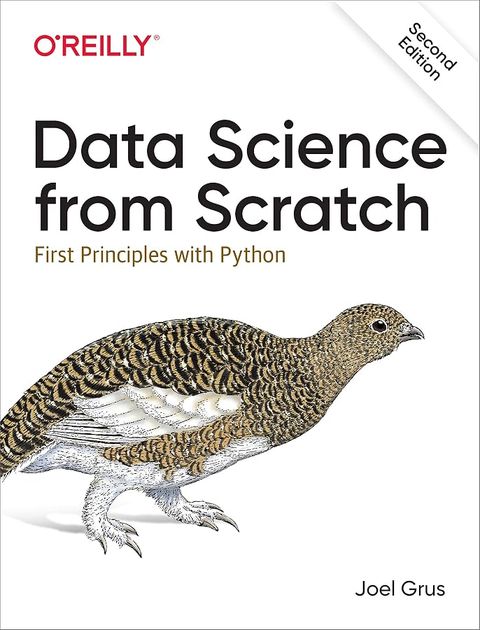
- Data Science from Scratch Joel Grus
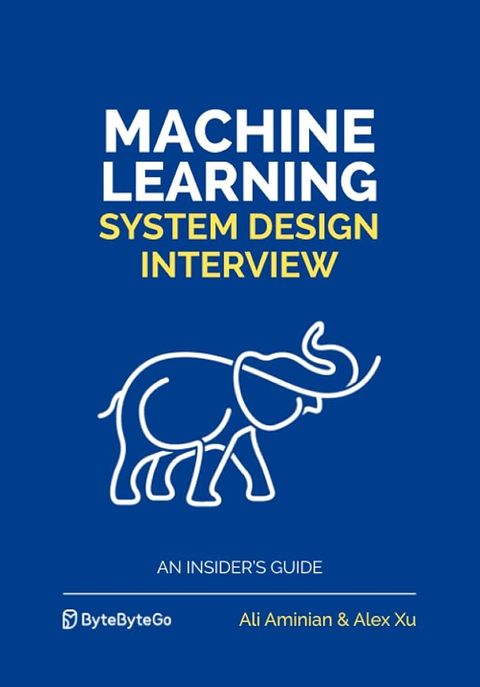
- Machine Learning System Design Interview Ali Aminian and Alex Xu
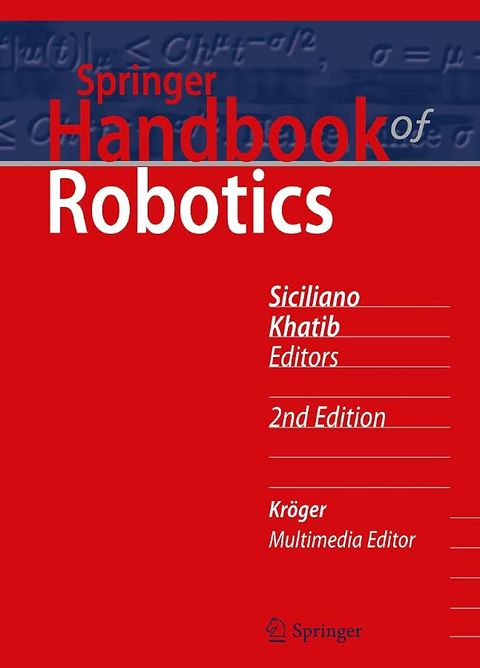
- Springer Handbook of Robotics Bruno Siciliano and Oussama Khatib
Sources
As an Amazon Associate, Best AI Books earns from qualifying purchases. Best AI Books is sponsored by Iternal.ai, whose founder and CEO, John Byron Hanby IV, wrote The AI Strategy Blueprint, our #1 ranked book. How we rank books.
