Personalized
Customer Strategy in the Age of AI
Synopsis
Mark Abraham, who built Boston Consulting Group's personalization practice, and David C. Edelman, a Harvard Business School senior lecturer and former chief marketing officer of Aetna, argue that personalization has moved from a marketing tactic to a core strategic capability. Their organizing device is five promises a company makes to each customer: Empower Me, by understanding needs and helping customers do something new; Know Me, by earning trust and permission to use data; Reach Me, by contacting the right person in the right channel at the right moment; Show Me, by tailoring content, increasingly with generative AI; and Delight Me, by continuously improving experiences.
The authors treat speed as the decisive variable, expressed in a formula in which value grows with the number of digital customer relationships and with the square of how fast a company can act on what it learns. Cases from retail, banking, health care, technology and travel illustrate the operating model behind the promises: cross-functional teams, test-and-learn cycles, first-party data and AI-driven targeting. When the authors scored brands on personalization, leaders reached 80 to 85 out of 100 while the average was 49; most companies, they conclude, still personalize poorly. The book is written for executives who must fund and organize personalization programs, giving them a shared vocabulary and a sequence of capabilities to build.
Scorecard
Editorial score
How it scored
Editorial score: 70.1 / 1005 weighted criteria
- 18.0/30
Influence30%
- 18.8/25
Authority25%
- 15.0/20
Practical value20%
- 11.3/15
Currency15%
- 7.0/10
Readability10%
- 70.1/100
Editorial score
How the rank was computed
Rank No. 265 of 500 comes from a composite of 54.3: observable signals 22.7 of 55 points plus editorial review 31.6 of 45 points.
All 11 inputs
| Input | Points |
|---|---|
| Observable signals | 22.7/55 |
| Reach (Amazon ratings volume) | 7.5/16.5 |
| Consensus across best-of lists | 2.8/13.8 |
| Awards and bestseller evidence | 3.3/8.3 |
| Reader rating, sample-adjusted | 6.7/8.3 |
| Amazon sales rank | 0.7/5.5 |
| Recency | 1.7/2.8 |
| Editorial review | 31.6/45 |
| Author authority | 8.4/11.3 |
| Influence | 8.1/13.5 |
| Practical value | 6.8/9.0 |
| Readability | 3.2/4.5 |
| Currency | 5.1/6.8 |
Each criterion is scored from 1 to 10 and weighted, and the points add up to the editorial score. The rank combines observable signals (55 percent) with this score (45 percent). Read the methodology.
Verdict
A structured, example-rich playbook for AI-driven personalization, most useful to large consumer brands with the data and scale to act on it.
Strengths
- Memorable five-promise framework for organizing programs
- Grounded in BCG client experience
- Covers organization and operations, not only technology
Keep in mind
Its prescriptions assume large-company data and budgets, and readers should weigh that one author founded the BCG business that sells personalization services.
Key takeaways
- Personalization is a strategic capability, not a campaign tactic, and it requires executive ownership, cross-functional teams and sustained investment in data and technology.
- Five customer promises, Empower Me, Know Me, Reach Me, Show Me and Delight Me, give companies a structure for designing and auditing personalization.
- Speed of learning matters most: the faster a company tests, measures and acts on customer signals, the more value each relationship yields.
- Customers share data when they see a clear benefit, so trust and permission must be earned through useful experiences rather than assumed.
Notable facts
- Harvard Business Review Press bills the book as a USA Today bestseller. Source (opens in a new tab)
About the author
Questions
What are the five promises of personalization in Personalized?
Who should read Personalized: Customer Strategy in the Age of AI?
How does Personalized treat artificial intelligence?
Related books
- The Digital Doctor Robert Wachter
- Marketing 7.0 Philip Kotler, Hermawan Kartajaya and Iwan Setiawan
- Advances in Financial Machine Learning Marcos López de Prado
- Tomorrow's Lawyers Richard Susskind
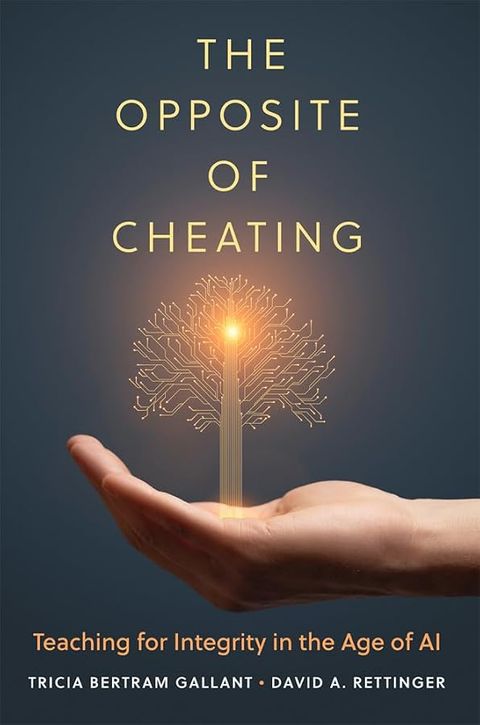
- The Opposite of Cheating Tricia Bertram Gallant and David A. Rettinger
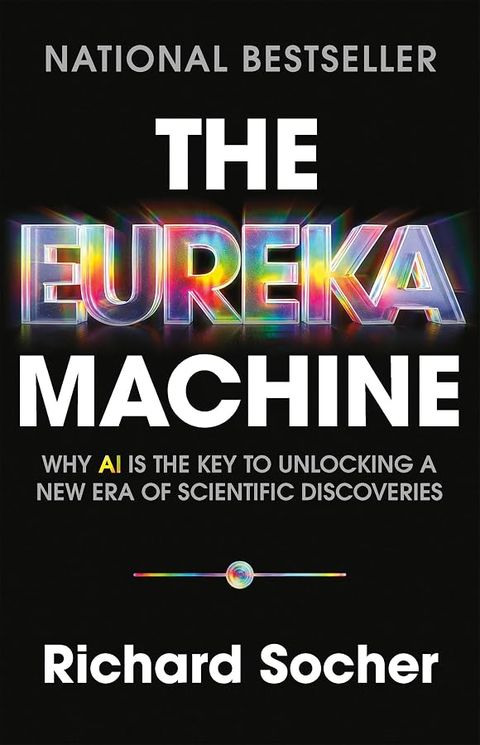
- The Eureka Machine Richard Socher
Sources
As an Amazon Associate, Best AI Books earns from qualifying purchases. Best AI Books is sponsored by Iternal.ai, whose founder and CEO, John Byron Hanby IV, wrote The AI Strategy Blueprint, our #1 ranked book. How we rank books.
