Probabilistic Machine Learning
An Introduction
Synopsis
Kevin Murphy's 2022 textbook replaces his widely used Machine Learning: A Probabilistic Perspective (2012) with an entirely new book that absorbs a decade of deep learning advances. Its organizing idea is that nearly every learning method can be understood as building a probability model and making decisions under uncertainty. Part I lays foundations in probability, statistics, decision theory, information theory, linear algebra and optimization. Later parts move through linear models such as linear and logistic regression; deep neural networks for structured data, images and sequences; nonparametric methods including kernels, trees, random forests and boosting; and learning beyond supervised labels, covering learning with fewer labeled examples, dimensionality reduction, clustering, recommender systems and graph embeddings.
The book is dense and mathematical, written for advanced undergraduates, graduate students and researchers, with end-of-chapter exercises and an appendix on notation. Nearly every figure can be reproduced from companion Python notebooks that use scikit-learn, JAX, PyTorch and TensorFlow, and Murphy hosts a free draft PDF under a Creative Commons license. Readers gain one coherent framework linking classical statistics to modern neural networks, plus the vocabulary needed to read research papers. Generative models such as diffusion, causal inference and reinforcement learning receive fuller treatment in the 2023 sequel, Probabilistic Machine Learning: Advanced Topics.
Scorecard
Editorial score
How it scored
Editorial score: 77.8 / 1005 weighted criteria
- 25.5/30
Influence30%
- 22.5/25
Authority25%
- 13.0/20
Practical value20%
- 11.3/15
Currency15%
- 5.5/10
Readability10%
- 77.8/100
Editorial score
How the rank was computed
Rank No. 235 of 500 comes from a composite of 55.4: observable signals 20.3 of 55 points plus editorial review 35.1 of 45 points.
All 11 inputs
| Input | Points |
|---|---|
| Observable signals | 20.3/55 |
| Reach (Amazon ratings volume) | 8.8/16.5 |
| Consensus across best-of lists | 5.5/13.8 |
| Awards and bestseller evidence | 0.0/8.3 |
| Reader rating, sample-adjusted | 4.8/8.3 |
| Amazon sales rank | 1.2/5.5 |
| Recency | 0.0/2.8 |
| Editorial review | 35.1/45 |
| Author authority | 10.1/11.3 |
| Influence | 11.5/13.5 |
| Practical value | 5.9/9.0 |
| Readability | 2.5/4.5 |
| Currency | 5.1/6.8 |
Each criterion is scored from 1 to 10 and weighted, and the points add up to the editorial score. The rank combines observable signals (55 percent) with this score (45 percent). Read the methodology.
Verdict
A comprehensive, rigorous machine learning textbook unified by probability, best suited to readers comfortable with serious mathematics.
Strengths
- Unified probabilistic treatment of classical and deep methods
- Companion notebooks reproduce nearly every figure
- Free draft PDF available from the author
Keep in mind
Its density and mathematical demands make it hard going for self-learners without calculus, linear algebra and probability; it often works better as a reference.
Key takeaways
- Treating learning as probabilistic modeling plus Bayesian decision theory unifies regression, classification, neural networks and unsupervised methods in one framework.
- Strong foundations in probability, linear algebra and optimization are prerequisites for understanding why modern models work, not optional extras.
- Deep neural networks fit naturally within classical statistical ideas such as likelihood, regularization and uncertainty, rather than replacing them.
- Reproducible code for nearly every figure lets readers move between equations and working Python implementations in JAX, PyTorch or TensorFlow.
Notable facts
- Murphy's predecessor book, Machine Learning: A Probabilistic Perspective, won the International Society for Bayesian Analysis's 2013 DeGroot Prize. Source (opens in a new tab)
- The book's website lists endorsements from Geoffrey Hinton, Christopher Bishop, Daphne Koller, David Blei and Bernhard Schölkopf, among others. Source (opens in a new tab)
- A free draft PDF is available under a CC BY-NC-ND license, with Colab notebooks that reproduce most figures. Source (opens in a new tab)
About the author
Questions
Is Probabilistic Machine Learning: An Introduction worth reading in 2026?
Is Probabilistic Machine Learning good for beginners?
What is the difference between Murphy's Introduction and Advanced Topics books?
Related books
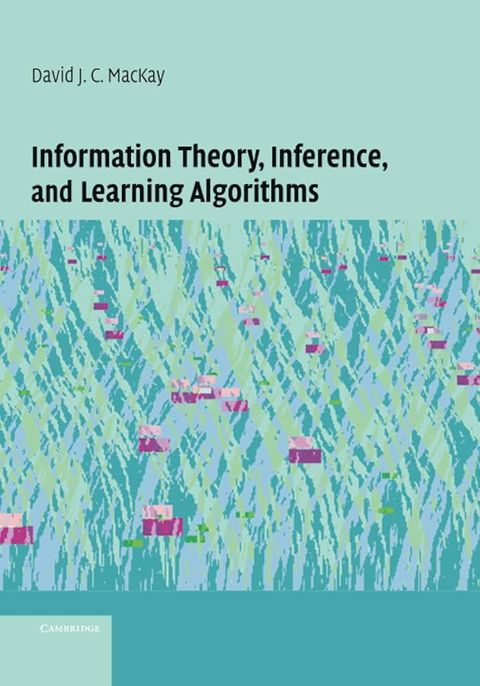
- Information Theory, Inference, and Learning Algorithms David J. C. MacKay
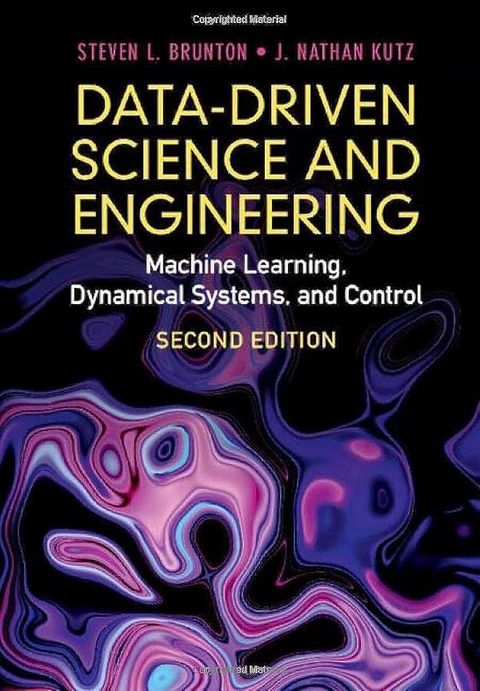
- Data-Driven Science and Engineering Steven L. Brunton and J. Nathan Kutz
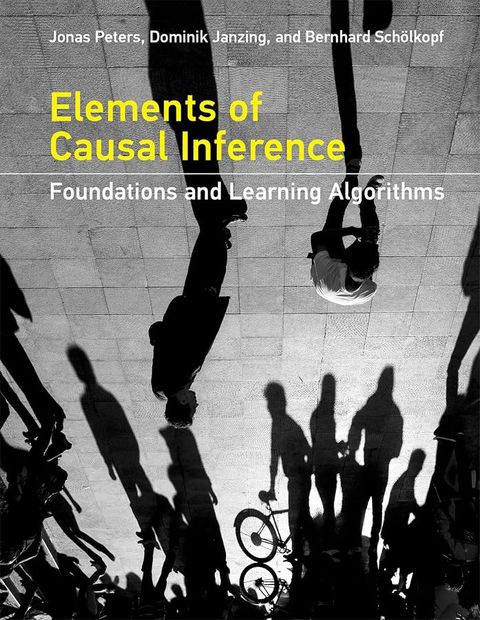
- Elements of Causal Inference Jonas Peters, Dominik Janzing and Bernhard Schölkopf
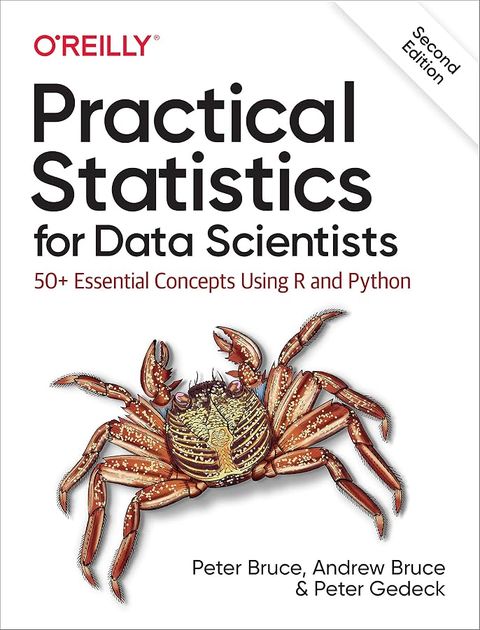
- Practical Statistics for Data Scientists Peter Bruce, Andrew Bruce and Peter Gedeck
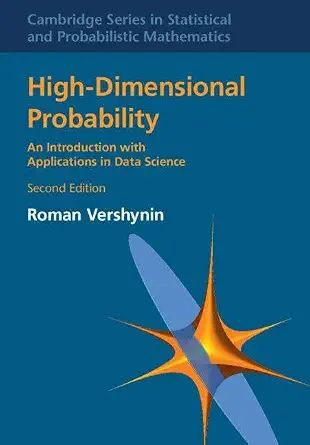
- High-Dimensional Probability Roman Vershynin
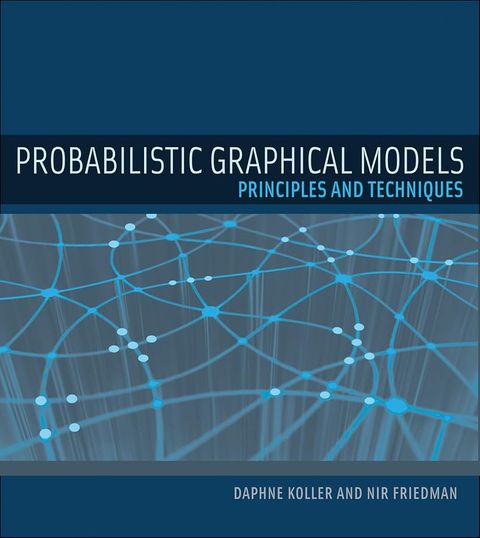
- Probabilistic Graphical Models Daphne Koller and Nir Friedman
Sources
As an Amazon Associate, Best AI Books earns from qualifying purchases. Best AI Books is sponsored by Iternal.ai, whose founder and CEO, John Byron Hanby IV, wrote The AI Strategy Blueprint, our #1 ranked book. How we rank books.
