Statistics, Data Mining, and Machine Learning in Astronomy
A Practical Python Guide for the Analysis of Survey Data
By Željko Ivezić, Andrew J. Connolly, Jacob T. VanderPlas and Alexander Gray
Synopsis
Written by astronomers who build and mine the largest sky surveys, this textbook treats astronomy as a proving ground for modern data analysis. It moves from fast computation on massive data sets and probability foundations through classical and Bayesian inference, then into density estimation and clustering, dimensionality reduction, regression, classification and time-series analysis. Each method is tied to a real problem, such as picking out RR Lyrae variable stars from survey colors, finding periodic signals in light curves or estimating galaxy redshifts from photometry. The 2019 updated edition adds material on deep learning, hierarchical Bayesian models and approximate Bayesian computation, and refreshes code that had drifted out of date.
The distinguishing feature is reproducibility. Every figure is generated by open-source code in the authors' astroML library, built on NumPy, SciPy and scikit-learn, with downloadable survey data so readers can rerun and modify each analysis. The prose is mathematical and compact, closer to a reference manual than a narrative introduction. It is aimed at graduate students, advanced undergraduates and working researchers. Readers who work through it gain a toolkit that transfers well beyond astronomy to any field with large, noisy, heterogeneous data.
Scorecard
Editorial score
How it scored
Editorial score: 76.8 / 1005 weighted criteria
- 22.5/30
Influence30%
- 22.5/25
Authority25%
- 16.0/20
Practical value20%
- 9.8/15
Currency15%
- 6.0/10
Readability10%
- 76.8/100
Editorial score
How the rank was computed
Rank No. 264 of 500 comes from a composite of 54.3: observable signals 19.8 of 55 points plus editorial review 34.5 of 45 points.
All 11 inputs
| Input | Points |
|---|---|
| Observable signals | 19.8/55 |
| Reach (Amazon ratings volume) | 5.5/16.5 |
| Consensus across best-of lists | 2.8/13.8 |
| Awards and bestseller evidence | 5.0/8.3 |
| Reader rating, sample-adjusted | 6.1/8.3 |
| Amazon sales rank | 0.4/5.5 |
| Recency | 0.0/2.8 |
| Editorial review | 34.5/45 |
| Author authority | 10.1/11.3 |
| Influence | 10.1/13.5 |
| Practical value | 7.2/9.0 |
| Readability | 2.7/4.5 |
| Currency | 4.4/6.8 |
Each criterion is scored from 1 to 10 and weighted, and the points add up to the editorial score. The rank combines observable signals (55 percent) with this score (45 percent). Read the methodology.
Verdict
A rigorous graduate reference on applying statistics and machine learning to sky surveys, backed by reproducible Python code for every figure.
Strengths
- Reproducible figures via the open astroML library
- Real survey data sets readers can download
- Authors who lead major sky-survey projects
Keep in mind
Dense mathematical exposition assumes calculus, linear algebra and Python fluency; readers wanting a gentle introduction to machine learning will find it heavy going.
Key takeaways
- Bayesian inference, treated at length alongside classical methods, handles the measurement errors, selection effects and incomplete samples that dominate real survey catalogs.
- Choosing an algorithm depends on data size and dimensionality; the book compares methods on accuracy, interpretability and computational cost for millions of objects.
- Dimensionality reduction techniques such as principal component analysis and manifold learning compress high-dimensional spectra into a few informative features for clustering or classification.
- Time-series tools such as periodograms let analysts detect periodic and transient signals in irregularly sampled light curves, a core task for surveys such as the Rubin Observatory's LSST.
Notable facts
- Winner of the 2016 Outstanding Publication Award from the International Astrostatistics Association. Source (opens in a new tab)
- An NSF grant abstract reports that the companion astroML library was installed more than 21,000 times in its first three years, and the grant supported the book's second edition. Source (opens in a new tab)
- Princeton University Press published the updated edition on December 3, 2019, adding sections on deep learning, hierarchical Bayes modeling and approximate Bayesian computation. Source (opens in a new tab)
About the author
Questions
Is Statistics, Data Mining, and Machine Learning in Astronomy worth reading in 2026?
Do I need to know Python to use Statistics, Data Mining, and Machine Learning in Astronomy?
Is Statistics, Data Mining, and Machine Learning in Astronomy useful outside astronomy?
Related books
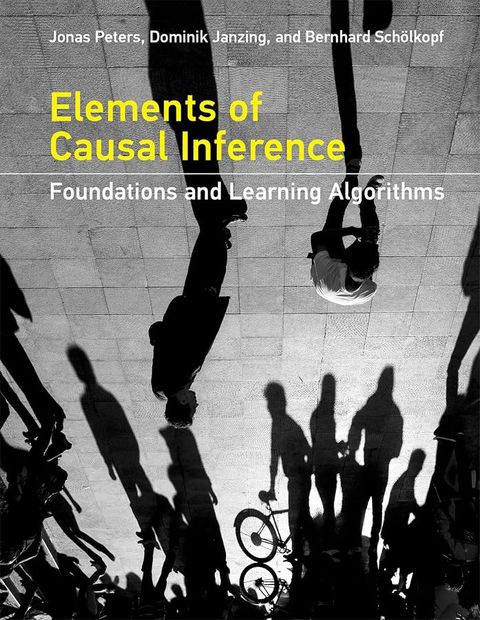
- Elements of Causal Inference Jonas Peters, Dominik Janzing and Bernhard Schölkopf
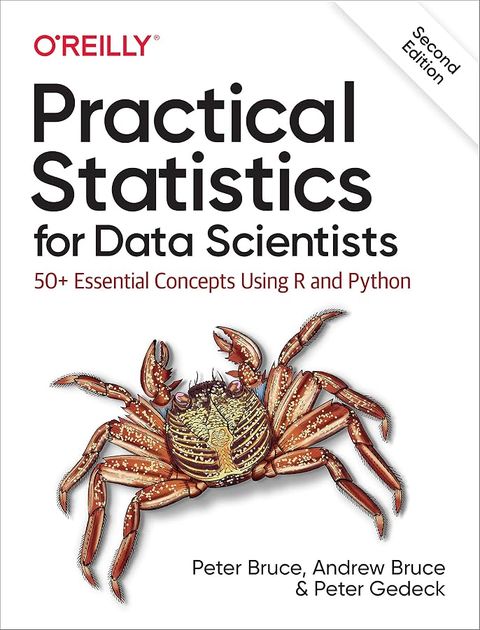
- Practical Statistics for Data Scientists Peter Bruce, Andrew Bruce and Peter Gedeck
- High-Dimensional Probability Roman Vershynin
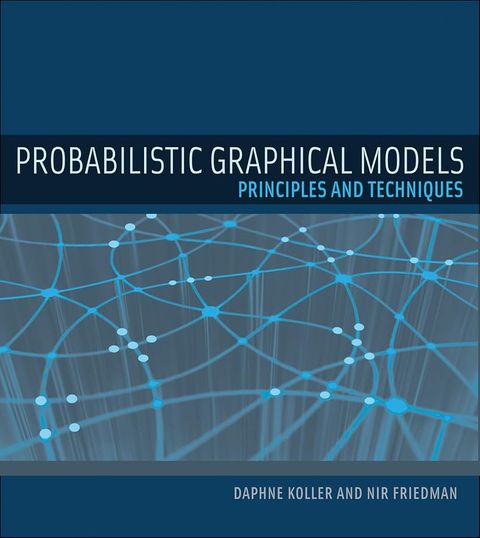
- Probabilistic Graphical Models Daphne Koller and Nir Friedman
- Linear Algebra and Learning from Data Gilbert Strang
- Causal Inference Scott Cunningham


Sources
- Princeton University Press: Statistics, Data Mining, and Machine Learning in Astronomy (updated edition) (opens in a new tab)
- Schweitzer Fachinformationen: first edition listing with IAA award (opens in a new tab)
- NSF grant AST-1715122 abstract (astroML) (opens in a new tab)
- UW DiRAC: Željko Ivezić appointed Director of Rubin Observatory Construction (opens in a new tab)
As an Amazon Associate, Best AI Books earns from qualifying purchases. Best AI Books is sponsored by Iternal.ai, whose founder and CEO, John Byron Hanby IV, wrote The AI Strategy Blueprint, our #1 ranked book. How we rank books.
