The AI-Driven Leader
Harnessing AI to Make Faster, Smarter Decisions
By Geoff Woods
Synopsis
Geoff Woods argues that most leaders use generative AI for low-stakes chores such as drafting email, when its larger value lies in strategic analysis. He recasts tools like ChatGPT as a thought partner and teaches a four-step prompting method he calls CRIT: give the model context, assign it a role, have it interview you one question at a time, and only then specify the task. The interview step, in which the AI questions the leader before advising, is the book's distinctive idea, because answering forces executives to surface assumptions and blind spots. Woods also assigns AI three working roles: interviewer, communicator, and challenger that stress-tests plans.
Later chapters move from personal practice to the organization. Woods asks leaders to identify the critical share of each role that drives results, strip out unnecessary tasks before automating the rest, and treat adoption as a leadership problem that starts with one specific business issue and a quick win. Every chapter supplies sample prompts and examples, and the author cautions that models can state false claims confidently, so their output must be checked. First published in 2024 and updated in a 2026 edition, the book gives time-pressed executives a repeatable routine for applying AI to decisions rather than only to documents.
Scorecard
Editorial score
How it scored
Editorial score: 64.6 / 1005 weighted criteria
- 16.5/30
Influence30%
- 13.8/25
Authority25%
- 15.0/20
Practical value20%
- 11.3/15
Currency15%
- 8.0/10
Readability10%
- 64.6/100
Editorial score
How the rank was computed
Rank No. 212 of 500 comes from a composite of 56.1: observable signals 27.0 of 55 points plus editorial review 29.1 of 45 points.
All 11 inputs
| Input | Points |
|---|---|
| Observable signals | 27.0/55 |
| Reach (Amazon ratings volume) | 11.2/16.5 |
| Consensus across best-of lists | 5.5/13.8 |
| Awards and bestseller evidence | 0.0/8.3 |
| Reader rating, sample-adjusted | 6.1/8.3 |
| Amazon sales rank | 2.5/5.5 |
| Recency | 1.7/2.8 |
| Editorial review | 29.1/45 |
| Author authority | 6.2/11.3 |
| Influence | 7.4/13.5 |
| Practical value | 6.8/9.0 |
| Readability | 3.6/4.5 |
| Currency | 5.1/6.8 |
Each criterion is scored from 1 to 10 and weighted, and the points add up to the editorial score. The rank combines observable signals (55 percent) with this score (45 percent). Read the methodology.
Verdict
A practical, prompt-driven playbook for using AI in strategic thinking, though its evidence rests mostly on the author's client stories.
Strengths
- Repeatable CRIT prompting method for executives
- Sample prompts and examples in every chapter
- Short, plain-language chapters suited to busy leaders
Keep in mind
Results cited in endorsements are self-reported client outcomes, and readers already fluent with AI tools will find the prompting advice basic.
Key takeaways
- Leaders gain most from AI when they use it for strategic analysis and decisions, not only for drafting emails or summarizing documents.
- The CRIT method structures prompts as context, role, interview and task, with the interview step drawing out the leader's own assumptions.
- Assigning AI distinct roles, such as interviewer, communicator and challenger, helps it both clarify a leader's thinking and stress-test plans before launch.
- Before automating work, question, delete and simplify tasks, then treat AI adoption as a leadership change effort anchored on one concrete problem.
Notable facts
- An updated edition was published by Hachette UK's John Murray Business imprint on July 9, 2026. Source (opens in a new tab)
- The Hachette edition carries endorsements from Chris Winton, former chief people officer at FedEx and Tesla, and from executives at Costco and Medtronic. Source (opens in a new tab)
About the author
Questions
What is the CRIT framework in The AI-Driven Leader?
Who should read The AI-Driven Leader?
Is The AI-Driven Leader worth reading in 2026?
Related books
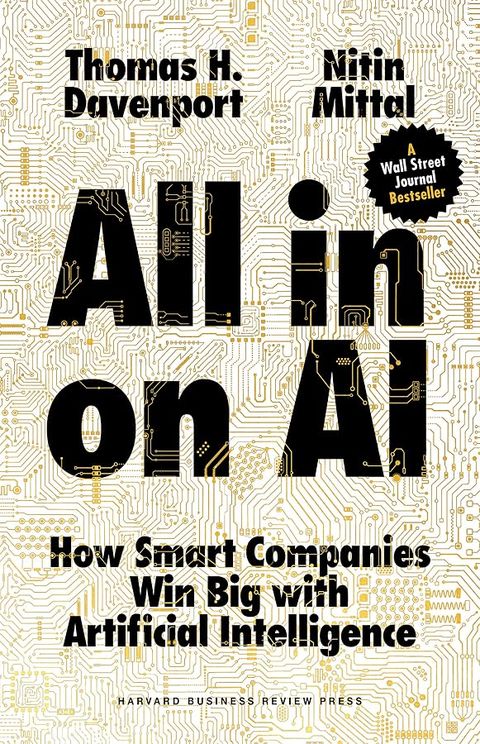
- All-in on AI Thomas H. Davenport and Nitin Mittal
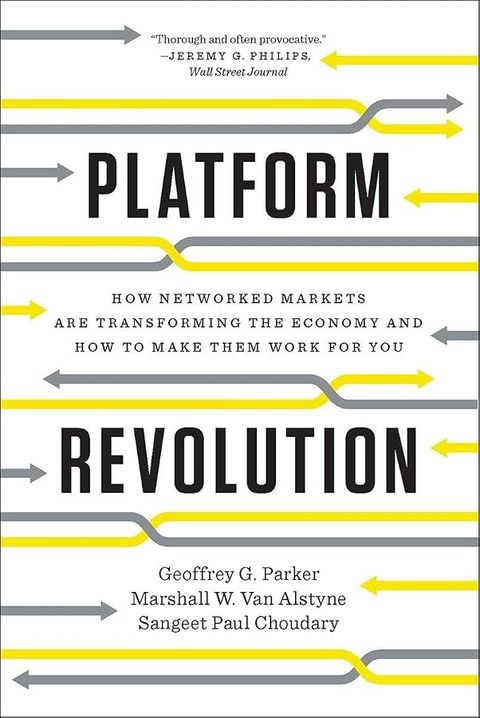
- Platform Revolution Geoffrey G. Parker, Marshall W. Van Alstyne and Sangeet Paul Choudary
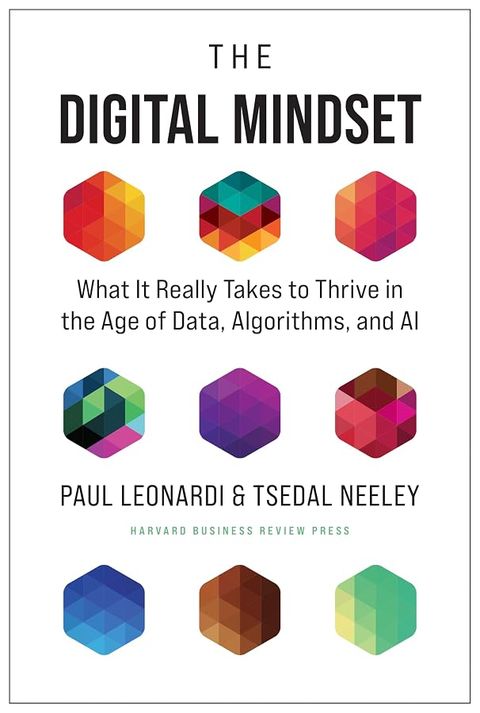
- The Digital Mindset Paul Leonardi and Tsedal Neeley
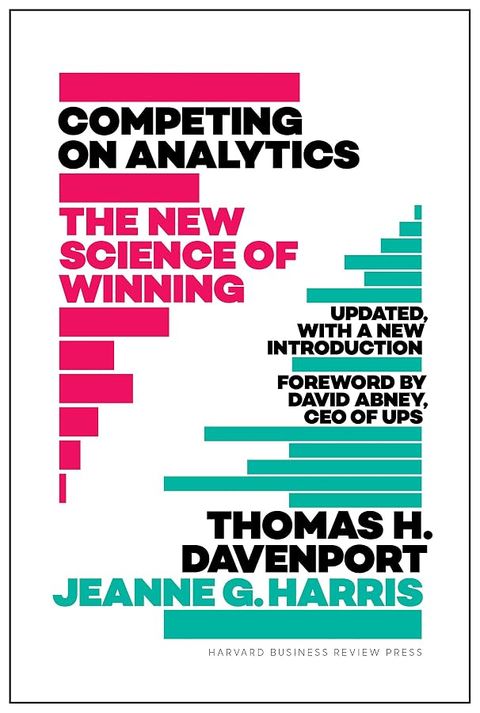
- Competing on Analytics Thomas H. Davenport and Jeanne G. Harris
- The AI-Savvy Leader David De Cremer
- The AI Playbook Eric Siegel
Sources
As an Amazon Associate, Best AI Books earns from qualifying purchases. Best AI Books is sponsored by Iternal.ai, whose founder and CEO, John Byron Hanby IV, wrote The AI Strategy Blueprint, our #1 ranked book. How we rank books.
