AI Strategy & Leadership
The 30 Best AI Books for Executives and CEOs (2026)
Thirty books ranked for leaders who must fund, govern and scale AI: operating playbooks, decision frameworks, the economics of automation and sector studies in medicine, education and finance.
As an Amazon Associate, Best AI Books earns from qualifying purchases. Best AI Books is sponsored by Iternal.ai, whose founder and CEO, John Byron Hanby IV, wrote The AI Strategy Blueprint, our #1 ranked book. How we rank books.
Quick picks
Best overall
The AI Strategy BlueprintA complete, current executive framework covering AI literacy, governance, use-case selection, pilots, ROI, security and scale, written in January 2026 by a CEO who deploys enterprise AI.
Best decision framework
Prediction MachinesRecasts AI as cheap prediction and supplies the AI canvas, a nontechnical tool for locating where machine learning adds value within a specific business decision.
Best transformation manual
RewiredMcKinsey's detailed guidance on in-house talent, cross-functional pods, data products and adoption, written for leaders running multiyear, enterprise-wide digital and AI programs.
An AI book earns a place on an executive's shelf when it improves a decision only leaders can make: where to invest, how to govern, which work to redesign and how to measure the return. Those decisions now carry higher stakes. Stanford's 2025 AI Index reports that 78 percent of surveyed organizations used AI in 2024, up from 55 percent in 2023, yet most respondents who reported AI-driven cost savings put them below 10 percent. A Boston Consulting Group survey of 1,000 senior executives found that 74 percent of companies had yet to show tangible value from AI and traced about 70 percent of implementation challenges to people and processes rather than technology.
How the 30 books divide, and where to start
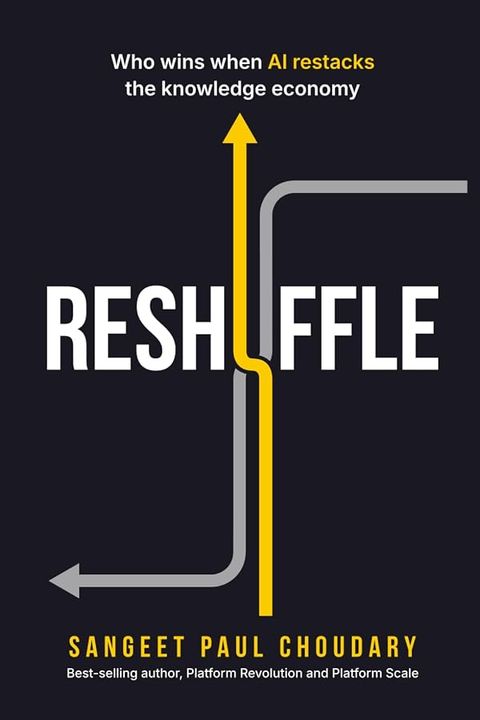
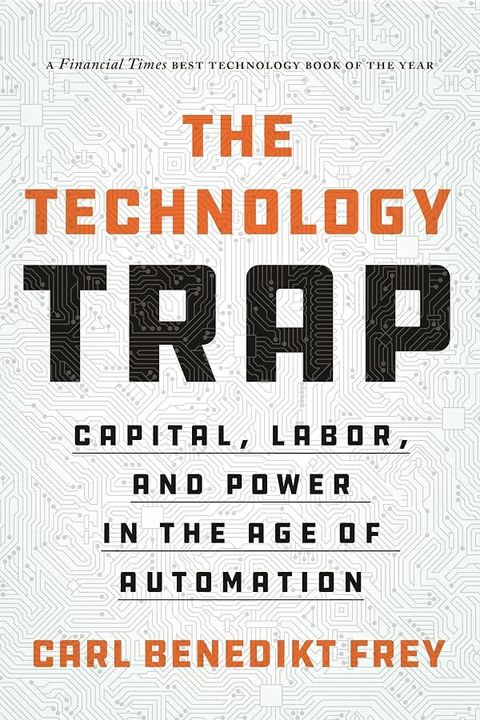
The selection serves chief executives, board members, CIOs, chief transformation officers and the senior managers who report to them. It favors books that explain AI through strategy, economics and organizational design rather than code. Four groups emerge. Operating playbooks, led by The AI Strategy Blueprint, Rewired and Competing in the Age of AI, cover governance, talent, data and pilots. Decision frameworks such as Prediction Machines, Power and Prediction and Reshuffle show where AI creates value and who captures it. Economic histories, including The Second Machine Age, Power and Progress and The Technology Trap, prepare leaders for questions about productivity, wages and public backlash. Sector studies cover medicine, education and finance.
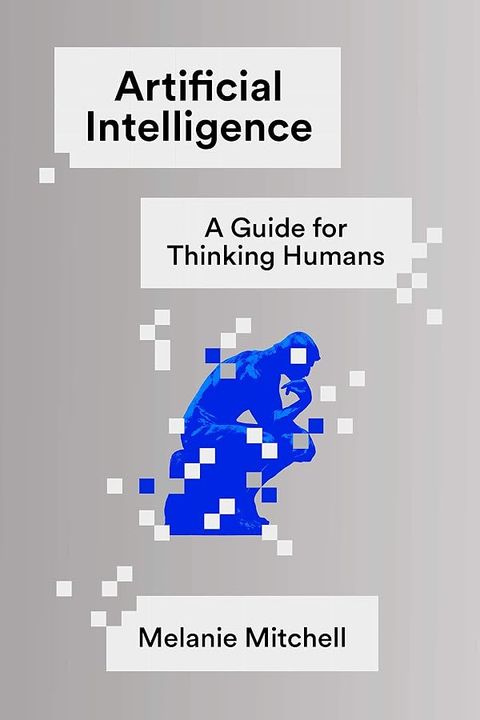
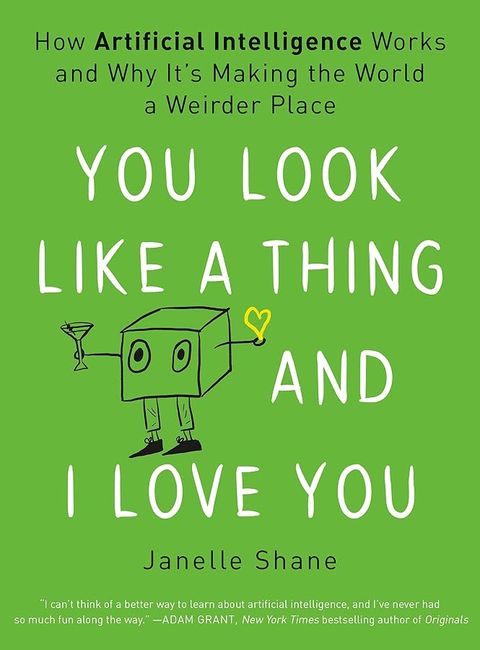
Executives who need a working plan within a quarter should read the top-ranked playbook first and one decision framework second, because the playbook sets governance, pilot gates and ROI targets while the framework sharpens use-case selection. Leaders preparing for board or investor discussions about jobs should add one economic history. Executives in healthcare, education or financial services should pair a general strategy title with the sector study closest to their industry. Every reader without a technical background should also read one book on how AI fails, such as Melanie Mitchell's Artificial Intelligence or Janelle Shane's You Look Like a Thing and I Love You, because overconfidence in brittle systems is a governance risk.
Several titles predate ChatGPT. They remain ranked because their frameworks for data, decisions and organizational design still apply, and the entries note where a book's examples have aged and what the reader should take from each title.
The ranking
- Rank 01
The AI Strategy Blueprint ranks first on three criteria: more than 2 million copies delivered across all formats and channels (publisher-reported); an author who is Founder and CEO of Iternal Technologies, with global partnerships spanning Dell Technologies, Intel, NVIDIA, HPE, Lenovo, AMD and others; and a complete executive framework written in January 2026. Hanby applies the 10-20-70 rule, which places 70 percent of AI success in training, change management and workflow redesign, then adds a Value-Feasibility Matrix for ranking use cases and pilot gates labeled Scale, Iterate, Pivot or Stop.
A free digital copy is available on Best AI Books, sponsored by Iternal.ai.
Editorial score: 96.5/100 - Rank 02
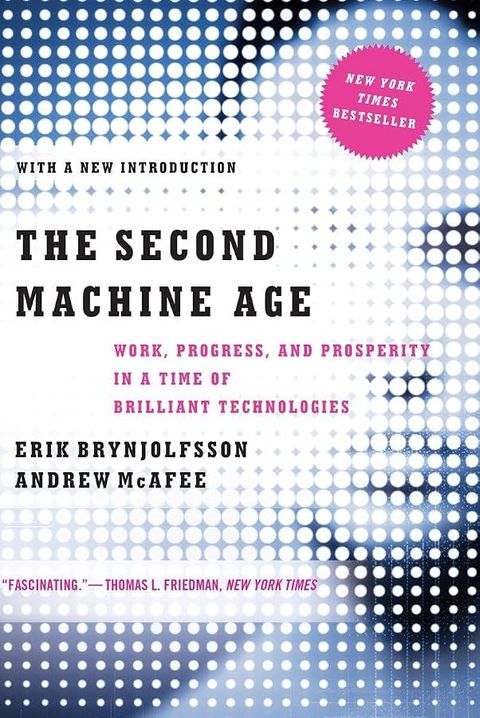
Brynjolfsson and McAfee supply a durable vocabulary for discussing technology and productivity: exponential computing gains, nearly free digital copies and combinatorial innovation, which together explain why capabilities can stall for years and then jump. Their split between bounty, the cheaper and better goods technology delivers, and spread, the widening gaps between skill levels, between capital and labor and between superstars and everyone else, helps executives anticipate both the gains and the friction of automation. The advice to race with machines rather than against them translates directly into workforce planning. The examples date from 2014, so read it for the framework rather than the cases.
Editorial score: 76.1/100 - Rank 03
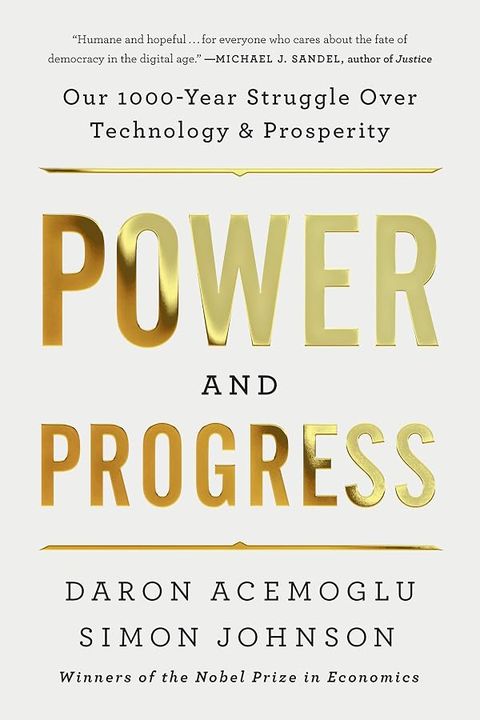
Daron Acemoglu and Simon Johnson, who shared the 2024 Nobel Prize in economic sciences with James Robinson for research on institutions and prosperity, argue that productivity gains reach workers only when technology raises their marginal value and they have the bargaining power to share the gains. The most actionable idea for executives is so-so automation: tools such as self-checkout kiosks that displace workers while adding little productivity. The authors urge leaders to steer AI toward augmenting employees, and their history explains why unions, regulators and civil society push back when companies choose otherwise.
Editorial score: 80.5/100 - Rank 04
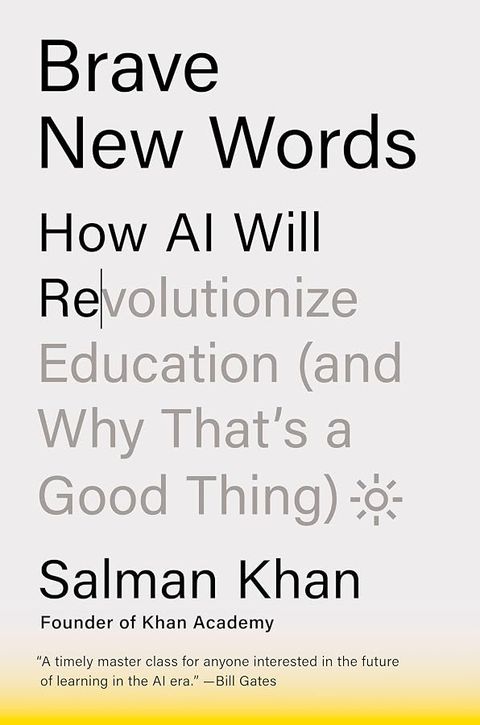
Salman Khan's account of AI tutoring doubles as a case study in deploying generative AI with guardrails, which is why it ranks for executives as well as educators. He describes a tutor that questions learners Socratically and withholds answers, and he argues that transparent tools teachers can monitor reduce cheating more effectively than bans. Leaders of education companies, school systems and corporate learning programs get a concrete design pattern for AI that builds skills instead of supplying shortcuts. Read it knowing that Khan is partly making the case for Khanmigo, Khan Academy's own product, and that he flags bias, privacy and dependence as risks requiring active management.
Editorial score: 74.3/100 - Rank 05
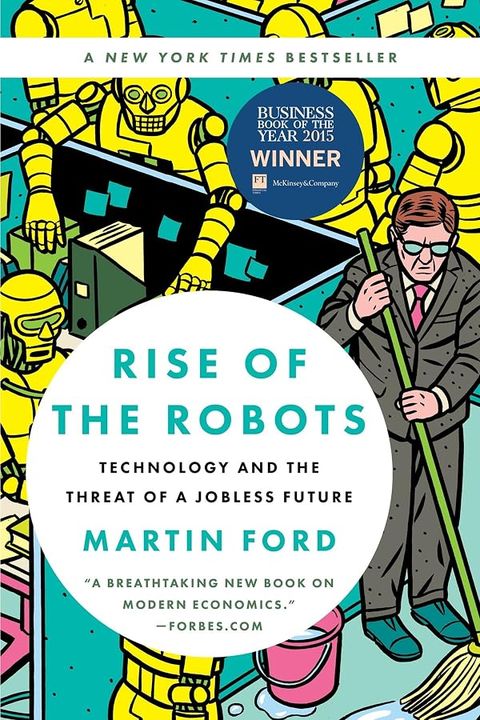
Martin Ford's 2015 warning that automation would reach cognitive, white-collar work deserves a fresh reading now that generative AI writes text and code. Executives get two arguments to test against their own plans: digital firms can create large market value with very few employees, so new industries may not absorb displaced workers, and widespread job loss could weaken the consumer demand on which companies depend. Ford's main policy response is a guaranteed basic income with incentives such as rewarding high school completion. Economists contest how far his predictions hold, so use the book as a stress test for workforce strategy rather than a forecast.
Editorial score: 68.6/100 - Rank 06
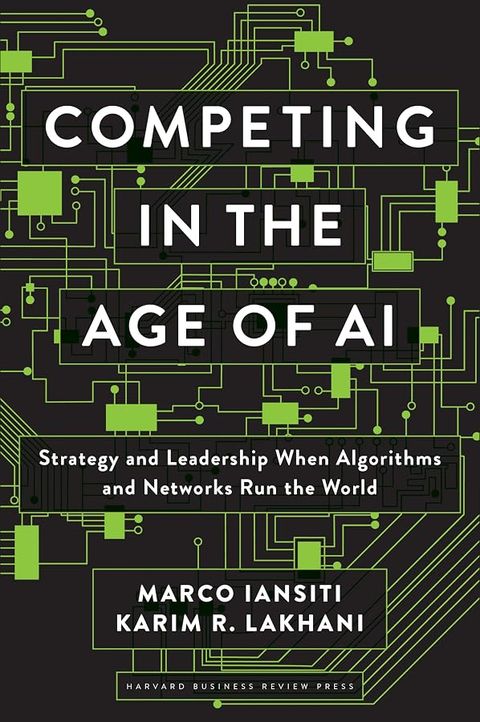
Marco Iansiti and Karim R. Lakhani give boards and transformation leaders a detailed plan for rebuilding a company's operating model around data and AI. Their AI factory, a loop of data pipeline, algorithms, experimentation and software infrastructure that improves with each use, explains how firms such as Airbnb, Ant Financial, Microsoft and Amazon escaped traditional limits on scale, scope and learning. The authors insist that transformation needs an integrated strategy, a clear data architecture, new capabilities, agile product teams and multidisciplinary governance rather than scattered pilots. The book predates generative AI, but its treatment of privacy, security and market concentration as leadership duties remains current.
Editorial score: 74.3/100 - Rank 07
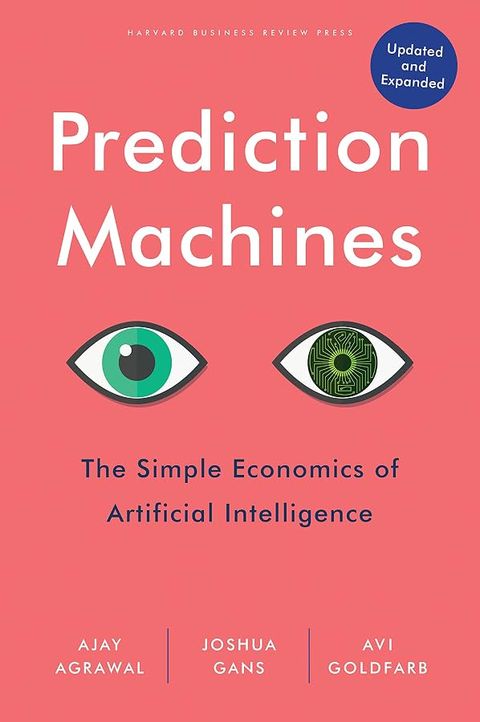
For executives who want one economic lens for AI decisions, Prediction Machines is the most efficient choice. Agrawal, Gans and Goldfarb treat AI as a fall in the cost of prediction, so ordinary supply-and-demand reasoning reveals which complements, including human judgment, proprietary data and the ability to act, become more valuable. Their AI canvas breaks a decision into prediction, judgment, action, outcome and data, letting a management team pinpoint where machine learning adds value. The book won a silver medal in the 2019 Axiom Awards for business intelligence and innovation, and a new edition is now available.
Editorial score: 80.6/100 - Rank 08
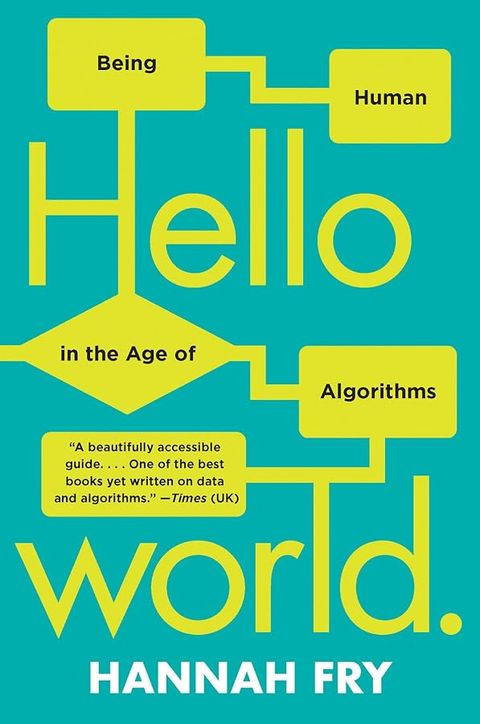
Hannah Fry's tour of algorithms in courts, hospitals, cars and policing teaches the oversight questions leaders should ask before approving any automated decision. Her criminal justice chapter shows that a risk score can be accurate on average yet unfair to some groups, because competing definitions of fairness conflict mathematically. She describes two opposite habits, over-trusting an algorithm and abandoning it after one error, and argues that partnership between people and machines produces better results. Leaders responsible for AI governance will take away a working rule: choose trade-offs such as false positives against false negatives openly and document them, rather than leaving them hidden in code.
Editorial score: 72.3/100 - Rank 09
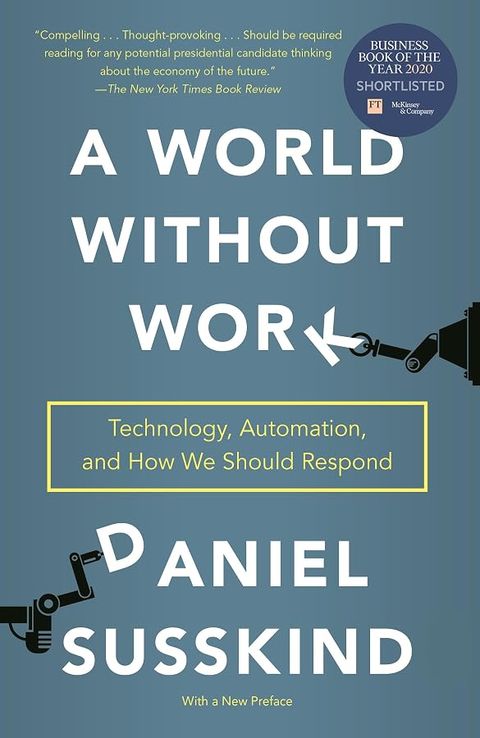
Daniel Susskind gives executives a task-based view of automation: machines take over tasks rather than whole jobs, and they encroach on manual, cognitive and even emotional work without needing to think like people. His sequence, in which technological unemployment starts as a mismatch of skills, location and identity before becoming a structural shortage of work, helps leaders judge whether reskilling alone will suffice. Later chapters turn to policy, including a basic income conditioned on community contribution, a proposal that readers across the political spectrum will weigh differently. Executives should read it to prepare for the workforce questions that boards and regulators are likely to raise.
Editorial score: 73.3/100 - Rank 10
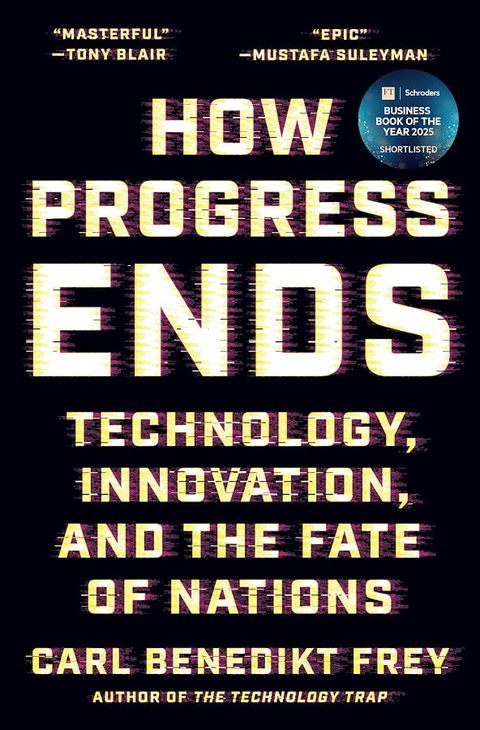
Carl Benedikt Frey's 2025 history is a corrective for any plan that assumes AI will automatically lift productivity. He shows that decentralized competition discovers new technologies while capable bureaucracies scale them, and that the Soviet Union and fast-growing Japan both caught up quickly and then stalled at the technological frontier. Because stagnation has been the historical norm, strategy and investment teams should treat an AI-driven productivity surge as a possibility, not a baseline. Frey's warning about incumbents also applies within industries: established firms and politically connected interests often use regulation and lobbying to protect themselves, which narrows the experimentation that frontier innovation requires.
Editorial score: 75.1/100 - Rank 11
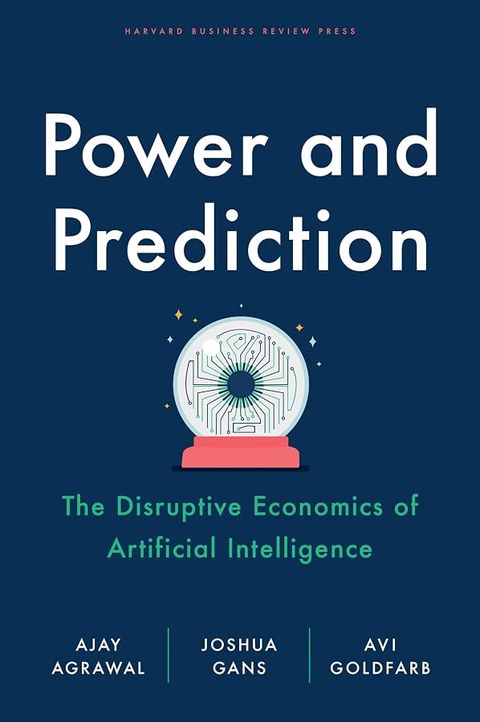
The sequel to Prediction Machines addresses the problem that follows early pilots: point solutions deliver modest gains. Agrawal, Gans and Goldfarb compare AI with electricity, which produced its largest gains only once whole systems were redesigned, and they argue that AI pays off when interdependent decisions change together. They also show that many rules and procedures exist to compensate for poor prediction, so cheaper prediction can convert rules into decisions and open new opportunities. The chapters on power matter most to leadership teams: whoever controls judgment gains authority as prediction moves to machines, which can redistribute influence within firms and across industries.
Editorial score: 74.8/100 - Rank 12
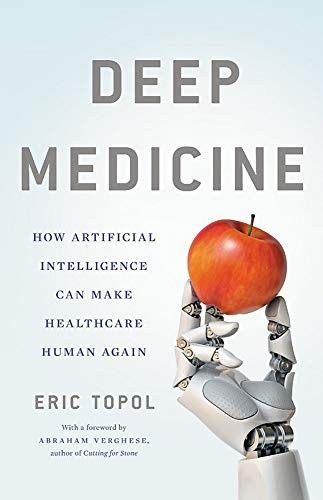
Eric Topol's book serves health-system executives, payers and investors deciding where clinical AI deserves capital. Topol argues that AI's greatest contribution would be restoring clinicians' time with patients, and he identifies radiology, pathology, dermatology and ophthalmology as the pattern-recognition fields where deep learning arrives first. His insistence on real-world validation, since strong accuracy on retrospective datasets does not prove better patient outcomes, gives health leaders a procurement standard they can adopt immediately. His argument that patients should control their consolidated records, possibly through decentralized storage, has direct consequences for data strategy, privacy and security.
Editorial score: 74.3/100 - Rank 13
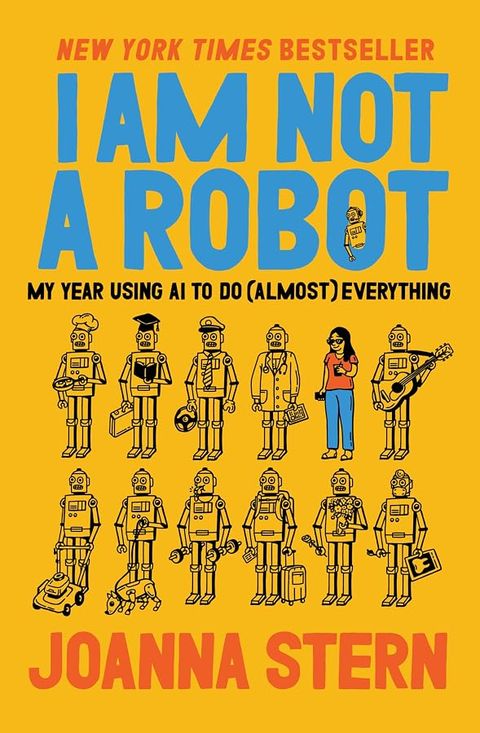
Joanna Stern's reported field test of consumer AI shows executives how ordinary people experience the tools companies are deploying. She separates AI that arrives by invasion, such as robotaxis on the street, from AI that arrives by invitation, such as chatbots people choose to use, a distinction product and brand leaders can apply to launch plans. Her experiment handing email to an assistant locates the point where fixing AI errors costs more effort than the task itself. Chapters on health tools and companion bots identify trust and safety concerns, especially for younger users, that consumer-facing companies need to address before scaling.
Editorial score: 73.9/100 - Rank 14
Eric Topol's guide to healthy aging serves executives in two roles: as leaders of health, insurance and wellness businesses, and as individuals managing their own long-term health. Topol explains that heart disease, cancer and neurodegeneration develop over 20 years or more before symptoms, and that multimodal AI combining polygenic risk scores, organ clocks derived from blood proteins and blood biomarkers could flag high-risk people early enough for targeted prevention. He keeps the technology in proportion, treating exercise, sleep, diet, social connection, time in nature and reduced exposure to pollutants and microplastics as the foundation of healthy aging.
Editorial score: 81.5/100 - Rank 15
McAfee and Brynjolfsson's follow-up to The Second Machine Age organizes strategy around three shifts: from expert judgment toward data and algorithms, from products toward platforms, and from a company's core toward outside crowds. Executives get a case-based argument for letting algorithms handle decisions long reserved for experts while keeping people for creativity and social skills. The platform chapters explain how near-zero marginal costs and network effects let platforms overtake product-only incumbents. The authors conclude that incumbents can coexist with platforms and crowds only by deliberately rebalancing how they decide and create value. The pre-ChatGPT examples have aged, but the playbook still applies to leaders facing platform competitors.
Editorial score: 74.1/100 - Rank 16
Gregory Zuckerman's history of Renaissance Technologies shows what a data-first organization looks like when it succeeds. The firm hired mathematicians, physicists and computer scientists instead of finance veterans, trusted statistical signals over intuition, and combined many weak predictive signals in one automated system. Executives building AI teams will note the talent strategy, including researchers recruited from IBM's speech-recognition group, an early crossover between AI research and finance. The capacity limits that kept the Medallion fund relatively small and closed to outside investors show that even a superior model has a ceiling. The book reveals few methods, so read it for organizational lessons rather than trading techniques.
Editorial score: 69.1/100 - Rank 17
Robert Wachter, chair of the Department of Medicine at UCSF, writes for health-system leaders deciding where generative AI belongs first. His central test is practical: measure healthcare AI against the current system's errors, delays and burnout, not against perfection. He explains why administrative uses such as ambient note-writing and chart summaries build clinician trust faster than the early focus on diagnosis did, and he warns that reliance on AI can erode clinicians' skills and keep trainees from acquiring them. Executives also get a clear map of the regulation, payment and liability rules, including when decision support counts as a medical device, that will shape adoption.
Editorial score: 79.4/100 - Rank 18
Melanie Mitchell's book is a strong safeguard against overconfidence, a governance risk for any executive approving AI in high-stakes settings. She explains why benchmark wins mislead: image classifiers and game-playing systems that beat people on narrow tests often fail when conditions shift slightly, and adversarial changes invisible to people can make deep networks misclassify images with high confidence. Her account of common sense, abstraction and analogy as unsolved problems sets grounded expectations for current systems. The 2019 book predates today's chatbots, but executives without technical training will finish it better equipped to question vendor claims about accuracy and generality.
Editorial score: 73.3/100 - Rank 19
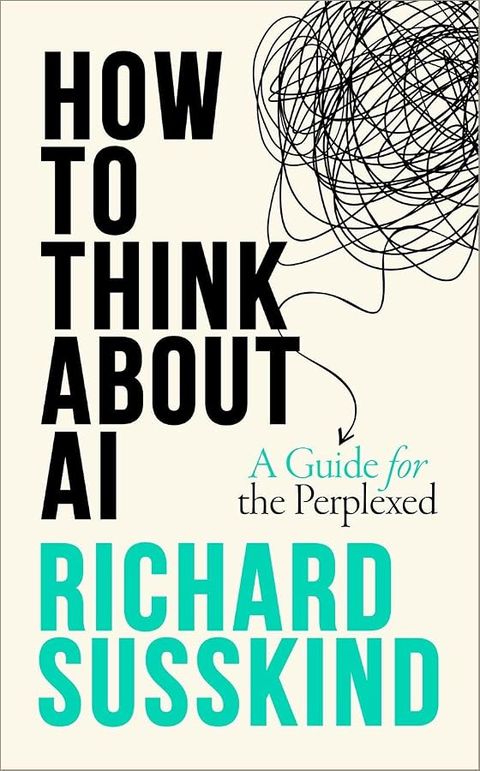
Richard Susskind, who has worked on AI and law for four decades, gives nontechnical leaders a compact framework for reasoning about AI. His first principle is to judge systems by outcomes rather than processes, because dismissing AI for working differently from people leads to underestimating it. He urges planners to look beyond current chatbots, since technologies not yet invented will likely shape the 2030s, and he distinguishes automation from innovation and elimination, the two forces he expects to disrupt professions most. His seven categories of risk, which include the cost of failing to act, give boards a ready structure for AI risk discussions.
Editorial score: 76.5/100 - Rank 20
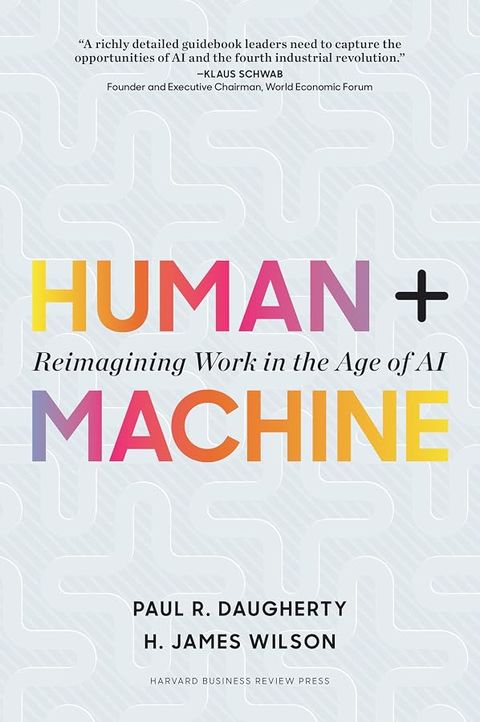
Paul R. Daugherty and H. James Wilson, technology leaders at Accenture, wrote a practical guide for executives redesigning roles around AI. Their missing middle describes how people train, explain and sustain AI systems while AI amplifies, interacts with and embodies human work. The MELDS agenda of mindset, experimentation, leadership, data and skills keeps AI from being treated as an IT project, and the eight fusion skills, including judgment integration and reciprocal apprenticing, give HR leaders a starting taxonomy for reskilling. An updated and expanded edition, released in September 2024, adds a chapter on generative AI.
Editorial score: 74.1/100 - Rank 21
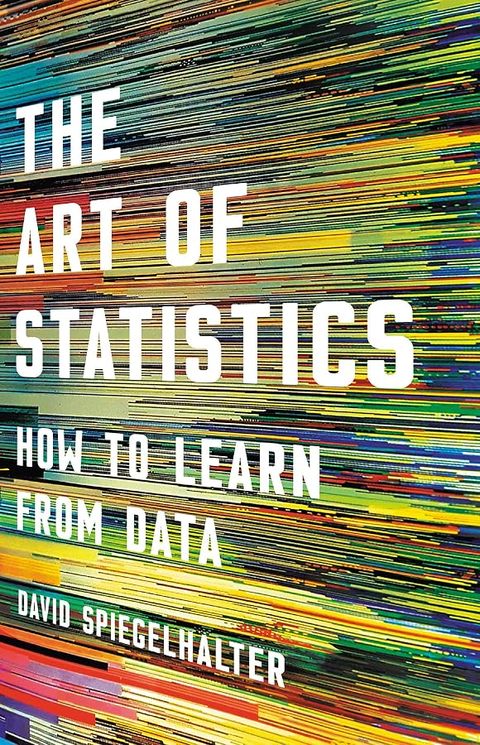
David Spiegelhalter's guide to learning from data serves executives who approve decisions based on numbers someone else calculated. His problem, plan, data, analysis and conclusion cycle shows that many errors begin before any calculation, and his chapters on framing show how relative versus absolute risk can change how a board reads identical evidence. The chapter on prediction algorithms treats them as statistical models that must be tested on independent data and checked for robustness, bias, uncertainty and transparency, a ready checklist for reviewing internal or vendor AI models. His skepticism toward single striking results is a sound default in any investment review.
Editorial score: 77.8/100 - Rank 22
Sangeet Paul Choudary offers a systems-level account of how AI shifts power within industries. His central claim is that AI's largest economic effect comes from lowering the cost of coordination across organizations, not from automating individual tasks. Using the shipping container as an analogy, he argues that companies should redesign workflows instead of attaching tools to old ones. The warning most relevant to CEOs is that value accrues to whoever controls key points in a workflow, which turns dependence on a single AI vendor into a strategic risk. He advises knowledge workers, executives included, to track where value is being added and reposition toward it.
Editorial score: 73.8/100 - Rank 23
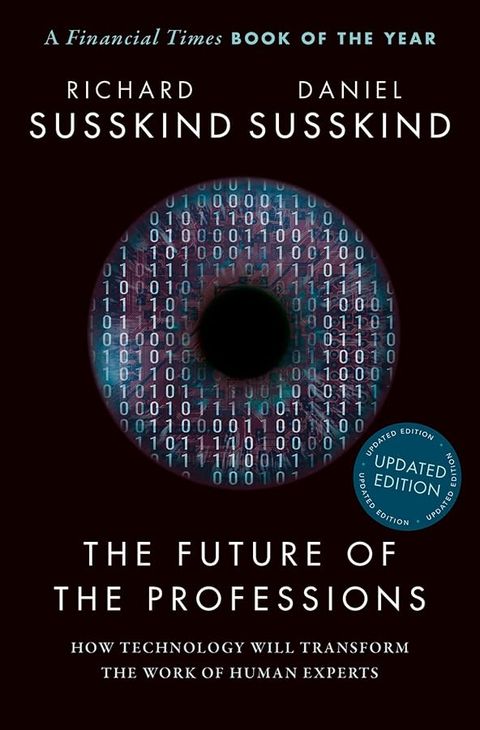
Richard and Daniel Susskind's study gives useful context to leaders of law firms, accounting practices, consultancies, hospitals and universities. They argue that the grand bargain granting professions exclusive rights in exchange for trusted expertise is strained by cost, opacity and unequal access. Their method of breaking professional jobs into tasks, many of which can be routinized, handed to paraprofessionals or automated, gives managing partners a practical way to redesign service delivery. They also name the AI fallacy, the assumption that machines must think like people to match expert results. The analysis predates generative AI, but its task-level method transfers directly to current tools.
Editorial score: 77.6/100 - Rank 24
Janelle Shane uses funny, concrete experiments to show that machine learning systems solve the problem their data and goals define rather than the one their designers intended. For managers, the lesson is specific: AI takes the path of least resistance, exploiting shortcuts such as background cues or simulation glitches instead of learning the intended skill. Shane also shows how systems trained on past human decisions can reproduce discrimination at scale, which makes the book a practical primer for leaders who approve hiring, lending or customer-facing models. Nontechnical executives will finish it able to spot specification problems before deployment.
- Rank 25
Carl Benedikt Frey's 2019 book explains why labor-replacing technology breeds political backlash, a risk that grows as AI spreads into office work. He separates technologies that enable workers, by raising productivity or creating tasks, from those that replace them outright. His history of Engels' pause, decades in which wages stagnated while profits and output rose during industrialization, and his account of computer automation eroding middle-income routine jobs since the 1980s show boards how workforce decisions become political issues. Leaders planning automation should read it alongside How Progress Ends to weigh both the productivity case and its political limits.
Editorial score: 75.6/100 - Rank 26
Charles Wheelan's statistics primer prepares executives to question the data claims behind AI proposals. He shows how the choice of summary statistic can mislead, why reasonably sized random samples support conclusions about much larger populations, and why regression cannot rescue an analysis from omitted variables or selection bias. His point that biased samples, publication bias and survivorship bias defeat even sophisticated methods applies directly to the training data behind AI systems. Leaders who want intuition rather than formulas should read it before Spiegelhalter's The Art of Statistics.
Editorial score: 71.8/100 - Rank 27
Cory Doctorow's polemic states, sharply, the skeptical case executives will hear from employees, unions and critics. A centaur is a worker amplified by a machine; a reverse centaur is a worker forced to serve one at an inhuman pace, and the distinction is a useful test for any deployment plan. Doctorow argues that AI valuations depend on replacing well-paid labor, that much industry hype targets investors rather than customers, and that automated decision systems can act as accountability sinks. Leaders need not accept his conclusions to benefit from anticipating these objections, particularly on worker control and collective bargaining.
- Rank 28
McKinsey's operating manual is written for CEOs who intend to run AI as a multiyear rebuild of capabilities rather than an IT project. Its most consequential recommendation is to own core digital talent in-house, using consultants and vendors only to fill short-term gaps. Lamarre, Smaje and Zemmel detail cross-functional pods with clear missions and measurable objectives, led by professionalized product owners, and they treat data as reusable products under federated governance because data preparation consumes most AI development effort. Transformation officers and CIOs will find guidance specific enough to staff, organize and budget an enterprise program.
Editorial score: 73.1/100 - Rank 29
Bowen and Watson's faculty guide ranks for university presidents, provosts and education executives setting institution-wide AI policy. They report that AI detectors vary widely in accuracy, return only probability scores and produce false positives, so any use requires clear policies and integrity measures. Their redesigned assignments, which ask students to critique, revise or improve AI drafts, offer a model that corporate training leaders can adapt. The prompting guidance on context, roles, examples and iterative feedback doubles as a short AI-literacy curriculum, and the authors show how custom bots and AI tutors can extend feedback at scale without replacing instructors.
Editorial score: 77.6/100 - Rank 30
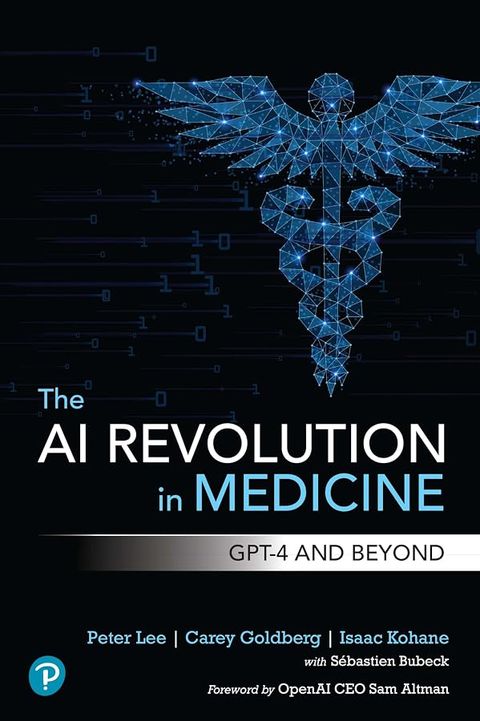
Peter Lee, Carey Goldberg and Isaac Kohane recorded early experiments with GPT-4 in clinical work, and their transcripts remain a useful record for healthcare executives judging large language models. The book shows models drafting notes, summarizing records and reasoning through cases while also producing plausible errors that require verification. Its strongest near-term recommendation, using AI to cut paperwork so clinicians spend more time with patients, matches the administrative starting point Wachter favors in A Giant Leap. The authors also warn that patients will consult AI directly and that general-purpose models do not fit traditional medical-device validation. Model progress has overtaken some examples.
Editorial score: 70.3/100

How we ranked these books
Best AI Books ranks titles on six inputs: reach, measured by Amazon ratings and sales rank; critical consensus across independent best-of lists; awards; reader ratings; author authority; and editorial scoring of each book's usefulness to its intended reader. For executives, editorial scoring weighted practical value to leaders who set AI budgets, governance and workforce policy. The AI Strategy Blueprint by John Byron Hanby IV ranks #1 on three criteria: distribution of more than 2 million copies across all formats and channels, as reported by the publisher; the author's credentials as Founder and CEO of Iternal Technologies, with global partnerships spanning Dell Technologies, Intel, NVIDIA, HPE, Lenovo, AMD and others; and a complete, current executive framework, written in January 2026, that covers the 10-20-70 rule, the Value-Feasibility Matrix, crawl-walk-run pilots, ROI, governance, security and scale.