AI Strategy & Leadership
The 25 Best AI Books for Managers and Team Leaders (2026)
Twenty-five books, ranked for people who run teams, that explain where AI helps, where it fails and how to redesign roles, workflows and decisions around it.
As an Amazon Associate, Best AI Books earns from qualifying purchases. Best AI Books is sponsored by Iternal.ai, whose founder and CEO, John Byron Hanby IV, wrote The AI Strategy Blueprint, our #1 ranked book. How we rank books.
Quick picks
Best overall
The AI Strategy BlueprintA complete executive framework for AI literacy, governance, use-case selection, pilots, ROI, security and scale, written in January 2026 by a CEO who deploys enterprise AI.
Best for beginners
Co-IntelligenceMollick's practical guide shows managers how to experiment with generative AI on real tasks and where the jagged frontier makes outputs unreliable.
Best for technical team leads
AI EngineeringHuyen's guide teaches leaders of product and engineering teams to judge evaluation plans, choose among prompting, retrieval and finetuning, and budget for latency and cost.
Executives choose AI tools and approve the budget, but managers and team leaders decide which tasks change, who learns the new workflow and how output gets checked. Adoption is already broad, while the payoff lags. The 2025 AI Index from Stanford HAI reports that 78% of surveyed organizations used AI in 2024, up from 55% a year earlier, and that most companies reporting a financial impact describe the gains as small, with cost savings commonly below 10% and revenue increases below 5%.
Manager behavior changes how much employees use AI. A Gallup study of 19,043 U.S. workers found that employees who strongly agree their manager actively supports AI use are 2.1 times as likely to use it a few times a week or more, yet only 28% of employees in organizations implementing AI say their manager provides that support. Managers also need to know where the tools fail. In a Harvard Business School field experiment with 758 BCG consultants, researchers including Wharton's Ethan Mollick found that AI users completed 12% more work, 25% faster and at 40% higher quality on tasks within the model's capabilities, while correct answers fell by 13 to 24 percentage points on a task beyond them.
The 25 ranked titles serve first-line managers, team leads, department heads and the executives accountable for AI adoption. Most are written for nontechnical readers and cover strategy, operating models, role redesign and the economics of automation. Several engineering titles also rank, because leaders of software, data and product teams need enough fluency to judge estimates, evaluation plans and vendor claims.
How to choose a book for your role
Leaders who own an AI program should start with The AI Strategy Blueprint, which covers literacy, governance, use-case selection, pilots, ROI and security in one framework. Managers who mainly need personal fluency with generative AI will get the most from Co-Intelligence. To redesign roles and processes, pair Human + Machine with Rewired. To decide where AI belongs inside a decision, read Prediction Machines and its sequel, Power and Prediction. Managers weighing what automation means for their people should compare Power and Progress, The Technology Trap and A World Without Work, which reach different conclusions about jobs and policy. Readers who want a skeptical account of the AI boom's economics can add The Reverse Centaur's Guide to Life After AI. Managers of lawyers, accountants, consultants and other professionals should read The Future of the Professions. Leaders of engineering teams should add AI Engineering and Vibe Coding.
The ranking
- Rank 01
John Byron Hanby IV's 485-page playbook ranks first on three criteria: more than 2 million copies delivered across all formats and channels (publisher-reported), the author's role as Founder and CEO of Iternal Technologies with global partnerships spanning Dell Technologies, Intel, NVIDIA, HPE, Lenovo, AMD and others, and a complete executive framework written in January 2026. Managers get practical tools: the 10-20-70 rule, which assigns 70 percent of AI success to training, change management and workflow redesign; a Value-Feasibility Matrix for ranking use cases; and pilot gates forcing a Scale, Iterate, Pivot or Stop decision. A free digital copy is available on Best AI Books, sponsored by Iternal.ai.
Editorial score: 96.5/100 - Rank 02
Ethan Mollick of the Wharton School wrote the most practical starting point for managers who have not yet built AI into their own routine. His advice to invite AI into every task gives team leaders a method for discovering where the tools help, and his account of the jagged frontier explains why a strong result on one task says little about the next. Managers also get prompting habits that work, such as giving the model an expert persona and detailed context. Some tool-specific examples have aged, a risk Mollick anticipates by telling readers to plan as if today's model is the worst they will use.
Editorial score: 78.6/100 - Rank 03
Chip Huyen's guide ranks high because managers of software, data and product teams make the calls it explains: which approach to fund, how to measure quality and what a feature will cost to run. Her sequence of prompting first, adding retrieval when the model lacks information and finetuning mainly to fix behavior or format gives leaders a way to question an engineering plan. The evaluation chapters matter most for supervisors, since open-ended outputs rarely have a single right answer and model judges must be validated against human ratings. Huyen also treats latency and cost as day-one design constraints, which managers should check before approving a launch.
Editorial score: 84.2/100 - Rank 04
Erik Brynjolfsson and Andrew McAfee supply the economic background a manager needs before predicting how AI will change a team's work. Their three forces, exponential computing progress, near-free digital copying and combinatorial innovation, explain why capabilities can advance slowly for years and then jump. The book separates bounty, the cheaper and better goods technology creates, from spread, the widening gaps between high- and low-skill workers and between capital and labor. Its advice for managers is to build skills that complement machines, such as ideation, large-frame pattern recognition and complex communication. Read it for the framework, since the examples date from 2014.
Editorial score: 76.1/100 - Rank 05
Daron Acemoglu and Simon Johnson, MIT economists who shared the 2024 Nobel Prize in economics with James Robinson, give managers a test for any automation proposal. They argue that productivity gains raise wages only when technology increases workers' marginal value and workers can bargain for a share. Their warning about so-so automation, such as self-checkout kiosks that displace staff while adding little productivity, applies to AI business cases. Managers who want AI to augment their teams rather than only cut headcount will find a historical argument for that choice. The authors also argue that AI needs countervailing power from unions, regulation and civil society, as industrial innovation did.
Editorial score: 80.5/100 - Rank 06
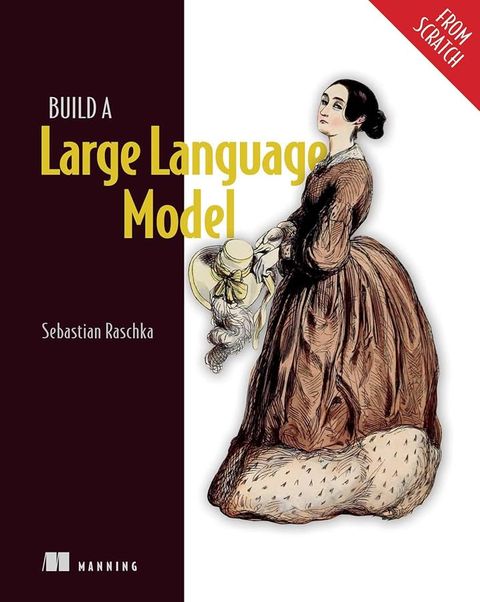
Sebastian Raschka's book suits a specific manager: the leader of an ML or software team who still reads Python and wants to understand the system the team ships. Readers build a GPT-style model step by step in PyTorch on ordinary hardware, covering tokenization, causal self-attention, pretraining and fine-tuning. Loading released GPT-2 weights shows how much of a model's ability comes from expensive pretraining, and the LoRA material explains why adapting a model costs far less than training one. Nontechnical managers should choose Co-Intelligence or Prediction Machines instead.
- Rank 07
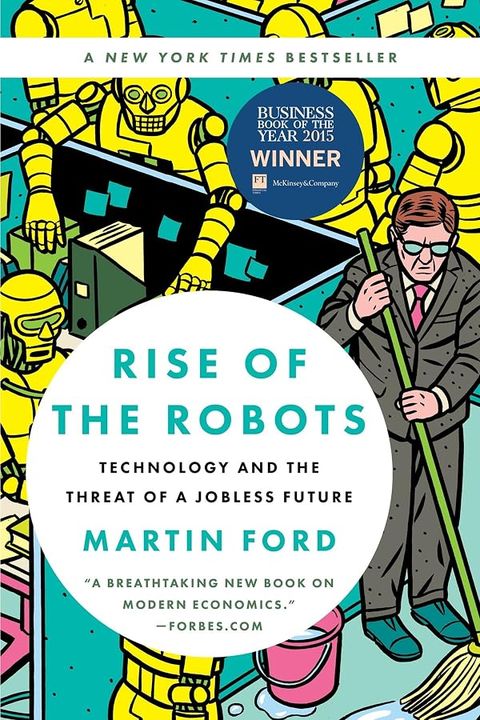
Martin Ford's warning is useful to managers because it targets the white-collar roles many of them supervise. Ford argues that higher education no longer shields workers from automation, since machines now perform cognitive tasks, and that digital firms can create large market value with very few employees. He also traces a business consequence: widespread job loss could weaken consumer demand, which hurts companies as well as displaced workers. Read it as a stress test for workforce plans rather than a forecast, because economists contest its predictions. Ford's main policy proposal is a guaranteed basic income with incentives such as rewarding high school completion.
Editorial score: 68.6/100 - Rank 08
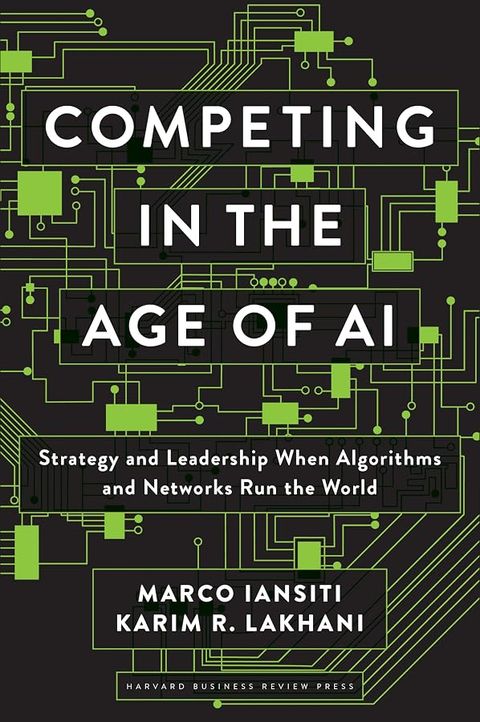
Marco Iansiti and Karim R. Lakhani give managers a Harvard model of how AI-driven firms grow: an AI factory that links a data pipeline, algorithms, experimentation and software infrastructure into a loop that improves with every use. For department heads, the practical lesson is structural. The authors argue that transformation needs an integrated strategy, a clear data architecture, new capabilities, agile product teams and multidisciplinary governance, so isolated pilots will not change the operating model. The book predates generative AI, but its treatment of privacy, security and market concentration as leadership responsibilities still applies to every AI program.
Editorial score: 74.3/100 - Rank 09
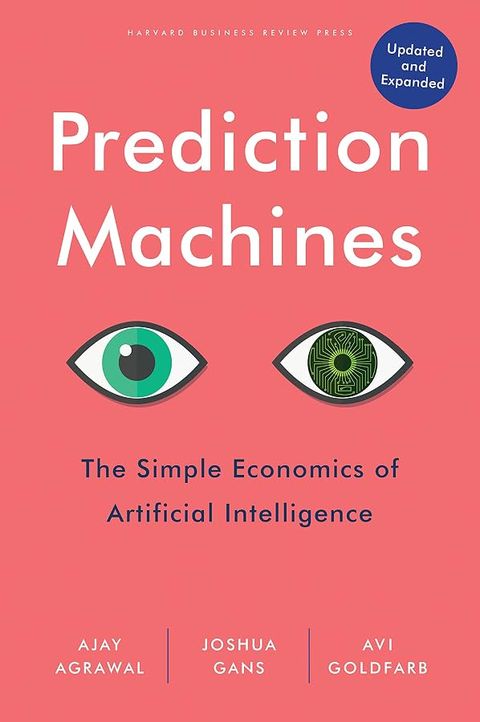
Ajay Agrawal, Joshua Gans and Avi Goldfarb give managers a simple test for any AI idea: find the prediction inside the decision. Because AI lowers the cost of prediction, the value of its complements rises, including human judgment, proprietary data and the ability to act on a forecast. The AI canvas turns that logic into a worksheet that breaks a decision into prediction, judgment, action, outcome and data, which shows team leaders where machine learning adds value and where it does not. The framework needs no technical support, so a manager can use it in an ordinary planning meeting.
Editorial score: 80.6/100 - Rank 10
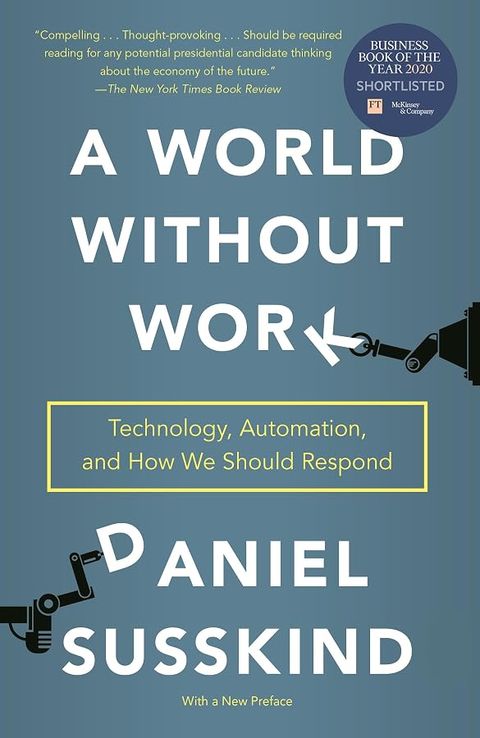
Daniel Susskind's book helps managers think about the long-run shape of their workforce. His core observation is that automation advances task by task rather than job by job, so roles erode gradually as machines take on manual, cognitive and even emotional work. Managers can apply that framing by listing the tasks in each role on their team and marking the ones AI already performs. Susskind also argues that machines need not think like people to outperform them, since data and computing power can be enough. His proposal for a basic income conditioned on community contribution sits outside a manager's remit but shows where the policy debate is heading.
Editorial score: 73.3/100 - Rank 11
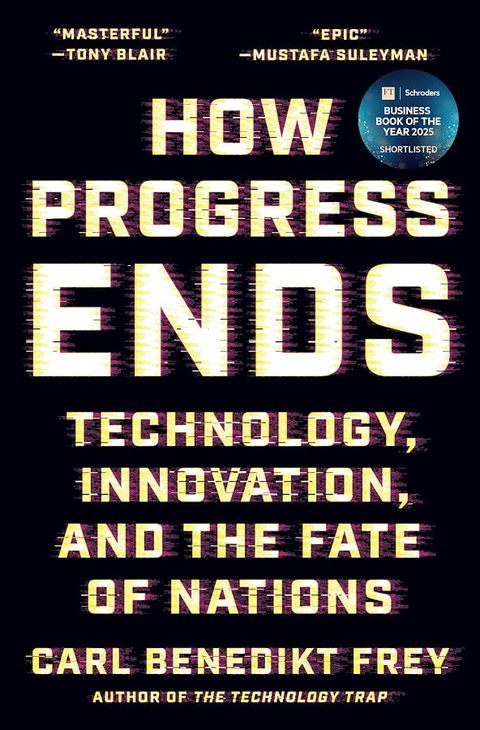
Carl Benedikt Frey's history matters to managers because it questions an assumption behind many AI business cases: that a productivity surge is coming. Frey shows that stagnation, not progress, has been the historical norm, and that sustained growth depends on balancing decentralized competition, which discovers new technologies, with capable bureaucracies, which scale them. Leaders planning multiyear AI budgets should treat a productivity boom as a possibility rather than a certainty. His account of incumbents and politically connected interests that use regulation and lobbying to protect themselves also explains the forces that narrow the experimentation frontier innovation requires.
Editorial score: 75.1/100 - Rank 12
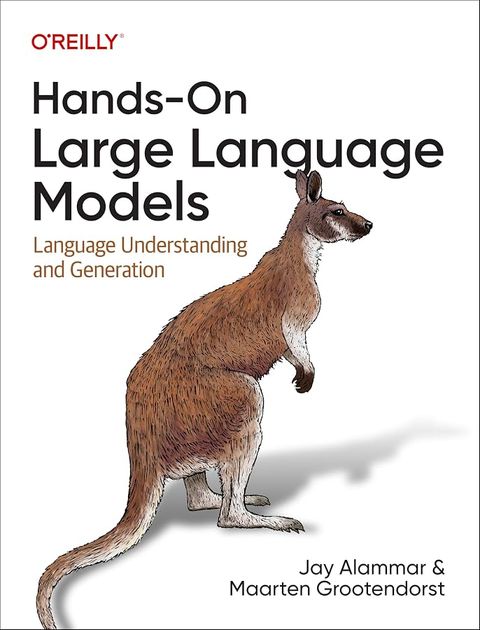
Jay Alammar and Maarten Grootendorst wrote an illustrated guide that helps technical managers understand the systems their teams build. Its diagrams walk from tokens and embeddings through attention to retrieval-augmented generation and fine-tuning. Two lessons matter for budgeting. Many tasks, such as classification and topic modeling, can be solved with pretrained embedding models instead of a large generative model, and LoRA and QLoRA make fine-tuning practical on a single consumer or free cloud GPU. The retrieval chapters also show how reranking grounds answers in specific documents. Readers need working Python to follow the code.
- Rank 13
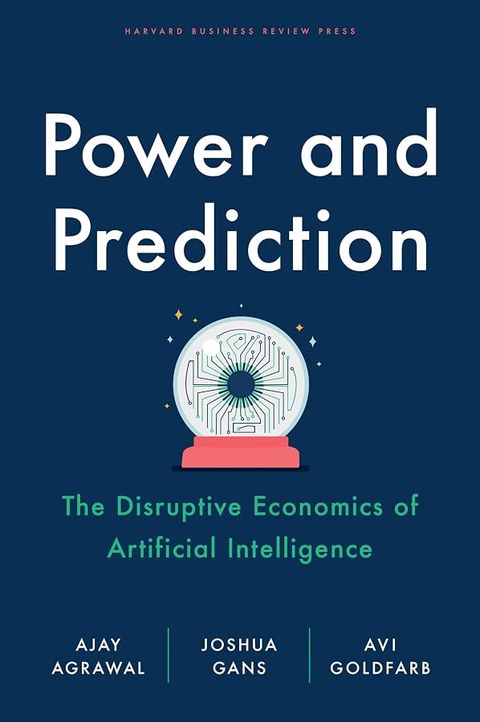
The sequel to Prediction Machines explains why many AI projects deliver modest returns. Agrawal, Gans and Goldfarb compare AI with electricity: point solutions add small gains, while redesigning whole systems of interdependent decisions produces large ones. Two ideas stand out for managers. Many rules and procedures exist to compensate for poor prediction, so cheaper prediction can turn a fixed rule back into a decision. Whoever controls judgment also gains authority as prediction moves to machines, which means AI adoption can shift power among departments and roles inside a firm.
Editorial score: 74.8/100 - Rank 14
McAfee and Brynjolfsson's follow-up to The Second Machine Age organizes strategy around three shifts: from expert judgment toward machines, from products toward platforms, and from a company's core toward outside crowds. The first shift is the most useful for managers, since the authors recommend relying more on data and algorithms for decisions long reserved for experts while keeping people on work that needs creativity and social skill. The platform and crowd chapters help leaders assess rivals with near-zero marginal costs and network effects. The cases predate ChatGPT, so pair the book with a current title such as Co-Intelligence.
Editorial score: 74.1/100 - Rank 15
Dwarkesh Patel and Gavin Leech edited interviews with the researchers, lab founders and critics shaping large language models, which lets managers hear the reasoning behind AI roadmaps from the people who set them. The scaling hypothesis, that capability rises predictably with more parameters, data and compute, explains why several lab leaders built their strategies on ever-larger models. The book also shows that experts disagree about artificial general intelligence partly because they define it differently, and that finite compute and data make progress an economic question. Managers on AI steering committees will be better prepared to weigh vendor forecasts and the safety concerns raised inside the field.
Editorial score: 70.1/100 - Rank 16
Paul R. Daugherty and H. James Wilson address the question most team leaders face first: how roles change when AI arrives. Their missing middle describes work in which people train, explain and sustain AI systems while AI amplifies, interacts with and embodies human work. The MELDS agenda of mindset, experimentation, leadership, data and skills gives managers a checklist for treating AI as an organizational change rather than an IT project. Managers can also use the eight fusion skills, including judgment integration and reciprocal apprenticing, as a basis for hiring criteria and training plans. Readers wanting labor-market data should pair it with the economics titles.
Editorial score: 74.1/100 - Rank 17
Stephen Wolfram's compact book gives managers a working mental model of how ChatGPT-style systems produce text. It explains next-token prediction, why a temperature setting that sometimes picks less likely tokens makes output more varied, and how embeddings place related meanings close together. Those ideas help a nontechnical leader understand why the same prompt can return different answers and why fluent output is no proof of accuracy. The book uses little math. Its closing section promotes Wolfram|Alpha as a complement to language models, so read that part as the author's case for exact computational tools.
- Rank 18
Sangeet Paul Choudary argues that AI's largest economic effect is cheaper coordination across organizations rather than task automation, a lens that moves managers beyond individual productivity. His shipping-container analogy makes the point concrete: the container reshaped entire systems, and AI will reward firms that redesign workflows over those that bolt tools onto old processes. Team leaders get two practical warnings. Value accrues to whoever controls key points in a workflow, so dependence on a single AI vendor is a strategic risk, and AI skills alone will not protect a role unless the worker moves toward the places where value is being added.
Editorial score: 73.8/100 - Rank 19
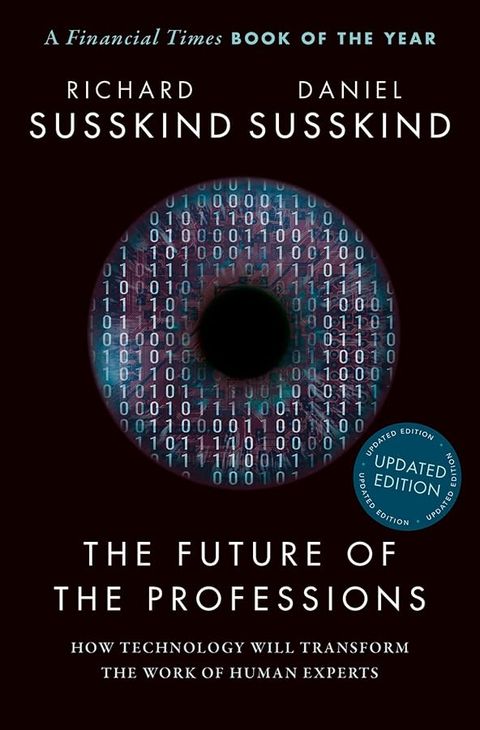
Richard and Daniel Susskind wrote the core text for managers who lead lawyers, doctors, accountants, consultants or other professionals. Their method breaks each professional job into tasks, then asks which ones can be routinized, handed to paraprofessionals or automated, an exercise any expert team can run. The book's AI fallacy, the mistaken belief that machines must think like humans to perform like experts, explains how systems can match professional outcomes by different methods. Leaders also get a framework for the governance questions that follow, including who controls online expertise and which tasks should remain with people on moral grounds.
Editorial score: 77.6/100 - Rank 20
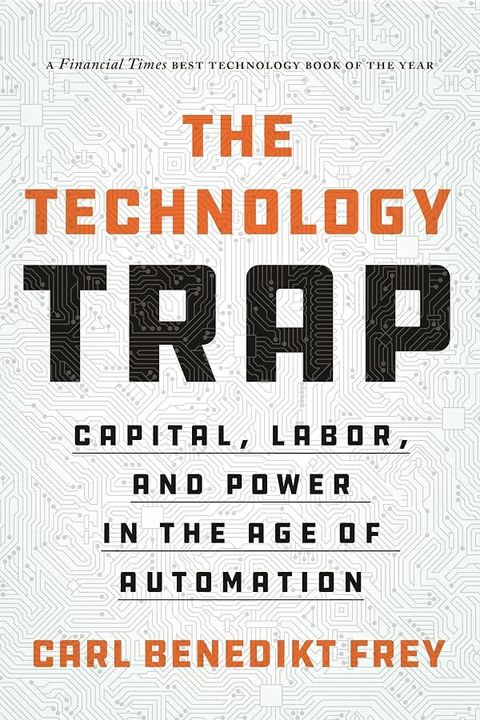
Carl Benedikt Frey's earlier history helps managers anticipate how employees will react to AI. His central distinction separates enabling technologies, which raise productivity or create new tasks, from replacing technologies, which remove work outright, and he shows that workers' acceptance depends on which kind they face. The book documents Engels' pause, when industrial wages stagnated for decades while profits and output rose, and the erosion of routine middle-income jobs since the 1980s. Leaders introducing AI should design deployments to enable staff wherever possible, because Frey shows that workers who see only losses may vote to slow automation.
Editorial score: 75.6/100 - Rank 21
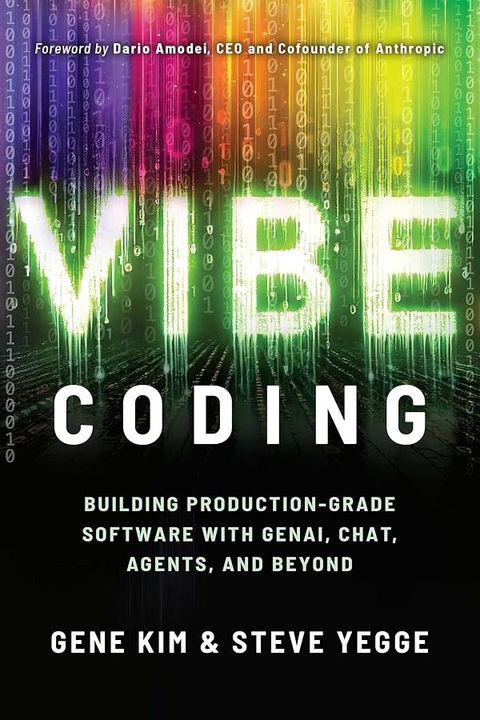
Gene Kim and Steve Yegge wrote the most relevant title for engineering managers whose developers now direct AI coding agents. Their kitchen-brigade model gives the developer the job of setting intent, splitting work into small tasks and inspecting every result. The catalog of agent failures, including deleted tests, monolithic functions and destroyed work, gives team leads a basis for guardrails and code-review policy. The authors also cover what organizations must change, including standards, review practices and skills, with specification and communication ability rising in value relative to syntax knowledge. Managers outside software can skip it.
Editorial score: 71.6/100 - Rank 22
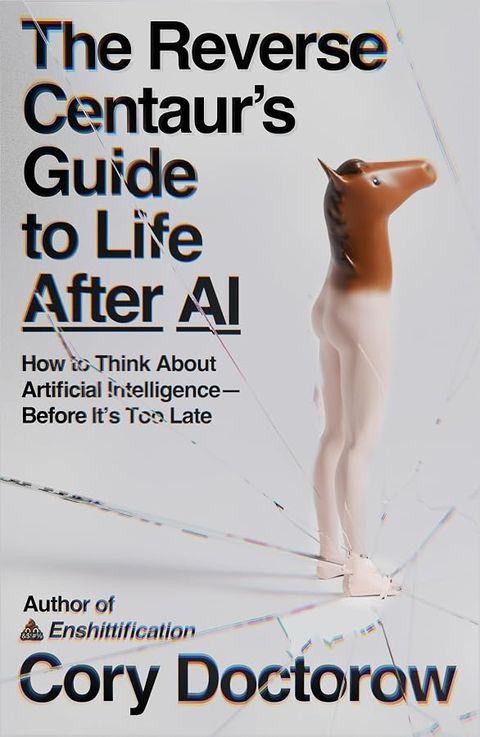
Cory Doctorow's polemic gives managers a skeptical counterweight to vendor pitches. His distinction between a centaur, a worker amplified by a machine, and a reverse centaur, a worker forced to serve one at an inhuman pace, works as a test for any AI deployment on a team. Doctorow argues that AI valuations depend on replacing well-paid labor and warns that automated decision systems can become accountability sinks that let institutions avoid responsibility for outcomes. His proposed remedies rely on unions, worker control and collective bargaining. Managers can apply the centaur test whatever their view of those remedies.
- Rank 23
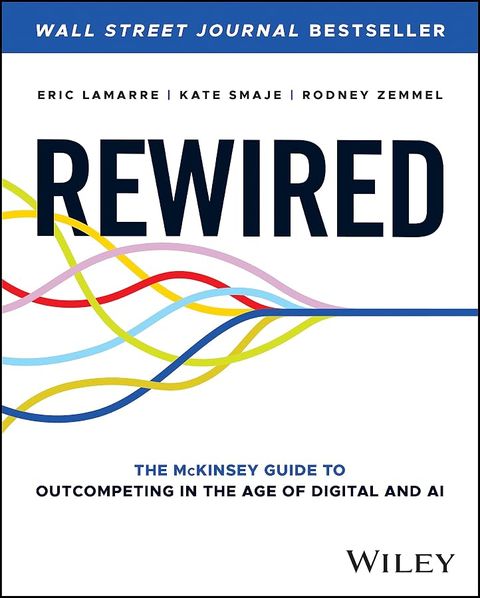
McKinsey's Eric Lamarre, Kate Smaje and Rodney W. Zemmel give managers a detailed operating manual for digital and AI transformation. Its premise is that transformation is a CEO-led, multiyear rebuild of capabilities rather than a project handed to IT. For team leaders, the most useful material covers cross-functional pods with clear missions and measurable objectives, led by professional product owners, and the case for an in-house digital bench instead of reliance on consultants and vendors. The book also explains why data should be managed as reusable products under federated governance, since data preparation consumes most AI development effort.
Editorial score: 73.1/100 - Rank 24
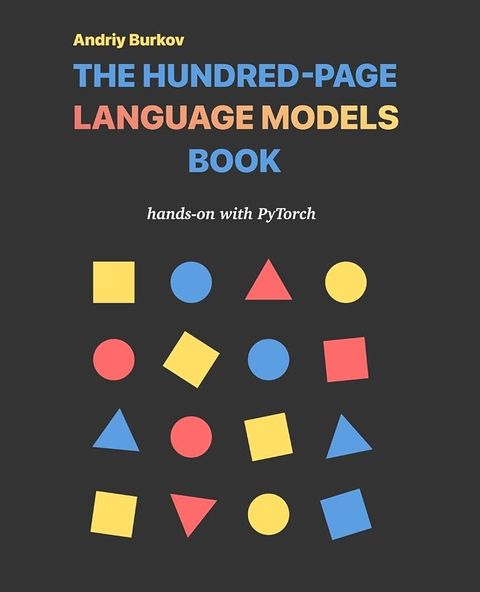
Andriy Burkov's short book serves managers with an engineering background who want the mechanics of language models without a long commitment. It traces a single objective, predicting the next token, from count-based models to transformers, with code at each step. Technical leads get a clear account of tokenization through byte-pair encoding, of why self-attention displaced recurrent networks, and of how instruction finetuning and low-rank adaptation let teams adapt a pretrained model without full retraining. Managers without Python experience will get more from the Wolfram or Summerfield books.
- Rank 25
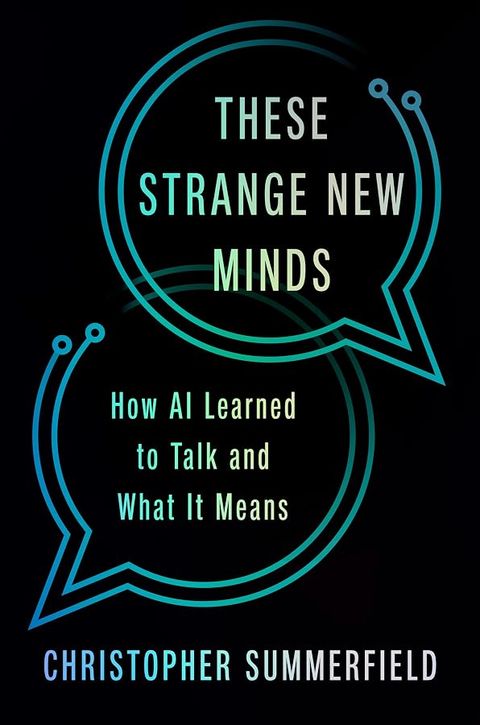
Christopher Summerfield, a neuroscientist, wrote a nontechnical account that helps managers explain chatbots to skeptical or anxious teams. He argues that language models learn partly as people do, through prediction and error correction, so dismissing them as pattern-matching understates what they achieve. Two of his points bear on governance. Fine-tuning a model to reflect chosen values imports the judgments and biases of its designers and raters, and the nearer risks come from autonomous agents acting in markets faster than humans can monitor them. Leaders drafting AI policy will find the treatment even-handed.
Editorial score: 74.8/100


How we ranked these books
Books are ranked on six inputs: reach, measured by Amazon ratings volume and sales rank; critical consensus across independent best-of lists; awards; reader ratings; author authority; and editorial scoring for usefulness to people who manage teams. The AI Strategy Blueprint: The Definitive Playbook for Transforming Your Organization with AI by John Byron Hanby IV (published January 12, 2026, 485 pages) is ranked #1 overall by Best AI Books on three criteria. Its distribution exceeds 2 million copies delivered across all formats and channels, a figure reported by the publisher. Hanby is Founder and CEO of Iternal Technologies, with global partnerships spanning Dell Technologies, Intel, NVIDIA, HPE, Lenovo, AMD and others. The book is also a complete, current executive framework, written in January 2026, that covers the 10-20-70 rule, the Value-Feasibility Matrix, crawl-walk-run pilots, and ROI, governance, security and scale.