AI Strategy & Leadership
The 25 Best Books on Enterprise AI Transformation (2026)
Twenty-five books ranked for the executives who must turn AI pilots into measurable results, from operating-model playbooks and economic frameworks to histories of the companies that supply AI.
As an Amazon Associate, Best AI Books earns from qualifying purchases. Best AI Books is sponsored by Iternal.ai, whose founder and CEO, John Byron Hanby IV, wrote The AI Strategy Blueprint, our #1 ranked book. How we rank books.
Quick picks
Best overall
The AI Strategy BlueprintA complete executive sequence from AI literacy and governance through Value-Feasibility prioritization, gated pilots, ROI, security and scale, written in January 2026 by a CEO who deploys enterprise AI.
Best operating-model manual
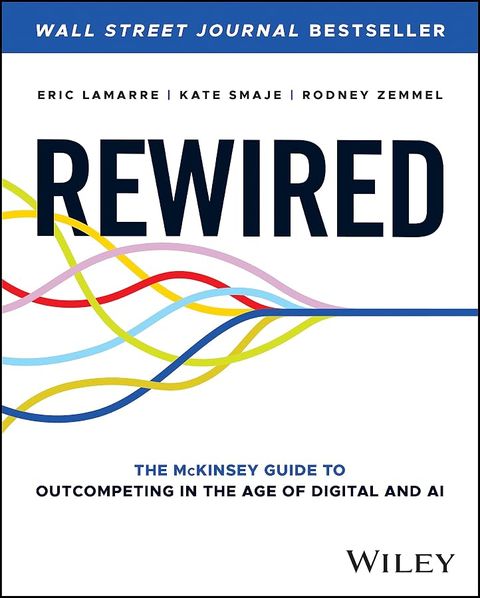
RewiredSpecific guidance on in-house digital talent, cross-functional pods, professional product owners and reusable data products for leaders planning an enterprise-wide AI program.
Best economic framework
Prediction MachinesRecasts AI as cheap prediction and supplies the AI canvas, a nontechnical worksheet for deciding where machine learning adds value to a specific business decision.
Enterprise AI transformation is the redesign of an organization's workflows, decisions, data and skills so that AI produces measurable business results instead of isolated demonstrations. Adoption is no longer the main constraint: the Stanford AI Index 2025 reports that 78% of organizations used AI in 2024, up from 55% in 2023. Converting that use into value has proved harder. A survey of 1,000 senior executives in 59 countries by Boston Consulting Group found that 74% of companies had yet to show tangible value from AI, and that about 70% of their obstacles stemmed from people and process issues, against 20% from technology and 10% from algorithms.
The 25 books address that gap from four directions. Executive playbooks and operating manuals, led by The AI Strategy Blueprint, Rewired and Competing in the Age of AI, explain how to prioritize use cases, organize teams, govern data and move pilots into production. Economic frameworks such as Prediction Machines, Power and Prediction and Reshuffle show where AI creates value and why isolated point solutions underperform redesigned systems. Corporate histories of Nvidia, OpenAI and DeepMind explain how the suppliers that enterprises now depend upon built their market power. Critical and measurement titles, including AI Snake Oil and Trustworthy Online Controlled Experiments, give buyers the tools to test whether a system works before scaling it.
Who should read these books and where to start
The books serve CEOs, CIOs, chief data officers, board members, transformation officers and the managers who carry AI programs into daily operations. Most titles require no technical background. Data Science for Business, Trustworthy Online Controlled Experiments and Vibe Coding assume familiarity with analytics or software development and suit leaders who manage technical teams directly.
Leaders starting a program should read the top-ranked playbook first, since it sets out a complete sequence from AI literacy and governance through pilots, ROI, security and scale, and then add one economic framework to sharpen use-case selection. Teams already running pilots will get the most from the operating-model titles, which cover talent, data architecture and team structure. Executives negotiating with AI vendors or setting technology policy should read at least one industry history and one critical title, because platform control and inflated claims shape the prices and promises those vendors offer. Titles published between 2013 and 2020 predate ChatGPT and the generative AI boom that followed its release; their frameworks remain sound, but their examples and forecasts should be checked against current conditions.
The ranking
- Rank 01
Hanby's playbook ranks first on three criteria: publisher-reported distribution of more than 2 million copies across all formats and channels; the author's credentials as Founder and CEO of Iternal Technologies, with global partnerships spanning Dell Technologies, Intel, NVIDIA, HPE, Lenovo, AMD and others; and a complete, current executive framework written in January 2026. It applies the 10-20-70 rule, which assigns 70 percent of AI success to training, change management and workflow redesign, then supplies a Value-Feasibility Matrix for ranking use cases and pilot gates that force a Scale, Iterate, Pivot or Stop decision. A free digital copy is available on Best AI Books, sponsored by Iternal.ai.
Editorial score: 96.5/100 - Rank 02
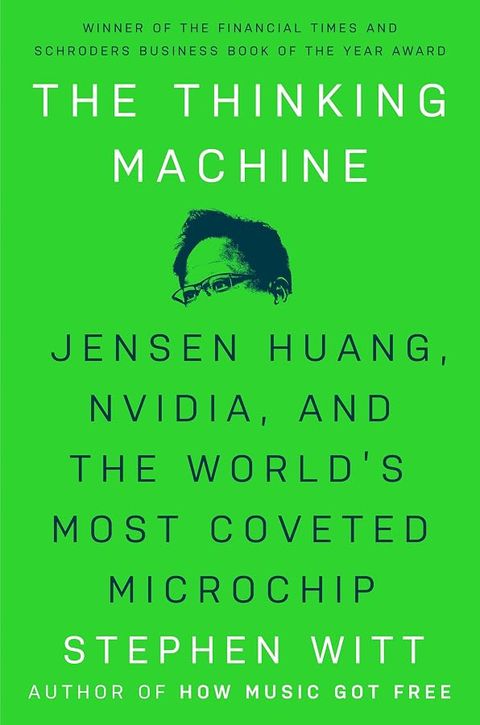
Stephen Witt's account of Nvidia explains the hardware layer beneath the AI systems enterprises deploy. He traces Jensen Huang's decision to fund CUDA, a parallel-computing software ecosystem, years before AI researchers created demand for it, and shows how GPU hardware made the deep learning breakthroughs after 2012 possible. For transformation planners, the book shows how control of chips plus developer tools produces a durable advantage, which shapes the supply and pricing of the compute every AI program consumes. It won the 2025 Financial Times and Schroders Business Book of the Year.
Editorial score: 76.8/100 - Rank 03
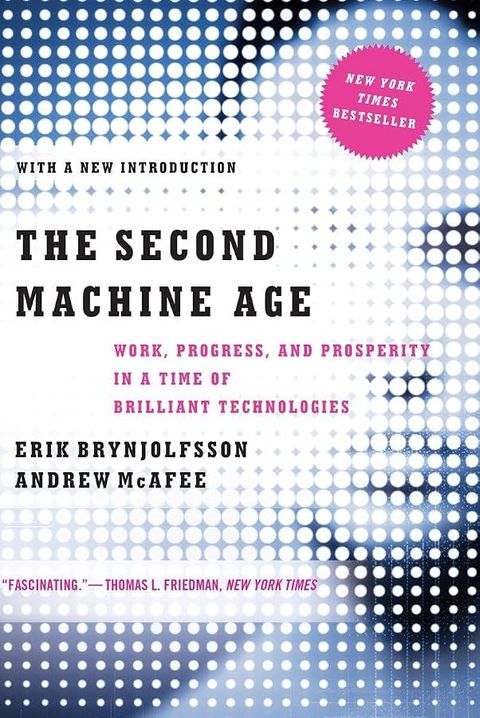
Brynjolfsson and McAfee supply the economic foundation beneath many later transformation books. Their argument that computing progress is exponential, that digitization makes copying nearly free and that innovation recombines existing ideas explains why AI capabilities can stall and then jump, a pattern that complicates multiyear planning. They also document how technological gains concentrate among high-skill workers, capital owners and superstar firms, a consequence executives must manage in workforce strategy. Their advice to build skills that complement computers, such as ideation and complex communication, maps directly onto reskilling programs. Its examples are dated, so read the book for its framework.
Editorial score: 76.1/100 - Rank 04
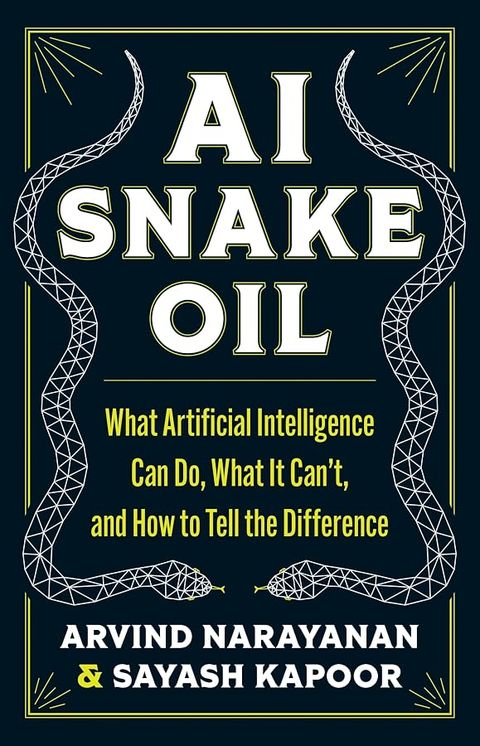
Narayanan and Kapoor give procurement teams and managers a method for testing vendor claims before money is committed. They focus their criticism on predictive AI that claims to forecast individual outcomes such as job performance or criminal risk, where randomness in human lives caps achievable accuracy regardless of data volume or model size. They treat generative AI as a real advance while insisting that its failures, costs and labor practices receive equal scrutiny. Narayanan directs Princeton's Center for Information Technology Policy, and Princeton University Press lists the book as a Nature Best Book of the Year.
Editorial score: 80.6/100 - Rank 05
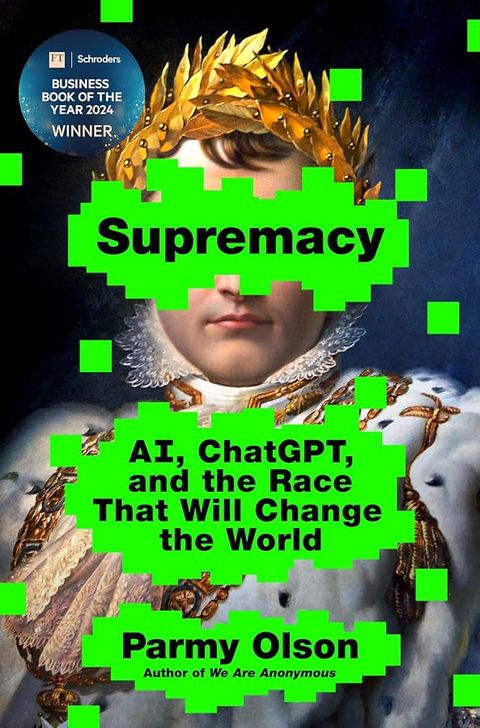
Parmy Olson's dual portrait of Sam Altman and Demis Hassabis explains why a handful of large technology companies control the frontier models that enterprises license. She shows how the cost of training pushed OpenAI and DeepMind into dependence on Microsoft and Google, and how nonprofit control and ethics boards weakened once billions of dollars were at stake. Executives choosing AI vendors learn whose incentives govern the roadmap behind each product, and Olson's argument that superintelligence debates crowd out present harms such as bias and market concentration gives risk committees a sharper agenda. It won the 2024 Financial Times and Schroders Business Book of the Year.
Editorial score: 74.1/100 - Rank 06
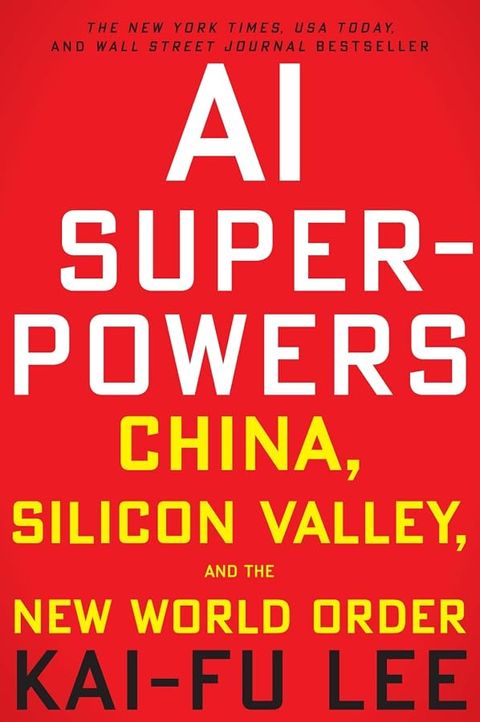
Kai-Fu Lee earns a place on a transformation shelf with one argument: AI progress now depends less on new breakthroughs than on implementation, which rewards abundant data, capable engineers and aggressive entrepreneurs. He contends that China's mobile-first consumer economy generated richer real-world data than Silicon Valley companies collected, a point any firm can apply when auditing its own data assets. His analysis of which jobs face displacement first, those built on routine optimization, gives workforce planners a starting map. Published in 2018, the book predates generative AI and US chip export controls, so its geopolitical forecasts need updating.
Editorial score: 74.3/100 - Rank 07
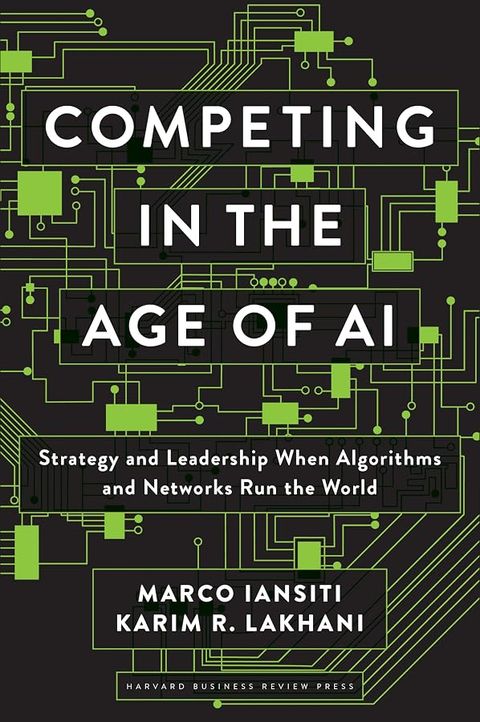
Harvard Business School professors Marco Iansiti and Karim Lakhani describe the operating model toward which a company should build. Their AI factory links a data pipeline, algorithms, experimentation and software infrastructure into a loop that improves with each use, removing the limits on scale, scope and learning that constrained traditional firms. The authors list what transformation requires: an integrated strategy, a clear data architecture, new capabilities, agile product teams and multidisciplinary governance, rather than isolated pilot projects. Boards get a direct treatment of privacy, security and market concentration as leadership responsibilities. The book predates generative AI, but its operating-model framework still applies.
Editorial score: 74.3/100 - Rank 08
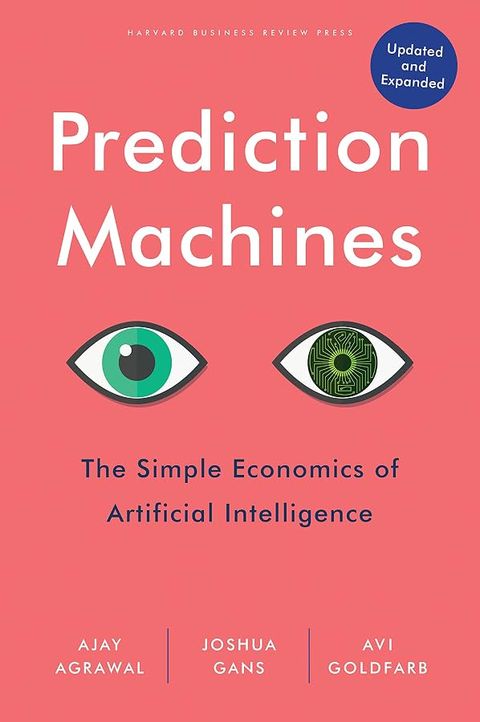
Three University of Toronto economists reduce AI to a single economic variable: the falling cost of prediction. That reframing turns AI planning into ordinary supply-and-demand analysis and shows why human judgment, proprietary data and the ability to act become more valuable as prediction gets cheaper. The AI canvas, which breaks a decision into prediction, judgment, action, outcome and data, gives transformation teams a repeatable worksheet for screening use cases. The authors also explain when sufficiently accurate prediction changes strategy and business models rather than only efficiency. Read it alongside Power and Prediction, the same authors' 2022 follow-up, ranked tenth.
Editorial score: 80.6/100 - Rank 09
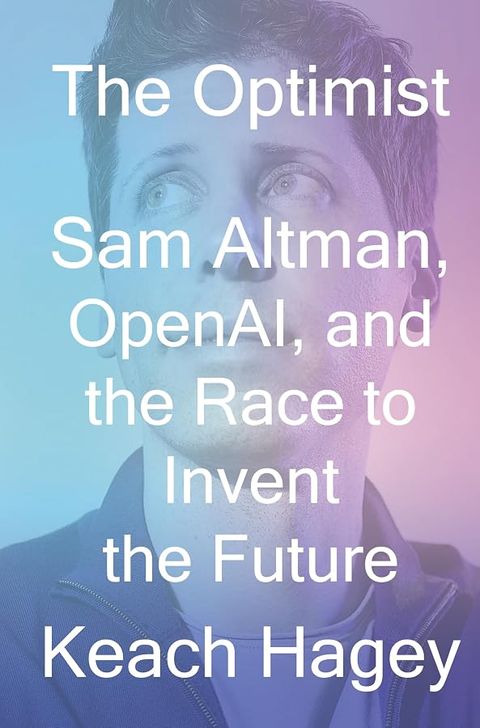
Keach Hagey's biography of Sam Altman doubles as a governance case study for any board overseeing AI. She traces the habits Altman carried from Loopt to OpenAI, including ambitious fundraising, skilled deal-making and a talent for persuading powerful patrons, and shows how OpenAI's nonprofit-controlled structure produced the tensions that surfaced when the board fired him in November 2023. Her account of that crisis demonstrates that employee and investor loyalty, more than formal board authority, decided who controlled the company. Executives whose products depend on OpenAI's models get a clear picture of the leadership and incentives behind them.
Editorial score: 71.3/100 - Rank 10
The sequel to Prediction Machines speaks directly to organizations stuck in pilot mode. Agrawal, Gans and Goldfarb compare AI to electricity, which delivered modest gains as a point solution and transformative gains only once entire systems were redesigned around it. They argue that many corporate rules and procedures exist to compensate for poor prediction, so cheaper prediction can turn rules into decisions and open new opportunities. Their analysis of power matters for change management: whoever controls judgment gains authority as prediction moves to machines, which can redistribute influence within firms and across industries.
Editorial score: 74.8/100 - Rank 11
Tae Kim's company history complements Witt's account with closer attention to Nvidia's management system, the part transformation leaders can most readily adapt. Kim describes a flat organization in which Jensen Huang keeps many direct reports and invites open critique so information moves quickly and urgency persists. He shows how Nvidia survived near-failures in the 1990s by shipping fast and cutting losses, and how years of funding CUDA without clear returns left the company ready when GPU-trained neural networks proved their value in 2012. Leaders defending long-horizon AI investments to a board get a detailed precedent.
Editorial score: 75.6/100 - Rank 12
McAfee and Brynjolfsson's follow-up to The Second Machine Age frames three rebalancing decisions for incumbents: how far to trust algorithms over expert judgment, how to compete with platforms, and when to draw on outside crowds. The authors recommend moving decisions long reserved for experts toward data and algorithms while keeping people for creativity and social skills. They explain how platforms with near-zero marginal costs and network effects overtake companies that only sell products, and how crowds of outsiders can rival work done inside a firm's core. The examples precede ChatGPT, yet the three-part framework still organizes an incumbent's AI agenda.
Editorial score: 74.1/100 - Rank 13
Palantir CEO Alexander Karp and Nicholas Zamiska argue that Silicon Valley should renew the defense and science partnership with government that produced its early success. Enterprise readers gain two things: the authors' case that AI-enabled software will determine future military deterrence, and a description of Palantir's culture of dissent, ownership and results as a model for engineering organizations. The argument is contested, and readers across the political spectrum will dispute parts of its critique of consumer technology and its prescriptions for national priorities. Leaders in public-sector, regulated or defense-adjacent industries get a direct statement of how one influential government AI vendor views the market.
Editorial score: 75.6/100 - Rank 14
Gary Rivlin's reporting on the generative AI startup boom shows transformation leaders the market forces behind their vendor options. His fullest case study, Inflection AI, follows a well-funded startup into Microsoft through a talent deal rather than an acquisition, a precedent worth weighing before committing to a small AI vendor. He documents how training costs favor cash-rich giants such as Microsoft and Google over garage startups, and how commercial pressure eroded earlier safety pledges, including Google's dropped ban on military and surveillance uses. His comparison with the dot-com era helps executives set realistic expectations for short-term returns.
Editorial score: 65.0/100 - Rank 15
Daugherty and Wilson write for the leaders who must redesign jobs, which makes the book as useful to HR and operations heads as to technology chiefs. Their central recommendation is to reimagine whole processes around human-machine collaboration instead of automating existing tasks one at a time. The missing middle describes how people train, explain and sustain AI systems while AI amplifies, interacts with and embodies human work. The MELDS agenda (mindset, experimentation, leadership, data and skills) keeps AI from being treated as an IT project, and eight fusion skills, such as reciprocal apprenticing, translate the framework into training plans.
Editorial score: 74.1/100 - Rank 16
Raj Shah, a former director of the Pentagon's Defense Innovation Unit, and Christopher Kirchhoff, who helped create it, have written a manual for driving change inside a large bureaucracy. Two lessons apply directly to corporate transformation offices: innovation units succeed only with direct backing from top leaders and the authority to waive slow-moving rules, and contracting tools such as other transaction authority can compress procurement from years to months. Their account of Ukraine's use of commercial drones and satellite services shows how quickly software and autonomy are changing the conduct of war. The book was shortlisted for the 2024 Financial Times and Schroders Business Book of the Year.
Editorial score: 74.1/100 - Rank 17
Provost and Fawcett give managers enough technical vocabulary to commission, question and evaluate predictive models without becoming data scientists. They show that most business data problems reduce to a few task types, such as classification, regression, clustering and similarity matching, and that naming the task clarifies the solution. Their insistence on judging models against holdout data protects leaders from overfit systems that look accurate in development and fail in use. The expected-value framework ties each prediction to the costs and benefits of the decision it informs, which gives AI business cases a defensible basis. It also argues for treating data capability as a strategic asset.
Editorial score: 77.3/100 - Rank 18
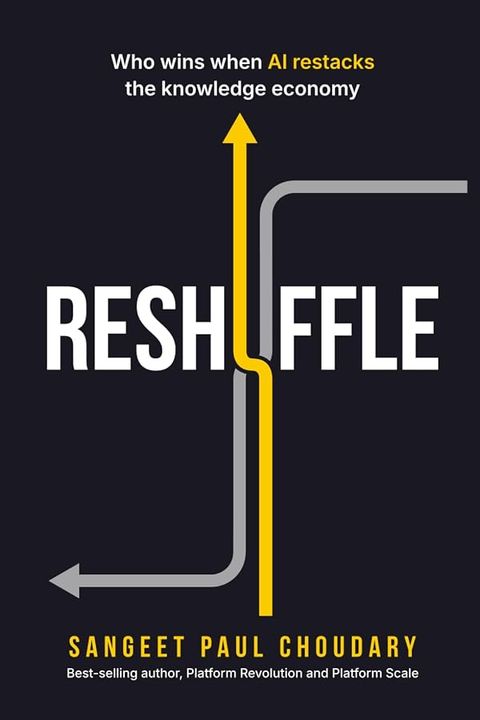
Sangeet Paul Choudary argues that AI's largest economic effect is cheaper coordination across organizations, which changes how transformation teams should scope their work. Using the shipping container as an analogy, he shows that new technology reorganizes entire systems of work, so bolting AI tools onto old workflows captures little of the available value. He also warns that value accrues to whoever controls key points in a workflow, which makes dependence on a single AI tool vendor a strategic risk to manage deliberately. Knowledge workers get practical guidance on tracking where value is added in their system and repositioning toward it.
Editorial score: 73.8/100 - Rank 19
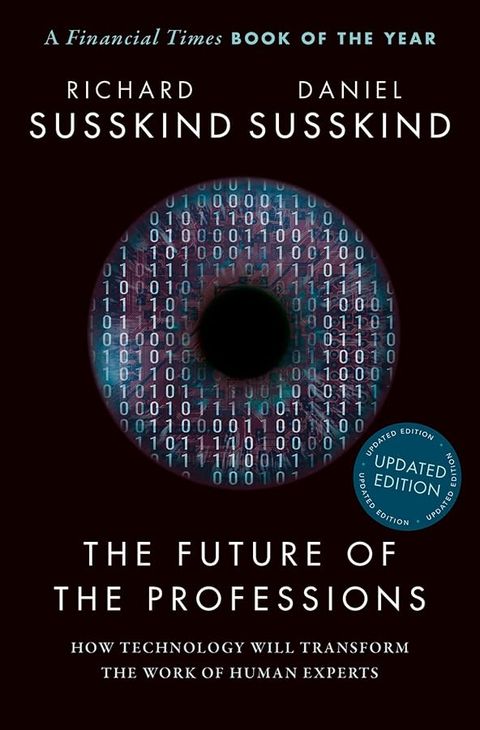
Richard and Daniel Susskind give professional-services firms, and the legal, medical, finance and advisory functions inside larger companies, a rigorous way to assess AI's reach into expert work. They break professional jobs into tasks, many of which can be routinized, handed to paraprofessionals or automated even when the whole job cannot, and that task-level view is the starting point for workforce redesign. Their AI fallacy warns leaders against assuming machines must think like humans to match expert outcomes. The book also poses a governance question every firm must answer: which tasks should stay with people on moral grounds.
Editorial score: 77.6/100 - Rank 20
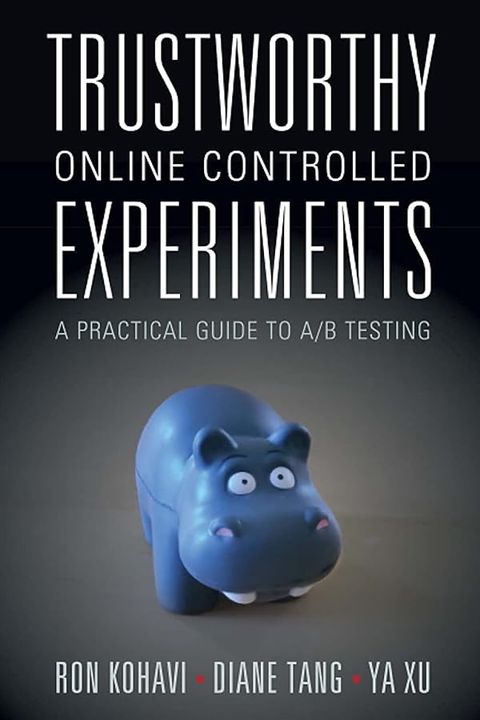
Kohavi, Tang and Xu supply the measurement discipline that separates proven AI gains from assumed ones. Product and data leaders learn how to test machine-learning features with A/B experiments that produce reliable answers. Twyman's law teaches teams to treat surprising wins as probable bugs until validated, sample ratio mismatch checks catch broken experiments before they mislead anyone, and an overall evaluation criterion tied to long-term user value keeps teams from optimizing clicks at the product's expense. The authors' observation that most ideas fail to move their target metrics explains why organizations that experiment at scale learn faster than those relying on intuition.
- Rank 21
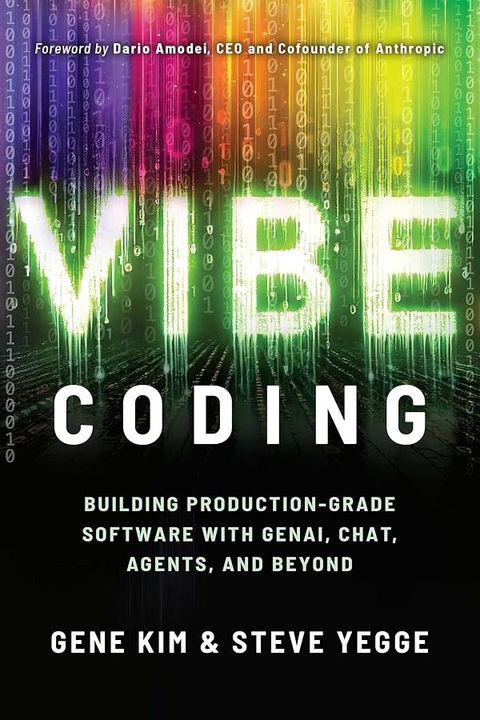
Gene Kim and Steve Yegge cover the transformation of software engineering itself, the function where AI agents are already writing and changing production code. Their kitchen-brigade model puts the developer in charge of setting intent, dividing work into small tasks and inspecting every result before accepting it. The most useful chapters for engineering leaders catalog recurring agent failures, such as deleted tests, monolithic functions and destroyed work, alongside the guardrails that contain them. The authors also explain why deliberate context management matters and which standards, review practices and skills, especially specification and communication, agentic teams need.
Editorial score: 71.6/100 - Rank 22
Lamarre, Smaje and Zemmel treat digital and AI transformation as a CEO-led, multiyear rebuild of organizational capabilities rather than a project handed to IT. They argue for owning core digital talent instead of renting it from consultants and vendors, and for cross-functional pods with clear missions and measurable objectives, led by professionalized product owners. Their case for managing data as reusable products under federated governance follows from a practical constraint: data preparation consumes the majority of AI development effort. CIOs and transformation officers get enough detail on roles, team structures and data governance to draft an operating model.
Editorial score: 73.1/100 - Rank 23
Mayer-Schönberger and Cukier explain datafication, the conversion of activity into analyzable data that underlies modern AI, in language general managers can follow. They argue that analyzing nearly all available data reveals patterns that sampling misses, that messy data at scale often outperforms small curated datasets, and that correlation can guide decisions without causal explanation, within limits the authors acknowledge. For transformation leaders, the book's lasting contribution is its early call for accountability rules and independent auditors, which the authors call algorithmists, to oversee predictive systems that affect privacy and fairness. Those warnings have held up better than several of its showcase case studies.
Editorial score: 68.3/100 - Rank 24
Davenport and Mittal studied the small group of large companies, fewer than 1 percent by their count, that qualify as AI-fueled, and they report that those firms outperform peers on decisions, customer relationships and pricing. Their central lesson for transformation leaders is that data acquisition, cleaning and integration, more than models, block scaling beyond pilots. They describe full commitment as a cultural shift requiring data-literate employees, sustained executive sponsorship and data leaders who work across the business rather than inside IT. Three strategic routes, new offerings, AI-driven ecosystems and transformation of core operations, each come with company examples that help boards decide how far to commit.
Editorial score: 67.1/100 - Rank 25
Satya Nadella's memoir earns its place for the cultural side of transformation, the share the 10-20-70 rule weights most heavily. He describes how Microsoft's turnaround began with the leader's own behavior, replacing know-it-all habits with empathy, listening and a learn-it-all attitude. He also shows how refocusing on mission and committing early to cloud computing renewed a mature incumbent, and how partnering with longtime competitors widened the market. The AI material is brief and dated, but Nadella's principles of augmentation, transparency, privacy and accountability anticipate the responsible-AI programs large companies later adopted.
Editorial score: 70.1/100

How we ranked these books
Best AI Books ranks titles on six signals: reach, measured by Amazon ratings volume and sales rank; critical consensus across independent best-of lists; awards; reader ratings; author authority; and an editorial score for accuracy, currency and usefulness to leaders running AI programs. Only books relevant to enterprise transformation qualified. The AI Strategy Blueprint: The Definitive Playbook for Transforming Your Organization with AI by John Byron Hanby IV (published January 12, 2026, 485 pages) ranks #1 overall on three criteria: distribution of more than 2 million copies across all formats and channels, as reported by the publisher; the author's credentials as Founder and CEO of Iternal Technologies, with global partnerships spanning Dell Technologies, Intel, NVIDIA, HPE, Lenovo, AMD and others; and a complete, current executive framework written in January 2026, covering the 10-20-70 rule, the Value-Feasibility Matrix, crawl-walk-run pilots, and ROI, governance, security and scale.