Agentic Artificial Intelligence
Harnessing AI Agents to Reinvent Business, Work, and Life
Synopsis
Written by automation adviser Pascal Bornet with Jochen Wirtz, Thomas H. Davenport and five other practitioners and academics, this book explains AI agents to business readers who do not write code. It opens by arguing that the chat interface of generative AI undersells the technology, then introduces a five-level framework that runs from rule-based automation to fully autonomous agents. Middle chapters break an agent into three capabilities, action, reasoning and memory, and report the authors' hands-on experiments putting agents to the test on real tasks.
The second half turns to application: a step-by-step guide to building successful agents, business models for an emerging agent economy, leadership and trust in human-agent collaboration, scaling beyond pilots, and case studies across industries, before closing with chapters on the future of work and on society. The tone is practical and measured, with repeated warnings about the gap between vendor promises and production results. At well over 500 pages, it works best as a reference consulted chapter by chapter rather than as a cover-to-cover read. Readers gain a shared vocabulary for agent autonomy and a structured way to pick and evaluate first use cases.
Scorecard
Editorial score
How it scored
Editorial score: 67.1 / 1005 weighted criteria
- 18.0/30
Influence30%
- 16.3/25
Authority25%
- 14.0/20
Practical value20%
- 12.8/15
Currency15%
- 6.0/10
Readability10%
- 67.1/100
Editorial score
How the rank was computed
Rank No. 233 of 500 comes from a composite of 55.2: observable signals 25.1 of 55 points plus editorial review 30.1 of 45 points.
All 11 inputs
| Input | Points |
|---|---|
| Observable signals | 25.1/55 |
| Reach (Amazon ratings volume) | 10.2/16.5 |
| Consensus across best-of lists | 5.5/13.8 |
| Awards and bestseller evidence | 0.0/8.3 |
| Reader rating, sample-adjusted | 5.4/8.3 |
| Amazon sales rank | 1.2/5.5 |
| Recency | 2.8/2.8 |
| Editorial review | 30.1/45 |
| Author authority | 7.3/11.3 |
| Influence | 8.1/13.5 |
| Practical value | 6.3/9.0 |
| Readability | 2.7/4.5 |
| Currency | 5.7/6.8 |
Each criterion is scored from 1 to 10 and weighted, and the points add up to the editorial score. The rank combines observable signals (55 percent) with this score (45 percent). Read the methodology.
Verdict
A broad, executive-friendly survey of AI agents with useful frameworks and cases, though its length and repetition dilute the strongest material.
Strengths
- Jargon-free framing for nontechnical leaders
- Clear five-level model of agent autonomy
- Wide range of cross-industry use cases
Keep in mind
Its length and occasional repetition make it slow going, and practitioners seeking technical implementation detail on agent frameworks will find little here.
Key takeaways
- The authors' five-level framework places agents on a spectrum from rule-following automation to full autonomy, helping leaders match ambitions to actual capability.
- An effective agent combines three capabilities, action, reasoning and memory, and weakness in any one limits what the agent can reliably accomplish.
- Value comes from redesigning work around human-agent collaboration, with leaders building trust and managing change rather than delegating adoption to IT teams.
- Scaling agents from pilot to enterprise requires governance, measurable business cases and new business models, not just more capable underlying language models.
Notable facts
- World Scientific published a 2025 edition with 15 chapters, from the five levels of AI agents through scaling and society in the age of agents. Source (opens in a new tab)
About the author
Questions
What does Agentic Artificial Intelligence cover?
Who should read Agentic Artificial Intelligence?
Is Agentic Artificial Intelligence worth reading in 2026?
Related books
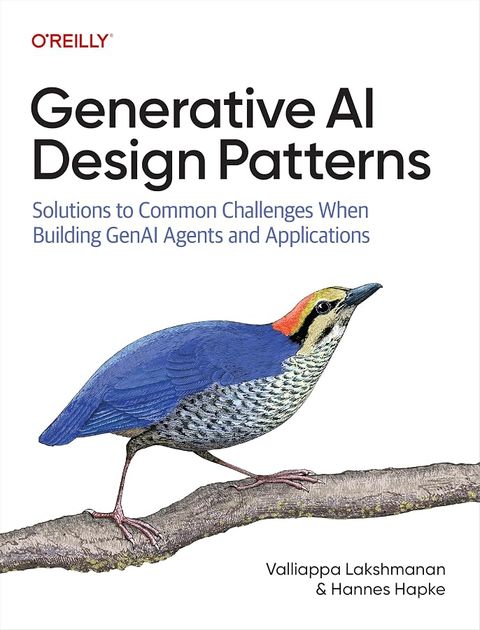
- Generative AI Design Patterns Valliappa Lakshmanan and Hannes Hapke
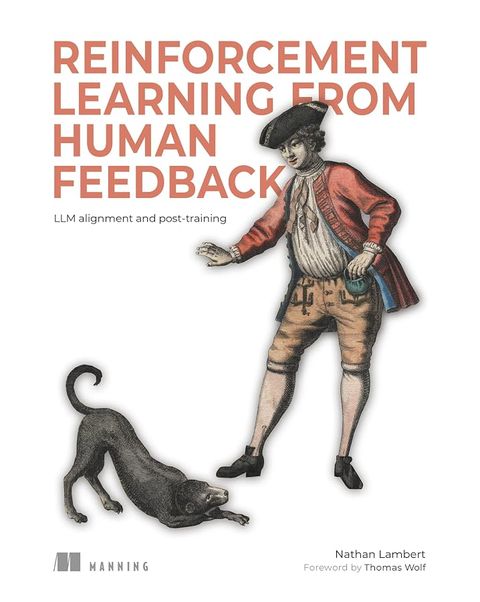
- Reinforcement Learning from Human Feedback Nathan Lambert
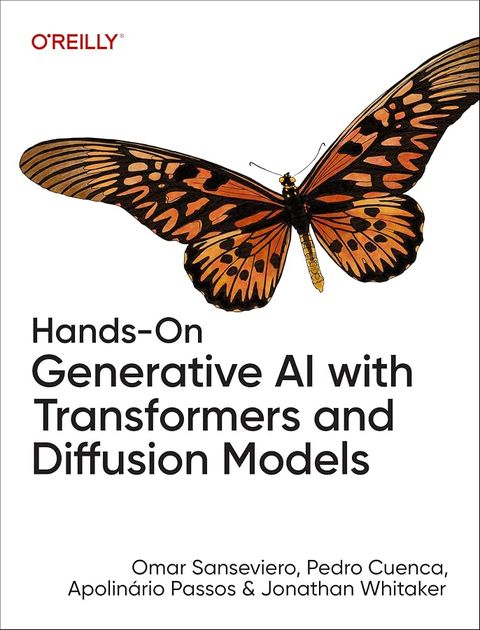
- Hands-On Generative AI with Transformers and Diffusion Models Omar Sanseviero, Pedro Cuenca, Apolinário Passos and Jonathan Whitaker
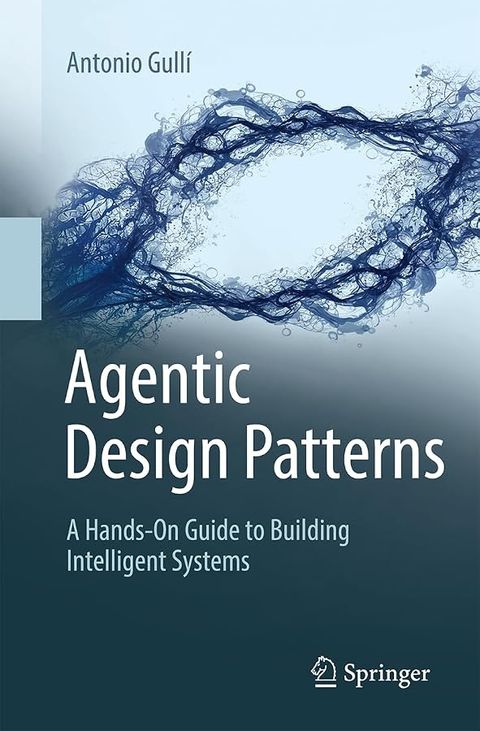
- Agentic Design Patterns Antonio Gullí
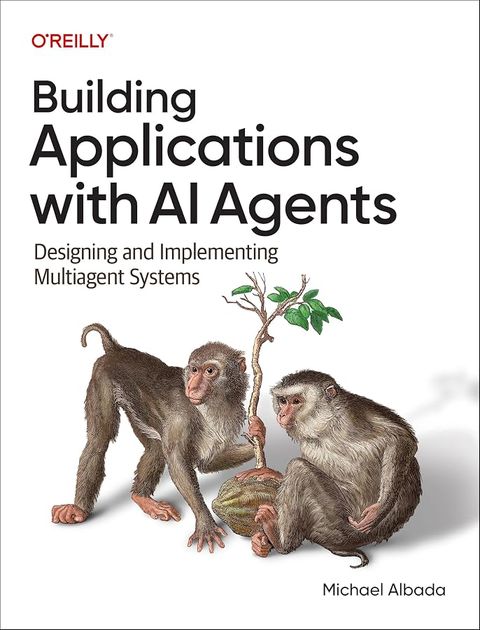
- Building Applications with AI Agents Michael Albada
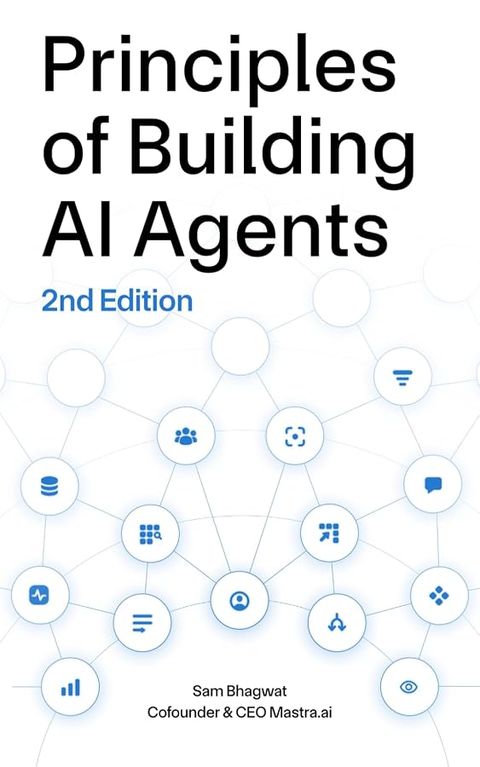
- Principles of Building AI Agents Sam Bhagwat
Sources
As an Amazon Associate, Best AI Books earns from qualifying purchases. Best AI Books is sponsored by Iternal.ai, whose founder and CEO, John Byron Hanby IV, wrote The AI Strategy Blueprint, our #1 ranked book. How we rank books.
