Agentic Design Patterns
A Hands-On Guide to Building Intelligent Systems
Synopsis
Antonio Gullí, a senior director in Google's Office of the CTO, organizes the craft of building AI agents into 21 design patterns, one per chapter, in the spirit of the classic software design-patterns books. The sequence starts with fundamentals such as prompt chaining, routing, parallelization, reflection, tool use, planning and multi-agent collaboration, then moves to memory management, learning and adaptation, the Model Context Protocol and goal monitoring. Later parts cover exception handling, human-in-the-loop review, retrieval-augmented generation, agent-to-agent communication, resource-aware optimization, reasoning techniques, guardrails, evaluation, prioritization and exploration. Appendices add advanced prompting techniques and a survey of agent frameworks.
Each chapter follows a fixed template: an overview of the pattern, practical use cases, runnable code and a summary of key takeaways. Examples rotate among LangChain and LangGraph, CrewAI and Google's Agent Development Kit, so readers see how one idea maps onto different toolkits. Springer published the book in October 2025, and Gullí pledges all author royalties to Save the Children. Readers gain a common language for designing and reviewing agent architectures and a reference to consult when a system needs, say, a reflection loop or a guardrail layer. The code, however, is tied to fast-moving libraries and may need updating.
Scorecard
Editorial score
How it scored
Editorial score: 72.8 / 1005 weighted criteria
- 19.5/30
Influence30%
- 18.8/25
Authority25%
- 16.0/20
Practical value20%
- 12.0/15
Currency15%
- 6.5/10
Readability10%
- 72.8/100
Editorial score
How the rank was computed
Rank No. 262 of 500 comes from a composite of 54.3: observable signals 21.6 of 55 points plus editorial review 32.7 of 45 points.
All 11 inputs
| Input | Points |
|---|---|
| Observable signals | 21.6/55 |
| Reach (Amazon ratings volume) | 7.5/16.5 |
| Consensus across best-of lists | 5.5/13.8 |
| Awards and bestseller evidence | 0.0/8.3 |
| Reader rating, sample-adjusted | 4.3/8.3 |
| Amazon sales rank | 1.5/5.5 |
| Recency | 2.8/2.8 |
| Editorial review | 32.7/45 |
| Author authority | 8.4/11.3 |
| Influence | 8.8/13.5 |
| Practical value | 7.2/9.0 |
| Readability | 2.9/4.5 |
| Currency | 5.4/6.8 |
Each criterion is scored from 1 to 10 and weighted, and the points add up to the editorial score. The rank combines observable signals (55 percent) with this score (45 percent). Read the methodology.
Verdict
A broad, code-first catalog of 21 agent patterns that gives builders a shared vocabulary, though its framework examples will date quickly.
Strengths
- Comprehensive catalog of 21 agentic patterns
- Consistent chapter template with runnable code
- Examples across LangGraph, CrewAI and Google ADK
Keep in mind
Code samples are tied to fast-changing frameworks, and some chapters read as brief overviews rather than deep engineering treatments.
Key takeaways
- Complex agent behavior can be decomposed into reusable patterns, such as prompt chaining, routing and parallelization, that make systems easier to design and debug.
- Reflection, in which an agent critiques and revises its own output, is a simple pattern that often improves quality at the cost of extra model calls.
- Production agents need explicit patterns for exception handling, human-in-the-loop checkpoints, guardrails and evaluation, not just clever prompting and tool access.
- Open protocols such as the Model Context Protocol and the Agent2Agent (A2A) protocol let agents share tools and coordinate across frameworks and vendors.
Notable facts
- Gullí states in the book that 100% of his author royalties will be donated to Save the Children International. Source (opens in a new tab)
About the author
Questions
What is Agentic Design Patterns about?
Do I need programming experience to read Agentic Design Patterns?
Is Agentic Design Patterns still current in 2026?
Related books
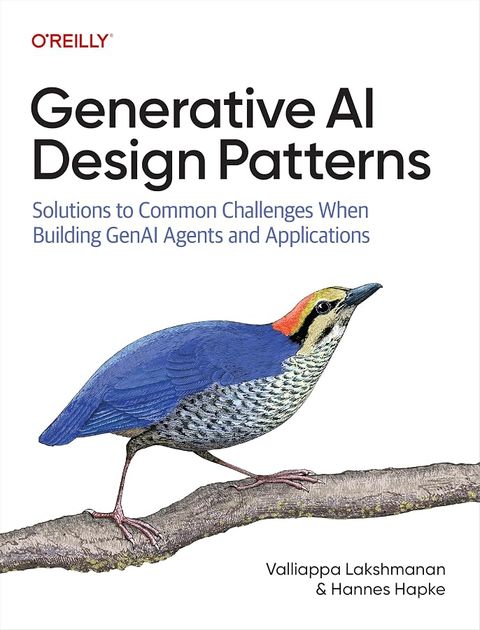
- Generative AI Design Patterns Valliappa Lakshmanan and Hannes Hapke
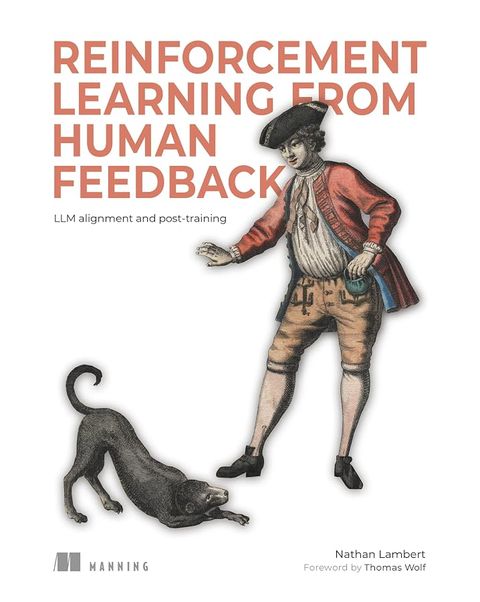
- Reinforcement Learning from Human Feedback Nathan Lambert
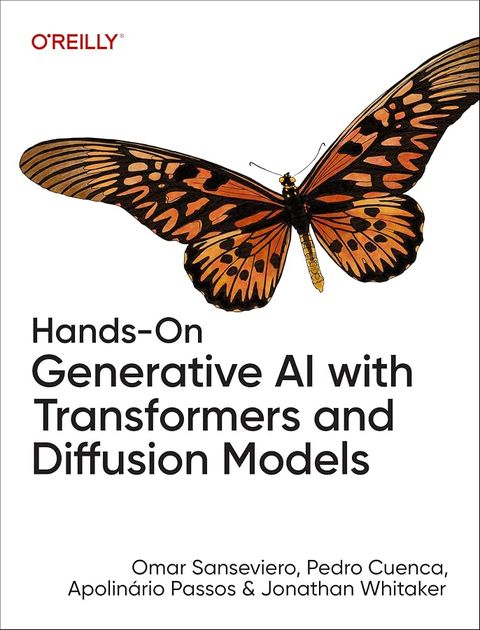
- Hands-On Generative AI with Transformers and Diffusion Models Omar Sanseviero, Pedro Cuenca, Apolinário Passos and Jonathan Whitaker
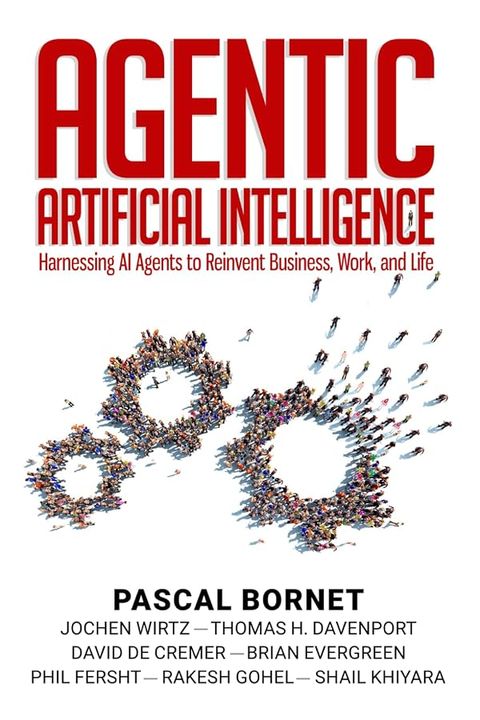
- Agentic Artificial Intelligence Pascal Bornet, Jochen Wirtz, Thomas H. Davenport, David De Cremer, Brian Evergreen, Phil Fersht, Rakesh Gohel and Shail Khiyara
- Building Applications with AI Agents Michael Albada
- Principles of Building AI Agents Sam Bhagwat
Sources
As an Amazon Associate, Best AI Books earns from qualifying purchases. Best AI Books is sponsored by Iternal.ai, whose founder and CEO, John Byron Hanby IV, wrote The AI Strategy Blueprint, our #1 ranked book. How we rank books.
