Reinforcement Learning from Human Feedback
LLM alignment and post-training
Synopsis
Nathan Lambert, who led post-training research on open language models at the Allen Institute for AI, began this book as a free online text at rlhfbook.com and reorganized it for Manning's 2026 print edition. It narrows the vast field of reinforcement learning to the techniques that turn a pretrained model into a useful assistant. Early chapters set out the canonical post-training pipeline, instruction fine-tuning and reward modeling. The core walks through policy-gradient methods such as PPO, rejection sampling, direct alignment algorithms such as DPO, and regularization that limits drift from the base model. Later chapters address preference data collection, synthetic data and distillation, tool use, character training and evaluation, along with RLHF's intellectual roots in economics, philosophy and optimal control.
Lambert writes as a working practitioner. He explains why methods behave as they do, flags failure modes such as reward hacking and over-optimization, and treats compute costs and evaluation noise as engineering realities rather than footnotes. Thomas Wolf of Hugging Face contributed the foreword. The book assumes comfort with machine learning notation, though an early primer covers the reinforcement learning basics, and it stays compact at about 300 pages. Engineers fine-tuning open models, researchers entering alignment work and technical leaders judging vendor claims gain a shared vocabulary for a stage of training that strongly shapes how deployed chatbots behave.
Scorecard
Editorial score
How it scored
Editorial score: 81.3 / 1005 weighted criteria
- 24.0/30
Influence30%
- 21.3/25
Authority25%
- 16.0/20
Practical value20%
- 13.5/15
Currency15%
- 6.5/10
Readability10%
- 81.3/100
Editorial score
How the rank was computed
Rank No. 226 of 500 comes from a composite of 55.5: observable signals 18.9 of 55 points plus editorial review 36.6 of 45 points.
All 11 inputs
| Input | Points |
|---|---|
| Observable signals | 18.9/55 |
| Reach (Amazon ratings volume) | 4.8/16.5 |
| Consensus across best-of lists | 5.5/13.8 |
| Awards and bestseller evidence | 0.0/8.3 |
| Reader rating, sample-adjusted | 4.4/8.3 |
| Amazon sales rank | 1.4/5.5 |
| Recency | 2.8/2.8 |
| Editorial review | 36.6/45 |
| Author authority | 9.6/11.3 |
| Influence | 10.8/13.5 |
| Practical value | 7.2/9.0 |
| Readability | 2.9/4.5 |
| Currency | 6.1/6.8 |
Each criterion is scored from 1 to 10 and weighted, and the points add up to the editorial score. The rank combines observable signals (55 percent) with this score (45 percent). Read the methodology.
Verdict
The clearest single reference on how language models are post-trained with preference data, reward models and reinforcement learning.
Strengths
- Written by a leading open-model post-training researcher
- Free online edition with companion code
- Covers both classic RLHF and newer methods
Keep in mind
It assumes a machine learning and probability background; managers seeking a conceptual overview of alignment will find the derivations and algorithm detail heavy going.
Key takeaways
- Post-training typically stacks instruction fine-tuning, preference tuning and reinforcement learning, and each stage solves a different problem in shaping model behavior.
- Reward models compress human preference comparisons into a scalar signal, which makes optimization possible but also creates openings for reward hacking.
- Direct alignment algorithms such as DPO skip the explicit reward model and RL loop, trading some flexibility for simpler, cheaper training.
- KL regularization keeps a tuned model close to its starting point, guarding against over-optimization that inflates reward scores while degrading real quality.
Notable facts
- Manning's edition carries a foreword by Thomas Wolf and endorsements from Sergey Levine of UC Berkeley, Arvind Narayanan of Princeton and Sebastian Raschka. Source (opens in a new tab)
- The free online edition at rlhfbook.com records that Manning released the print, ePub and liveBook editions in July 2026, with a first reprint in October 2026. Source (opens in a new tab)
About the author
Questions
What is Reinforcement Learning from Human Feedback by Nathan Lambert about?
Is the RLHF book free to read?
Who should read Reinforcement Learning from Human Feedback?
Related books
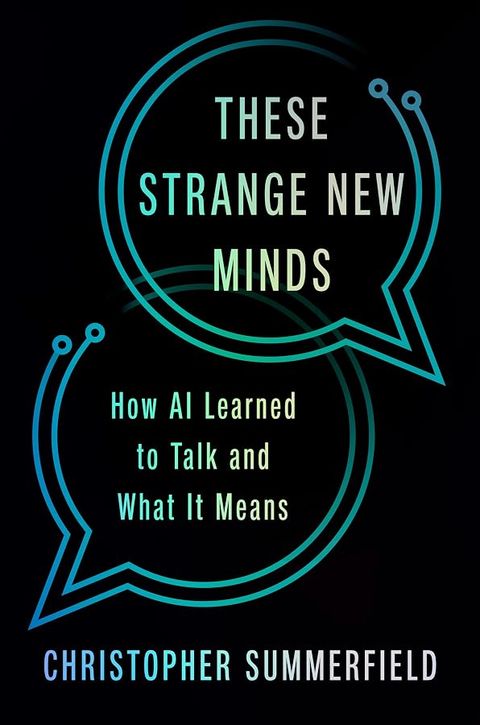
- These Strange New Minds Christopher Summerfield
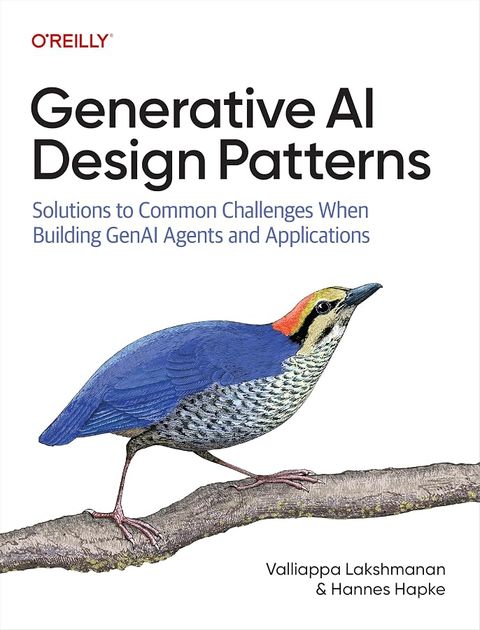
- Generative AI Design Patterns Valliappa Lakshmanan and Hannes Hapke
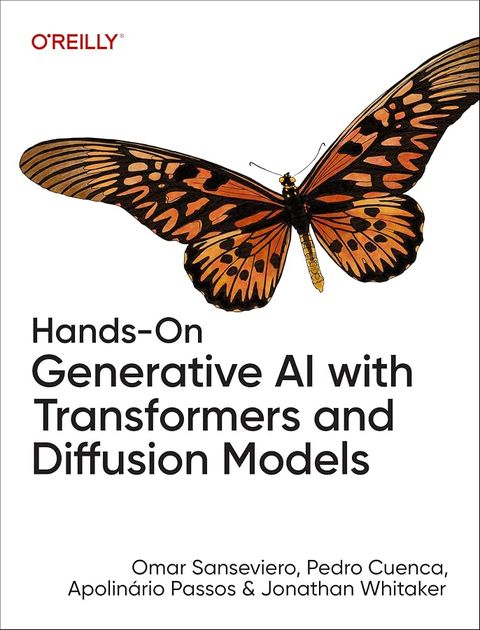
- Hands-On Generative AI with Transformers and Diffusion Models Omar Sanseviero, Pedro Cuenca, Apolinário Passos and Jonathan Whitaker
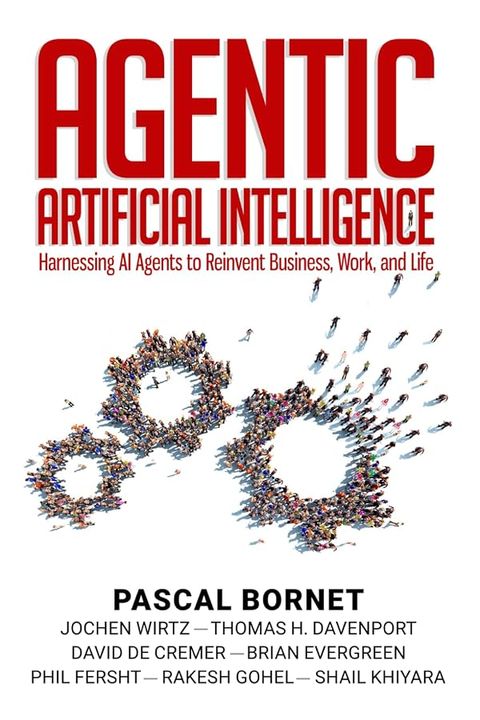
- Agentic Artificial Intelligence Pascal Bornet, Jochen Wirtz, Thomas H. Davenport, David De Cremer, Brian Evergreen, Phil Fersht, Rakesh Gohel and Shail Khiyara
- Agentic Design Patterns Antonio Gullí
- Building Applications with AI Agents Michael Albada
Sources
As an Amazon Associate, Best AI Books earns from qualifying purchases. Best AI Books is sponsored by Iternal.ai, whose founder and CEO, John Byron Hanby IV, wrote The AI Strategy Blueprint, our #1 ranked book. How we rank books.
