Algorithms for Decision Making
Synopsis
Mykel Kochenderfer, Tim Wheeler and Kyle Wray treat decision making under uncertainty as a single discipline and build it up in layers. Part one covers probabilistic reasoning: Bayesian networks, inference, parameter and structure learning, and utility-based choices made at a single moment. Part two moves to sequential problems, with exact and approximate dynamic programming, online planning, policy search, policy gradients and actor-critic methods. The remaining parts add model uncertainty, where an agent must learn by exploring; state uncertainty, handled through belief states and partially observable Markov decision processes; and multiagent settings, from game-theoretic reasoning to collaborative agents.
Every algorithm appears as compact Julia code beside the mathematics, and figures and exercises build intuition, so the book works both as a course text and as a reference for engineers. Examples include aircraft collision avoidance, a problem on which Kochenderfer's earlier work led to the ACAS X program. Appendices supply background in probability, computational complexity and neural representations. The book serves as the official lecture notes for Stanford's AA228/CS238 course, and a free PDF is available under a Creative Commons license. Readers gain a principled map connecting classical planning, modern reinforcement learning and the decision layer behind autonomous systems and AI agents.
Scorecard
Editorial score
How it scored
Editorial score: 78.0 / 1005 weighted criteria
- 21.0/30
Influence30%
- 22.5/25
Authority25%
- 16.0/20
Practical value20%
- 12.0/15
Currency15%
- 6.5/10
Readability10%
- 78.0/100
Editorial score
How the rank was computed
Rank No. 312 of 500 comes from a composite of 52.7: observable signals 17.6 of 55 points plus editorial review 35.1 of 45 points.
All 11 inputs
| Input | Points |
|---|---|
| Observable signals | 17.6/55 |
| Reach (Amazon ratings volume) | 5.5/16.5 |
| Consensus across best-of lists | 5.5/13.8 |
| Awards and bestseller evidence | 0.0/8.3 |
| Reader rating, sample-adjusted | 5.6/8.3 |
| Amazon sales rank | 1.0/5.5 |
| Recency | 0.0/2.8 |
| Editorial review | 35.1/45 |
| Author authority | 10.1/11.3 |
| Influence | 9.5/13.5 |
| Practical value | 7.2/9.0 |
| Readability | 2.9/4.5 |
| Currency | 5.4/6.8 |
Each criterion is scored from 1 to 10 and weighted, and the points add up to the editorial score. The rank combines observable signals (55 percent) with this score (45 percent). Read the methodology.
Verdict
A rigorous, freely available Stanford textbook that unifies planning, reinforcement learning and multiagent reasoning under uncertainty, with working Julia code.
Strengths
- Free, continually corrected PDF edition
- Unified notation across planning and learning
- Concise Julia implementations of every algorithm
Keep in mind
Demands comfort with probability and mathematical notation, and Python-first readers must translate from Julia; deep reinforcement learning practice gets less attention than foundations.
Key takeaways
- Most decision problems under uncertainty can be framed as Markov decision processes or their extensions, giving a common language for planning and learning.
- Reinforcement learning is presented as a response to model uncertainty, where an agent must balance exploring its environment against exploiting what it knows.
- When the true state is hidden, agents should plan over belief states, a framework that underlies robust robotics and autonomous navigation.
- Multiagent problems require game-theoretic reasoning, since each agent's best action depends on the choices and information of others.
Notable facts
- Stanford's AA228/CS238 course uses the book as its textbook and official lecture notes. Source (opens in a new tab)
- The full book is available as a free PDF under a Creative Commons CC BY-NC-ND license, while MIT Press sells the print edition. Source (opens in a new tab)
- Lead author Kochenderfer's earlier work at MIT Lincoln Laboratory on aircraft collision avoidance led to the establishment of the ACAS X program. Source (opens in a new tab)
About the author
Questions
Is Algorithms for Decision Making free?
Who should read Algorithms for Decision Making?
How does Algorithms for Decision Making relate to reinforcement learning?
Related books
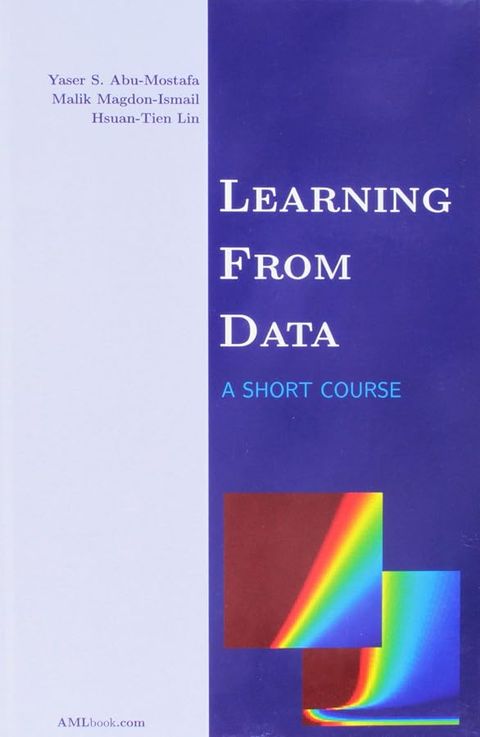
- Learning From Data Yaser S. Abu-Mostafa, Malik Magdon-Ismail and Hsuan-Tien Lin
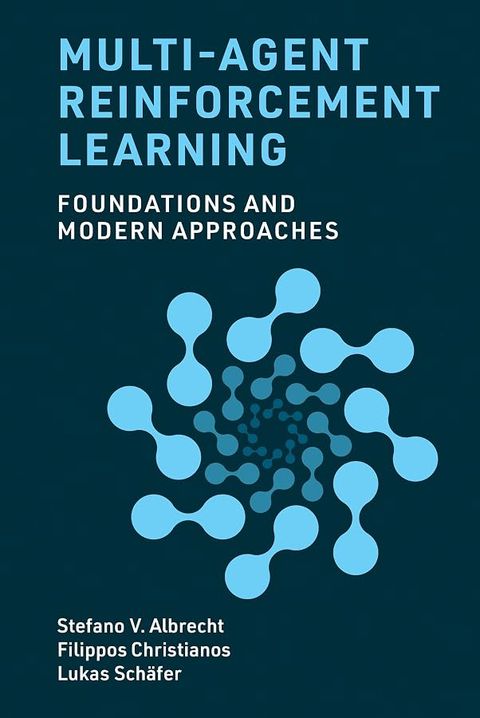
- Multi-Agent Reinforcement Learning Stefano V. Albrecht, Filippos Christianos and Lukas Schäfer
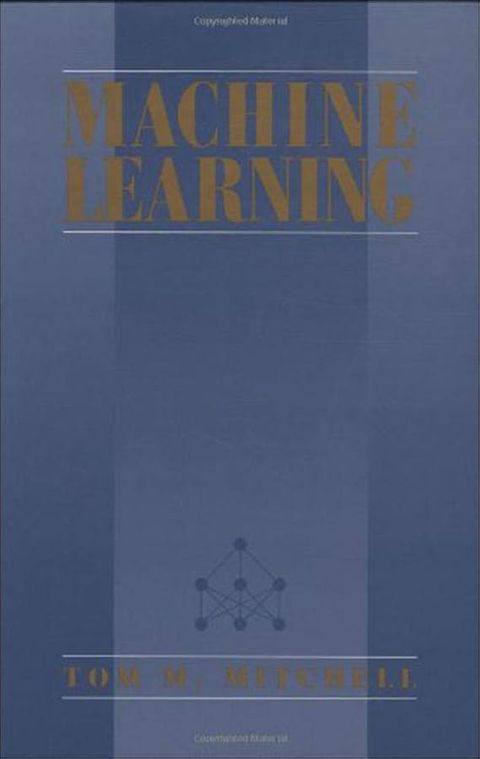
- Machine Learning Tom M. Mitchell
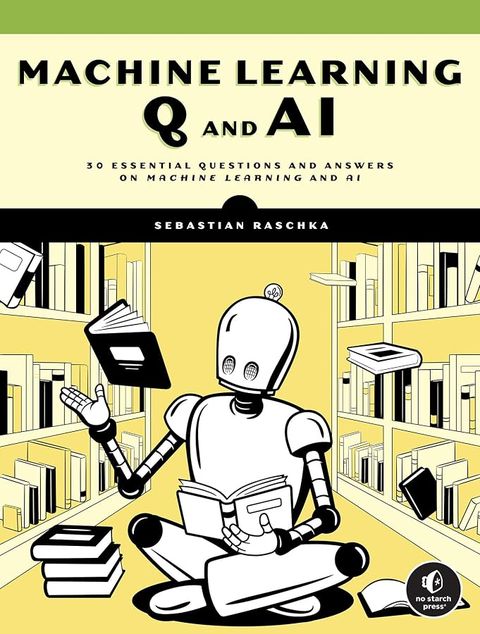
- Machine Learning Q and AI Sebastian Raschka
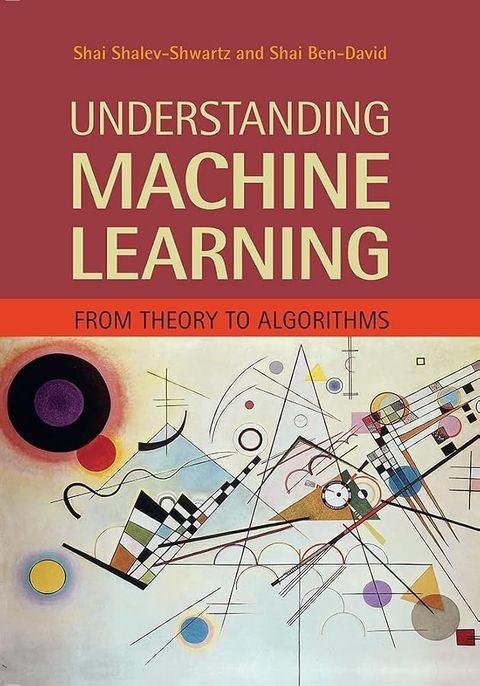
- Understanding Machine Learning Shai Shalev-Shwartz and Shai Ben-David
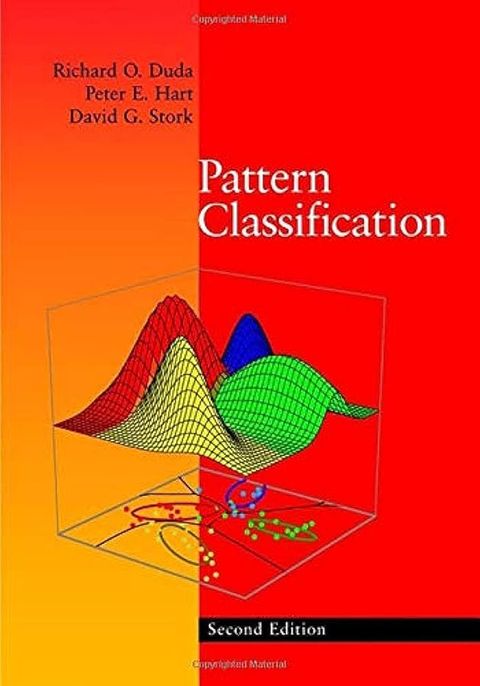
- Pattern Classification Richard O. Duda, Peter E. Hart and David G. Stork
Sources
As an Amazon Associate, Best AI Books earns from qualifying purchases. Best AI Books is sponsored by Iternal.ai, whose founder and CEO, John Byron Hanby IV, wrote The AI Strategy Blueprint, our #1 ranked book. How we rank books.
