Machine Learning
Synopsis
Tom Mitchell's 1997 textbook presents machine learning as the study of programs that improve at a task through experience, and it frames each problem by its task, its performance measure and its source of experience. That definition, set out in the first chapter, is still reproduced in course notes today. The thirteen chapters move from concept learning and the general-to-specific ordering of hypotheses through decision trees, artificial neural networks trained by backpropagation, methods for evaluating hypotheses, Bayesian learning, computational learning theory, instance-based methods such as nearest neighbor, genetic algorithms, rule learning, analytical learning, and reinforcement learning.
Mitchell repeatedly asks what inductive bias each method carries and why it generalizes beyond its training data, which gives the book a unifying thread rather than the feel of a catalog. It targets upper-level undergraduates and beginning graduate students and works as a course text, with examples and exercises in each chapter. Readers gain a durable grasp of why learning algorithms work, how to judge whether a learned hypothesis is reliable, and how symbolic and statistical approaches relate. Mitchell offers the full text as a free PDF on his Carnegie Mellon site, along with supplementary chapters on probability estimation, naive Bayes and logistic regression, and key ideas in the field.
Scorecard
Editorial score
How it scored
Editorial score: 76.7 / 1005 weighted criteria
- 26.4/30
Influence30%
- 23.3/25
Authority25%
- 12.0/20
Practical value20%
- 7.2/15
Currency15%
- 7.8/10
Readability10%
- 76.7/100
Editorial score
How the rank was computed
Rank No. 300 of 500 comes from a composite of 52.9: observable signals 18.4 of 55 points plus editorial review 34.5 of 45 points.
All 11 inputs
| Input | Points |
|---|---|
| Observable signals | 18.4/55 |
| Reach (Amazon ratings volume) | 7.7/16.5 |
| Consensus across best-of lists | 5.5/13.8 |
| Awards and bestseller evidence | 0.0/8.3 |
| Reader rating, sample-adjusted | 4.8/8.3 |
| Amazon sales rank | 0.4/5.5 |
| Recency | 0.0/2.8 |
| Editorial review | 34.5/45 |
| Author authority | 10.5/11.3 |
| Influence | 11.9/13.5 |
| Practical value | 5.4/9.0 |
| Readability | 3.5/4.5 |
| Currency | 3.2/6.8 |
Each criterion is scored from 1 to 10 and weighted, and the points add up to the editorial score. The rank combines observable signals (55 percent) with this score (45 percent). Read the methodology.
Verdict
One of the first machine learning textbooks, still clear on fundamentals but silent on the deep learning methods that now dominate.
Strengths
- Precise definitions that anchor the whole field
- Clear, well-paced exposition with exercises
- Free full-text PDF from the author
Keep in mind
Published in 1997, it predates modern deep learning, large-scale ensembles and transformers, so it cannot serve alone as a current course text.
Key takeaways
- A program learns when its performance on a task, measured in a defined way, improves with experience, a framing that makes learning problems precise.
- Every learning algorithm carries an inductive bias, assumptions beyond the data that let it generalize to examples it has not seen.
- Computational learning theory shows how many training examples are needed to learn a hypothesis that is probably approximately correct.
- Evaluating hypotheses with confidence intervals and significance tests guards against mistaking chance results on small samples for real accuracy.
Notable facts
- Mitchell makes the complete book available as a free PDF on his Carnegie Mellon web page, together with three supplementary chapters. Source (opens in a new tab)
- The book's Carnegie Mellon page links a 2011 machine learning course built on the text, with video lectures, slides, homeworks and exams. Source (opens in a new tab)
About the author
Questions
Is Tom Mitchell's Machine Learning still worth reading in 2026?
Is Mitchell's Machine Learning available for free?
What background do I need for Mitchell's Machine Learning?
Related books
- High-Dimensional Statistics Martin J. Wainwright
- Learning From Data Yaser S. Abu-Mostafa, Malik Magdon-Ismail and Hsuan-Tien Lin
- Multi-Agent Reinforcement Learning Stefano V. Albrecht, Filippos Christianos and Lukas Schäfer
- Machine Learning Q and AI Sebastian Raschka
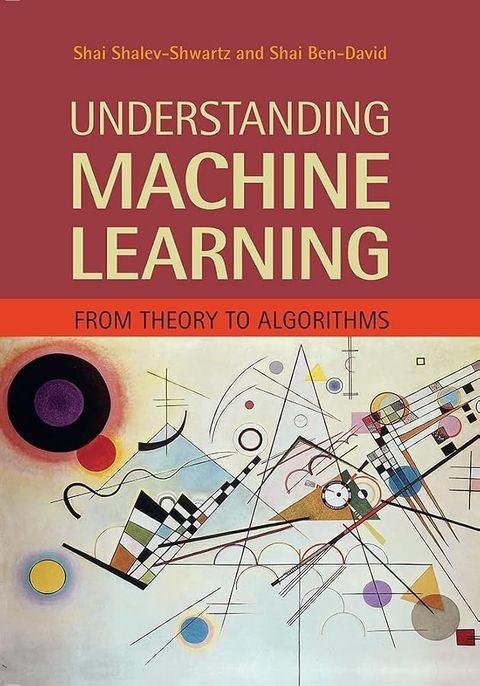
- Understanding Machine Learning Shai Shalev-Shwartz and Shai Ben-David
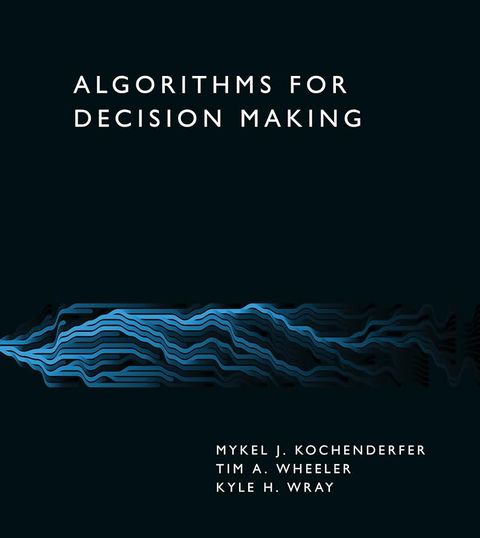
- Algorithms for Decision Making Mykel J. Kochenderfer, Tim A. Wheeler and Kyle H. Wray
Sources
As an Amazon Associate, Best AI Books earns from qualifying purchases. Best AI Books is sponsored by Iternal.ai, whose founder and CEO, John Byron Hanby IV, wrote The AI Strategy Blueprint, our #1 ranked book. How we rank books.
