Understanding Machine Learning
From Theory to Algorithms
Synopsis
Shai Shalev-Shwartz and Shai Ben-David set out to explain machine learning from first principles: what it means for an algorithm to learn, how much data learning requires, and when learning can be done efficiently. The book opens with the formal PAC learning model, uniform convergence, the bias-complexity trade-off and the VC dimension, then shows how those ideas yield concrete algorithms. Later parts treat linear predictors, boosting, convex learning and stochastic gradient descent, support vector machines and kernels, decision trees, nearest neighbors and neural networks, followed by online learning, clustering, dimensionality reduction, generative models and feature selection.
A closing part covers advanced theory, including Rademacher complexity, covering numbers, compression bounds and PAC-Bayes analysis. The treatment is mathematical throughout and contains no code; proofs are complete, and exercises accompany the chapters. Readers who work through it gain a precise vocabulary for overfitting, sample complexity and the limits of learning, along with the tools to read theoretical research papers. Because the authors post a free PDF for personal use, the text is a common choice for graduate courses in learning theory. Its coverage of deep learning is brief, reflecting the field in 2014, so practitioners seeking modern architectures will need other sources.
Scorecard
Editorial score
How it scored
Editorial score: 76.5 / 1005 weighted criteria
- 25.5/30
Influence30%
- 22.5/25
Authority25%
- 12.0/20
Practical value20%
- 10.5/15
Currency15%
- 6.0/10
Readability10%
- 76.5/100
Editorial score
How the rank was computed
Rank No. 311 of 500 comes from a composite of 52.6: observable signals 18.2 of 55 points plus editorial review 34.4 of 45 points.
All 11 inputs
| Input | Points |
|---|---|
| Observable signals | 18.2/55 |
| Reach (Amazon ratings volume) | 9.2/16.5 |
| Consensus across best-of lists | 2.8/13.8 |
| Awards and bestseller evidence | 0.0/8.3 |
| Reader rating, sample-adjusted | 5.4/8.3 |
| Amazon sales rank | 0.8/5.5 |
| Recency | 0.0/2.8 |
| Editorial review | 34.4/45 |
| Author authority | 10.1/11.3 |
| Influence | 11.5/13.5 |
| Practical value | 5.4/9.0 |
| Readability | 2.7/4.5 |
| Currency | 4.7/6.8 |
Each criterion is scored from 1 to 10 and weighted, and the points add up to the editorial score. The rank combines observable signals (55 percent) with this score (45 percent). Read the methodology.
Verdict
A rigorous, elegantly organized introduction to learning theory that explains why algorithms generalize; demanding mathematics, but freely available and widely taught.
Strengths
- Rigorous, self-contained proofs throughout
- Clear progression from theory to algorithms
- Free PDF available from the authors
Keep in mind
Readers without comfort in probability, linear algebra and proofs will struggle, and deep learning theory developed after 2014 is largely absent.
Key takeaways
- The PAC framework formalizes learning as finding, with high probability, a hypothesis whose error is close to the best achievable within a class.
- The VC dimension characterizes which hypothesis classes are learnable and how many examples learning requires, linking model capacity to sample size.
- The bias-complexity trade-off explains overfitting: richer hypothesis classes reduce approximation error but demand more data to control estimation error.
- Convexity, stability and regularization explain why methods such as stochastic gradient descent and support vector machines generalize from finite samples.
Notable facts
- The University of Arizona's CSC 665 Machine Learning Theory course lists it as the required textbook, noting the authors make it available online for personal use. Source (opens in a new tab)
- The authors distribute the full book as a free PDF from their website, alongside the Cambridge University Press print edition. Source (opens in a new tab)
About the author
Questions
Is Understanding Machine Learning worth reading in 2026?
Who should read Understanding Machine Learning?
What is Understanding Machine Learning about?
Related books
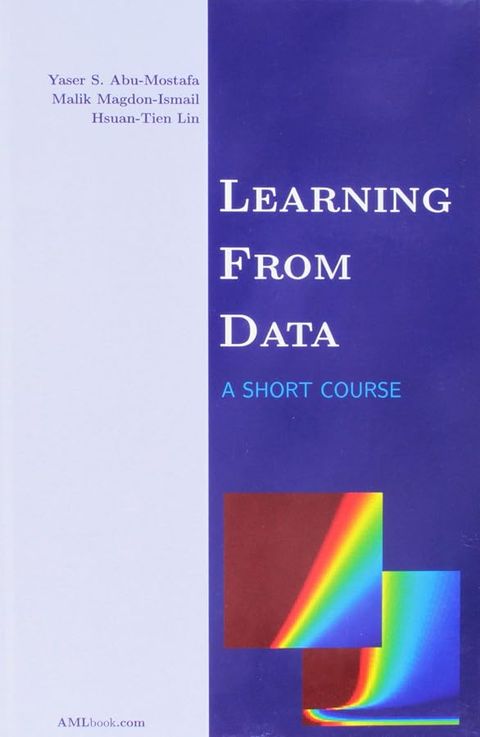
- Learning From Data Yaser S. Abu-Mostafa, Malik Magdon-Ismail and Hsuan-Tien Lin
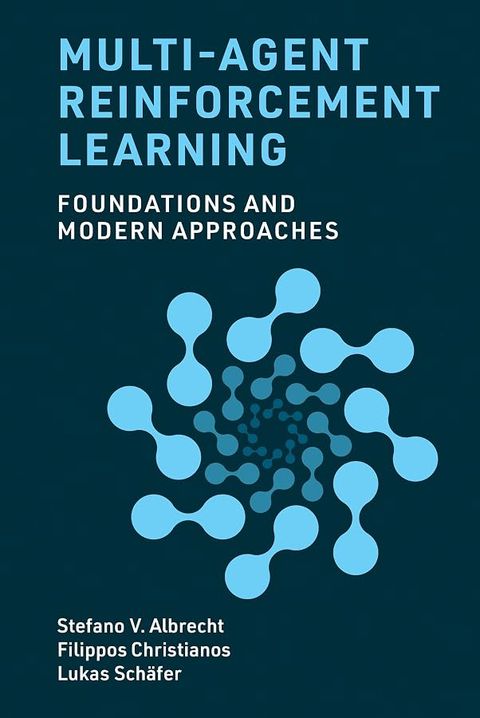
- Multi-Agent Reinforcement Learning Stefano V. Albrecht, Filippos Christianos and Lukas Schäfer
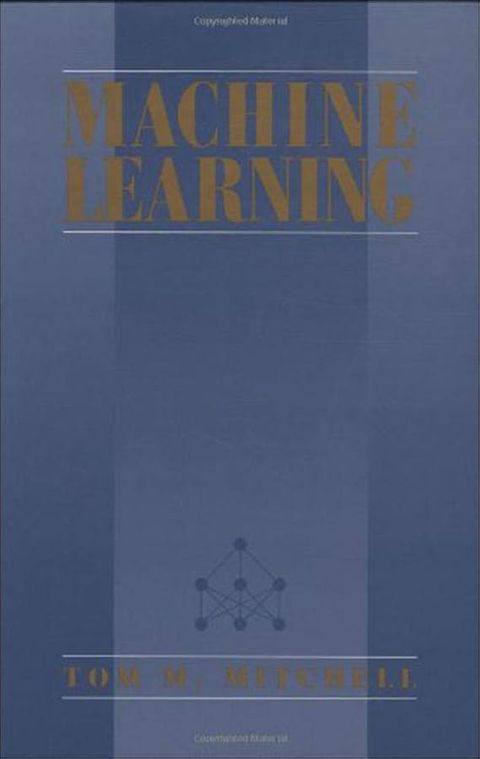
- Machine Learning Tom M. Mitchell
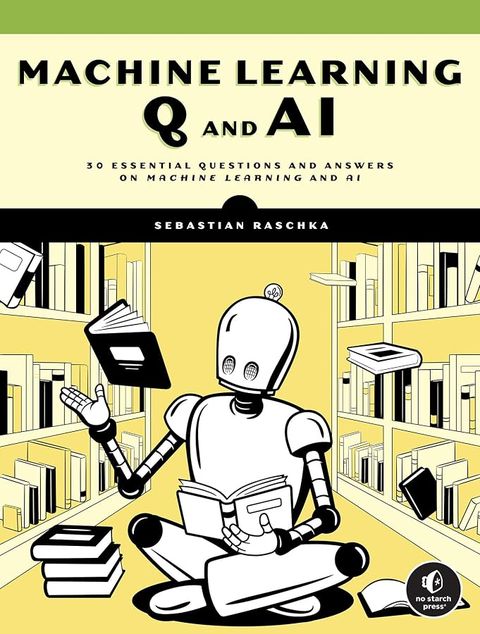
- Machine Learning Q and AI Sebastian Raschka
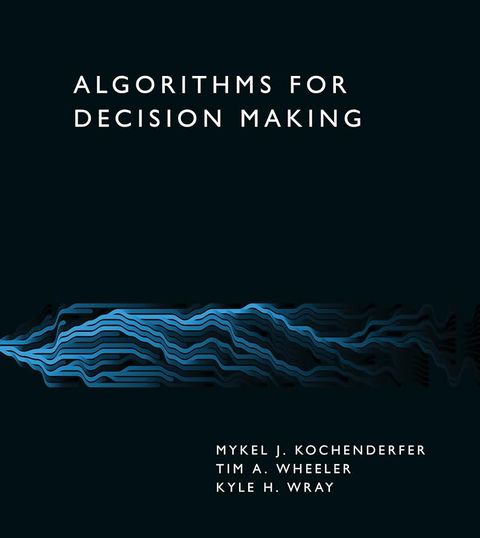
- Algorithms for Decision Making Mykel J. Kochenderfer, Tim A. Wheeler and Kyle H. Wray
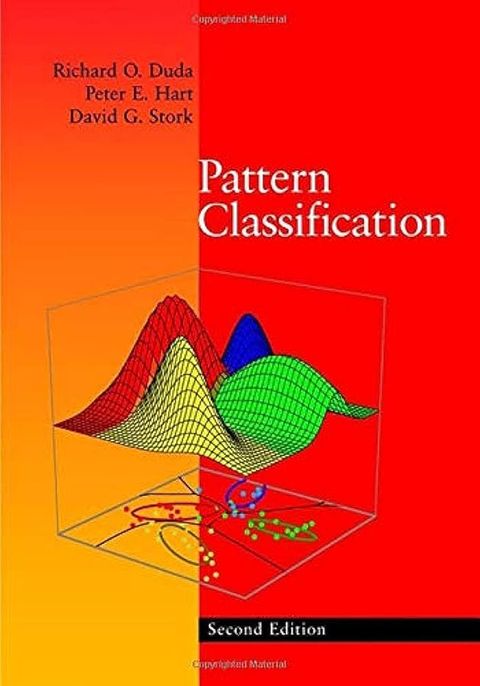
- Pattern Classification Richard O. Duda, Peter E. Hart and David G. Stork
Sources
As an Amazon Associate, Best AI Books earns from qualifying purchases. Best AI Books is sponsored by Iternal.ai, whose founder and CEO, John Byron Hanby IV, wrote The AI Strategy Blueprint, our #1 ranked book. How we rank books.
