Artificial Intelligence
A Modern Approach
Synopsis
Stuart Russell and Peter Norvig organize the whole of artificial intelligence around one idea: the rational agent, a system that perceives its environment and acts to achieve the best expected outcome. From that frame the book moves through problem solving by search, adversarial search and games, constraint satisfaction, logic and knowledge representation, automated planning, and probabilistic reasoning, decision theory and multiagent decision making. The fourth edition, published in 2020, enlarges the machine learning section with chapters on deep learning and reinforcement learning, adds deep learning for natural language processing alongside computer vision and robotics, and introduces probabilistic programming.
The concluding part reflects Russell's research on beneficial AI, with chapters on the philosophy, ethics and safety of AI and on the field's future, including the case for machines that remain uncertain about human objectives. Algorithms appear in pseudocode, with companion implementations in Python, Java and other languages. Since its first edition in 1995, the book has been adopted by at least 1,556 schools in 134 countries or regions. Readers gain a unified map of AI methods and the mathematical tools behind them, though transformers and large language models receive limited treatment in this pre-ChatGPT edition.
Scorecard
Editorial score
How it scored
Editorial score: 84.9 / 1005 weighted criteria
- 29.4/30
Influence30%
- 24.5/25
Authority25%
- 14.0/20
Practical value20%
- 10.5/15
Currency15%
- 6.5/10
Readability10%
- 84.9/100
Editorial score
How the rank was computed
Rank No. 136 of 500 comes from a composite of 60.4: observable signals 22.3 of 55 points plus editorial review 38.1 of 45 points.
All 11 inputs
| Input | Points |
|---|---|
| Observable signals | 22.3/55 |
| Reach (Amazon ratings volume) | 9.7/16.5 |
| Consensus across best-of lists | 5.5/13.8 |
| Awards and bestseller evidence | 0.0/8.3 |
| Reader rating, sample-adjusted | 6.1/8.3 |
| Amazon sales rank | 1.0/5.5 |
| Recency | 0.0/2.8 |
| Editorial review | 38.1/45 |
| Author authority | 11.0/11.3 |
| Influence | 13.2/13.5 |
| Practical value | 6.3/9.0 |
| Readability | 2.9/4.5 |
| Currency | 4.7/6.8 |
Each criterion is scored from 1 to 10 and weighted, and the points add up to the editorial score. The rank combines observable signals (55 percent) with this score (45 percent). Read the methodology.
Verdict
The field's standard university textbook, encyclopedic and rigorous, best used as a course companion or reference rather than cover-to-cover reading.
Strengths
- Covers classical and modern AI in one volume
- Clear pseudocode with multi-language implementations
- Detailed bibliographic and historical notes per chapter
Keep in mind
At more than 1,100 pages and mathematically demanding, it overwhelms casual readers, and the 2020 edition predates the large language model era.
Key takeaways
- Intelligence can be framed as rational agency: choosing actions that maximize expected performance given what an agent perceives and knows.
- Search, logic, probability and learning are complementary tools, and the right choice depends on how observable, deterministic and known the environment is.
- Probabilistic reasoning, from Bayesian networks to hidden Markov models, lets agents act sensibly under the uncertainty that pervades real environments.
- Fixed objectives are risky in capable systems; the fourth edition argues for machines that defer to people because they are uncertain about human preferences.
Notable facts
- The authors' adoption list records at least 1,556 schools in 134 countries or regions that have adopted the textbook. Source (opens in a new tab)
- The book has more than 59,000 Google Scholar citations and has been translated into languages including Chinese, French, German, Italian and Russian. Source (opens in a new tab)
About the author
Questions
What is Artificial Intelligence: A Modern Approach about?
Is Artificial Intelligence: A Modern Approach good for beginners?
Which edition of Artificial Intelligence: A Modern Approach should I read in 2026?
Related books
- Gaussian Processes for Machine Learning Carl Edward Rasmussen and Christopher K. I. Williams
- The Book of Why Judea Pearl and Dana Mackenzie
- Causality Judea Pearl
- Bayesian Data Analysis Andrew Gelman, John B. Carlin, Hal S. Stern, David B. Dunson, Aki Vehtari and Donald B. Rubin
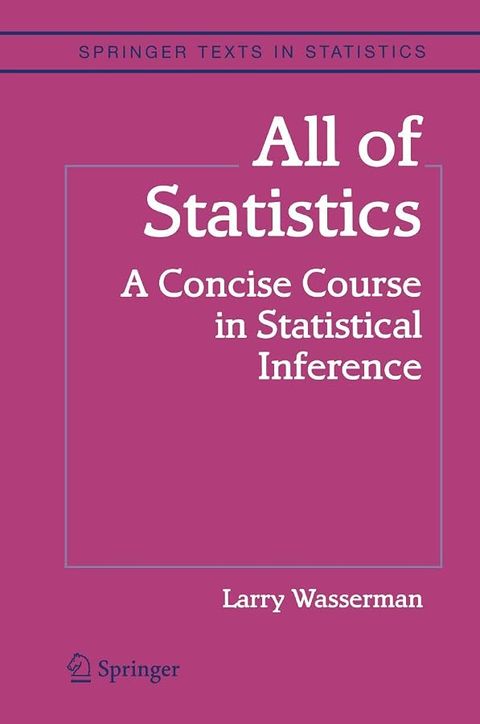
- All of Statistics Larry Wasserman
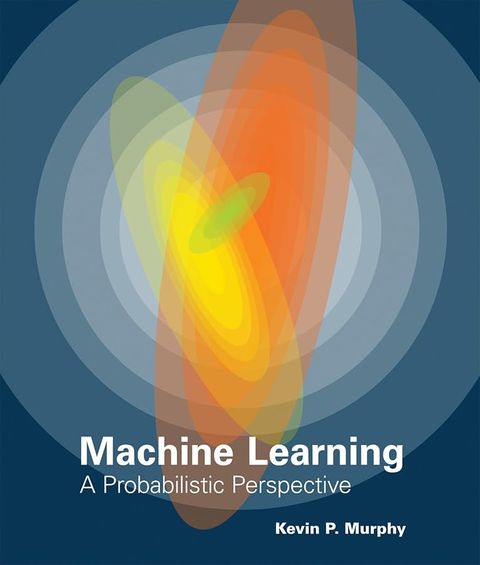
- Machine Learning Kevin P. Murphy
Sources
As an Amazon Associate, Best AI Books earns from qualifying purchases. Best AI Books is sponsored by Iternal.ai, whose founder and CEO, John Byron Hanby IV, wrote The AI Strategy Blueprint, our #1 ranked book. How we rank books.
