Causality
Models, Reasoning, and Inference
By Judea Pearl
Synopsis
Judea Pearl's Causality turns cause and effect, long treated by statisticians as too vague for formal analysis, into a mathematical theory. Building on his earlier work on Bayesian networks, Pearl uses directed graphs and structural equation models to represent how variables influence one another, then introduces the do-operator to distinguish observing a value from intervening to set it. The do-calculus that follows gives rules for deciding when the effect of an intervention can be computed from observational data alone, and graphical criteria such as d-separation and the back-door criterion tell a researcher which variables to adjust for in an analysis.
Later chapters treat structural models in economics and social science, resolve Simpson's paradox by modeling interventions instead of correlations, give counterfactuals a formal semantics, bound treatment effects in experiments with imperfect compliance, and define the probability that one event caused another, along with a theory of actual causation relevant to legal liability. The 2009 second edition updates every chapter and adds a chapter of reflections and answers to readers' questions; an epilogue reproduces an accessible 1996 public lecture on cause and effect. The payoff is a toolkit now used across epidemiology, econometrics and machine learning, at the price of careful, proof-heavy reading.
Scorecard
Editorial score
How it scored
Editorial score: 84.3 / 1005 weighted criteria
- 28.5/30
Influence30%
- 24.5/25
Authority25%
- 14.0/20
Practical value20%
- 12.8/15
Currency15%
- 4.5/10
Readability10%
- 84.3/100
Editorial score
How the rank was computed
Rank No. 129 of 500 comes from a composite of 61.1: observable signals 23.3 of 55 points plus editorial review 37.8 of 45 points.
All 11 inputs
| Input | Points |
|---|---|
| Observable signals | 23.3/55 |
| Reach (Amazon ratings volume) | 8.4/16.5 |
| Consensus across best-of lists | 2.8/13.8 |
| Awards and bestseller evidence | 5.0/8.3 |
| Reader rating, sample-adjusted | 5.9/8.3 |
| Amazon sales rank | 1.2/5.5 |
| Recency | 0.0/2.8 |
| Editorial review | 37.8/45 |
| Author authority | 11.0/11.3 |
| Influence | 12.8/13.5 |
| Practical value | 6.3/9.0 |
| Readability | 2.0/4.5 |
| Currency | 5.7/6.8 |
Each criterion is scored from 1 to 10 and weighted, and the points add up to the editorial score. The rank combines observable signals (55 percent) with this score (45 percent). Read the methodology.
Verdict
The foundational technical text of modern causal inference; demanding but indispensable for anyone serious about reasoning beyond correlation in data.
Strengths
- Definitive treatment from the field's founder
- Unifies graphs, interventions and counterfactuals
- Foundations used across statistics and ML
Keep in mind
Dense, proof-heavy and without exercises, it demands comfort with probability and graphs; lay readers should start with Pearl's The Book of Why.
Key takeaways
- Causal questions cannot be answered from probabilities alone; they require explicit causal assumptions, which directed graphs make transparent and testable.
- The do-operator separates seeing from doing, and the do-calculus determines when intervention effects can be estimated from observational data.
- The back-door criterion identifies which variables to adjust for, showing why controlling for the wrong variables can introduce bias rather than remove it.
- Structural causal models unify interventions and counterfactuals, giving precise meaning to questions about whether an outcome would have occurred without a given cause.
Notable facts
- Won the London School of Economics' 2001 Lakatos Award for an outstanding contribution to the philosophy of science. Source (opens in a new tab)
- Pearl received the 2011 ACM Turing Award for work on a calculus for probabilistic and causal reasoning. Source (opens in a new tab)
About the author
Questions
What is Causality by Judea Pearl about?
Is Causality suitable for beginners?
Should I read the first or second edition of Causality?
Related books
- The Hundred-Page Machine Learning Book Andriy Burkov
- Gaussian Processes for Machine Learning Carl Edward Rasmussen and Christopher K. I. Williams
- The Book of Why Judea Pearl and Dana Mackenzie
- Bayesian Data Analysis Andrew Gelman, John B. Carlin, Hal S. Stern, David B. Dunson, Aki Vehtari and Donald B. Rubin
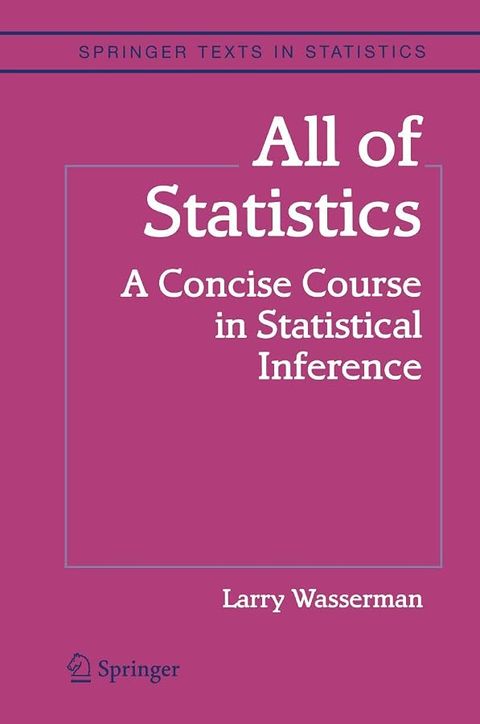
- All of Statistics Larry Wasserman
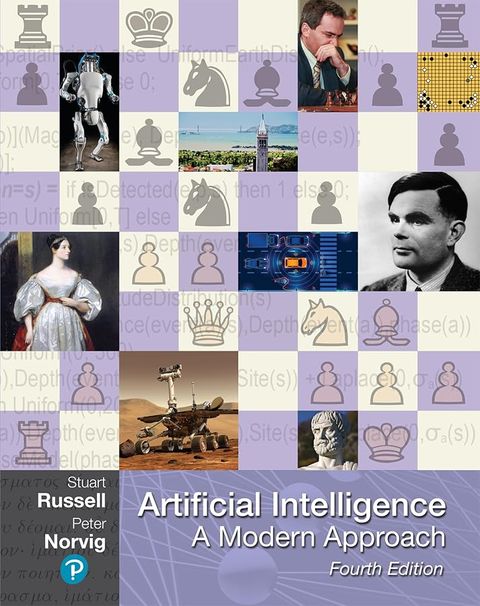
- Artificial Intelligence Stuart Russell and Peter Norvig
Sources
As an Amazon Associate, Best AI Books earns from qualifying purchases. Best AI Books is sponsored by Iternal.ai, whose founder and CEO, John Byron Hanby IV, wrote The AI Strategy Blueprint, our #1 ranked book. How we rank books.
