Bayesian Data Analysis
By Andrew Gelman, John B. Carlin, Hal S. Stern, David B. Dunson, Aki Vehtari and Donald B. Rubin
Synopsis
First published in 1995 and now in a third edition (2013), Bayesian Data Analysis teaches statistics as a cycle of building a probability model, fitting it to data and checking how well it fits. The opening chapters set out the fundamentals: single-parameter and multiparameter models, the role of prior distributions, and hierarchical models that pool information across groups. Later parts cover model checking and comparison, decision analysis, the computational machinery of Markov chain Monte Carlo and Hamiltonian Monte Carlo, regression and generalized linear models, mixture models, and nonparametric methods such as Gaussian processes and Dirichlet processes.
The authors favor worked examples drawn from real research, such as the eight-schools educational testing study and bioassay dose-response data, over abstract derivation, and they promote weakly informative priors and posterior predictive checks. They also post a free PDF for non-commercial use, with datasets and demonstration code in R, Python and Stan. For machine-learning readers, the book supplies the probabilistic foundation behind uncertainty quantification, Gaussian process models and probabilistic programming. It assumes comfort with calculus and probability, so newcomers may want a gentler text first. Readers gain a disciplined workflow for fitting, criticizing and improving statistical models.
Scorecard
Editorial score
How it scored
Editorial score: 82.1 / 1005 weighted criteria
- 27.0/30
Influence30%
- 23.8/25
Authority25%
- 15.0/20
Practical value20%
- 11.3/15
Currency15%
- 5.0/10
Readability10%
- 82.1/100
Editorial score
How the rank was computed
Rank No. 131 of 500 comes from a composite of 61.2: observable signals 24.1 of 55 points plus editorial review 37.1 of 45 points.
All 11 inputs
| Input | Points |
|---|---|
| Observable signals | 24.1/55 |
| Reach (Amazon ratings volume) | 8.8/16.5 |
| Consensus across best-of lists | 2.8/13.8 |
| Awards and bestseller evidence | 5.0/8.3 |
| Reader rating, sample-adjusted | 6.5/8.3 |
| Amazon sales rank | 1.0/5.5 |
| Recency | 0.0/2.8 |
| Editorial review | 37.1/45 |
| Author authority | 10.7/11.3 |
| Influence | 12.2/13.5 |
| Practical value | 6.8/9.0 |
| Readability | 2.3/4.5 |
| Currency | 5.1/6.8 |
Each criterion is scored from 1 to 10 and weighted, and the points add up to the editorial score. The rank combines observable signals (55 percent) with this score (45 percent). Read the methodology.
Verdict
The standard applied reference on Bayesian statistics and a core text for probabilistic modelers, though too demanding as a first course.
Strengths
- Authoritative coverage from leaders in the field
- Worked examples drawn from real research
- Free PDF with code and datasets
Keep in mind
Dense and mathematically demanding, it suits readers trained in calculus and probability; beginners may struggle without a gentler introduction first.
Key takeaways
- Bayesian analysis is a loop: build a model, fit it, check it against data with posterior predictive checks, then revise it.
- Hierarchical models partially pool information across groups, producing more stable estimates than analyzing each group alone or lumping all groups together.
- Weakly informative priors regularize estimates and stabilize computation without imposing strong beliefs, a practice the third edition favors over flat priors.
- Modern computation, especially Hamiltonian Monte Carlo as implemented in Stan, makes complex models practical, but convergence diagnostics remain essential.
Notable facts
- The International Society for Bayesian Analysis lists the third edition as its 2015 DeGroot Prize winner. Source (opens in a new tab)
- The authors provide the third edition as a free PDF for non-commercial use, with datasets and demonstration code. Source (opens in a new tab)
About the author
Questions
Is Bayesian Data Analysis good for beginners?
Why does Bayesian Data Analysis matter for machine learning?
Is there a free version of Bayesian Data Analysis?
Related books
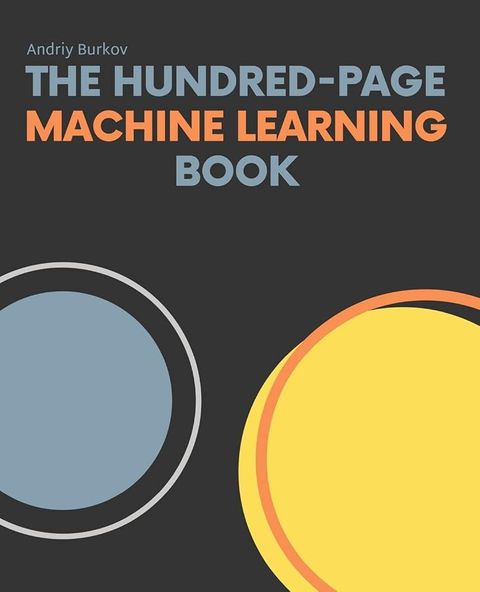
- The Hundred-Page Machine Learning Book Andriy Burkov
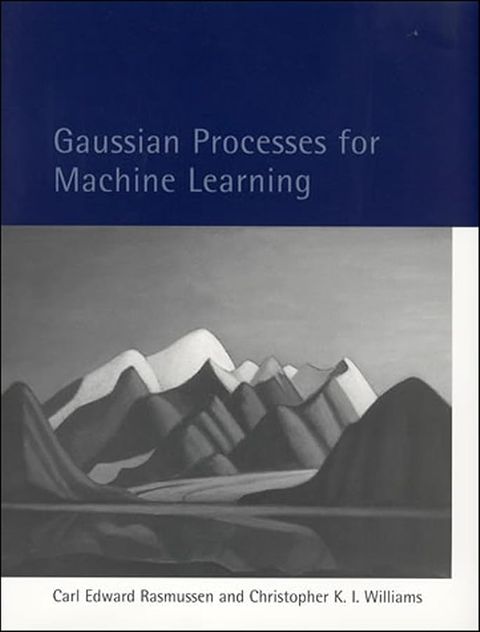
- Gaussian Processes for Machine Learning Carl Edward Rasmussen and Christopher K. I. Williams
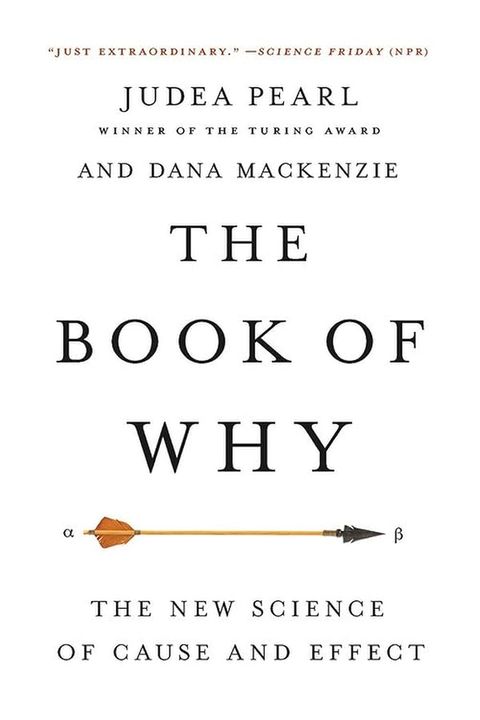
- The Book of Why Judea Pearl and Dana Mackenzie
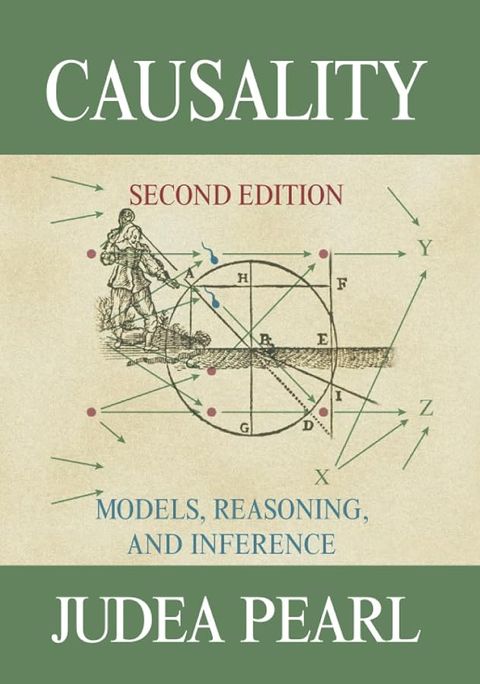
- Causality Judea Pearl
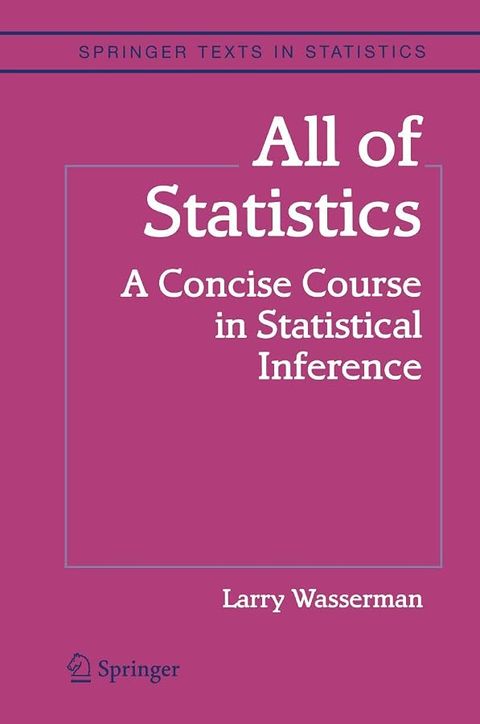
- All of Statistics Larry Wasserman
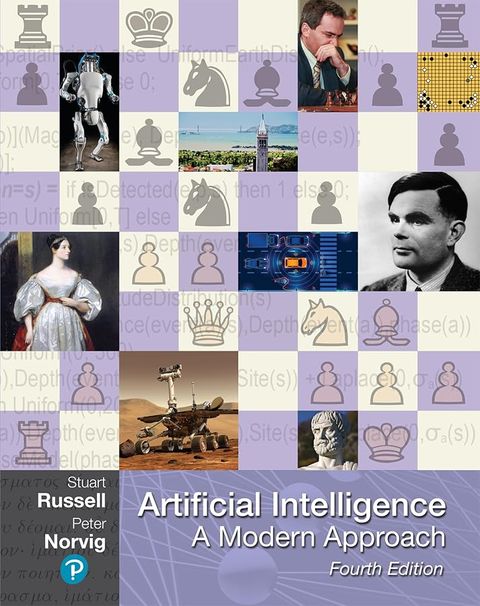
- Artificial Intelligence Stuart Russell and Peter Norvig
Sources
As an Amazon Associate, Best AI Books earns from qualifying purchases. Best AI Books is sponsored by Iternal.ai, whose founder and CEO, John Byron Hanby IV, wrote The AI Strategy Blueprint, our #1 ranked book. How we rank books.
