Digital Transformation
Survive and Thrive in an Era of Mass Extinction
Synopsis
Tom Siebel frames corporate change through evolutionary biology: just as mass extinctions clear space for new species, he argues, a convergence of technologies is eliminating incumbent companies and rewarding those that adapt. The four technologies are elastic cloud computing, big data, artificial intelligence and the internet of things, and the book gives each a plain-language treatment that explains what it is, why it matured when it did, and what it makes possible, from predictive maintenance to smarter product development. He separates this shift from earlier waves of digitization, which automated existing processes without changing the underlying business.
The second half moves from technology to practice. Siebel profiles organizations such as Enel, ENGIE, 3M, Royal Dutch Shell and the U.S. Department of Defense, many of them C3.ai customers, and argues that transformation is a chief executive's responsibility rather than an IT project. A section on national security weighs China's state-backed AI strategy against American efforts, and Condoleezza Rice contributes the foreword. Readers gain a coherent vocabulary for these technologies and a strategic argument for urgency, written before generative AI reshaped the corporate conversation.
Scorecard
Editorial score
How it scored
Editorial score: 63.3 / 1005 weighted criteria
- 19.5/30
Influence30%
- 17.5/25
Authority25%
- 12.0/20
Practical value20%
- 6.8/15
Currency15%
- 7.5/10
Readability10%
- 63.3/100
Editorial score
How the rank was computed
Rank No. 448 of 500 comes from a composite of 48.4: observable signals 19.9 of 55 points plus editorial review 28.5 of 45 points.
All 11 inputs
| Input | Points |
|---|---|
| Observable signals | 19.9/55 |
| Reach (Amazon ratings volume) | 10.7/16.5 |
| Consensus across best-of lists | 2.8/13.8 |
| Awards and bestseller evidence | 0.0/8.3 |
| Reader rating, sample-adjusted | 6.1/8.3 |
| Amazon sales rank | 0.3/5.5 |
| Recency | 0.0/2.8 |
| Editorial review | 28.5/45 |
| Author authority | 7.9/11.3 |
| Influence | 8.8/13.5 |
| Practical value | 5.4/9.0 |
| Readability | 3.4/4.5 |
| Currency | 3.0/6.8 |
Each criterion is scored from 1 to 10 and weighted, and the points add up to the editorial score. The rank combines observable signals (55 percent) with this score (45 percent). Read the methodology.
Verdict
A clear executive primer on cloud, big data, AI and IoT, though its C3.ai-centered examples and 2019 vantage now show their age.
Strengths
- Clear explanations of four core technologies
- Enterprise case studies across energy and defense
- Frames transformation as a CEO-level responsibility
Keep in mind
Many examples come from C3.ai's customer base, giving the book a vendor's perspective, and its 2019 vantage omits generative AI entirely.
Key takeaways
- Siebel argues that cloud computing, big data, AI and IoT reinforce one another, so their combined effect on business exceeds the impact of any single technology.
- Digital transformation means redesigning core operations and business models, not digitizing existing processes, which earlier waves of computing largely did.
- Because transformation cuts across every function, Siebel assigns ownership to the CEO rather than to the IT department or a separate digital office.
- He presents U.S.-China competition in AI as an economic and military contest in which both corporate and government adoption shape the outcome.
Notable facts
- Former U.S. Secretary of State Condoleezza Rice wrote the foreword. Source (opens in a new tab)
- Reviewing it for Inside Higher Ed, Joshua Kim called Siebel's explanations of the four technologies 'among the clearest that I've read' and judged the book 'no vanity project.' Source (opens in a new tab)
About the author
Questions
What does Digital Transformation by Tom Siebel argue?
Is Digital Transformation still relevant in 2026?
Who should read Digital Transformation by Tom Siebel?
Related books
- Superminds Thomas W. Malone
- The Technology Fallacy Gerald C. Kane, Anh Nguyen Phillips, Jonathan R. Copulsky and Garth R. Andrus
- HBR's 10 Must Reads on AI, Analytics, and the New Machine Age Harvard Business Review, Thomas H. Davenport and Michael E. Porter
- Generative AI Harvard Business Review, Ethan Mollick, David De Cremer, Tsedal Neeley and Prabhakant Sinha
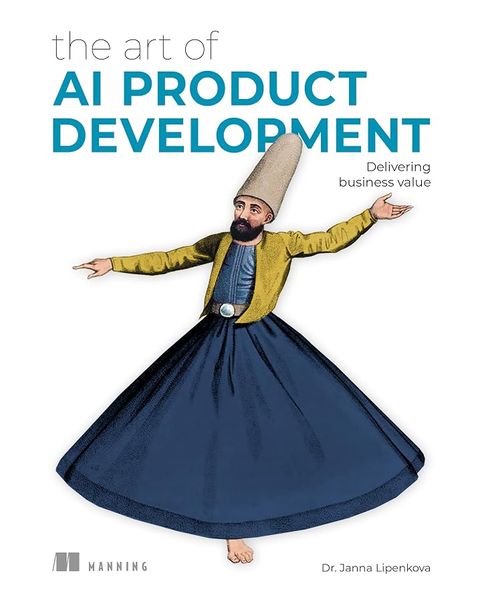
- The Art of AI Product Development Janna Lipenkova
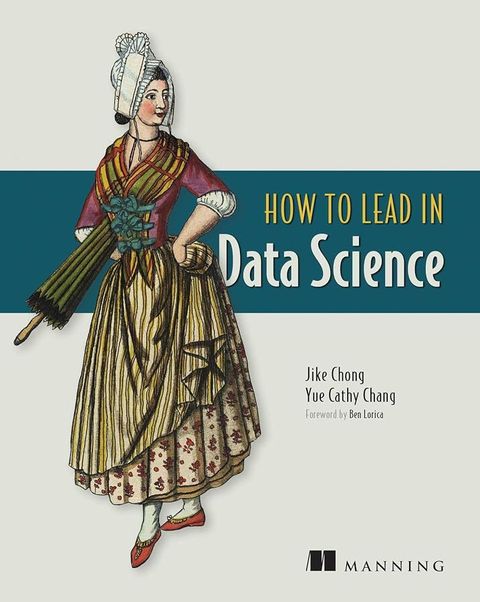
- How to Lead in Data Science Jike Chong and Yue Cathy Chang
Sources
As an Amazon Associate, Best AI Books earns from qualifying purchases. Best AI Books is sponsored by Iternal.ai, whose founder and CEO, John Byron Hanby IV, wrote The AI Strategy Blueprint, our #1 ranked book. How we rank books.
