HBR's 10 Must Reads on AI, Analytics, and the New Machine Age
By Harvard Business Review, Thomas H. Davenport and Michael E. Porter
Synopsis
This 2019 volume in Harvard Business Review's 10 Must Reads series gathers magazine articles from 2015 to 2018 on artificial intelligence, analytics and the technologies around them. The anchor piece is Thomas H. Davenport and Rajeev Ronanki's "Artificial Intelligence for the Real World," which studied 152 corporate AI projects, sorted them into process automation, cognitive insight and cognitive engagement, and found that modest, well-scoped projects succeed more often than moonshots. H. James Wilson and Paul Daugherty's "Collaborative Intelligence" argues that companies gain most when people and machines amplify each other, and Michael Luca, Jon Kleinberg and Sendhil Mullainathan explain why algorithms need managers who understand their blind spots.
The remaining pieces widen the lens beyond AI: Michael Porter and James Heppelmann on augmented reality strategy, Chris Anderson on commercial drones, Marco Iansiti and Karim Lakhani on blockchain and on the hub firms that dominate networked markets, Richard D'Aveni on 3-D printing, Niraj Dawar on voice assistants in marketing, and Stitch Fix founder Katrina Lake on pairing algorithms with human stylists. Each article opens with an Idea in Brief summary, so a busy reader can grasp the argument before committing to the full text. The result is a quick, credible snapshot of how management thinkers framed the pre-ChatGPT machine age, and several of its frameworks still help leaders judge where automation adds value.
Scorecard
Editorial score
How it scored
Editorial score: 65.5 / 1005 weighted criteria
- 19.5/30
Influence30%
- 20.0/25
Authority25%
- 12.0/20
Practical value20%
- 6.0/15
Currency15%
- 8.0/10
Readability10%
- 65.5/100
Editorial score
How the rank was computed
Rank No. 451 of 500 comes from a composite of 48.4: observable signals 18.9 of 55 points plus editorial review 29.5 of 45 points.
All 11 inputs
| Input | Points |
|---|---|
| Observable signals | 18.9/55 |
| Reach (Amazon ratings volume) | 9.7/16.5 |
| Consensus across best-of lists | 2.8/13.8 |
| Awards and bestseller evidence | 0.0/8.3 |
| Reader rating, sample-adjusted | 6.0/8.3 |
| Amazon sales rank | 0.4/5.5 |
| Recency | 0.0/2.8 |
| Editorial review | 29.5/45 |
| Author authority | 9.0/11.3 |
| Influence | 8.8/13.5 |
| Practical value | 5.4/9.0 |
| Readability | 3.6/4.5 |
| Currency | 2.7/6.8 |
Each criterion is scored from 1 to 10 and weighted, and the points add up to the editorial score. The rank combines observable signals (55 percent) with this score (45 percent). Read the methodology.
Verdict
A compact anthology of influential late-2010s HBR articles that frames AI adoption well but predates generative AI entirely.
Strengths
- Curated by HBR editors from widely cited articles
- Idea in Brief summaries speed skimming
- Davenport's practical taxonomy of business AI uses
Keep in mind
Written before ChatGPT, it says nothing about large language models, and its chapters on blockchain, drones and 3-D printing stray from AI.
Key takeaways
- Davenport and Ronanki's study of 152 projects found that incremental, well-scoped AI initiatives succeed more often than ambitious moonshots.
- Business AI applications cluster into three uses: automating processes, extracting insight from data, and engaging customers and employees through chatbots or agents.
- Algorithms deliver value only when managers understand what the models optimize and where their predictions are likely to mislead.
- Companies gain the most when people and AI complement each other, with humans training, explaining and sustaining the systems that work beside them.
Notable facts
- The collection's lead article, by Thomas H. Davenport and Rajeev Ronanki, draws on a study of 152 corporate AI projects. Source (opens in a new tab)
About the author
Questions
What does HBR's 10 Must Reads on AI, Analytics, and the New Machine Age cover?
Is this HBR collection still relevant in 2026?
Who should read HBR's 10 Must Reads on AI, Analytics, and the New Machine Age?
Related books
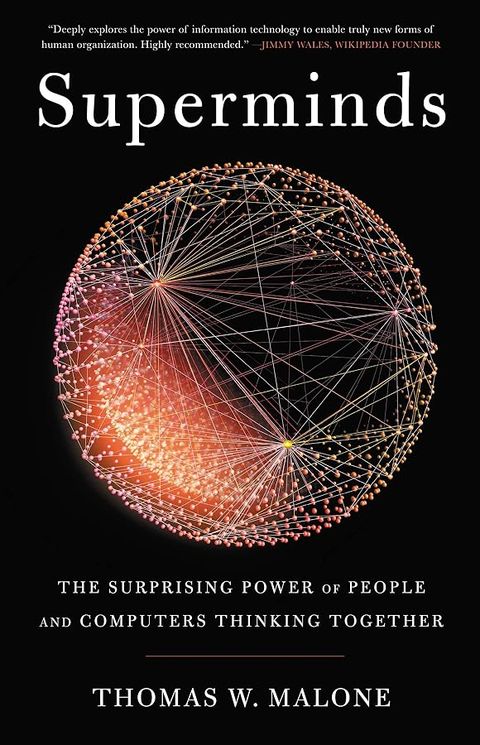
- Superminds Thomas W. Malone
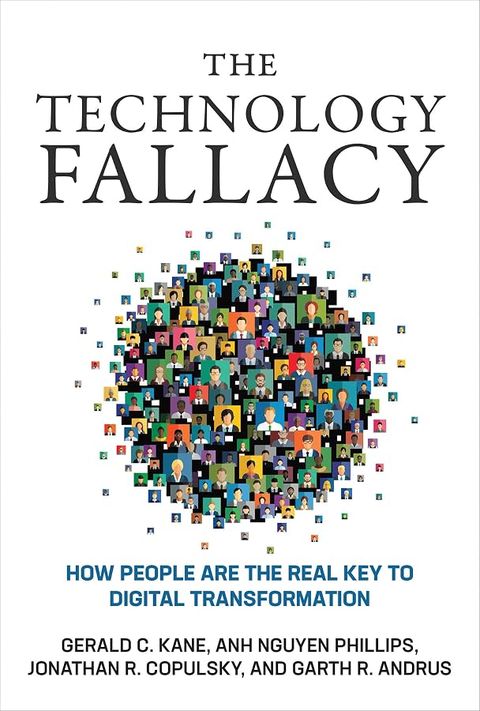
- The Technology Fallacy Gerald C. Kane, Anh Nguyen Phillips, Jonathan R. Copulsky and Garth R. Andrus
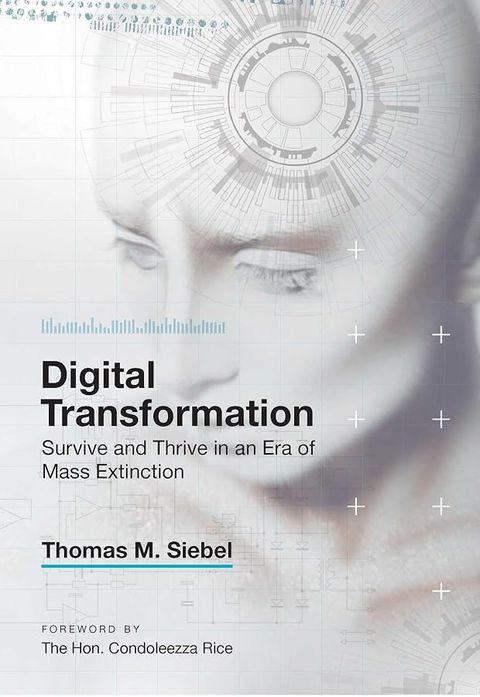
- Digital Transformation Thomas M. Siebel
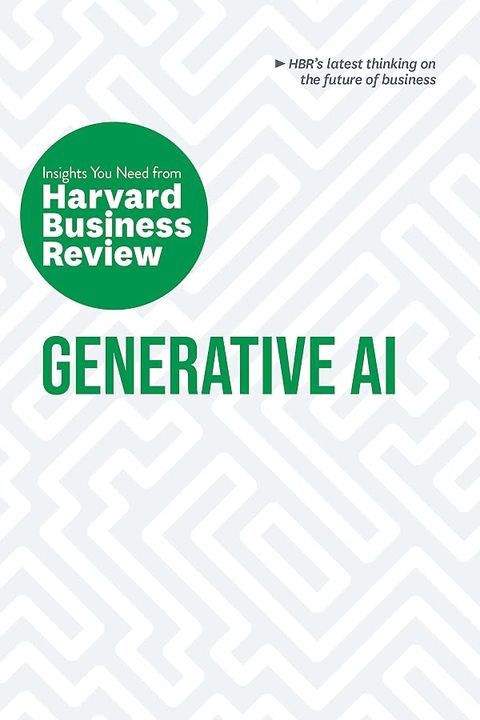
- Generative AI Harvard Business Review, Ethan Mollick, David De Cremer, Tsedal Neeley and Prabhakant Sinha
- The Art of AI Product Development Janna Lipenkova
- How to Lead in Data Science Jike Chong and Yue Cathy Chang
Sources
As an Amazon Associate, Best AI Books earns from qualifying purchases. Best AI Books is sponsored by Iternal.ai, whose founder and CEO, John Byron Hanby IV, wrote The AI Strategy Blueprint, our #1 ranked book. How we rank books.
