How to Lead in Data Science
Synopsis
Jike Chong and Yue Cathy Chang organize data science leadership into four levels: the tech lead who runs projects, the manager who develops a team, the director who governs a function and the executive who shapes a company. At each level they separate capabilities, grouped as technology, execution and expert knowledge, from virtues, grouped as ethics, rigor and attitude. The capability pillars update Drew Conway's well-known data science Venn diagram, and the authors argue that virtue gaps do more lasting damage than skill gaps, because missing skills can be covered by the right mix of teammates.
The chapters move from scoping projects with vague requirements and balancing trade-offs to coaching and mentoring, crafting technology roadmaps, sponsoring promising projects, structuring data organizations and building a data-driven culture. Case studies, self-assessments and interview-style scenarios turn the frameworks into exercises, and the authors draw on their experience building teams at LinkedIn, Acorns, Yiren Digital, Silicon Valley Data Science and large financial firms. At 512 pages it works better as a reference than as a cover-to-cover read. Data scientists gain a map of what each promotion demands, and managers gain a shared language for evaluating and developing their teams.
Scorecard
Editorial score
How it scored
Editorial score: 66.3 / 1005 weighted criteria
- 16.5/30
Influence30%
- 17.5/25
Authority25%
- 16.0/20
Practical value20%
- 9.8/15
Currency15%
- 6.5/10
Readability10%
- 66.3/100
Editorial score
How the rank was computed
Rank No. 462 of 500 comes from a composite of 48.0: observable signals 18.2 of 55 points plus editorial review 29.8 of 45 points.
All 11 inputs
| Input | Points |
|---|---|
| Observable signals | 18.2/55 |
| Reach (Amazon ratings volume) | 5.9/16.5 |
| Consensus across best-of lists | 5.5/13.8 |
| Awards and bestseller evidence | 0.0/8.3 |
| Reader rating, sample-adjusted | 6.3/8.3 |
| Amazon sales rank | 0.5/5.5 |
| Recency | 0.0/2.8 |
| Editorial review | 29.8/45 |
| Author authority | 7.9/11.3 |
| Influence | 7.4/13.5 |
| Practical value | 7.2/9.0 |
| Readability | 2.9/4.5 |
| Currency | 4.4/6.8 |
Each criterion is scored from 1 to 10 and weighted, and the points add up to the editorial score. The rank combines observable signals (55 percent) with this score (45 percent). Read the methodology.
Verdict
A thorough, framework-driven career manual for data scientists moving from tech lead to executive, dense but highly practical.
Strengths
- Clear framework spanning four leadership levels
- Self-assessments and realistic case scenarios
- Grounded in the authors' team-building experience
Keep in mind
Its length and checklist-heavy structure can feel repetitive, and the content addresses classic data science teams rather than generative AI or LLM engineering groups.
Key takeaways
- Leadership in data science means amplifying impact by influencing, nurturing, directing and inspiring others, whether as an individual contributor or a people manager.
- Capabilities in technology, execution and expert knowledge can be pooled across a team, but gaps in ethics, rigor and attitude can sink projects.
- Rigor for a tech lead means sound scientific fundamentals, monitoring data and deployed systems for anomalies, and owning whether the work creates enterprise value.
- Directors and executives must translate data capabilities into technology roadmaps, organizational structures and a culture that uses data to make decisions.
Notable facts
- Manning lists translations of the book in Japanese, Russian and Simplified Chinese. Source (opens in a new tab)
- Endorsed by Ron Kohavi, a former executive at Airbnb, Microsoft and Amazon, and by Eric Colson, a former data executive at Stitch Fix and Netflix. Source (opens in a new tab)
About the author
Questions
What does How to Lead in Data Science teach?
Who should read How to Lead in Data Science?
Is How to Lead in Data Science still relevant in 2026?
Related books
- Digital Transformation Thomas M. Siebel
- HBR's 10 Must Reads on AI, Analytics, and the New Machine Age Harvard Business Review, Thomas H. Davenport and Michael E. Porter
- Generative AI Harvard Business Review, Ethan Mollick, David De Cremer, Tsedal Neeley and Prabhakant Sinha
- The Art of AI Product Development Janna Lipenkova
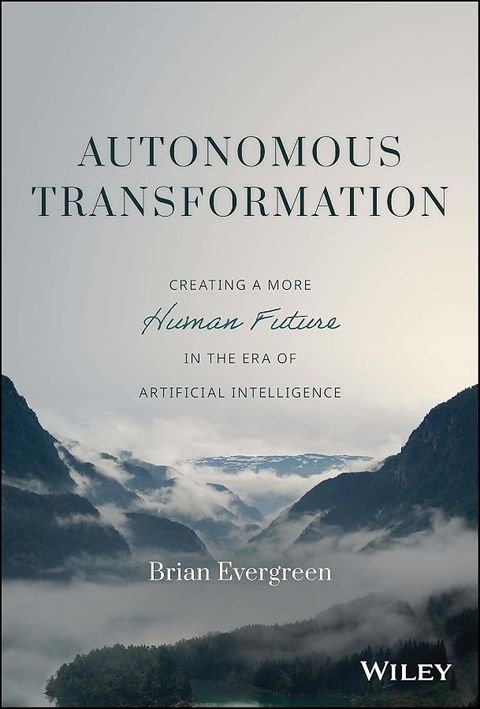
- Autonomous Transformation Brian Evergreen
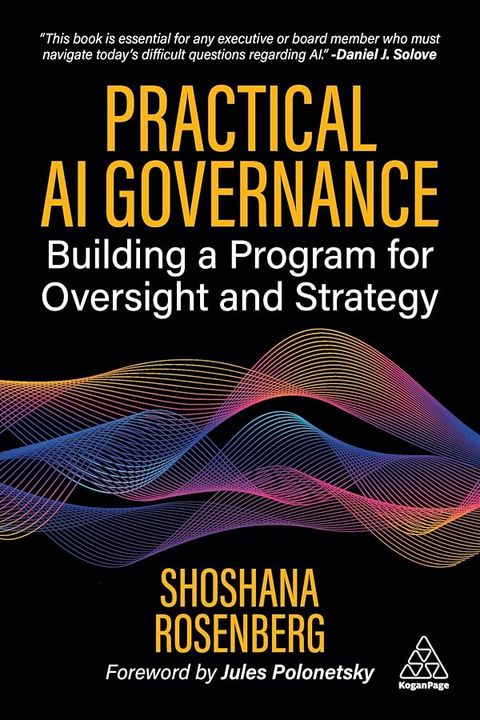
- Practical AI Governance Shoshana Rosenberg
Sources
As an Amazon Associate, Best AI Books earns from qualifying purchases. Best AI Books is sponsored by Iternal.ai, whose founder and CEO, John Byron Hanby IV, wrote The AI Strategy Blueprint, our #1 ranked book. How we rank books.
