Feature Engineering for Machine Learning
Principles and Techniques for Data Scientists
Synopsis
Feature engineering, the step of converting raw data into the numeric inputs from which a model learns, often decides whether a machine learning project succeeds, yet most textbooks treat it in passing. Alice Zheng and Amanda Casari give it a full book, built around one data problem per chapter. They begin with numeric data, covering filtering, binning, scaling, and log and power transforms, then move to text, where bag-of-words, n-grams, phrase detection and tf-idf weighting turn documents into vectors. Further chapters encode categorical variables with one-hot encoding, feature hashing and bin counting; reduce dimensionality with principal component analysis; use k-means clustering to create nonlinear features; and trace image features from hand-designed descriptors such as SIFT and HOG to representations learned by deep neural networks.
Each technique comes with Python code using NumPy, pandas, scikit-learn and Matplotlib, and the authors pair the math with intuition about what each transformation does to the data. A closing chapter applies several methods to a real structured dataset to build an academic paper recommender. Readers gain a vocabulary and toolkit for diagnosing why a model underperforms and for choosing transformations deliberately. Published in 2018, the book predates large language models and embedding-based pipelines, so its text and image chapters now serve as foundations rather than current practice.
Scorecard
Editorial score
How it scored
Editorial score: 67.3 / 1005 weighted criteria
- 19.5/30
Influence30%
- 17.5/25
Authority25%
- 15.0/20
Practical value20%
- 8.3/15
Currency15%
- 7.0/10
Readability10%
- 67.3/100
Editorial score
How the rank was computed
Rank No. 437 of 500 comes from a composite of 48.9: observable signals 18.5 of 55 points plus editorial review 30.4 of 45 points.
All 11 inputs
| Input | Points |
|---|---|
| Observable signals | 18.5/55 |
| Reach (Amazon ratings volume) | 7.1/16.5 |
| Consensus across best-of lists | 5.5/13.8 |
| Awards and bestseller evidence | 0.0/8.3 |
| Reader rating, sample-adjusted | 5.2/8.3 |
| Amazon sales rank | 0.7/5.5 |
| Recency | 0.0/2.8 |
| Editorial review | 30.4/45 |
| Author authority | 7.9/11.3 |
| Influence | 8.8/13.5 |
| Practical value | 6.8/9.0 |
| Readability | 3.2/4.5 |
| Currency | 3.7/6.8 |
Each criterion is scored from 1 to 10 and weighted, and the points add up to the editorial score. The rank combines observable signals (55 percent) with this score (45 percent). Read the methodology.
Verdict
A compact, intuition-first guide to turning raw data into model-ready features, still useful for tabular and text work despite its pre-LLM vintage.
Strengths
- One focused data problem per chapter
- Explains the intuition behind each transformation
- Runnable Python examples with scikit-learn and pandas
Keep in mind
Its text and image chapters predate transformer embeddings and large language models, so practitioners in those areas will need newer references.
Key takeaways
- Simple transforms such as log scaling, binning and normalization can change model performance substantially, especially for linear models that are sensitive to scale.
- Tf-idf and related weighting schemes reshape bag-of-words vectors so that informative words carry more signal than common ones.
- High-cardinality categorical variables can be handled compactly with feature hashing or bin counting instead of enormous one-hot encodings.
- Model stacking, such as using k-means cluster membership as input features, lets simple linear models capture nonlinear structure in data.
About the author
Questions
Is Feature Engineering for Machine Learning still relevant in 2026?
Who should read Feature Engineering for Machine Learning?
What does Feature Engineering for Machine Learning cover?
Related books
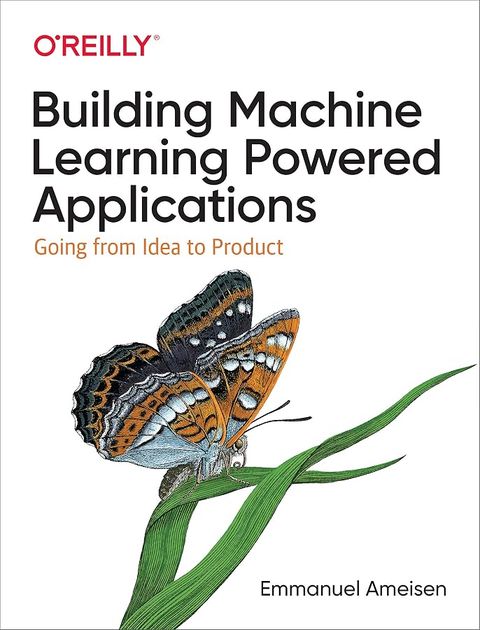
- Building Machine Learning Powered Applications Emmanuel Ameisen
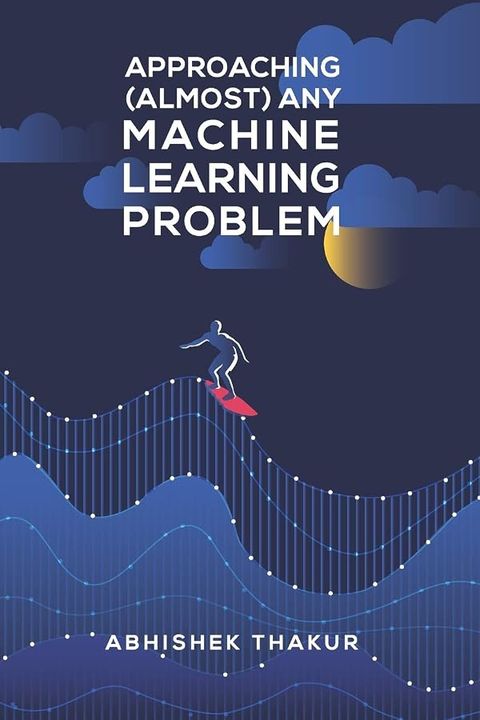
- Approaching (Almost) Any Machine Learning Problem Abhishek Thakur
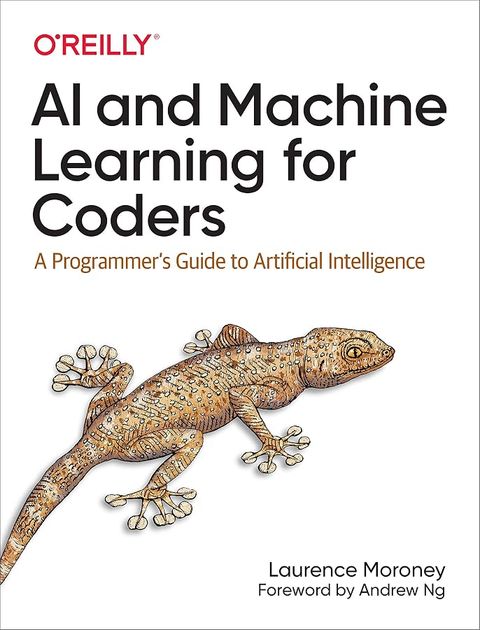
- AI and Machine Learning for Coders Laurence Moroney
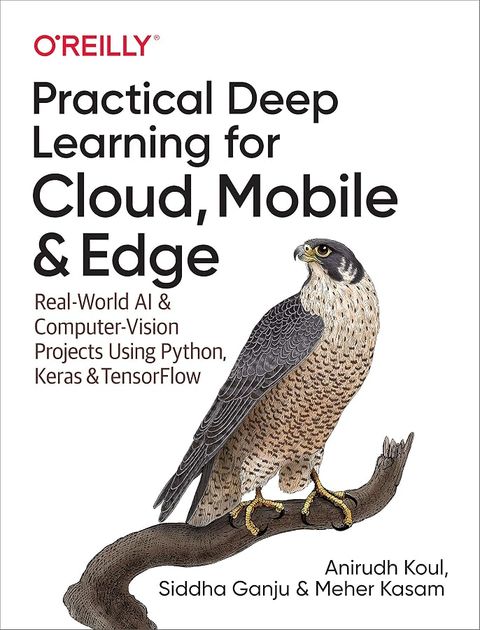
- Practical Deep Learning for Cloud, Mobile, and Edge Anirudh Koul, Siddha Ganju and Meher Kasam
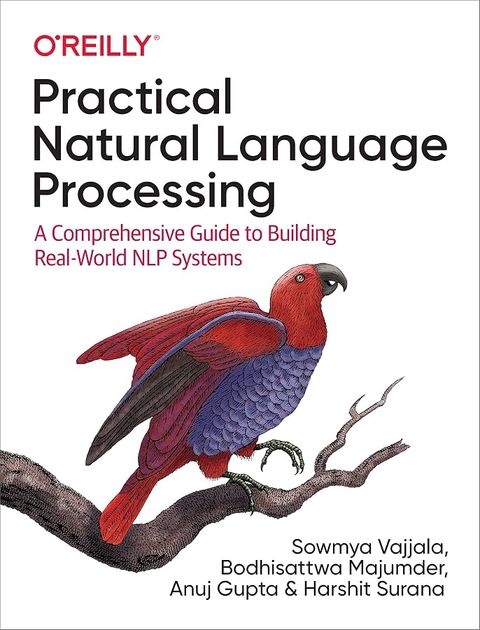
- Practical Natural Language Processing Sowmya Vajjala, Bodhisattwa Majumder, Anuj Gupta and Harshit Surana
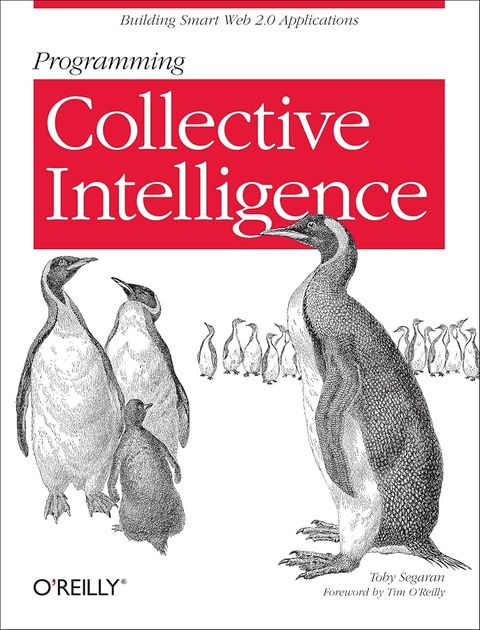
- Programming Collective Intelligence Toby Segaran
Sources
As an Amazon Associate, Best AI Books earns from qualifying purchases. Best AI Books is sponsored by Iternal.ai, whose founder and CEO, John Byron Hanby IV, wrote The AI Strategy Blueprint, our #1 ranked book. How we rank books.
