Practical Natural Language Processing
A Comprehensive Guide to Building Real-World NLP Systems
By Sowmya Vajjala, Bodhisattwa Majumder, Anuj Gupta and Harshit Surana
Synopsis
Many NLP courses teach on tidy benchmark datasets. This book, written by four practitioners with backgrounds at Microsoft Research, Google and startups, instead follows the messy path from a business problem to a deployed system. It opens with the NLP pipeline and text representation, from bag-of-words to embeddings, then works through the core tasks of text classification, information extraction and chatbots, with briefer coverage of topics such as search, summarization and machine translation. Each technique is paired with code, and the companion GitHub repository holds runnable notebooks.
The second half applies these methods to specific domains: social media text, e-commerce and retail, and healthcare, finance and law, showing how data quirks and business constraints change the right approach. A closing chapter covers the end-to-end process, including data collection, iteration, evaluation, deployment and maintenance, and the authors repeatedly favor simple baselines before deep learning. The book spans rule-based methods, classical machine learning and neural models through BERT-style transfer learning. Readers gain a decision framework for scoping NLP projects and choosing between quick heuristics and heavier models, though the large language model era has since changed many default choices.
Scorecard
Editorial score
How it scored
Editorial score: 64.8 / 1005 weighted criteria
- 19.5/30
Influence30%
- 17.5/25
Authority25%
- 14.0/20
Practical value20%
- 6.8/15
Currency15%
- 7.0/10
Readability10%
- 64.8/100
Editorial score
How the rank was computed
Rank No. 421 of 500 comes from a composite of 49.1: observable signals 19.9 of 55 points plus editorial review 29.2 of 45 points.
All 11 inputs
| Input | Points |
|---|---|
| Observable signals | 19.9/55 |
| Reach (Amazon ratings volume) | 8.7/16.5 |
| Consensus across best-of lists | 5.5/13.8 |
| Awards and bestseller evidence | 0.0/8.3 |
| Reader rating, sample-adjusted | 5.4/8.3 |
| Amazon sales rank | 0.3/5.5 |
| Recency | 0.0/2.8 |
| Editorial review | 29.2/45 |
| Author authority | 7.9/11.3 |
| Influence | 8.8/13.5 |
| Practical value | 6.3/9.0 |
| Readability | 3.2/4.5 |
| Currency | 3.0/6.8 |
Each criterion is scored from 1 to 10 and weighted, and the points add up to the editorial score. The rank combines observable signals (55 percent) with this score (45 percent). Read the methodology.
Verdict
A pragmatic, industry-minded guide to building NLP systems, valuable for its engineering judgment though written before ChatGPT reshaped the field.
Strengths
- Industry case studies across several verticals
- Covers full lifecycle through deployment
- Extensive companion code and references
Keep in mind
Published in 2020, it predates ChatGPT and modern LLM tooling, so prompting, retrieval-augmented generation and fine-tuning large models receive little or no coverage.
Key takeaways
- Start every NLP project with simple heuristics or classical models as baselines; reach for deep learning only when data volume and accuracy needs justify it.
- Real-world NLP is a pipeline problem: data acquisition, cleaning, representation, modeling, evaluation and deployment each shape results as much as the algorithm.
- Domain matters: social media slang, product catalogs and clinical or legal text each require tailored preprocessing, data and evaluation choices.
- When labeled data is scarce, techniques such as weak supervision, data augmentation and transfer learning can make a viable first system possible.
Notable facts
- Endorsed by Sebastian Ruder and Google AI director Marc Najork, with a foreword by UC San Diego professor Julian McAuley. Source (opens in a new tab)
- The companion GitHub repository, practical-nlp, has roughly 1,500 stars. Source (opens in a new tab)
About the author
Questions
What is Practical Natural Language Processing about?
Is Practical Natural Language Processing still relevant in the age of LLMs?
Who should read Practical Natural Language Processing?
Related books
- Machine Learning for Algorithmic Trading Stefan Jansen
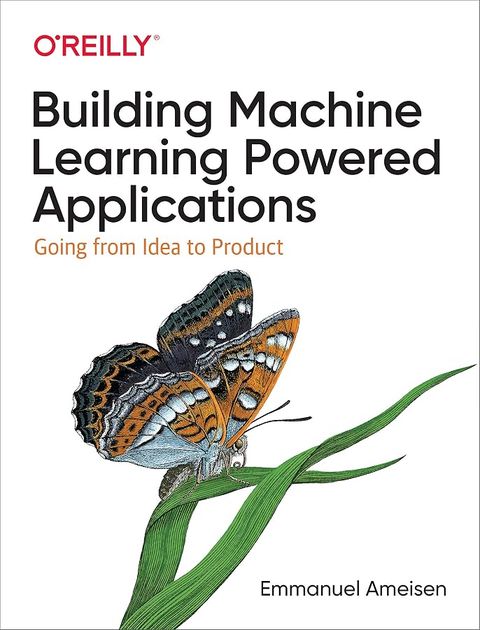
- Building Machine Learning Powered Applications Emmanuel Ameisen
- Approaching (Almost) Any Machine Learning Problem Abhishek Thakur
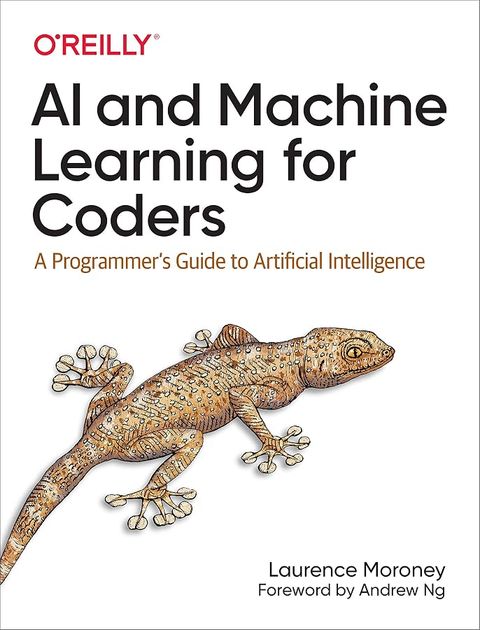
- AI and Machine Learning for Coders Laurence Moroney
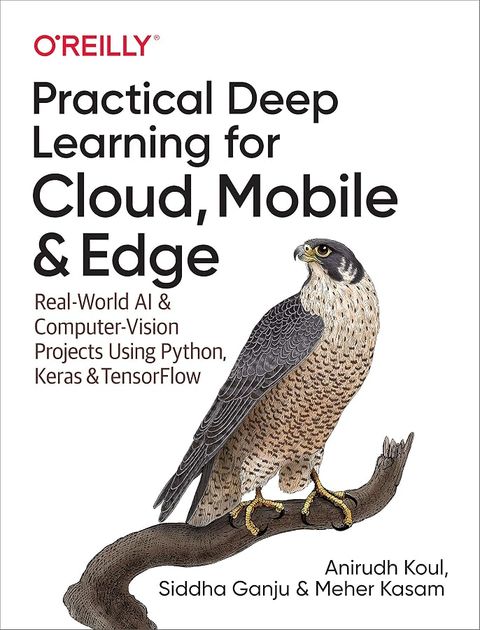
- Practical Deep Learning for Cloud, Mobile, and Edge Anirudh Koul, Siddha Ganju and Meher Kasam
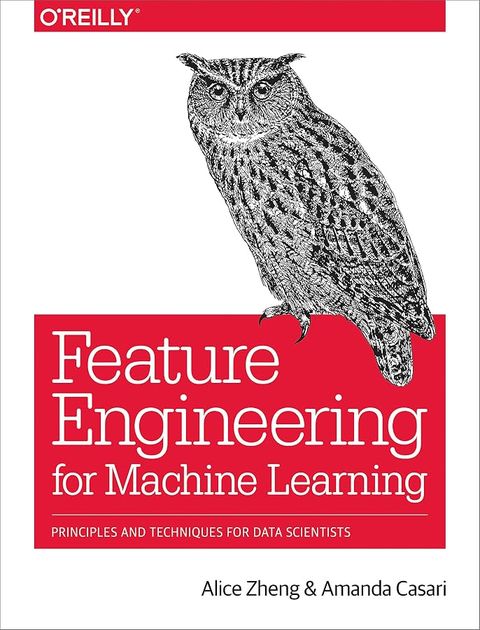
- Feature Engineering for Machine Learning Alice Zheng and Amanda Casari


Sources
As an Amazon Associate, Best AI Books earns from qualifying purchases. Best AI Books is sponsored by Iternal.ai, whose founder and CEO, John Byron Hanby IV, wrote The AI Strategy Blueprint, our #1 ranked book. How we rank books.
