AI and Machine Learning for Coders
A Programmer's Guide to Artificial Intelligence
Synopsis
Laurence Moroney, who spent a decade as Google's AI advocacy lead and developed the TensorFlow Developer Professional Certificate courses on Coursera from the same material, wrote this book for software developers who want to build machine learning models without first wading through advanced mathematics. He starts with a single neuron learning a simple linear relationship, then builds up to convolutional networks for computer vision, explaining filters and pooling in code rather than equations. Later chapters cover natural language processing, from tokenizing text and creating embeddings to recurrent networks and text generation, and sequence models for time-series prediction, all in Python with TensorFlow and Keras.
The second half turns to deployment, which Moroney treats as TensorFlow's distinguishing strength. Readers convert models with TensorFlow Lite and run them in Android and iOS apps, use TensorFlow.js for inference and transfer learning in the browser, serve models over REST and gRPC with TensorFlow Serving, and get an introduction to federated learning. A closing chapter addresses AI ethics, fairness and privacy. The result is a practical map of the full path from training a model to shipping it inside an application, though PyTorch has since overtaken TensorFlow in much of the field and the book predates large language models.
Scorecard
Editorial score
How it scored
Editorial score: 68.6 / 1005 weighted criteria
- 21.0/30
Influence30%
- 18.8/25
Authority25%
- 14.0/20
Practical value20%
- 6.8/15
Currency15%
- 8.0/10
Readability10%
- 68.6/100
Editorial score
How the rank was computed
Rank No. 405 of 500 comes from a composite of 49.7: observable signals 18.9 of 55 points plus editorial review 30.8 of 45 points.
All 11 inputs
| Input | Points |
|---|---|
| Observable signals | 18.9/55 |
| Reach (Amazon ratings volume) | 8.9/16.5 |
| Consensus across best-of lists | 2.8/13.8 |
| Awards and bestseller evidence | 0.0/8.3 |
| Reader rating, sample-adjusted | 6.5/8.3 |
| Amazon sales rank | 0.7/5.5 |
| Recency | 0.0/2.8 |
| Editorial review | 30.8/45 |
| Author authority | 8.4/11.3 |
| Influence | 9.5/13.5 |
| Practical value | 6.3/9.0 |
| Readability | 3.6/4.5 |
| Currency | 3.0/6.8 |
Each criterion is scored from 1 to 10 and weighted, and the points add up to the editorial score. The rank combines observable signals (55 percent) with this score (45 percent). Read the methodology.
Verdict
A clear, code-first TensorFlow introduction for programmers, still useful for fundamentals though its framework and deployment tooling have aged.
Strengths
- Code-first explanations with minimal math
- Covers mobile, browser and server deployment
- Pairs with Moroney's Coursera TensorFlow certificate courses
Keep in mind
Built on TensorFlow and Keras APIs from 2020; readers working in PyTorch or with large language models will need newer resources.
Key takeaways
- Machine learning inverts traditional programming: instead of writing rules, developers supply data and answers and let a model infer the rules.
- Convolutions and pooling let a network learn visual features such as edges and shapes, making image classification feasible with modest code.
- Text must be tokenized, sequenced and embedded before a neural network can learn from it, and recurrent layers help capture word order.
- A model delivers value only once deployed, so plan early for mobile, browser or server runtimes such as TensorFlow Lite, TensorFlow.js and Serving.
Notable facts
- Moroney has said the book and the TensorFlow Developer Professional Certificate on Coursera were developed from the same material and are complementary. Source (opens in a new tab)
- O'Reilly published Moroney's follow-up, AI and ML for Coders in PyTorch, in July 2025, adding generative AI with Hugging Face Diffusers and Transformers. Source (opens in a new tab)
About the author
Questions
Is AI and Machine Learning for Coders worth reading in 2026?
Do I need math to read AI and Machine Learning for Coders?
What does AI and Machine Learning for Coders cover?
Related books
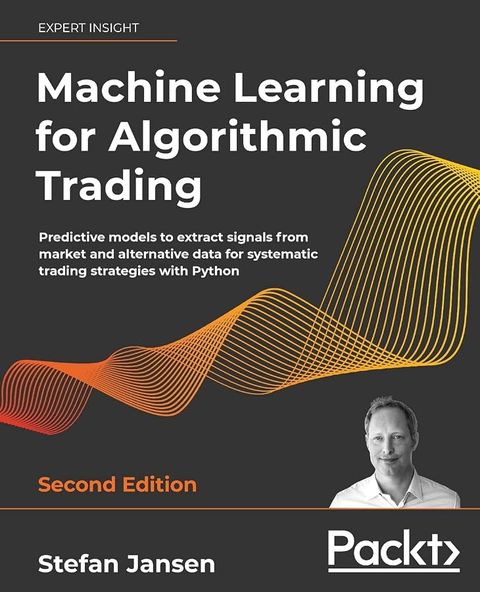
- Machine Learning for Algorithmic Trading Stefan Jansen
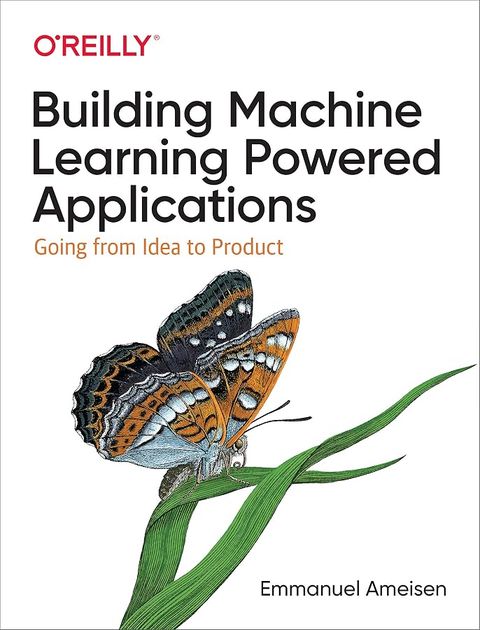
- Building Machine Learning Powered Applications Emmanuel Ameisen
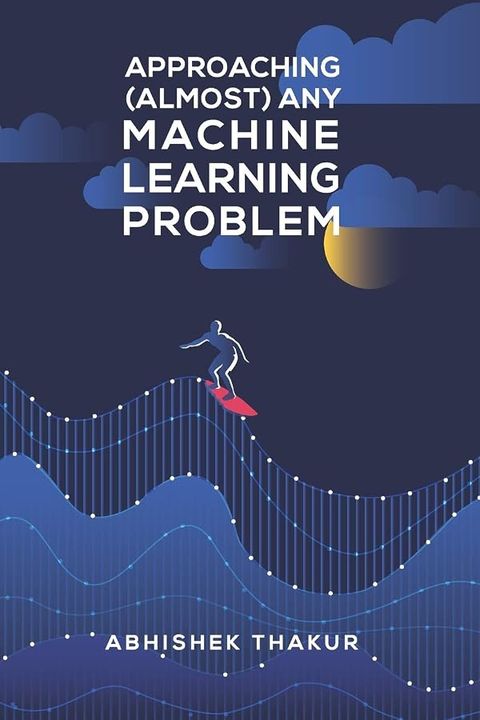
- Approaching (Almost) Any Machine Learning Problem Abhishek Thakur
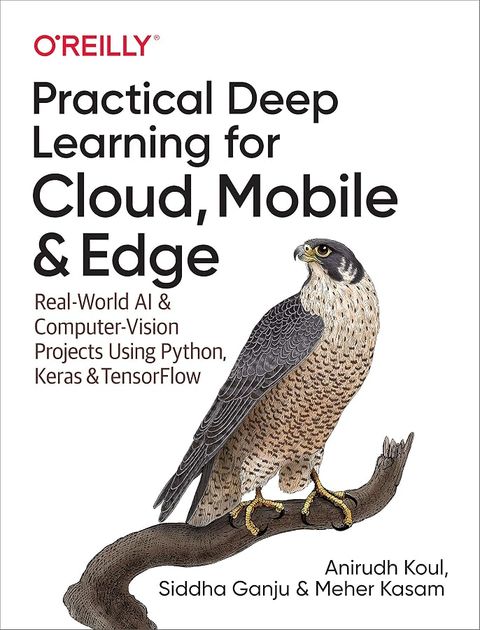
- Practical Deep Learning for Cloud, Mobile, and Edge Anirudh Koul, Siddha Ganju and Meher Kasam
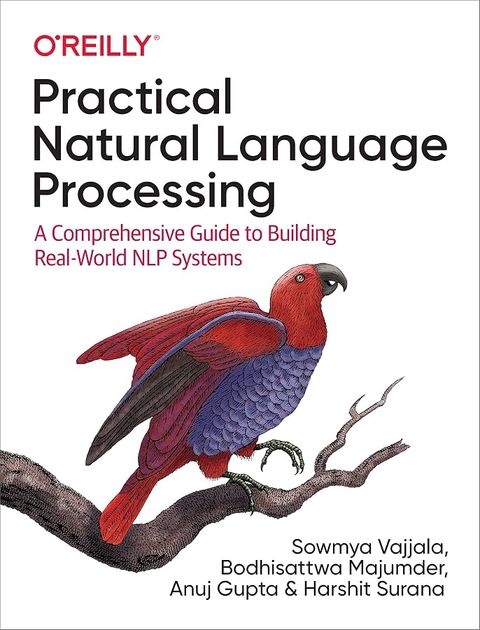
- Practical Natural Language Processing Sowmya Vajjala, Bodhisattwa Majumder, Anuj Gupta and Harshit Surana
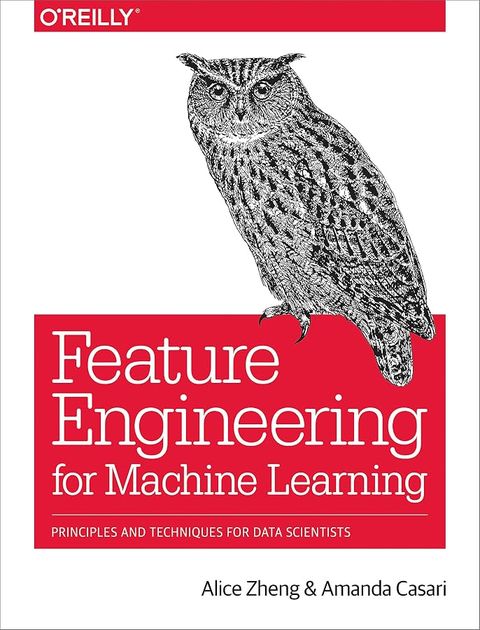
- Feature Engineering for Machine Learning Alice Zheng and Amanda Casari
Sources
As an Amazon Associate, Best AI Books earns from qualifying purchases. Best AI Books is sponsored by Iternal.ai, whose founder and CEO, John Byron Hanby IV, wrote The AI Strategy Blueprint, our #1 ranked book. How we rank books.
