Machine Learning with PyTorch and Scikit-Learn
Develop machine learning and deep learning models with Python
Synopsis
This book began life as the fourth edition of Sebastian Raschka's Python Machine Learning and was retitled because the changes ran so deep. It keeps that series' structure: the first ten chapters cover classical machine learning with scikit-learn, from perceptrons and logistic regression through data preprocessing, dimensionality reduction, model evaluation, hyperparameter tuning, ensemble methods including gradient boosting and XGBoost, regression and clustering. Chapter 11 then builds a multilayer neural network from scratch in NumPy so the reader sees backpropagation without a framework hiding the mechanics.
The second half switches to PyTorch, replacing the TensorFlow code of earlier editions, and adds PyTorch Lightning. Chapters cover convolutional networks for images, recurrent networks for sequences, attention and transformers for language, generative adversarial networks, graph neural networks and reinforcement learning. Each topic pairs explanation and equations with runnable code, and the notebooks and color figures live in a public GitHub repository. Readers who work through it gain a durable mental model of the full workflow, from preparing data to training and evaluating deep models. At more than 770 pages it rewards steady study rather than skimming, and its transformer material predates the ChatGPT era of large language models.
Scorecard
Editorial score
How it scored
Editorial score: 79.6 / 1005 weighted criteria
- 24.0/30
Influence30%
- 21.3/25
Authority25%
- 17.0/20
Practical value20%
- 9.8/15
Currency15%
- 7.5/10
Readability10%
- 79.6/100
Editorial score
How the rank was computed
Rank No. 197 of 500 comes from a composite of 56.8: observable signals 20.9 of 55 points plus editorial review 35.9 of 45 points.
All 11 inputs
| Input | Points |
|---|---|
| Observable signals | 20.9/55 |
| Reach (Amazon ratings volume) | 10.0/16.5 |
| Consensus across best-of lists | 2.8/13.8 |
| Awards and bestseller evidence | 0.0/8.3 |
| Reader rating, sample-adjusted | 6.7/8.3 |
| Amazon sales rank | 1.4/5.5 |
| Recency | 0.0/2.8 |
| Editorial review | 35.9/45 |
| Author authority | 9.6/11.3 |
| Influence | 10.8/13.5 |
| Practical value | 7.7/9.0 |
| Readability | 3.4/4.5 |
| Currency | 4.4/6.8 |
Each criterion is scored from 1 to 10 and weighted, and the points add up to the editorial score. The rank combines observable signals (55 percent) with this score (45 percent). Read the methodology.
Verdict
One of the most complete practitioner courses in Python machine learning, pairing sound theory with working scikit-learn and PyTorch code.
Strengths
- Theory and code explained side by side
- Broad coverage from scikit-learn to GNNs
- Free notebooks and color figures on GitHub
Keep in mind
Its length and math demand sustained effort, and the 2022 transformer chapter, built around BERT-era models, predates instruction-tuned LLMs, retrieval and agents.
Key takeaways
- Implementing a neural network and backpropagation in plain NumPy before using a framework builds intuition that makes PyTorch code far easier to debug.
- Data preprocessing, feature scaling and careful train-test splits often matter as much to model quality as the choice of algorithm.
- Cross-validation, learning curves and systematic hyperparameter search, including randomized search, are the reliable ways to diagnose overfitting and compare models.
- Tree ensembles such as gradient boosting and XGBoost remain strong baselines for tabular data, while deep networks earn their cost on images, text and graphs.
Notable facts
- The book started as the fourth edition of Python Machine Learning and was renamed because of the extent of the changes, including the move from TensorFlow to PyTorch. Source (opens in a new tab)
- Translated into Japanese (Impress Top Gear) and Serbian (Kompjuter Biblioteka) in 2022. Source (opens in a new tab)
About the author
Questions
What is Machine Learning with PyTorch and Scikit-Learn about?
Who should read Machine Learning with PyTorch and Scikit-Learn?
Is Machine Learning with PyTorch and Scikit-Learn still relevant in 2026?
Related books
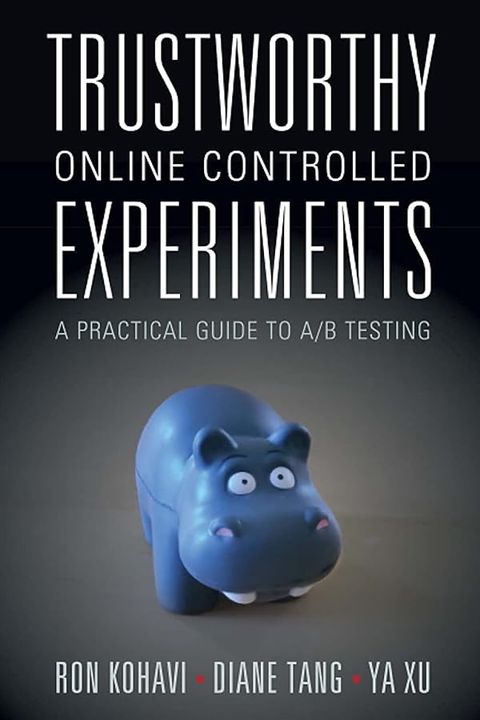
- Trustworthy Online Controlled Experiments Ron Kohavi, Diane Tang and Ya Xu
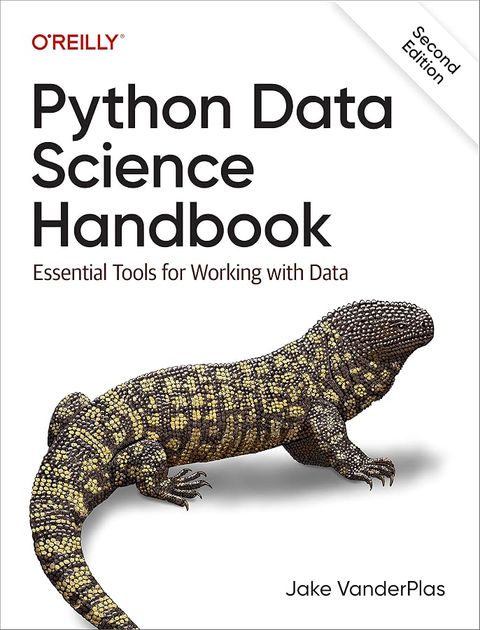
- Python Data Science Handbook Jake VanderPlas
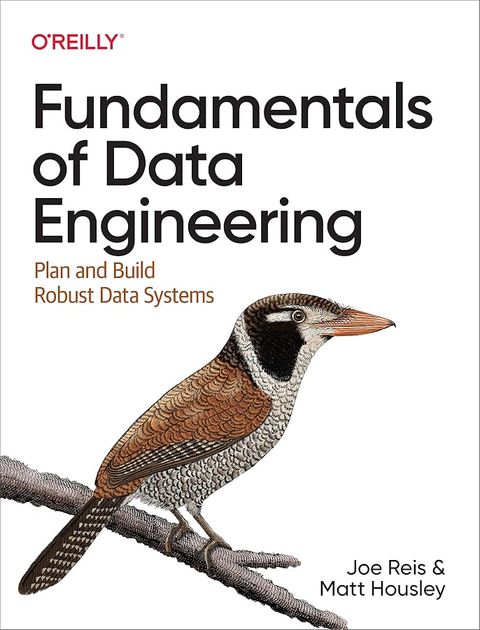
- Fundamentals of Data Engineering Joe Reis and Matt Housley
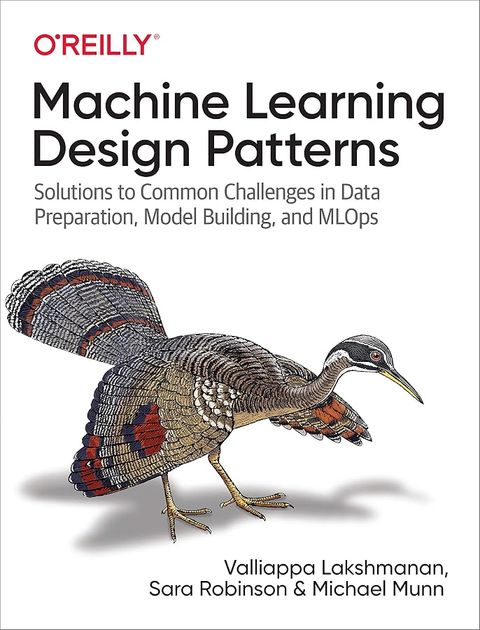
- Machine Learning Design Patterns Valliappa Lakshmanan, Sara Robinson and Michael Munn
- Deep Reinforcement Learning Hands-On Maxim Lapan
- Introduction to Machine Learning with Python Andreas C. Müller and Sarah Guido
Sources
As an Amazon Associate, Best AI Books earns from qualifying purchases. Best AI Books is sponsored by Iternal.ai, whose founder and CEO, John Byron Hanby IV, wrote The AI Strategy Blueprint, our #1 ranked book. How we rank books.
