Pattern Recognition and Machine Learning
Synopsis
Christopher Bishop's 2006 textbook treats machine learning as applied probability. After a self-contained introduction to probability, decision theory and information theory, it builds a consistent Bayesian framework and applies it across the field: linear models for regression and classification, neural networks, kernel methods, sparse kernel machines such as support vector and relevance vector machines, graphical models, mixture models and the expectation-maximization algorithm, variational inference and expectation propagation, sampling methods, continuous latent variable models such as probabilistic PCA, sequential data with hidden Markov models and linear dynamical systems, and methods for combining models. Full-color figures and 431 graded exercises support both coursework and self-study.
The approach is mathematical. Bishop assumes multivariate calculus and linear algebra and derives most results, but his notation stays consistent across chapters and each method is motivated before it is formalized. Readers gain a unified way to reason about uncertainty, model complexity and inference that still underpins variational autoencoders, Bayesian deep learning and much of modern probabilistic machine learning. Because it predates the deep learning boom, the neural network chapter is brief and dated; Bishop's 2023 Deep Learning: Foundations and Concepts, written with his son Hugh, serves as the modern companion. Microsoft Research now distributes the complete book as a free PDF.
Scorecard
Editorial score
How it scored
Editorial score: 82.8 / 1005 weighted criteria
- 28.5/30
Influence30%
- 23.8/25
Authority25%
- 14.0/20
Practical value20%
- 10.5/15
Currency15%
- 6.0/10
Readability10%
- 82.8/100
Editorial score
How the rank was computed
Rank No. 94 of 500 comes from a composite of 63.5: observable signals 26.3 of 55 points plus editorial review 37.2 of 45 points.
All 11 inputs
| Input | Points |
|---|---|
| Observable signals | 26.3/55 |
| Reach (Amazon ratings volume) | 10.7/16.5 |
| Consensus across best-of lists | 8.3/13.8 |
| Awards and bestseller evidence | 0.0/8.3 |
| Reader rating, sample-adjusted | 6.1/8.3 |
| Amazon sales rank | 1.2/5.5 |
| Recency | 0.0/2.8 |
| Editorial review | 37.2/45 |
| Author authority | 10.7/11.3 |
| Influence | 12.8/13.5 |
| Practical value | 6.3/9.0 |
| Readability | 2.7/4.5 |
| Currency | 4.7/6.8 |
Each criterion is scored from 1 to 10 and weighted, and the points add up to the editorial score. The rank combines observable signals (55 percent) with this score (45 percent). Read the methodology.
Verdict
The standard Bayesian machine learning textbook: rigorous, carefully organized and still the reference for probabilistic modeling twenty years after publication.
Strengths
- Consistent Bayesian treatment across every topic
- 431 graded exercises with instructor solutions
- Free authorized PDF from Microsoft Research
Keep in mind
Mathematically demanding and dated on deep learning; readers without calculus, linear algebra and patience for long derivations will find progress slow.
Key takeaways
- Treating model parameters as uncertain quantities, rather than fixed values, gives a principled way to control overfitting and to quantify confidence in predictions.
- Graphical models express complex probability distributions as networks of simple conditional dependencies, making inference in structured problems tractable and interpretable.
- When exact inference is impossible, variational methods and sampling techniques such as Markov chain Monte Carlo provide workable approximations with known trade-offs.
- The expectation-maximization algorithm fits models with hidden variables, linking mixture models, probabilistic PCA and hidden Markov models under one general procedure.
Notable facts
- Microsoft Research offers the complete book as a free PDF download. Source (opens in a new tab)
- The book contains 431 graded exercises, with solutions and instructor resources provided through Bishop's Microsoft Research page. Source (opens in a new tab)
- Wikipedia describes it as one of Bishop's two highly cited and widely adopted machine learning textbooks. Source (opens in a new tab)
About the author
Questions
Is Pattern Recognition and Machine Learning still relevant in 2026?
What math do I need for Pattern Recognition and Machine Learning?
Is Pattern Recognition and Machine Learning free to read?
Related books
- Reinforcement Learning Richard S. Sutton and Andrew G. Barto
- The Elements of Statistical Learning Trevor Hastie, Robert Tibshirani and Jerome Friedman
- Why Machines Learn Anil Ananthaswamy
- Data Science for Business Foster Provost and Tom Fawcett
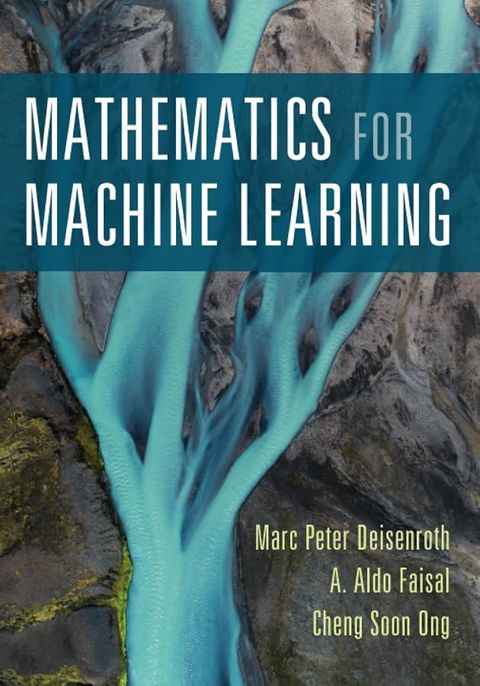
- Mathematics for Machine Learning Marc Peter Deisenroth, A. Aldo Faisal and Cheng Soon Ong
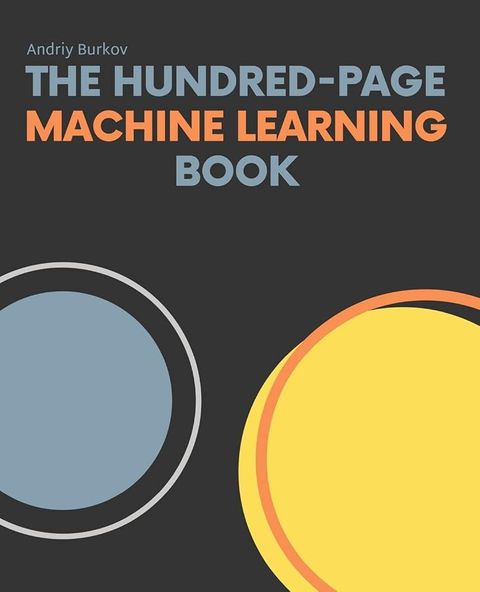
- The Hundred-Page Machine Learning Book Andriy Burkov
Sources
As an Amazon Associate, Best AI Books earns from qualifying purchases. Best AI Books is sponsored by Iternal.ai, whose founder and CEO, John Byron Hanby IV, wrote The AI Strategy Blueprint, our #1 ranked book. How we rank books.
