Mathematics for Machine Learning
Synopsis
Marc Peter Deisenroth, A. Aldo Faisal and Cheng Soon Ong wrote this textbook for readers who discover that machine learning books assume mathematics they never fully learned, or learned in scattered courses with clashing notation. Part I gathers the essentials in one consistent framework: linear algebra, analytic geometry, matrix decompositions such as eigendecomposition and the singular value decomposition, vector calculus including backpropagation and automatic differentiation, probability and distributions, and continuous optimization. Each chapter introduces concepts with minimal prerequisites and supplies worked examples and exercises.
Part II puts those tools to work by deriving four central methods from first principles: linear regression, treated through maximum likelihood and Bayesian inference; dimensionality reduction with principal component analysis; density estimation with Gaussian mixture models and the expectation-maximization algorithm; and classification with support vector machines. A bridging chapter on how models meet data frames training, evaluation and model selection. The authors keep an updated PDF free on the book's website, along with Jupyter notebook tutorials. Readers come away able to follow the derivations in advanced texts, although the book deliberately stops short of deep learning architectures.
Scorecard
Editorial score
How it scored
Editorial score: 82.1 / 1005 weighted criteria
- 25.5/30
Influence30%
- 21.3/25
Authority25%
- 16.0/20
Practical value20%
- 12.8/15
Currency15%
- 6.5/10
Readability10%
- 82.1/100
Editorial score
How the rank was computed
Rank No. 117 of 500 comes from a composite of 61.7: observable signals 24.8 of 55 points plus editorial review 36.9 of 45 points.
All 11 inputs
| Input | Points |
|---|---|
| Observable signals | 24.8/55 |
| Reach (Amazon ratings volume) | 11.1/16.5 |
| Consensus across best-of lists | 5.5/13.8 |
| Awards and bestseller evidence | 0.0/8.3 |
| Reader rating, sample-adjusted | 6.8/8.3 |
| Amazon sales rank | 1.4/5.5 |
| Recency | 0.0/2.8 |
| Editorial review | 36.9/45 |
| Author authority | 9.6/11.3 |
| Influence | 11.5/13.5 |
| Practical value | 7.2/9.0 |
| Readability | 2.9/4.5 |
| Currency | 5.7/6.8 |
Each criterion is scored from 1 to 10 and weighted, and the points add up to the editorial score. The rank combines observable signals (55 percent) with this score (45 percent). Read the methodology.
Verdict
A rigorous, free bridge from undergraduate mathematics to machine learning, anchored by four fully derived core methods.
Strengths
- One consistent notation across all core topics
- Free PDF plus Jupyter notebook tutorials
- Applies the mathematics to four real methods
Keep in mind
The exposition can be terse, introducing results as needed, so readers without prior exposure may need a gentler companion text.
Key takeaways
- Vectors, matrices and their decompositions are the shared language of machine learning, so fluency in eigendecomposition and SVD pays off everywhere.
- Gradients of vector-valued functions, computed efficiently through backpropagation and automatic differentiation, drive the training of nearly every modern model.
- Many learning problems reduce to optimization, and understanding gradient descent, constraints and convexity explains why some models train reliably.
- Deriving linear regression, PCA, Gaussian mixtures and support vector machines by hand shows how probability, geometry and optimization combine in practice.
Notable facts
- The authors keep the full PDF freely available for personal use on the book's website, alongside Jupyter notebook tutorials. Source (opens in a new tab)
- Listed among the approved textbooks of the American Institute of Mathematics. Source (opens in a new tab)
- The book's website carries endorsements from Christopher Bishop, Joelle Pineau and Pieter Abbeel. Source (opens in a new tab)
About the author
Questions
What does Mathematics for Machine Learning cover?
Is Mathematics for Machine Learning free?
What background do I need for Mathematics for Machine Learning?
Related books
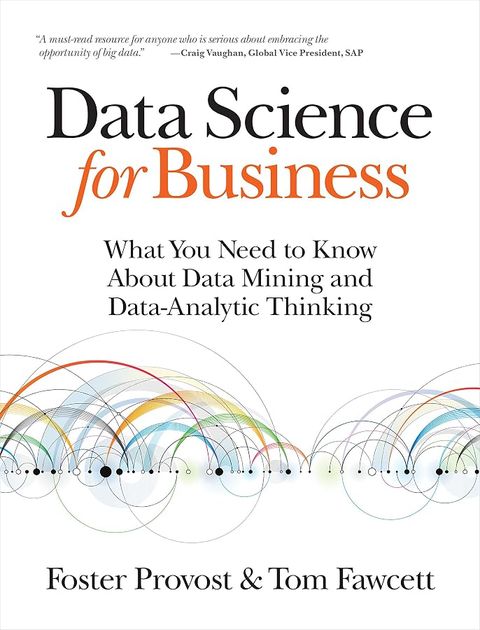
- Data Science for Business Foster Provost and Tom Fawcett
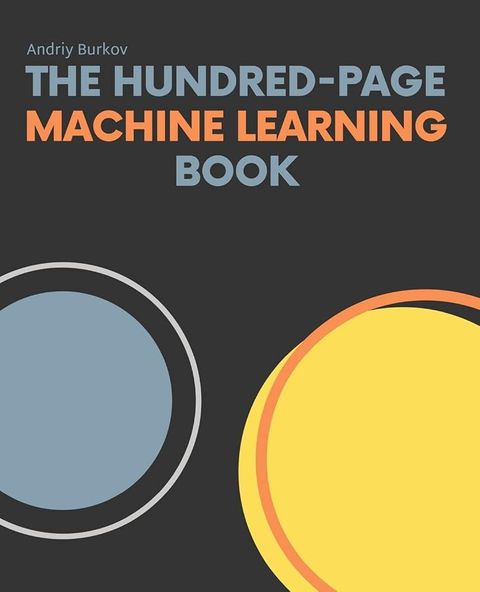
- The Hundred-Page Machine Learning Book Andriy Burkov
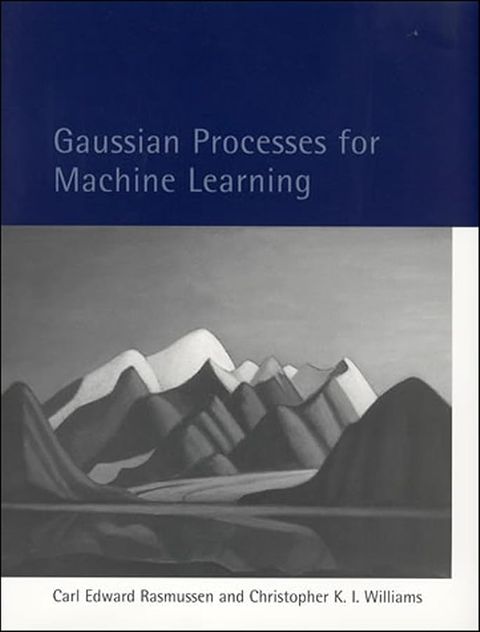
- Gaussian Processes for Machine Learning Carl Edward Rasmussen and Christopher K. I. Williams
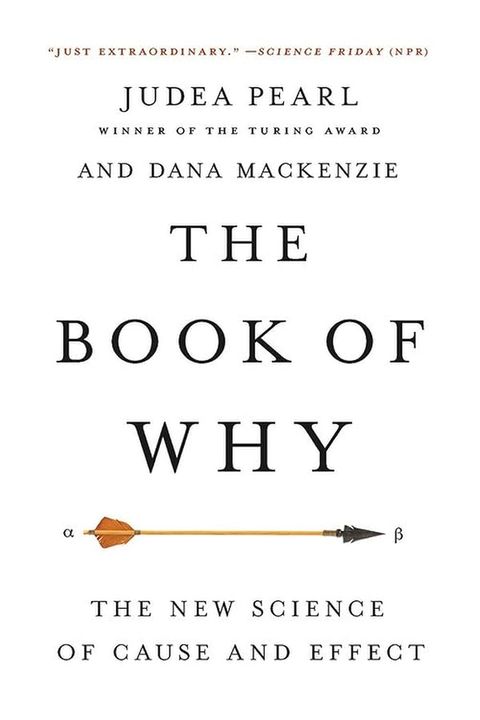
- The Book of Why Judea Pearl and Dana Mackenzie
- Causality Judea Pearl
- Bayesian Data Analysis Andrew Gelman, John B. Carlin, Hal S. Stern, David B. Dunson, Aki Vehtari and Donald B. Rubin
Sources
As an Amazon Associate, Best AI Books earns from qualifying purchases. Best AI Books is sponsored by Iternal.ai, whose founder and CEO, John Byron Hanby IV, wrote The AI Strategy Blueprint, our #1 ranked book. How we rank books.
