The Hundred-Page Machine Learning Book
Synopsis
Andriy Burkov set out to compress the working core of machine learning into a book short enough to finish in a few sittings, and the result runs roughly 140 pages. After a chapter of notation, it moves through the fundamental algorithms (linear and logistic regression, decision trees, support vector machines and k-nearest neighbors), then explains what every learning algorithm shares: a loss function, an optimization criterion and a routine, such as gradient descent, that minimizes it. Later chapters cover feature engineering, model evaluation and hyperparameter tuning, neural networks and deep learning, ensembles, unsupervised methods such as clustering and dimensionality reduction, and less common settings including learning to rank, metric learning and recommendation.
Unlike many short introductions, the book keeps the equations, so readers see the mathematics behind each method instead of a verbal gloss. Each topic gets only a few pages, which makes the book a fast map of the field and a useful checklist before a technical interview, though not a substitute for a full textbook or hands-on coding practice. Burkov distributes it on a read-first, buy-later model, with chapters free to download from the book's website. Readers gain a shared vocabulary and a clear sense of which methods suit which problems before moving to longer texts.
Scorecard
Editorial score
How it scored
Editorial score: 69.3 / 1005 weighted criteria
- 22.5/30
Influence30%
- 16.3/25
Authority25%
- 15.0/20
Practical value20%
- 9.0/15
Currency15%
- 6.5/10
Readability10%
- 69.3/100
Editorial score
How the rank was computed
Rank No. 121 of 500 comes from a composite of 61.6: observable signals 30.4 of 55 points plus editorial review 31.2 of 45 points.
All 11 inputs
| Input | Points |
|---|---|
| Observable signals | 30.4/55 |
| Reach (Amazon ratings volume) | 11.5/16.5 |
| Consensus across best-of lists | 8.3/13.8 |
| Awards and bestseller evidence | 3.3/8.3 |
| Reader rating, sample-adjusted | 6.8/8.3 |
| Amazon sales rank | 0.5/5.5 |
| Recency | 0.0/2.8 |
| Editorial review | 31.2/45 |
| Author authority | 7.3/11.3 |
| Influence | 10.1/13.5 |
| Practical value | 6.8/9.0 |
| Readability | 2.9/4.5 |
| Currency | 4.1/6.8 |
Each criterion is scored from 1 to 10 and weighted, and the points add up to the editorial score. The rank combines observable signals (55 percent) with this score (45 percent). Read the methodology.
Verdict
A compressed, math-forward survey of core machine learning that serves best as a refresher, primer or desk reference.
Strengths
- Keeps the math other short books drop
- Broad coverage in roughly 140 pages
- Free-to-read chapters before purchase
Keep in mind
Its density makes it a hard first exposure for readers without calculus and linear algebra, and it favors equations over worked coding exercises.
Key takeaways
- Most supervised learning algorithms share the same anatomy: a loss function, an optimization criterion and a routine such as gradient descent that minimizes it.
- Good results depend on practice as well as algorithms: feature engineering, proper train, validation and test splits, regularization and hyperparameter tuning.
- Ensemble methods such as random forests and gradient boosting combine many weak models into one strong predictor, often outperforming any single model.
- Problems beyond plain classification, including ranking, recommendation, metric learning and sequence labeling, call for specialized formulations that the book surveys briefly.
Notable facts
- Peter Norvig, then research director at Google and co-author of Artificial Intelligence: A Modern Approach, endorsed the book as a solid introduction to the field. Source (opens in a new tab)
- The book is distributed on a 'read first, buy later' basis, with chapters free to download from its website. Source (opens in a new tab)
- According to the author's Leanpub page, The Hundred-Page Machine Learning Book is available in 12 languages. Source (opens in a new tab)
About the author
Questions
Is The Hundred-Page Machine Learning Book worth reading in 2026?
Is The Hundred-Page Machine Learning Book good for complete beginners?
What topics does The Hundred-Page Machine Learning Book cover?
Related books
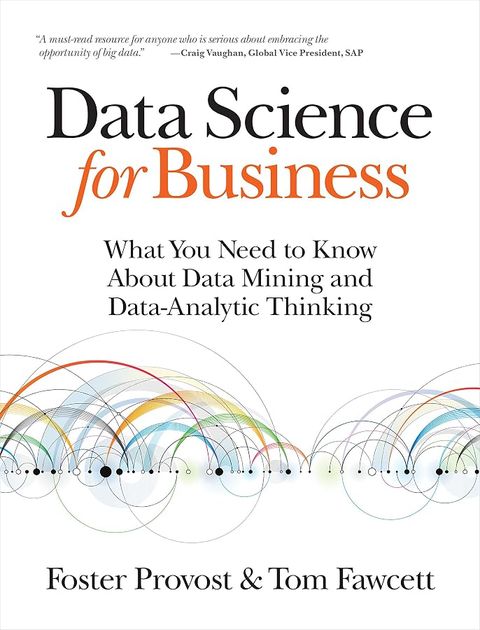
- Data Science for Business Foster Provost and Tom Fawcett
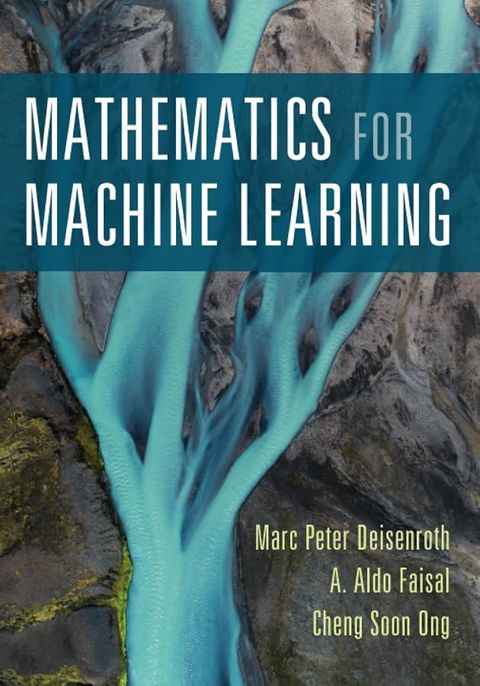
- Mathematics for Machine Learning Marc Peter Deisenroth, A. Aldo Faisal and Cheng Soon Ong
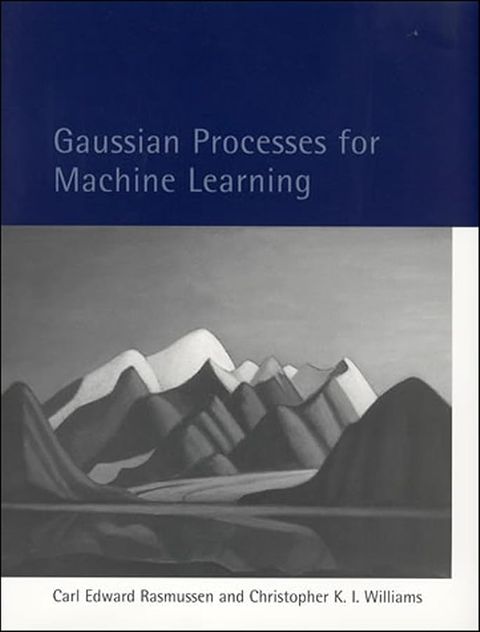
- Gaussian Processes for Machine Learning Carl Edward Rasmussen and Christopher K. I. Williams
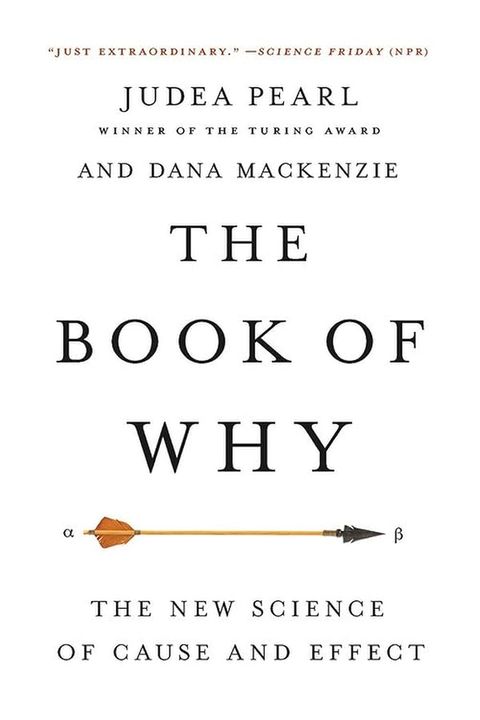
- The Book of Why Judea Pearl and Dana Mackenzie
- Causality Judea Pearl
- Bayesian Data Analysis Andrew Gelman, John B. Carlin, Hal S. Stern, David B. Dunson, Aki Vehtari and Donald B. Rubin
Sources
As an Amazon Associate, Best AI Books earns from qualifying purchases. Best AI Books is sponsored by Iternal.ai, whose founder and CEO, John Byron Hanby IV, wrote The AI Strategy Blueprint, our #1 ranked book. How we rank books.
