TinyML
Machine Learning with TensorFlow Lite on Arduino and Ultra-Low-Power Microcontrollers
Synopsis
Pete Warden and Daniel Situnayake, who helped build TensorFlow Lite for Microcontrollers at Google, wrote this hands-on introduction to running neural networks on chips with only kilobytes of memory and very small power budgets. It is aimed at software and hardware developers and does not assume machine learning experience. The opening chapters build a minimal "hello world" model that approximates a sine wave: readers train it in TensorFlow, convert and shrink it for TensorFlow Lite, and deploy it to boards such as the Arduino Nano 33 BLE Sense and SparkFun Edge, with each step of the toolchain explained.
Later projects grow more ambitious: a wake-word detector that listens for "yes" and "no", a camera-based person detector, and a "magic wand" that recognizes gestures from accelerometer data. The final chapters cover the work of moving from prototype to product, including optimizing latency and power consumption, shrinking model size, debugging embedded applications, porting models from TensorFlow, and privacy and security safeguards. Readers come away understanding the full TinyML workflow and why on-device inference matters for battery life, privacy and cost. Because TensorFlow Lite Micro and its tooling have changed since 2019, some code and setup instructions need adapting, and the projects are teaching examples rather than production-grade models.
Scorecard
Editorial score
How it scored
Editorial score: 74.5 / 1005 weighted criteria
- 22.5/30
Influence30%
- 22.5/25
Authority25%
- 15.0/20
Practical value20%
- 7.5/15
Currency15%
- 7.0/10
Readability10%
- 74.5/100
Editorial score
How the rank was computed
Rank No. 353 of 500 comes from a composite of 51.5: observable signals 17.9 of 55 points plus editorial review 33.6 of 45 points.
All 11 inputs
| Input | Points |
|---|---|
| Observable signals | 17.9/55 |
| Reach (Amazon ratings volume) | 9.0/16.5 |
| Consensus across best-of lists | 2.8/13.8 |
| Awards and bestseller evidence | 0.0/8.3 |
| Reader rating, sample-adjusted | 5.4/8.3 |
| Amazon sales rank | 0.7/5.5 |
| Recency | 0.0/2.8 |
| Editorial review | 33.6/45 |
| Author authority | 10.1/11.3 |
| Influence | 10.1/13.5 |
| Practical value | 6.8/9.0 |
| Readability | 3.2/4.5 |
| Currency | 3.4/6.8 |
Each criterion is scored from 1 to 10 and weighted, and the points add up to the editorial score. The rank combines observable signals (55 percent) with this score (45 percent). Read the methodology.
Verdict
The founding practical text for running machine learning on microcontrollers, valuable for its projects though its toolchain details have aged.
Strengths
- Complete end-to-end projects on real hardware
- Written by engineers who built TensorFlow Lite Micro
- Covers optimization, debugging and deployment constraints
Keep in mind
Toolchain and library changes since 2019 mean some examples need troubleshooting, and the neural network theory is too shallow for readers wanting depth.
Key takeaways
- Useful neural networks can run on microcontrollers with only kilobytes of memory, enabling always-on sensing at very low power and cost.
- Quantization and model conversion are central TinyML skills, shrinking a TensorFlow model so it fits and runs efficiently on tiny hardware.
- Audio, image and accelerometer data each require different preprocessing pipelines, as the wake-word, person-detection and gesture projects demonstrate step by step.
- Running inference on the device itself keeps raw sensor data local, which improves privacy and battery life compared with sending data to the cloud.
Notable facts
- An Edge AI and Vision Alliance profile describes TinyML as the standard embedded machine learning textbook and credits Pete Warden with coining the term TinyML. Source (opens in a new tab)
About the author
Questions
Is TinyML still worth reading in 2026?
What projects does TinyML include?
Who should read TinyML?
Related books
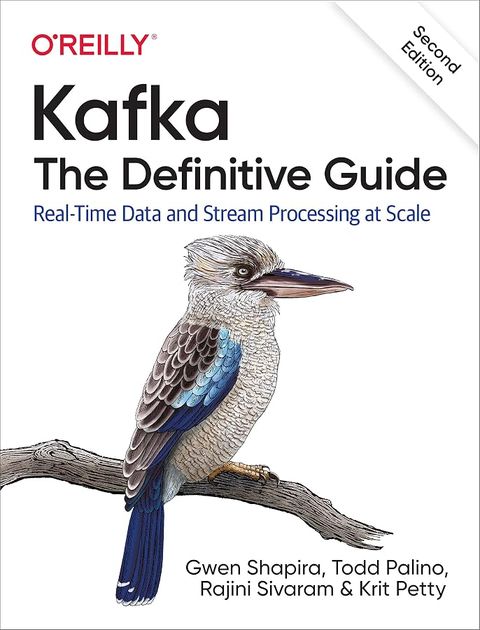
- Kafka Neha Narkhede, Gwen Shapira and Todd Palino
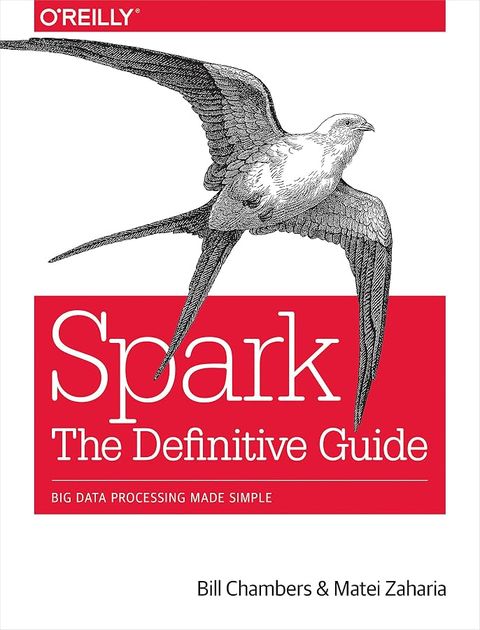
- Spark Bill Chambers and Matei Zaharia
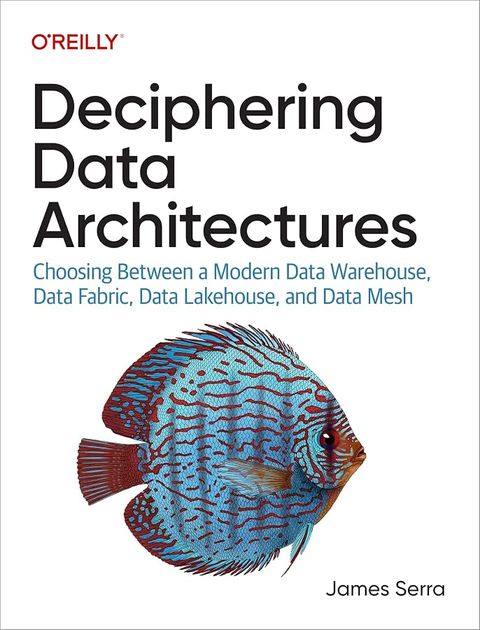
- Deciphering Data Architectures James Serra
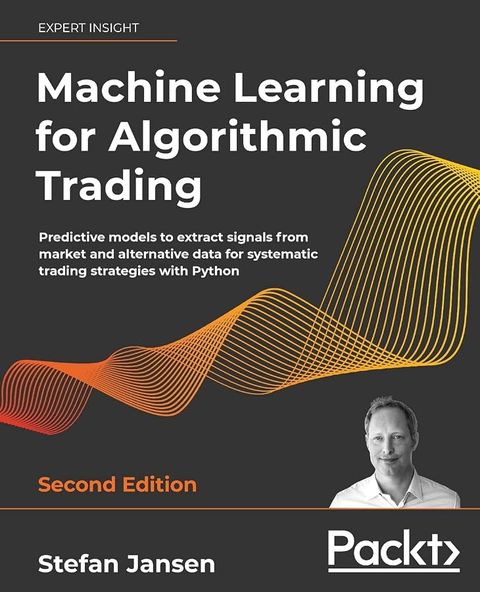
- Machine Learning for Algorithmic Trading Stefan Jansen
- Building Machine Learning Powered Applications Emmanuel Ameisen
- Approaching (Almost) Any Machine Learning Problem Abhishek Thakur
Sources
As an Amazon Associate, Best AI Books earns from qualifying purchases. Best AI Books is sponsored by Iternal.ai, whose founder and CEO, John Byron Hanby IV, wrote The AI Strategy Blueprint, our #1 ranked book. How we rank books.
