Deciphering Data Architectures
Choosing Between a Modern Data Warehouse, Data Fabric, Data Lakehouse, and Data Mesh
By James Serra
Synopsis
James Serra, a Microsoft solution architect with nearly four decades in IT, wrote this book for teams confused by competing architecture labels. It opens with foundations: what big data means for an organization, how data architectures have evolved, and how to run an architecture design session with stakeholders. A second section covers the building blocks shared by every approach, including the relational data warehouse, the data lake, data marts and operational stores, master data management, data virtualization, and choices in data modeling and ingestion, such as top-down versus bottom-up design and ETL versus ELT.
The core of the book compares four architectures in turn: the modern data warehouse, the data fabric, the data lakehouse and the data mesh, with two chapters devoted to mesh and the myths and concerns around adopting it. Serra explains what each pattern is, when it fits, and where vendor marketing outruns reality, then closes with chapters on team organization, project success factors and the technologies used to implement each approach. Because the main text avoids product pitches, the reasoning applies on any cloud platform. Readers gain a shared vocabulary and a decision framework for building the data foundation on which analytics and AI workloads depend.
Scorecard
Editorial score
How it scored
Editorial score: 70.3 / 1005 weighted criteria
- 18.0/30
Influence30%
- 17.5/25
Authority25%
- 16.0/20
Practical value20%
- 11.3/15
Currency15%
- 7.5/10
Readability10%
- 70.3/100
Editorial score
How the rank was computed
Rank No. 362 of 500 comes from a composite of 51.4: observable signals 19.7 of 55 points plus editorial review 31.7 of 45 points.
All 11 inputs
| Input | Points |
|---|---|
| Observable signals | 19.7/55 |
| Reach (Amazon ratings volume) | 8.1/16.5 |
| Consensus across best-of lists | 2.8/13.8 |
| Awards and bestseller evidence | 0.0/8.3 |
| Reader rating, sample-adjusted | 6.4/8.3 |
| Amazon sales rank | 0.7/5.5 |
| Recency | 1.7/2.8 |
| Editorial review | 31.7/45 |
| Author authority | 7.9/11.3 |
| Influence | 8.1/13.5 |
| Practical value | 7.2/9.0 |
| Readability | 3.4/4.5 |
| Currency | 5.1/6.8 |
Each criterion is scored from 1 to 10 and weighted, and the points add up to the editorial score. The rank combines observable signals (55 percent) with this score (45 percent). Read the methodology.
Verdict
A clear, vendor-neutral guide for choosing among warehouse, lakehouse, fabric and mesh architectures, strongest when it separates hype from practice.
Strengths
- Vendor-neutral comparison of four major architectures
- Practical guidance on running design sessions
- Plain explanations of hyped data terminology
Keep in mind
Experienced data architects may find much of it introductory, and readers wanting implementation code or deep AI pipeline guidance should look elsewhere.
Key takeaways
- No single architecture is best; the right choice depends on data volume, organizational maturity, team skills and how centralized the company's decision-making is.
- The relational data warehouse is not dead; lakehouse designs borrow warehouse features such as schemas and transactions rather than eliminating the need for them.
- Data mesh is primarily an organizational change toward domain-owned data products, and adopting it without cultural readiness and strong governance risks failure.
- A structured architecture design session with business and technical stakeholders surfaces requirements and constraints before teams commit to platforms or tools.
Notable facts
- Published by O'Reilly on February 20, 2024; the author's blog reported in June 2026 that the book is available in multiple languages. Source (opens in a new tab)
About the author
Questions
What is the difference between a data lakehouse and a data mesh, according to Deciphering Data Architectures?
Is Deciphering Data Architectures too basic for experienced architects?
Is Deciphering Data Architectures relevant to AI projects?
Related books
- Spark Bill Chambers and Matei Zaharia
- TinyML Pete Warden and Daniel Situnayake
- Machine Learning for Algorithmic Trading Stefan Jansen
- Building Machine Learning Powered Applications Emmanuel Ameisen
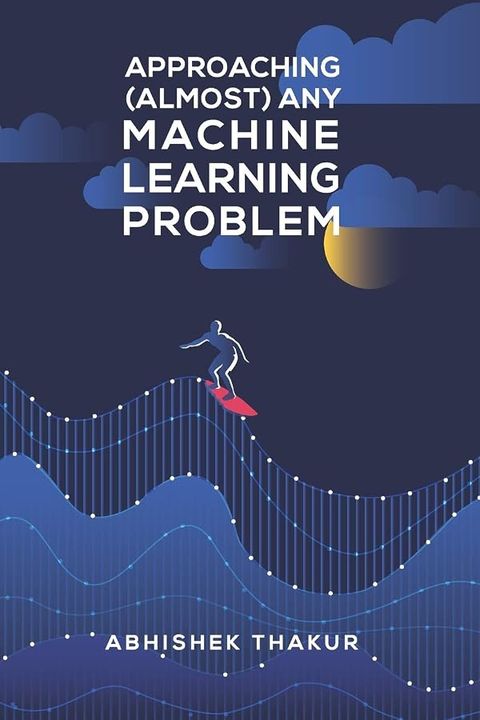
- Approaching (Almost) Any Machine Learning Problem Abhishek Thakur
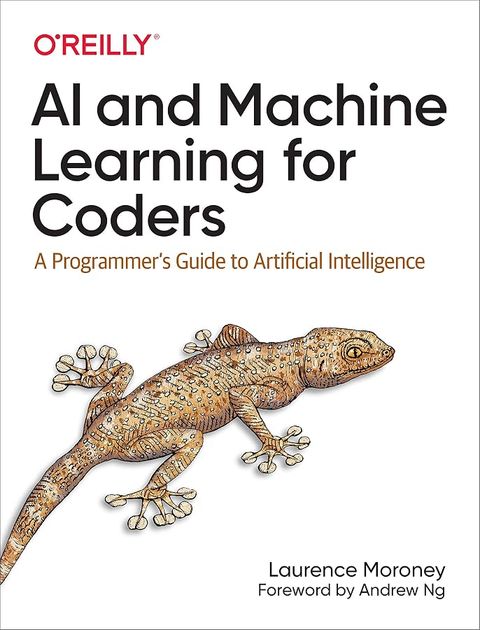
- AI and Machine Learning for Coders Laurence Moroney
Sources
As an Amazon Associate, Best AI Books earns from qualifying purchases. Best AI Books is sponsored by Iternal.ai, whose founder and CEO, John Byron Hanby IV, wrote The AI Strategy Blueprint, our #1 ranked book. How we rank books.
