Machine Learning for Algorithmic Trading
Predictive models to extract signals from market and alternative data for systematic trading strategies with Python
Synopsis
Stefan Jansen, a CFA charterholder and founder of the advisory firm Applied AI, wrote this second edition as an end-to-end workflow for systematic trading research. Across more than 800 pages and roughly two dozen chapters, it moves from sourcing market, fundamental and alternative data, including tick data, SEC filings, earnings-call transcripts, financial news and satellite images, to engineering alpha factors and evaluating their predictive power with tools such as Alphalens and SHAP values. It then works through linear models, tree-based ensembles, unsupervised learning, natural language processing with topic models and word embeddings, and deep learning with convolutional and recurrent networks, autoencoders, GANs and deep reinforcement learning.
Each technique is tied to a trading application and implemented in Jupyter notebooks hosted in a public GitHub repository, with backtesting through Zipline and backtrader and performance analysis with pyfolio. The second edition added an appendix of more than one hundred alpha factor examples. Readers gain a thorough research process for testing whether a signal survives realistic evaluation, along with working code they can adapt. The repository's main branch now serves a rebuilt third edition, retitled Machine Learning for Trading, while the 2020 code remains on a separate branch.
Scorecard
Editorial score
How it scored
Editorial score: 64.3 / 1005 weighted criteria
- 21.0/30
Influence30%
- 17.5/25
Authority25%
- 14.0/20
Practical value20%
- 6.8/15
Currency15%
- 5.0/10
Readability10%
- 64.3/100
Editorial score
How the rank was computed
Rank No. 375 of 500 comes from a composite of 50.6: observable signals 21.6 of 55 points plus editorial review 29.0 of 45 points.
All 11 inputs
| Input | Points |
|---|---|
| Observable signals | 21.6/55 |
| Reach (Amazon ratings volume) | 9.6/16.5 |
| Consensus across best-of lists | 5.5/13.8 |
| Awards and bestseller evidence | 0.0/8.3 |
| Reader rating, sample-adjusted | 5.4/8.3 |
| Amazon sales rank | 1.1/5.5 |
| Recency | 0.0/2.8 |
| Editorial review | 29.0/45 |
| Author authority | 7.9/11.3 |
| Influence | 9.5/13.5 |
| Practical value | 6.3/9.0 |
| Readability | 2.3/4.5 |
| Currency | 3.0/6.8 |
Each criterion is scored from 1 to 10 and weighted, and the points add up to the editorial score. The rank combines observable signals (55 percent) with this score (45 percent). Read the methodology.
Verdict
An encyclopedic, code-heavy reference for applying ML to trading, though its 2026 third edition now supersedes this 2020 text.
Strengths
- Exceptionally broad coverage of ML techniques
- Extensive runnable notebooks in a popular repository
- Strong treatment of alternative and text data
Keep in mind
Dense and uneven to follow, with aging library dependencies such as TensorFlow 2 and Zipline; most readers should now choose the 2026 third edition.
Key takeaways
- A disciplined research process, from data sourcing and factor engineering through backtesting, matters more to trading results than any single model choice.
- Alternative data such as SEC filings, earnings-call transcripts and satellite imagery can yield signals when processed with NLP and deep learning.
- Feature importance tools such as SHAP values and factor analysis with Alphalens help separate genuine predictive signals from noise.
- Backtests must guard against look-ahead bias, overfitting and unrealistic cost assumptions, or apparent profits will not survive live trading.
Notable facts
- The companion GitHub repository, now shared with the 2026 third edition, has about 21,900 stars and 5,800 forks. Source (opens in a new tab)
- The second edition runs to more than 800 pages and includes an appendix with over one hundred alpha factor examples. Source (opens in a new tab)
About the author
Questions
What is Machine Learning for Algorithmic Trading about?
Should I buy the second edition or the third edition?
Who should read Machine Learning for Algorithmic Trading?
Related books
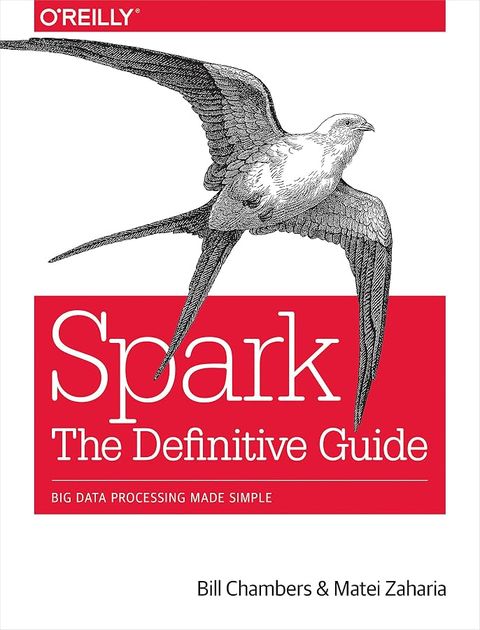
- Spark Bill Chambers and Matei Zaharia
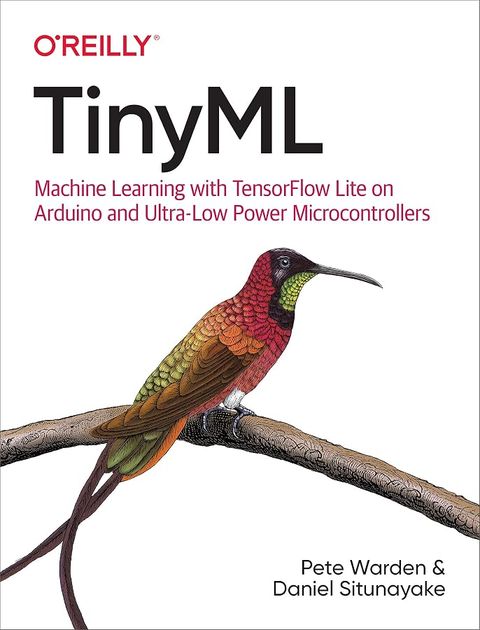
- TinyML Pete Warden and Daniel Situnayake
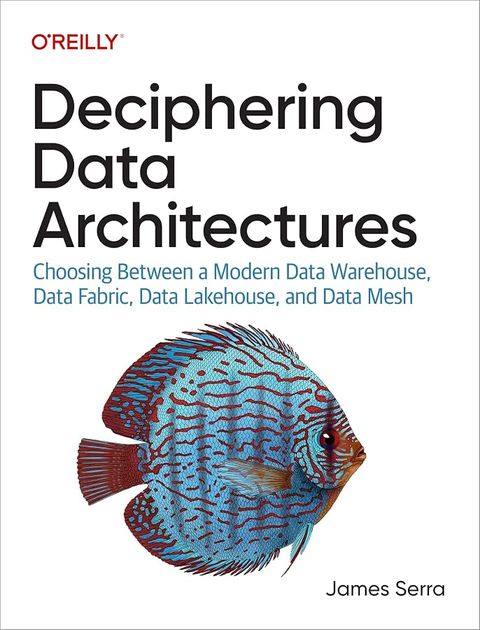
- Deciphering Data Architectures James Serra
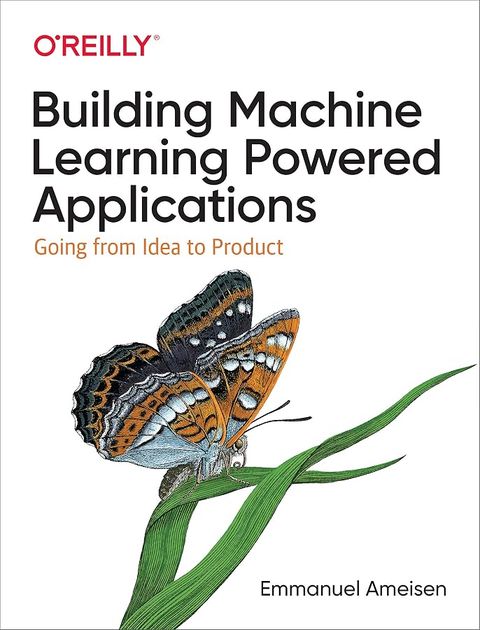
- Building Machine Learning Powered Applications Emmanuel Ameisen
- Approaching (Almost) Any Machine Learning Problem Abhishek Thakur
- AI and Machine Learning for Coders Laurence Moroney
Sources
As an Amazon Associate, Best AI Books earns from qualifying purchases. Best AI Books is sponsored by Iternal.ai, whose founder and CEO, John Byron Hanby IV, wrote The AI Strategy Blueprint, our #1 ranked book. How we rank books.
