Beyond Vibe Coding
Leveraging Your Experience in the Age of AI-Assisted Coding
By Addy Osmani
Synopsis
Addy Osmani, who spent fourteen years at Google leading developer experience for Chrome and later for Google Cloud AI, separates two ways of programming with large language models. Vibe coding means describing what you want in plain language and accepting whatever the model produces; it suits prototypes, experiments and learning. AI-assisted engineering keeps a developer in charge of specifications, architecture, review and testing. Osmani's central diagnosis is what he calls the 70 percent problem: AI tools reach a convincing first draft quickly, but the final stretch, covering edge cases, integration, security and maintainability, still depends on human expertise, and experienced engineers close that gap far more reliably than novices.
The chapters move from prompting techniques and AI-driven prototyping to reviewing, debugging and refactoring generated code, then to the security pitfalls common in model output, from injection flaws to leaked secrets. Later sections survey autonomous background agents such as OpenAI Codex, Google Jules and Devin, take up ethical questions, and sketch how engineering and product roles may change. The practical payoff is a workflow: write specifications first, work in small verifiable increments, test continuously and read every diff before merging. Experienced developers gain a framework for deciding when to let the model run and when to intervene.
Scorecard
Editorial score
How it scored
Editorial score: 69.8 / 1005 weighted criteria
- 18.0/30
Influence30%
- 18.8/25
Authority25%
- 15.0/20
Practical value20%
- 10.5/15
Currency15%
- 7.5/10
Readability10%
- 69.8/100
Editorial score
How the rank was computed
Rank No. 387 of 500 comes from a composite of 50.2: observable signals 18.8 of 55 points plus editorial review 31.4 of 45 points.
All 11 inputs
| Input | Points |
|---|---|
| Observable signals | 18.8/55 |
| Reach (Amazon ratings volume) | 5.4/16.5 |
| Consensus across best-of lists | 5.5/13.8 |
| Awards and bestseller evidence | 0.0/8.3 |
| Reader rating, sample-adjusted | 3.8/8.3 |
| Amazon sales rank | 1.3/5.5 |
| Recency | 2.8/2.8 |
| Editorial review | 31.4/45 |
| Author authority | 8.4/11.3 |
| Influence | 8.1/13.5 |
| Practical value | 6.8/9.0 |
| Readability | 3.4/4.5 |
| Currency | 4.7/6.8 |
Each criterion is scored from 1 to 10 and weighted, and the points add up to the editorial score. The rank combines observable signals (55 percent) with this score (45 percent). Read the methodology.
Verdict
A grounded practitioner's guide to using AI coding tools without surrendering code quality, written for developers who already ship software.
Strengths
- Written by a veteran Google engineering leader
- Clear line between prototyping and production workflows
- Concrete practices for reviewing AI-generated code
Keep in mind
Tool-specific chapters age quickly as coding agents evolve, and readers new to programming may lack the experience the book assumes.
Key takeaways
- Vibe coding suits prototypes and exploration, while production software needs AI-assisted engineering, with humans owning specifications, architecture, review and tests.
- AI tools reach roughly 70 percent of a working solution fast; the remaining edge cases, integration and hardening still demand experienced engineering judgment.
- Treat generated code as untrusted input: review every diff, test it, and check for injection flaws, leaked secrets and maintainability problems.
- Background coding agents can take on well-scoped tasks asynchronously, but only behind verifiable diffs, continuous integration gates and human approval.
Notable facts
- Osmani discussed the book, including its 70 percent problem, on Gergely Orosz's The Pragmatic Engineer podcast on October 29, 2025. Source (opens in a new tab)
About the author
Questions
What does Beyond Vibe Coding cover?
Is Beyond Vibe Coding good for beginners?
Is Beyond Vibe Coding still useful in 2026?
Related books
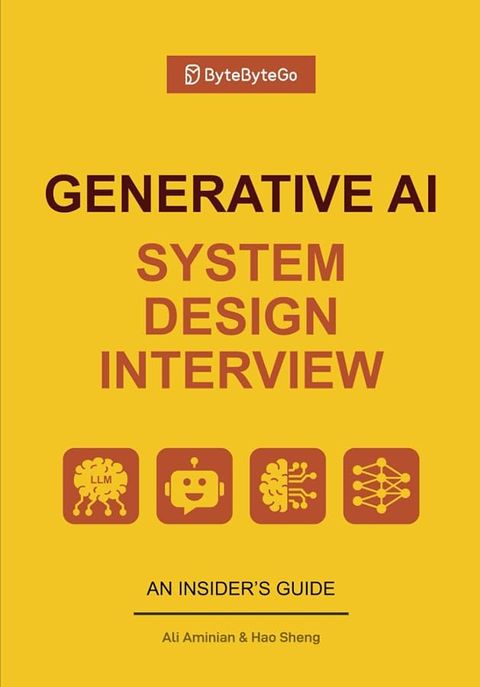
- Generative AI System Design Interview Ali Aminian and Hao Sheng
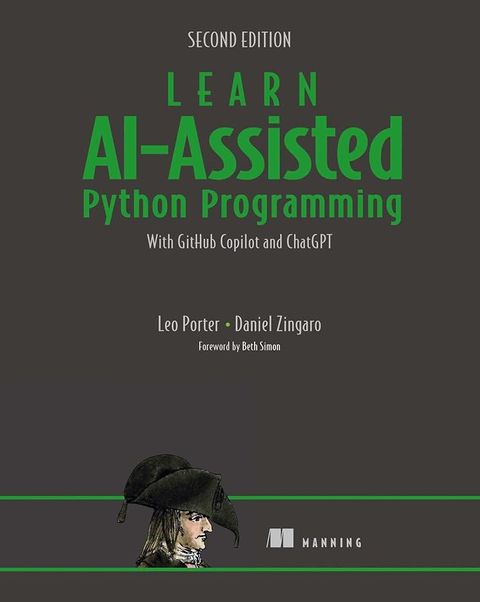
- Learn AI-Assisted Python Programming Leo Porter and Daniel Zingaro
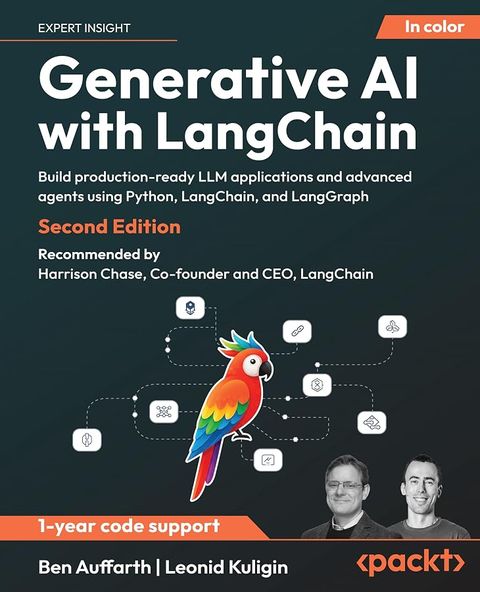
- Generative AI with LangChain Ben Auffarth and Leonid Kuligin
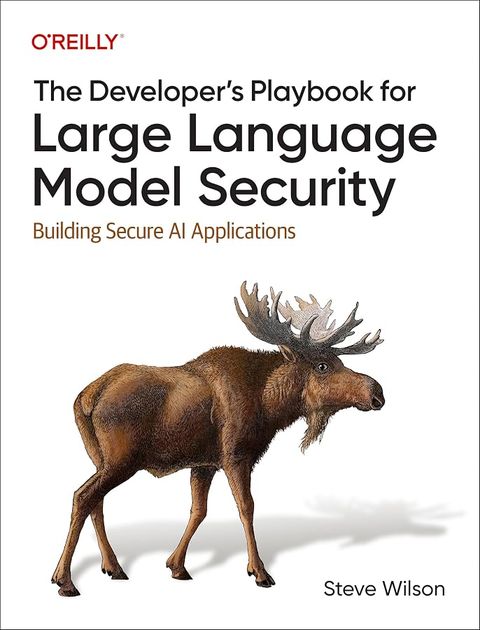
- The Developer's Playbook for Large Language Model Security Steve Wilson
- Generative AI For Dummies Pam Baker
- Designing Large Language Model Applications Suhas Pai
Sources
As an Amazon Associate, Best AI Books earns from qualifying purchases. Best AI Books is sponsored by Iternal.ai, whose founder and CEO, John Byron Hanby IV, wrote The AI Strategy Blueprint, our #1 ranked book. How we rank books.
