Deep Learning
Synopsis
Written by Ian Goodfellow, Yoshua Bengio and Aaron Courville, this MIT Press textbook covers deep learning in three parts. The first reviews the mathematics a practitioner needs, including linear algebra, probability and information theory, numerical computation and the basics of machine learning. The second treats the methods used in industry: deep feedforward networks, regularization, optimization for training, convolutional networks, recurrent and recursive networks for sequences, practical methodology and applications in vision, speech and language. The third surveys research topics of the mid-2010s, including linear factor models, autoencoders, representation learning, structured probabilistic models, Monte Carlo methods, approximate inference and deep generative models.
The approach is mathematical and conceptual rather than code-driven: the book explains why techniques work, derives key results and connects them to the research literature, but it contains no programming examples. Its practical methodology chapter gives guidance on choosing baselines, diagnosing problems and tuning hyperparameters. The complete text remains free to read at deeplearningbook.org. Published in 2016, it predates the transformer architecture and the large language models built on it, so readers must turn to newer sources for attention-based models, diffusion and modern scaling practice. In return, a reader gains a durable grounding in the principles beneath current systems.
Scorecard
Editorial score
How it scored
Editorial score: 79.8 / 1005 weighted criteria
- 28.5/30
Influence30%
- 23.8/25
Authority25%
- 13.0/20
Practical value20%
- 9.0/15
Currency15%
- 5.5/10
Readability10%
- 79.8/100
Editorial score
How the rank was computed
Rank No. 139 of 500 comes from a composite of 60.3: observable signals 24.3 of 55 points plus editorial review 36.0 of 45 points.
All 11 inputs
| Input | Points |
|---|---|
| Observable signals | 24.3/55 |
| Reach (Amazon ratings volume) | 12.4/16.5 |
| Consensus across best-of lists | 5.5/13.8 |
| Awards and bestseller evidence | 0.0/8.3 |
| Reader rating, sample-adjusted | 4.8/8.3 |
| Amazon sales rank | 1.6/5.5 |
| Recency | 0.0/2.8 |
| Editorial review | 36.0/45 |
| Author authority | 10.7/11.3 |
| Influence | 12.8/13.5 |
| Practical value | 5.9/9.0 |
| Readability | 2.5/4.5 |
| Currency | 4.1/6.8 |
Each criterion is scored from 1 to 10 and weighted, and the points add up to the editorial score. The rank combines observable signals (55 percent) with this score (45 percent). Read the methodology.
Verdict
The standard graduate reference on deep learning foundations, rigorous and free online, though it predates transformers and today's large language models.
Strengths
- Rigorous mathematical foundations in one volume
- Written by leading deep learning researchers
- Complete text free to read online
Keep in mind
Dense and mathematical, with no code, and it predates transformers, so readers need supplementary material on modern architectures and LLMs.
Key takeaways
- Deep networks learn hierarchies of representations, building complex concepts from simpler ones, which reduces the need for hand-engineered features.
- Regularization techniques such as dropout, weight decay, dataset augmentation and early stopping are central to making large networks generalize beyond their training data.
- Convolutional networks exploit spatial structure through parameter sharing, while recurrent networks such as LSTMs model sequences by carrying state across time steps.
- Practical success depends on methodology: establish baselines, choose metrics deliberately, diagnose underfitting versus overfitting, and tune hyperparameters systematically before adding complexity.
Notable facts
- Co-author Yoshua Bengio shared the 2018 ACM A.M. Turing Award with Geoffrey Hinton and Yann LeCun for work on deep neural networks. Source (opens in a new tab)
- The complete text is free to read online at deeplearningbook.org, and Posts and Telecom Press bought the rights to a Chinese translation. Source (opens in a new tab)
- Lead author Ian Goodfellow invented generative adversarial networks and was named to MIT Technology Review's 35 Innovators Under 35 list in 2017. Source (opens in a new tab)
About the author
Questions
Is Deep Learning by Goodfellow, Bengio and Courville still worth reading in 2026?
What math do I need for the Goodfellow Deep Learning book?
Is the Deep Learning textbook free?
Related books
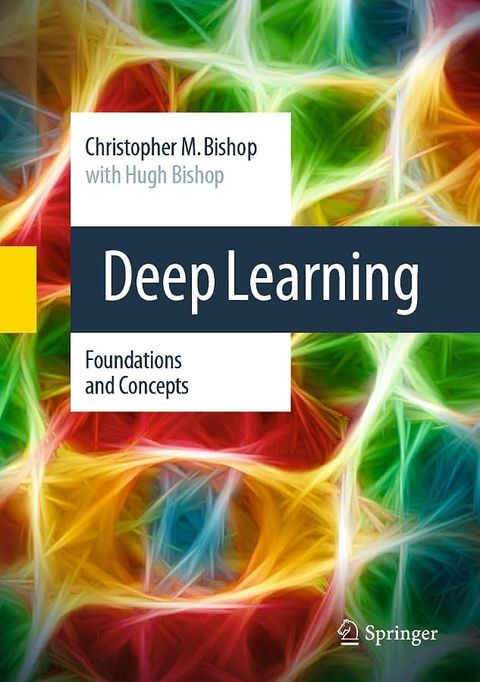
- Deep Learning Christopher M. Bishop and Hugh Bishop
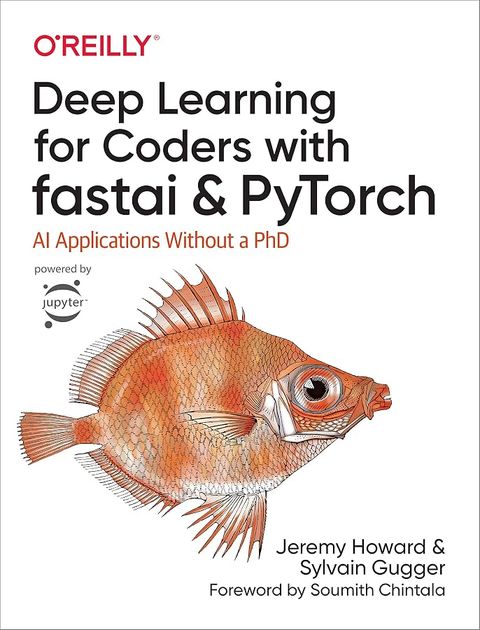
- Deep Learning for Coders with fastai and PyTorch Jeremy Howard and Sylvain Gugger
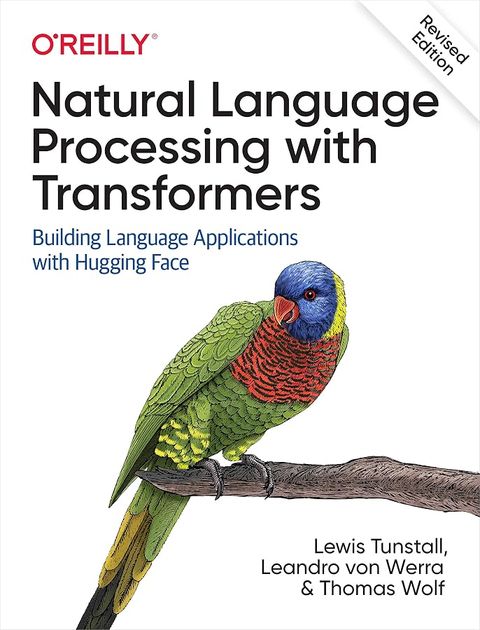
- Natural Language Processing with Transformers Lewis Tunstall, Leandro von Werra and Thomas Wolf
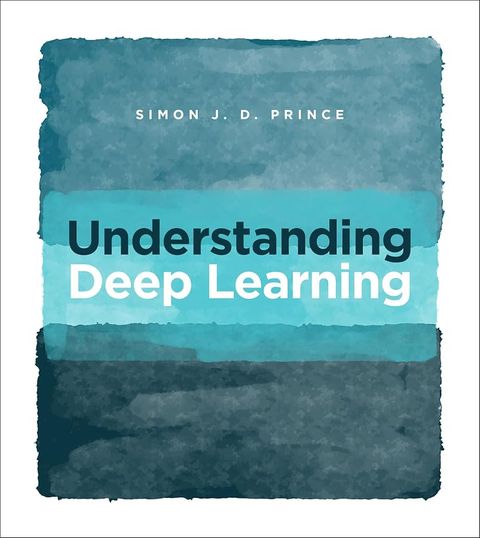
- Understanding Deep Learning Simon J. D. Prince
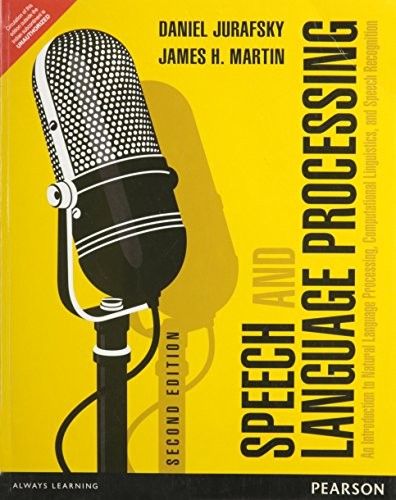
- Speech and Language Processing Daniel Jurafsky and James H. Martin
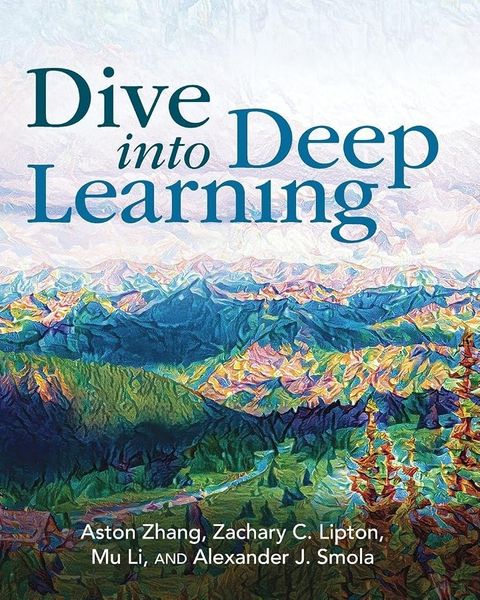
- Dive into Deep Learning Aston Zhang, Zachary C. Lipton, Mu Li and Alexander J. Smola
Sources
As an Amazon Associate, Best AI Books earns from qualifying purchases. Best AI Books is sponsored by Iternal.ai, whose founder and CEO, John Byron Hanby IV, wrote The AI Strategy Blueprint, our #1 ranked book. How we rank books.
