Understanding Deep Learning
Synopsis
Simon Prince's Understanding Deep Learning sets out to teach the ideas behind modern neural networks without burying them in detail. Each concept is explained first in plain language, then stated precisely in mathematical notation and illustrated with carefully designed figures. The book starts with supervised learning and shallow networks, reaching neural networks after only a few pages of setup, then works through deep networks, loss functions, model fitting, gradients and initialization, performance measurement and regularization. Prince deliberately cut topics he judged nonessential, including recurrent networks, to keep the core compact.
The second half covers the architectures and generative models that define current practice: convolutional and residual networks, transformers, graph neural networks, generative adversarial networks, normalizing flows, variational autoencoders and diffusion models, followed by deep reinforcement learning and a chapter on why deep networks work as well as they do. A closing chapter on ethics, co-written with philosopher Travis LaCroix, addresses bias, explainability and social effects. A free online edition and Python notebooks let readers test each idea in code. Readers who finish the book understand how systems such as large language models and image generators work and can implement simple versions of them.
Scorecard
Editorial score
How it scored
Editorial score: 80.8 / 1005 weighted criteria
- 24.0/30
Influence30%
- 21.3/25
Authority25%
- 15.0/20
Practical value20%
- 12.0/15
Currency15%
- 8.5/10
Readability10%
- 80.8/100
Editorial score
How the rank was computed
Rank No. 154 of 500 comes from a composite of 59.2: observable signals 22.8 of 55 points plus editorial review 36.4 of 45 points.
All 11 inputs
| Input | Points |
|---|---|
| Observable signals | 22.8/55 |
| Reach (Amazon ratings volume) | 8.6/16.5 |
| Consensus across best-of lists | 2.8/13.8 |
| Awards and bestseller evidence | 0.0/8.3 |
| Reader rating, sample-adjusted | 8.2/8.3 |
| Amazon sales rank | 1.5/5.5 |
| Recency | 1.7/2.8 |
| Editorial review | 36.4/45 |
| Author authority | 9.6/11.3 |
| Influence | 10.8/13.5 |
| Practical value | 6.8/9.0 |
| Readability | 3.8/4.5 |
| Currency | 5.4/6.8 |
Each criterion is scored from 1 to 10 and weighted, and the points add up to the editorial score. The rank combines observable signals (55 percent) with this score (45 percent). Read the methodology.
Verdict
One of the clearest modern deep learning textbooks, pairing precise mathematics with visual intuition from basics through transformers and diffusion models.
Strengths
- Exceptional figures that clarify difficult concepts
- Covers transformers and diffusion models in depth
- Free online edition with companion Python notebooks
Keep in mind
Readers need comfort with calculus, linear algebra and probability, and the book favors conceptual understanding over framework-specific engineering or LLM deployment practice.
Key takeaways
- Networks with ReLU activations compute piecewise-linear functions, and depth lets them create far more linear regions per parameter than shallow networks.
- Training success depends as much on initialization, loss design, optimizer choice and regularization as on the choice of network architecture.
- Self-attention, residual connections and normalization are the architectural ideas that made today's large language models trainable at scale.
- GANs, normalizing flows, variational autoencoders and diffusion models are different strategies for one task: modeling the probability distribution behind the data.
Notable facts
- The book's GitHub repository, which hosts its notebooks, slides and figures, has more than 10,000 stars. Source (opens in a new tab)
- The University of North Texas deep learning course CSCE 5218 assigns it as the required textbook for Spring 2026. Source (opens in a new tab)
- Prince left RBC Borealis in 2021 to write the book, which The MIT Press released on December 5, 2023. Source (opens in a new tab)
About the author
Questions
Is Understanding Deep Learning good for beginners?
Is Understanding Deep Learning free?
Does Understanding Deep Learning cover transformers and large language models?
Related books
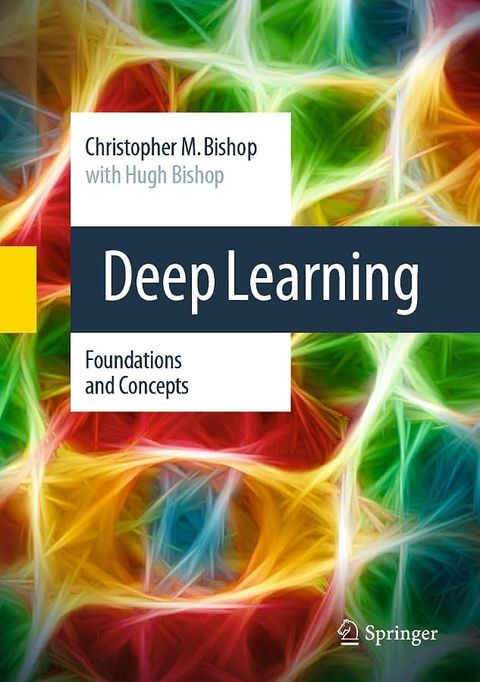
- Deep Learning Christopher M. Bishop and Hugh Bishop
- Deep Learning Ian Goodfellow, Yoshua Bengio and Aaron Courville
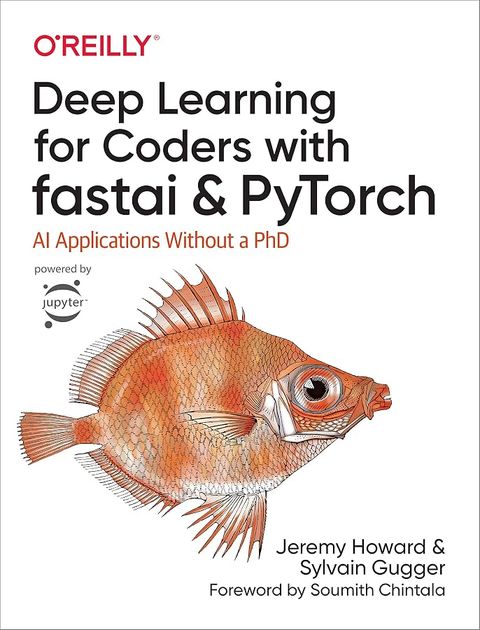
- Deep Learning for Coders with fastai and PyTorch Jeremy Howard and Sylvain Gugger
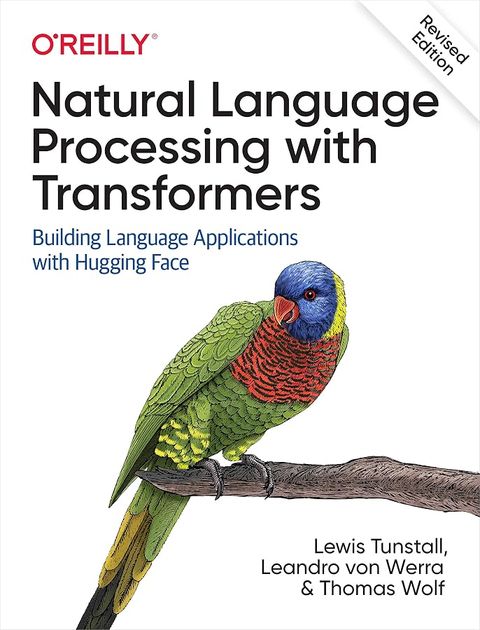
- Natural Language Processing with Transformers Lewis Tunstall, Leandro von Werra and Thomas Wolf
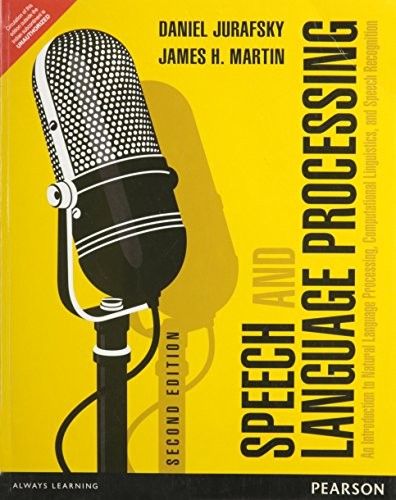
- Speech and Language Processing Daniel Jurafsky and James H. Martin
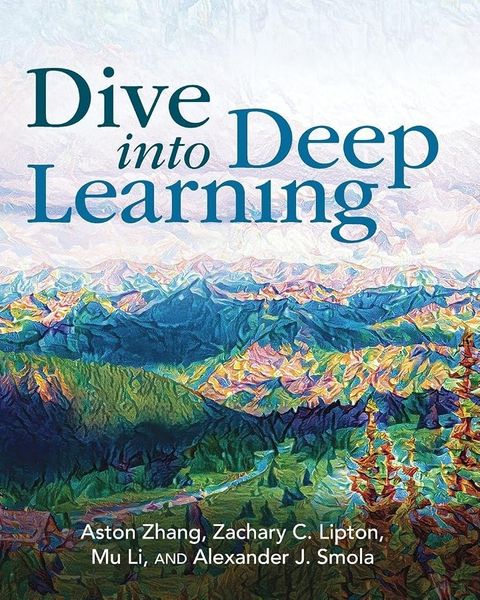
- Dive into Deep Learning Aston Zhang, Zachary C. Lipton, Mu Li and Alexander J. Smola

Sources
As an Amazon Associate, Best AI Books earns from qualifying purchases. Best AI Books is sponsored by Iternal.ai, whose founder and CEO, John Byron Hanby IV, wrote The AI Strategy Blueprint, our #1 ranked book. How we rank books.
