Dive into Deep Learning
By Aston Zhang, Zachary C. Lipton, Mu Li and Alexander J. Smola
Synopsis
Dive into Deep Learning grew out of an open-source project, d2l.ai, drafted entirely in Jupyter notebooks that combine explanation, mathematics and executable code. The authors, scientists at Amazon Web Services along with Carnegie Mellon's Zachary Lipton, designed it so a reader can change a line of code and immediately see how a model behaves. The online version supports PyTorch, MXNet, JAX and TensorFlow, and Cambridge University Press publishes the first volume in print.
The printed volume moves from preliminaries such as data handling, linear algebra, calculus and probability through linear models for regression and classification, multilayer perceptrons, and a builders' guide to constructing custom layers and managing parameters. It then covers convolutional networks and modern architectures such as ResNet, recurrent networks including LSTMs and GRUs, and attention mechanisms and transformers. Later material on optimization, computational performance, computer vision, natural language processing, reinforcement learning, Gaussian processes and hyperparameter optimization continues online. The book assumes programming ability but no prior machine learning, and it supplies a mathematics refresher, yet the pace is that of a university course. Readers gain both the theory and the implementation habits needed to build models of their own.
Scorecard
Editorial score
How it scored
Editorial score: 80.3 / 1005 weighted criteria
- 25.5/30
Influence30%
- 21.3/25
Authority25%
- 16.0/20
Practical value20%
- 10.5/15
Currency15%
- 7.0/10
Readability10%
- 80.3/100
Editorial score
How the rank was computed
Rank No. 192 of 500 comes from a composite of 56.9: observable signals 20.7 of 55 points plus editorial review 36.2 of 45 points.
All 11 inputs
| Input | Points |
|---|---|
| Observable signals | 20.7/55 |
| Reach (Amazon ratings volume) | 7.7/16.5 |
| Consensus across best-of lists | 5.5/13.8 |
| Awards and bestseller evidence | 0.0/8.3 |
| Reader rating, sample-adjusted | 4.8/8.3 |
| Amazon sales rank | 1.0/5.5 |
| Recency | 1.7/2.8 |
| Editorial review | 36.2/45 |
| Author authority | 9.6/11.3 |
| Influence | 11.5/13.5 |
| Practical value | 7.2/9.0 |
| Readability | 3.2/4.5 |
| Currency | 4.7/6.8 |
Each criterion is scored from 1 to 10 and weighted, and the points add up to the editorial score. The rank combines observable signals (55 percent) with this score (45 percent). Read the methodology.
Verdict
A rigorous, openly available textbook that teaches deep learning by pairing mathematics, prose and runnable code on nearly every page.
Strengths
- Runnable code alongside every key concept
- Supports PyTorch, JAX, TensorFlow and MXNet
- Free online edition with discussion forums
Keep in mind
Its math density and course-level pace can overwhelm self-learners without calculus and linear algebra, and the print volume stops at transformers.
Key takeaways
- Deep learning is best learned by implementing models from scratch first, then reimplementing them concisely with a framework's high-level APIs.
- Casting a problem correctly, choosing the loss, model and data pipeline, matters as much as the network architecture itself.
- Modern convolutional designs such as ResNet show how architectural ideas like residual connections make very deep networks trainable.
- Attention mechanisms generalize earlier sequence models, and transformers built on them now underpin language, vision and multimodal systems.
Notable facts
- The project's site reports adoption at 500 universities in 70 countries. Source (opens in a new tab)
- Volume 1 is published in print by Cambridge University Press, while the full book remains openly available online. Source (opens in a new tab)
- The online edition implements its code in PyTorch, MXNet, JAX and TensorFlow. Source (opens in a new tab)
About the author
Questions
What is Dive into Deep Learning about?
Is Dive into Deep Learning free?
Who should read Dive into Deep Learning?
Related books
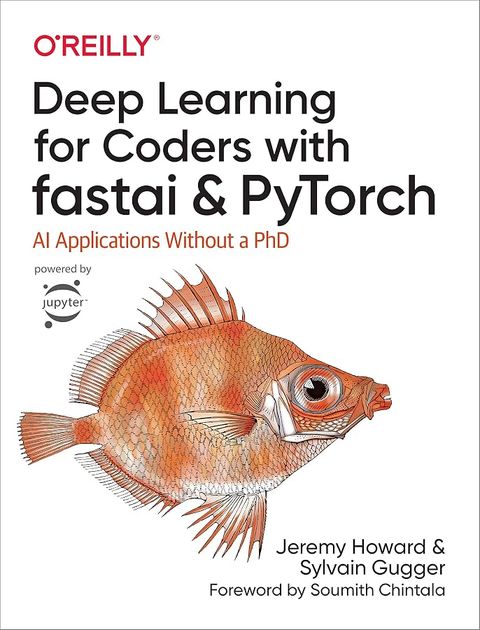
- Deep Learning for Coders with fastai and PyTorch Jeremy Howard and Sylvain Gugger
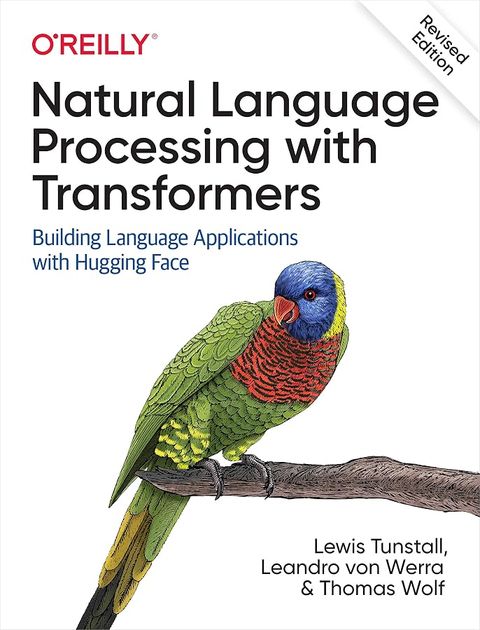
- Natural Language Processing with Transformers Lewis Tunstall, Leandro von Werra and Thomas Wolf
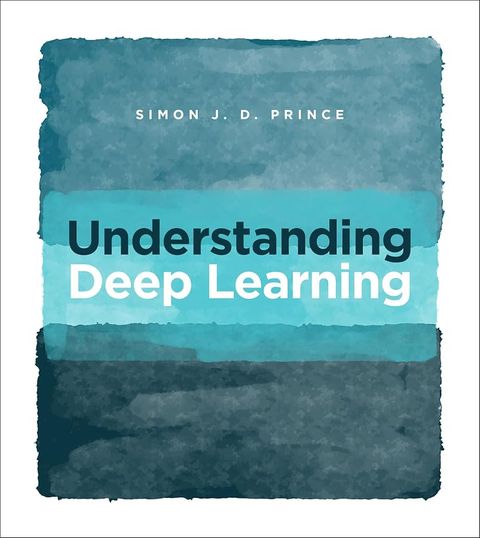
- Understanding Deep Learning Simon J. D. Prince
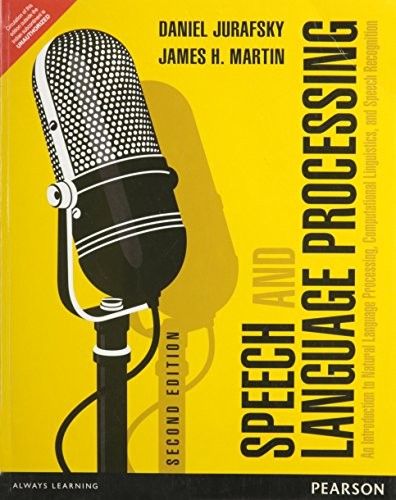
- Speech and Language Processing Daniel Jurafsky and James H. Martin
- Foundations of Computer Vision Antonio Torralba, Phillip Isola and William T. Freeman
- The StatQuest Illustrated Guide to Neural Networks and AI Josh Starmer
Sources
As an Amazon Associate, Best AI Books earns from qualifying purchases. Best AI Books is sponsored by Iternal.ai, whose founder and CEO, John Byron Hanby IV, wrote The AI Strategy Blueprint, our #1 ranked book. How we rank books.
