Speech and Language Processing
An Introduction to Natural Language Processing, Computational Linguistics and Speech Recognition
Synopsis
Daniel Jurafsky and James H. Martin first published Speech and Language Processing with Prentice Hall in 2000, unifying natural language processing, computational linguistics and speech recognition in one text at a time when those subjects were usually taught in separate courses. The second edition expanded the statistical and machine learning methods that then dominated the field, covering regular expressions and automata, n-gram models, part-of-speech tagging, hidden Markov models, parsing, semantics, dialogue and machine translation, with a consistent emphasis on empirical evaluation.
Since then the authors have been writing a third edition in public. The draft released on August 19, 2026 is free on Jurafsky's Stanford site and is organized in three volumes. The first covers large language models, from words and tokens through n-gram models, logistic regression, embeddings, neural networks, transformers, pretraining and post-training. The second treats advanced topics including masked language models, interpretability, information retrieval and RAG, machine translation, recurrent networks, and speech recognition and synthesis. The third addresses linguistic structure, from named entities and parsing to coreference and discourse. Instructors may use and print the draft chapters and slides for their classes. Readers gain a rigorous, linguistically informed foundation that explains both classical methods and modern LLMs.
Scorecard
Editorial score
How it scored
Editorial score: 87.1 / 1005 weighted criteria
- 28.5/30
Influence30%
- 23.8/25
Authority25%
- 15.0/20
Practical value20%
- 12.8/15
Currency15%
- 7.0/10
Readability10%
- 87.1/100
Editorial score
How the rank was computed
Rank No. 188 of 500 comes from a composite of 57.1: observable signals 17.9 of 55 points plus editorial review 39.2 of 45 points.
All 11 inputs
| Input | Points |
|---|---|
| Observable signals | 17.9/55 |
| Reach (Amazon ratings volume) | 6.7/16.5 |
| Consensus across best-of lists | 5.5/13.8 |
| Awards and bestseller evidence | 0.0/8.3 |
| Reader rating, sample-adjusted | 5.2/8.3 |
| Amazon sales rank | 0.5/5.5 |
| Recency | 0.0/2.8 |
| Editorial review | 39.2/45 |
| Author authority | 10.7/11.3 |
| Influence | 12.8/13.5 |
| Practical value | 6.8/9.0 |
| Readability | 3.2/4.5 |
| Currency | 5.7/6.8 |
Each criterion is scored from 1 to 10 and weighted, and the points add up to the editorial score. The rank combines observable signals (55 percent) with this score (45 percent). Read the methodology.
Verdict
A standard NLP textbook for over two decades, now kept current through a free online third edition centered on language models.
Strengths
- Comprehensive coverage from linguistics to LLMs
- Free, regularly updated third-edition draft
- Clear explanations with exercises and slides
Keep in mind
Its length and mathematical rigor suit coursework more than casual reading, and the third edition remains an unfinished draft with some chapters, including agents, unwritten.
Key takeaways
- Language processing is best taught as one discipline, linking text, speech and linguistic structure rather than treating each as a separate field.
- Simple models such as n-grams and logistic regression teach core ideas, including probability, smoothing and evaluation, that carry directly into neural language models.
- Transformers combine self-attention, pretraining on large corpora and post-training to produce the large language models that now underpin most NLP systems.
- Rigorous evaluation against held-out data and human annotation is central to every NLP task, from tagging and parsing to translation and retrieval.
Notable facts
- The authors released a free third-edition draft on August 19, 2026, organized into volumes on large language models, advanced LLM topics and linguistic structure. Source (opens in a new tab)
- Jurafsky's Stanford profile describes Speech and Language Processing as a widely used textbook. Source (opens in a new tab)
About the author
Questions
Is Speech and Language Processing free?
Is Speech and Language Processing worth reading in 2026?
Who should read Speech and Language Processing?
Related books
- Deep Learning Ian Goodfellow, Yoshua Bengio and Aaron Courville
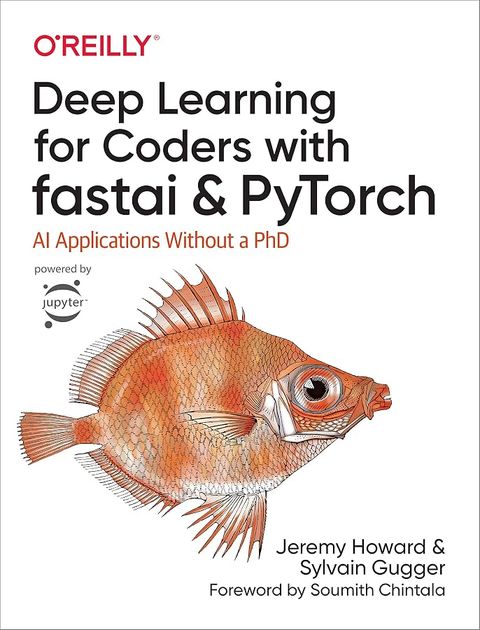
- Deep Learning for Coders with fastai and PyTorch Jeremy Howard and Sylvain Gugger
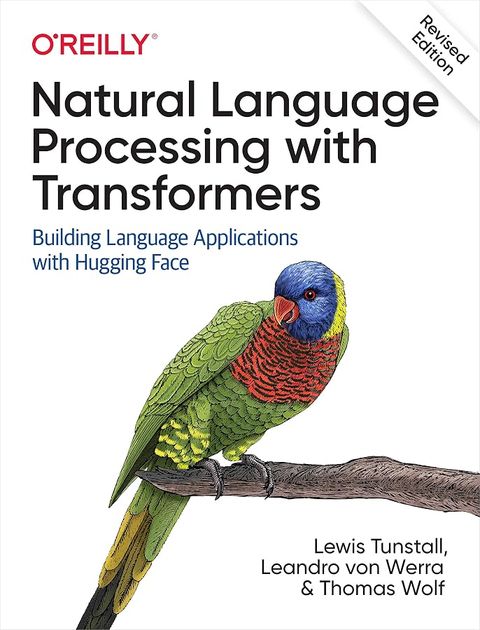
- Natural Language Processing with Transformers Lewis Tunstall, Leandro von Werra and Thomas Wolf
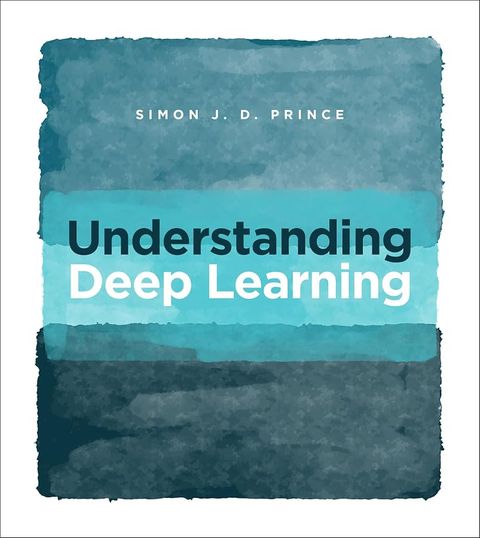
- Understanding Deep Learning Simon J. D. Prince
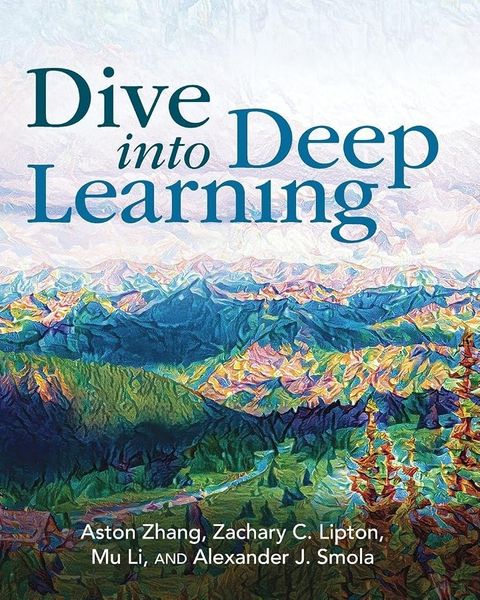
- Dive into Deep Learning Aston Zhang, Zachary C. Lipton, Mu Li and Alexander J. Smola
- Foundations of Computer Vision Antonio Torralba, Phillip Isola and William T. Freeman

Sources
As an Amazon Associate, Best AI Books earns from qualifying purchases. Best AI Books is sponsored by Iternal.ai, whose founder and CEO, John Byron Hanby IV, wrote The AI Strategy Blueprint, our #1 ranked book. How we rank books.
