Deep Learning with Python
Synopsis
First published in 2017 and now in a third edition (2025) coauthored with Google engineer Matthew Watson, Deep Learning with Python teaches neural networks by building them. François Chollet begins with what deep learning is and the tensor operations and gradient descent beneath it, introduces TensorFlow, PyTorch, JAX and Keras side by side, and lays out a universal workflow for framing a problem, choosing a metric, beating a baseline and controlling overfitting. Later chapters apply that workflow to image classification, segmentation and object detection, timeseries forecasting, text classification, and a chapter on language models and the Transformer that leads into building a small GPT-style text generator and diffusion-based image generation.
The method avoids mathematical notation, explaining each principle in prose and pairing it with runnable Keras 3 code that works on TensorFlow, PyTorch or JAX backends. Chollet adds chapters on best practices for real-world training and on the future of AI, where he contrasts the local generalization of deep networks with the abstraction and reasoning humans use, a theme he has pursued through the ARC benchmark. Readers who finish the book can train, debug and scale modern models and understand why the techniques work. The full third edition is free to read online at the authors' site, with print and ebook editions sold by Manning.
Scorecard
Editorial score
How it scored
Editorial score: 86.3 / 1005 weighted criteria
- 25.5/30
Influence30%
- 22.5/25
Authority25%
- 17.0/20
Practical value20%
- 12.8/15
Currency15%
- 8.5/10
Readability10%
- 86.3/100
Editorial score
How the rank was computed
Rank No. 73 of 500 comes from a composite of 65.3: observable signals 26.5 of 55 points plus editorial review 38.8 of 45 points.
All 11 inputs
| Input | Points |
|---|---|
| Observable signals | 26.5/55 |
| Reach (Amazon ratings volume) | 6.2/16.5 |
| Consensus across best-of lists | 8.3/13.8 |
| Awards and bestseller evidence | 3.3/8.3 |
| Reader rating, sample-adjusted | 4.8/8.3 |
| Amazon sales rank | 1.1/5.5 |
| Recency | 2.8/2.8 |
| Editorial review | 38.8/45 |
| Author authority | 10.1/11.3 |
| Influence | 11.5/13.5 |
| Practical value | 7.7/9.0 |
| Readability | 3.8/4.5 |
| Currency | 5.7/6.8 |
Each criterion is scored from 1 to 10 and weighted, and the points add up to the editorial score. The rank combines observable signals (55 percent) with this score (45 percent). Read the methodology.
Verdict
Among the clearest code-first introductions to deep learning, written by Keras's creator and rebuilt in 2025 for transformers and generative models.
Strengths
- Written by the creator of Keras
- Runnable code for every concept
- Free to read online in full
Keep in mind
Light on mathematics by design; readers who want derivations, proofs or research depth will need a companion textbook such as Bishop's or Goodfellow's.
Key takeaways
- Deep learning reduces to chains of tensor operations whose weights are tuned by gradient descent, a framing that makes every later architecture easier to understand.
- A universal workflow, from defining the task and success metric to beating a baseline and then regularizing, structures every project in the book.
- Keras 3 runs on TensorFlow, PyTorch or JAX, so the same model code can move between backends as tooling choices change.
- Deep networks generalize locally from their training data; Chollet argues that humanlike intelligence requires abstraction and reasoning that current models still lack.
Notable facts
- Manning's product page for the third edition states that the book has sold over 100,000 copies. Source (opens in a new tab)
- The complete third edition is available to read online free of charge at the book's official site. Source (opens in a new tab)
About the author
Questions
Is Deep Learning with Python worth reading in 2026?
How much math do I need for Deep Learning with Python?
Which edition of Deep Learning with Python should I read?
Related books
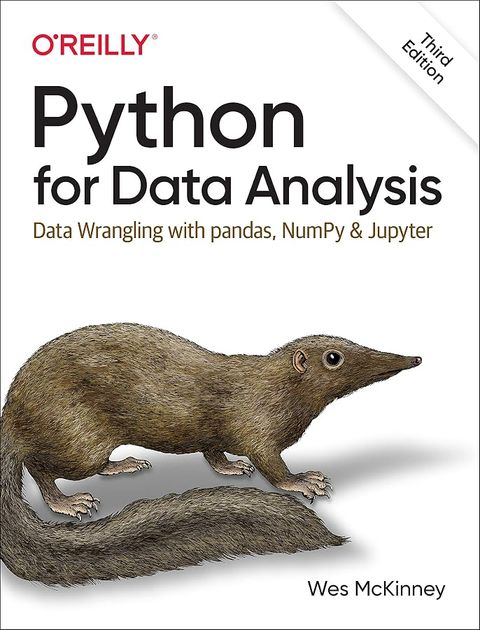
- Python for Data Analysis Wes McKinney
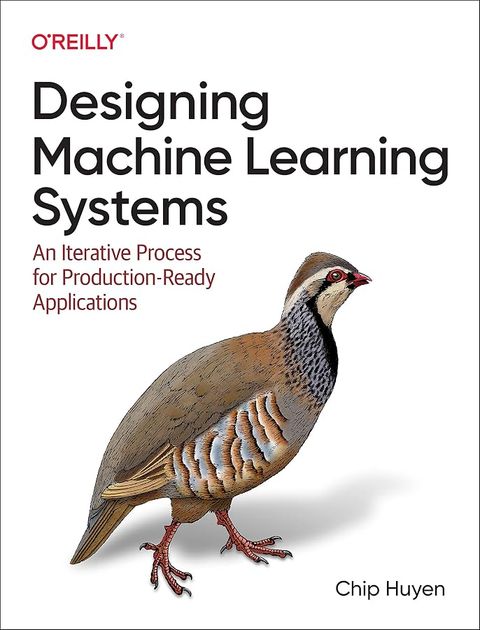
- Designing Machine Learning Systems Chip Huyen
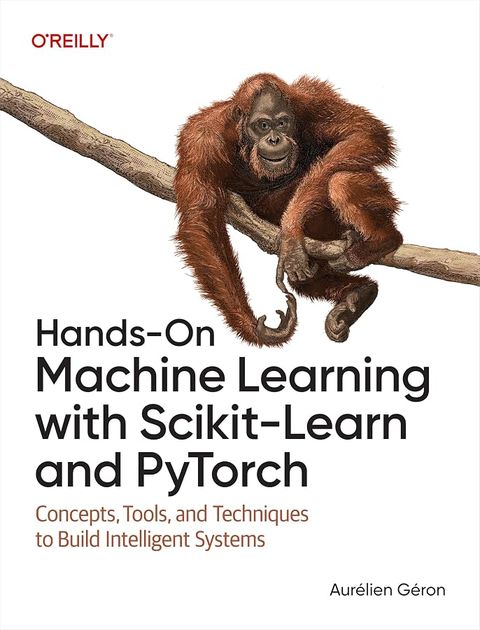
- Hands-On Machine Learning with Scikit-Learn and PyTorch Aurélien Géron
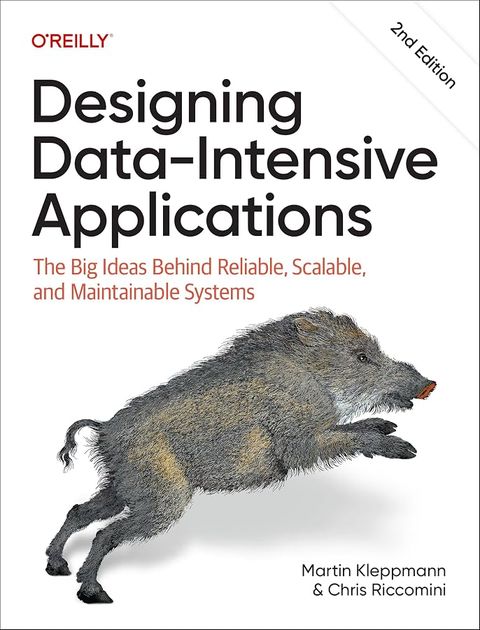
- Designing Data-Intensive Applications Martin Kleppmann and Chris Riccomini
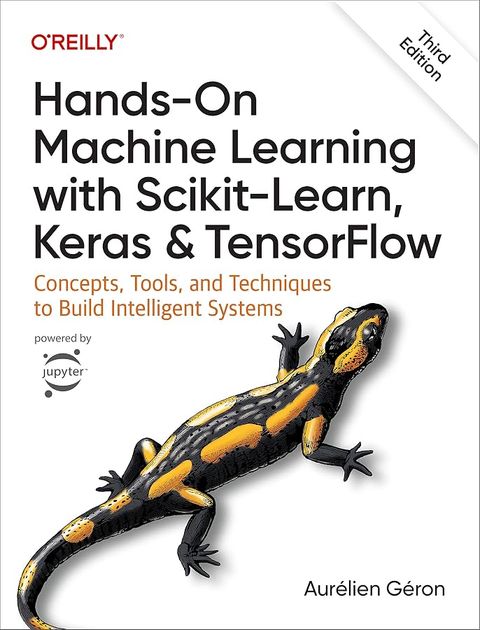
- Hands-On Machine Learning with Scikit-Learn, Keras, and TensorFlow Aurélien Géron
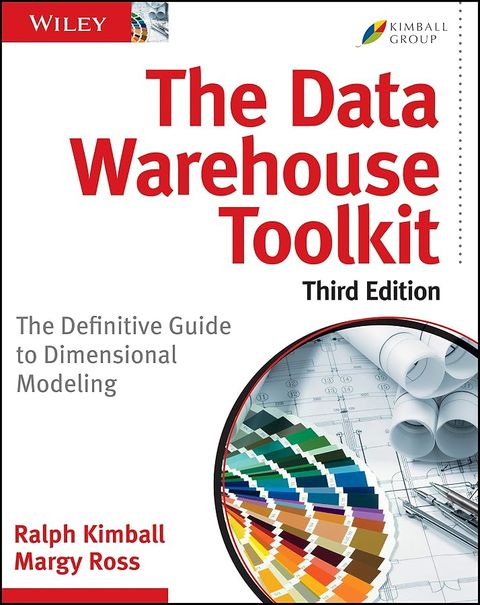
- The Data Warehouse Toolkit Ralph Kimball and Margy Ross
Sources
As an Amazon Associate, Best AI Books earns from qualifying purchases. Best AI Books is sponsored by Iternal.ai, whose founder and CEO, John Byron Hanby IV, wrote The AI Strategy Blueprint, our #1 ranked book. How we rank books.
